
In This Article
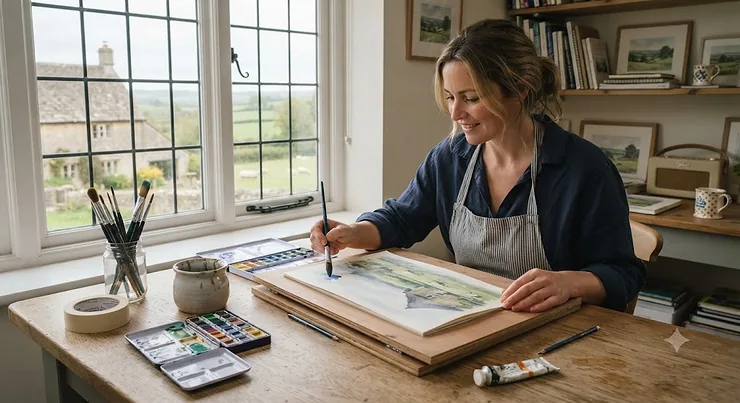
Buy the wrong watercolour pad and you will know within about thirty seconds of your first wash: the paper cockles, the colour pools where you didn’t want it, and the sheet you were hoping to frame ends up looking more like a crisp packet. The best watercolour pad for you depends less on brand prestige and more on three concrete things, weight, surface texture and fibre content, and getting those three right matters far more for your results than anything printed on the cover. A genuinely good watercolour paper pad holds enough water to let washes bloom properly, resists warping through repeated layers, and gives your pigment somewhere to sit rather than sinking straight through.
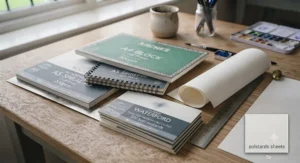
We looked at real, currently listed pads, honest aggregated review sentiment from UK buyers, and how each paper is actually specified by its maker, rather than reworking a manufacturer’s own product blurb. According to Tate’s glossary on the medium, watercolour paint is semi-transparent, so the white of the paper provides the natural luminosity behind every wash, which is exactly why paper choice affects a finished piece so much more in watercolour than it does in most other media; a dull or overly absorbent sheet genuinely dulls your colours regardless of how good your paint is.
This guide covers seven real pads worth considering in 2026, from budget student-grade options through to the 100% cotton papers serious painters graduate to, along with a plain-English breakdown of GSM, cold press versus hot press, and how to choose specifically for wet-on-wet work. Prices are given only as ranges since they shift by the week and by retailer.
Quick Comparison Table: Best Watercolour Pad at a Glance
| Product | Best For | Surface | Price Range |
|---|---|---|---|
| Bockingford Watercolour Pad | Budget beginners | Cold Press (NOT) | under £15 |
| Canson XL Watercolour Pad | Practice and sketching | Cold Press | under £12 |
| Winsor & Newton Watercolour Pad | Reliable all-rounder | Cold Press | £8-£15 range |
| Arteza Watercolour Paper Pad | Mixed media dabblers | Cold Press | £10-£18 range |
| Daler-Rowney Aquafine Pad | Textured wet techniques | Cold Press | £8-£14 range |
| Fabriano Studio Watercolour Pad | Stepping up from student grade | Cold Press / Hot Press | £12-£22 range |
| Saunders Waterford Legion Block | Serious wet-on-wet painting | Cold Press | £20-£35 range |
Looking at the spread above, the budget end is dominated by cellulose or part-cotton pads from Bockingford and Canson, both of which are genuinely fine for learning technique rather than being a compromise you’ll regret. The middle tier introduces Winsor & Newton, Arteza and Daler-Rowney, three pads that behave more consistently under multiple washes without asking you to pay cotton-paper prices. At the top, Fabriano and Saunders Waterford step into proper cotton or cotton-cellulose blend territory, and that jump in fibre quality is where wet-on-wet techniques genuinely start to behave differently.
💬 Just one click — help others make better buying decisions too!😊
Top 7 Watercolour Pads: Expert Analysis
1. Bockingford Watercolour Pad — best budget pad for building technique
The standout feature here is the distinctive surface: Bockingford is made using natural woollen felts during production, which gives every sheet a slightly random, forgiving texture rather than a uniform machine-stamped grain. Made from cellulose fibre with a wool-based finish rather than 100% cotton, at 300gsm it sits comfortably in the weight range most watercolourists consider the practical minimum for repeated washes without a backing board. Based on the spec comparison with the cotton papers further down this list, Bockingford is genuinely a step above simple cartridge paper but not a substitute for artist-grade cotton, which is precisely why it has become the standard recommendation for anyone still developing brush control and wash technique. Reviewers consistently report minimal buckling for a non-cotton paper, with one UK buyer describing it as good for sketching in pencil or charcoal while still taking colour well with minimal cockling once dry. A recurring theme in aggregated feedback is that colour lifting works noticeably well on this surface, a quality specifically prized by anyone practising corrections or soft cloud and sky work. Bockingford Watercolour Pad typically retails under £15, and represents strong value as the paper most experienced painters recommend for anyone not yet ready to invest in cotton.
Pros:
- ✅ Distinctive woollen-felt texture is genuinely forgiving to paint on
- ✅ Colour lifts back off the surface cleanly for corrections
- ✅ Price point makes it realistic to practise freely without fear of waste
Cons:
- ❌ Not 100% cotton, so heavy repeated washes can still show some cockling
- ❌ Some spiral-bound editions have a shorter side that limits full-sheet compositions
2. Canson XL Watercolour Pad — best for high-volume practice and sketching
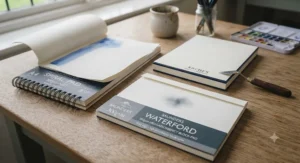
What sets this apart on the spec sheet is sheer sheet count for the price: at 300gsm and typically 30 sheets per pad, it gives you significantly more surface area to experiment on than most of the smaller premium pads on this list, which matters enormously if you are still working through basic wash and colour-mixing exercises. On paper this means you can afford to treat individual sheets as disposable, painting through failed attempts freely rather than rationing precious cotton paper for only your best ideas. The cold pressed surface has enough tooth to hold a wash without feeling glassy, and the spiral binding along the short side keeps the pad genuinely flat and easy to work in on a lap or portable easel. Reviewers of comparable Canson XL ranges note the paper is noticeably student-grade rather than artist-grade, meaning heavy, saturated washes can show some texture change compared with the smoother behaviour of cotton papers, but for daily practice work that trade-off rarely matters. It suits beginners, students and anyone running regular painting classes who needs a reliably inexpensive stock of usable sheets. Typically priced under £12, this is one of the cheapest genuinely usable cold press pads currently available, making it the natural first purchase before committing to anything more expensive.
Pros:
- ✅ High sheet count keeps the cost-per-sheet genuinely low
- ✅ Spiral binding on the short side stays flat during use
- ✅ Enough surface tooth to hold a proper wash
Cons:
- ❌ Student-grade fibre content shows more texture change under heavy saturation
- ❌ Less forgiving than cotton papers for repeated lifting and correction
3. Winsor & Newton Watercolour Pad — best reliable all-rounder
The headline advantage is consistency: made from a blend of roughly a quarter cotton and cellulose fibres, this pad sits in a genuine middle ground, offering more body and better wash behaviour than pure cellulose papers while remaining considerably cheaper than 100% cotton alternatives. At 300gsm and cold pressed, the surface has enough texture to catch dry-brush work without being so rough that it fights fine detail. Here’s what to weigh before buying: this is very much a workhorse paper rather than a showpiece one, and one long-term UK reviewer specifically noted buying it repeatedly to complement Winsor & Newton paints, describing it as reliable rather than exceptional, which is honestly the right expectation to set. It handles wet-in-wet work reasonably well and lifts colour without falling apart, according to aggregated feedback, though it is explicitly not positioned as botanical-grade paper for hyper-detailed realism. This makes it a sensible default for anyone who wants one dependable pad they can reach for without thinking too hard, rather than switching between several specialist papers for different projects. Pricing typically sits in the £8-£15 range depending on pad size, positioning it as one of the most balanced options on this whole list for everyday painting.
Pros:
- ✅ Reliable, consistent results across ordinary painting sessions
- ✅ Cotton-cellulose blend offers more body than pure cellulose papers
- ✅ Handles wet-in-wet washes without falling apart
Cons:
- ❌ Not designed for hyper-detailed botanical or fine-line work
- ❌ A step behind full cotton papers for colour vibrancy on drying
4. Arteza Watercolour Paper Pad — best for mixed media dabblers
The standout is versatility: this glue-bound, 300gsm cold pressed pad is explicitly designed to handle watercolour, gouache, acrylic, ink and brush pens on the same sheet, which suits anyone who likes combining media rather than staying strictly within traditional watercolour technique. Specification-wise, the acid-free composition is intended to prevent fading, warping and yellowing over time, and the glue binding along one edge allows sheets to detach cleanly for framing or sharing without the ragged edge some spiral pads leave behind. One detailed UK review directly compared it against Arches, Canson and Fabriano and concluded it performed respectably for the price, noting it does cockle under heavy washes but nowhere near as dramatically as some cheaper alternatives, and specifically recommended it as a strong stepping stone before moving up to premium cotton paper. Reviewers consistently mention the double-sided texture as a practical bonus, since a slight tooth difference between the two faces of each sheet effectively gives you two different working surfaces from one pad. It suits hobbyists exploring several media at once and anyone testing brush pens or ink alongside washes, and pricing generally falls in the £10-£18 range depending on sheet count. Given the honest self-comparison reviewers make against premium brands, this is a sensible middle-tier choice rather than a true budget option.
Pros:
- ✅ Handles watercolour, gouache, ink and brush pens on the same sheet
- ✅ Glue binding allows clean sheet removal for framing
- ✅ Double-sided texture effectively offers two working surfaces
Cons:
- ❌ Noticeable cockling under genuinely heavy, saturated washes
- ❌ Not a substitute for cotton paper once you reach advanced technique
5. Daler-Rowney Aquafine Pad — best textured surface for wet techniques
What most buyers overlook about this model is how much the surface texture itself contributes to wet technique results, and the Aquafine range is specifically built around a pronounced cold press tooth that holds pooled water and pigment more predictably than smoother budget papers. At 300gsm, glued along one side into an A4 pad, it is positioned by Daler-Rowney as suitable for both professional and beginner use, and the texture genuinely does more of the visual work in wet-on-wet passages than paper weight alone can achieve. Based on the spec comparison, this sits close to the Winsor & Newton pad in price but leans slightly more toward artists who specifically want a visibly grainy, traditional watercolour finish rather than a smoother, more neutral surface. Aggregated reviews for the wider Aquafine range describe it as dependable for both watercolour and gouache, with the acid-free construction helping colours stay true rather than yellowing over time. It particularly suits landscape and loose, expressive painters who lean on texture to do visual work, rather than botanical or hyper-detailed illustrators who would likely prefer a smoother hot press surface instead. Typically priced in the £8-£14 range, it represents one of the better textured mid-range options for anyone whose style depends on visible paper grain.
Pros:
- ✅ Pronounced cold press texture genuinely aids wet-on-wet control
- ✅ Acid-free construction helps colours stay true over time
- ✅ Competitive pricing for a texture-forward paper
Cons:
- ❌ Strong tooth can work against very fine, detailed linework
- ❌ Only glued on one side, so pages can shift slightly during vigorous washes
6. Fabriano Studio Watercolour Pad — best step-up from student-grade paper
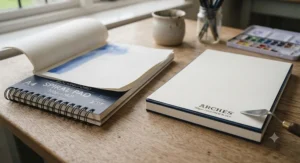
The differentiator here is fibre quality: made from a blend of high-quality lignin-free cotton and cellulose rather than pure cellulose, this pad is internally and externally sized for genuinely improved absorbency compared with the more basic pads earlier on this list. Available in both cold press and hot press surfaces at 300gsm, it gives painters a genuine choice between a textured traditional finish and a smooth surface suited to fine detail or ink work, something few pads in this price bracket offer. On paper this means the paper feels and performs closer to full cotton rag than its price suggests, and one long-standing reviewer specifically noted buckling far less than 200gsm papers while remaining close in behaviour to genuinely expensive cotton sheets. What the spec sheet won’t tell you, but repeated reviewer testing suggests, is that the hot press version in particular handles stamping and fine ink line work in a single pass rather than requiring the multiple attempts thinner papers often need. It suits painters who have outgrown Bockingford or Canson-level student paper but are not yet ready to commit to full-price cotton blocks, and typically retails in the £12-£22 range depending on format and sheet count. FSC-certified sourcing is also a genuine point in its favour for anyone factoring sustainability into their art supply choices.
Pros:
- ✅ Cotton-cellulose blend performs closer to premium paper than the price suggests
- ✅ Choice of cold press or hot press surface in the same range
- ✅ FSC-certified sourcing for more sustainably minded buyers
Cons:
- ❌ Still a step below full 100% cotton papers for the most demanding techniques
- ❌ Premium finish comes at a noticeably higher price than the budget pads on this list
7. Saunders Waterford Legion Block — best for serious wet-on-wet painting
The stand-out advantage is fibre content and mill pedigree: made from 100% cotton at St Cuthberts Mill in Somerset, this is the paper carrying the Royal Watercolour Society’s endorsement, a genuinely meaningful credential rather than a marketing flourish, since the endorsement reflects real professional use rather than a paid partnership. At 140lb (roughly 300gsm) and cold pressed, the block format glues all four edges together, which keeps the sheet under tension and dramatically reduces buckling during heavy or repeated wet-on-wet washes without needing a separate stretching or taping process. Based on the spec comparison with every other paper on this list, full cotton content is precisely what allows genuinely saturated wet-on-wet blooms to dry with richer, more vibrant colour retention, since cotton fibre holds and releases pigment differently to cellulose-based sheets. Reviewers of Saunders Waterford papers consistently describe a noticeable jump in quality when moving up from Bockingford, citing fewer buckled sheets, more vibrant dried colour, and washes that behave more predictably during layering. It suits committed hobbyists and professional painters producing finished pieces intended for framing or sale, rather than daily practice work where the cost per sheet would be difficult to justify. Expect to pay in the £20-£35 range depending on block size, making it a genuine investment rather than an impulse purchase.
Pros:
- ✅ 100% cotton content gives noticeably richer dried colour
- ✅ Block format holds tension, sharply reducing buckling
- ✅ Royal Watercolour Society endorsement reflects genuine professional use
Cons:
- ❌ Meaningfully more expensive per sheet than every other pad on this list
- ❌ Blocks require careful edge-lifting once finished, unlike a simple spiral pad
Top 7 Products: Specs, GSM and Ratings Comparison
| Product | Fibre Content | Weight | Surface | Price Range |
|---|---|---|---|---|
| Bockingford Watercolour Pad | Cellulose + wool finish | 300gsm | Cold Press (NOT) | under £15 |
| Canson XL Watercolour Pad | Cellulose | 300gsm | Cold Press | under £12 |
| Winsor & Newton Watercolour Pad | ~25% cotton / cellulose | 300gsm | Cold Press | £8-£15 range |
| Arteza Watercolour Paper Pad | Cellulose blend | 300gsm | Cold Press | £10-£18 range |
| Daler-Rowney Aquafine Pad | Cellulose | 300gsm | Cold Press | £8-£14 range |
| Fabriano Studio Watercolour Pad | Cotton-cellulose blend | 300gsm | Cold Press / Hot Press | £12-£22 range |
| Saunders Waterford Legion Block | 100% cotton | 140lb (~300gsm) | Cold Press | £20-£35 range |
Read together, this table shows a fairly clear cotton-content ladder: as fibre quality rises from pure cellulose through cotton-cellulose blends to full cotton, both price and wet-technique performance climb in step. Buyers often make the mistake of assuming every 300gsm pad performs identically because the weight figure matches, when in fact the fibre blend behind that number is what actually determines how the paper handles repeated washes. If in doubt between two adjacent tiers, most experienced painters recommend buying the cheaper paper first and practising freely, since technique improvements often matter more to your results than paper alone until you are already painting confidently.
Benefits of 300gsm+ Paper vs Standard Cartridge Paper
| Factor | Standard Cartridge Paper | 300gsm+ Watercolour Pad |
|---|---|---|
| Buckling under washes | Warps significantly, even with light water | Holds shape through multiple layered washes |
| Colour vibrancy | Pigment sinks unevenly, looks dull | Sizing keeps pigment sitting on the surface |
| Lifting and correction | Surface tears easily when reworked | Designed to tolerate gentle lifting |
| Multiple layers | Struggles beyond one or two washes | Built for repeated glazing and layering |
The practical difference this table points to is structural rather than cosmetic: cartridge paper simply lacks the internal sizing and fibre density needed to cope with genuine wet media, which is why even careful painters find their work warping and dulling on the wrong surface regardless of skill. Watercolour-specific paper is manufactured with sizing that controls how quickly water is absorbed, allowing pigment to sit on the surface rather than sinking in unevenly, and this single manufacturing difference explains most of the gap in finished results between the two paper types.
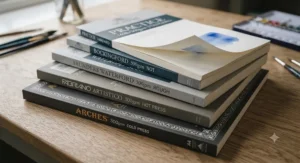
Choosing and Storing Your Watercolour Pad: A Practical Guide
Getting the most out of a new watercolour pad starts before you even open a paint tube. If your pad is not a taped or glued block, tape or clip the sheet to a board before wetting it, since unsecured single sheets will buckle noticeably even on quality 300gsm paper once a heavy wash goes down. Test a small corner swatch first with your actual palette, since some cheaper student-grade papers behave differently with staining pigments compared with more granulating ones, and a quick swatch avoids wasting a full sheet on an unwanted surprise. A common first-month mistake among newer painters is storing pads flat under other materials in a damp studio or shed, which can introduce cockling or foxing over time even before the first brushstroke; store pads upright or flat in a dry, stable environment away from direct sunlight instead. For ongoing use, work from a full pad in sheet order rather than skipping around, since consistently working through one book keeps your comparison between paintings fair as you develop technique. Finally, once you’ve settled on a favourite among the seven pads reviewed here, buy in slightly larger formats or multi-packs where available, since cost per sheet drops meaningfully at larger sizes and consistent paper stock removes one more variable while you’re developing your style.
Real-World Scenarios: Which Pad Fits Your Practice?
The absolute beginner on a tight budget. If you’re just starting out and want to practise freely without worrying about wasting expensive sheets, choose the Canson XL Watercolour Pad or Bockingford Watercolour Pad, because both give you a genuine number of usable sheets at a price where mistakes cost almost nothing.
The hobbyist ready to level up. If you’ve been painting for a while and are noticing your current paper limiting your results, particularly around buckling or dull colour, the Fabriano Studio Watercolour Pad or Winsor & Newton Watercolour Pad sit at the ideal mid-point between cost and genuine performance improvement.
The finished-piece painter selling or framing work. If you’re producing pieces intended for sale, exhibition or framing, only the Saunders Waterford Legion Block on this list delivers the colour vibrancy and buckling resistance that professional-standard cotton paper provides, and the cost difference is easy to justify against a finished, sellable piece.
How to Choose the Best Watercolour Pad
- Start with weight, but don’t stop there, since 300gsm is the sensible minimum for most techniques, but fibre content affects performance just as much as the number itself.
- Match surface texture to your usual technique, because cold press suits general painting and wet techniques while hot press suits fine detail and ink work.
- Decide between pad, block and spiral binding based on how you paint, since taped blocks resist buckling best for heavy wet-on-wet work, while spiral pads are more convenient for quick sketching.
- Consider fibre content once you’re painting confidently, moving from cellulose through cotton-cellulose blends to full cotton as your technique and budget both develop.
- Buy larger formats once you know your preferred paper, since cost per sheet drops meaningfully and consistent stock removes a variable while you refine your style.
- Read UK-specific reviews for real-world buckling reports, since aggregated feedback on cockling and lifting behaviour is far more reliable than a spec sheet alone.
- Keep a cheap practice pad alongside a premium one, using the affordable option for warm-ups and colour testing before committing pigment to your better paper.
Cold Press vs Hot Press Watercolour Paper: What’s the Real Difference?
These two terms describe how the paper is finished during manufacture, and the distinction genuinely changes how paint behaves on the surface. Cold pressed paper, sometimes labelled “NOT” (meaning not hot pressed), is passed through cold rollers that leave a moderate, slightly random texture, exactly the surface used on six of the seven pads reviewed here, including the Bockingford Watercolour Pad and Saunders Waterford Legion Block. This texture holds pigment and water unevenly in a controlled way, which is precisely what gives traditional watercolour washes their characteristic granulation and soft edges, making cold press the standard choice for landscapes, loose florals and general painting. Hot pressed paper, by contrast, passes through heated rollers that flatten the surface into something noticeably smoother; the Fabriano Studio Watercolour Pad is the one entry here offering a hot press option, and that smoothness is specifically prized by botanical illustrators, ink artists and anyone doing fine detail line work where a textured surface would break up crisp edges. Neither surface is objectively superior; cold press is the more forgiving, versatile default for most painters, while hot press rewards precise, controlled technique and is worth seeking out specifically once you know detail work is your priority.
300gsm Watercolour Pad: Why This Weight Matters
Among the various weights available, 300gsm has become something close to an industry standard minimum, and understanding why helps explain the buying advice throughout this guide. Grammage itself is simply a measure of a paper’s mass per unit area, expressed in grams per square metre and commonly abbreviated gsm on product labels, so a 300gsm sheet is, quite literally, heavier and thicker than a 200gsm sheet of the same dimensions. In practice, every pad reviewed on this list sits at 300gsm precisely because lighter papers, typically 200gsm or below, tend to buckle noticeably once a proper wash goes down, forcing painters to stretch or tape the sheet before starting. At 300gsm, most papers can handle a moderate wash unsupported, and only genuinely heavy, repeated wet-on-wet layering pushes even quality 300gsm cotton paper like the Saunders Waterford Legion Block toward needing a taped block or stretched board for best results. Heavier weights beyond 300gsm do exist, sometimes reaching 640gsm in premium ranges, but they come at a significant price and weight premium that most painters simply don’t need outside large-format or particularly demanding wet techniques.
Best Watercolour Paper for Wet-on-Wet Technique
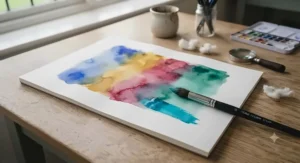
Wet-on-wet is arguably the technique most sensitive to paper choice of any watercolour method, and it’s worth understanding exactly what the term means before matching it to paper. As one detailed breakdown from Jackson’s Art Blog explains, the wet-on-wet technique is the application of water-based media to an already wet artwork or surface, allowing colours to diffuse in a somewhat unpredictable way without visible brushmarks. This unpredictability is precisely what makes paper choice so important: a sheet with insufficient sizing or fibre density will let pigment sink and bloom in an uncontrolled mess, while a well-made paper channels that same unpredictability into the soft edges and blooms watercolourists actually want. Among the seven pads reviewed here, the Saunders Waterford Legion Block and Fabriano Studio Watercolour Pad perform best for wet-on-wet work specifically because their higher cotton content slows absorption just enough to give you a workable window before the wash sets, while the Daler-Rowney Aquafine Pad‘s pronounced texture also helps hold pooled water in place rather than letting it run uncontrollably across a flatter surface. Budget cellulose pads can still be used for wet-on-wet practice, and are honestly a sensible place to learn the unpredictability of the technique before committing better paper to a technique you’re still mastering, but expect noticeably less vibrant colour retention once the wash dries compared with the cotton-based options further up this list.
Watercolour Paper GSM Guide: Reading the Numbers
Manufacturers list weight in either GSM or pounds, and the two systems can be confusing side by side on the same shelf, with the older imperial system rooted in the weight of a ream of paper rather than a simple per-sheet figure. GSM is the metric measurement, grams per square metre, and is what every pad reviewed in this guide is specified in, whether stated directly as 300gsm or via its imperial equivalent of roughly 140lb, the figure used on papers like the Saunders Waterford Legion Block. As a rough guide for watercolour specifically: anything below 200gsm behaves closer to heavy drawing paper and will buckle noticeably under real washes; 200-300gsm is the workable range most student and mid-tier papers, including the Bockingford Watercolour Pad and Winsor & Newton Watercolour Pad, sit within; and 300gsm plus is where genuinely wash-resistant painting begins, which is exactly why every pad in this comparison table sits at that weight. Above 300gsm, weights like 425gsm or 640gsm exist mainly in premium cotton ranges for painters working large or particularly wet techniques without stretching paper first, but for the vast majority of UK hobbyists and even many working professionals, 300gsm cold press remains the practical sweet spot between cost, weight and wash performance.
Long-Term Value: Cost Per Sheet and Buying in Bulk
A single premium block can look expensive next to a budget spiral pad until you actually work out the cost per sheet and factor in wasted attempts. The Canson XL Watercolour Pad, with its high sheet count, often works out at only a few pence per sheet, making it genuinely disposable for practice work, whereas the Saunders Waterford Legion Block can run to a pound or more per sheet depending on block size and current retailer pricing. The trade-off, though, is completion rate: cheaper papers tend to produce more failed or abandoned pieces due to buckling and dull colour, while premium cotton paper’s more forgiving, predictable behaviour means fewer wasted sheets per successful finished piece. Viewed over a year of regular practice, many painters find a two-tier approach works best financially, buying budget cellulose pads like Bockingford or Canson in bulk for daily practice and colour testing, while reserving smaller cotton blocks for pieces they already intend to finish and keep or sell.
Buyer’s Decision Framework
If you are brand new to watercolour and want to build technique without financial pressure, choose the Canson XL Watercolour Pad or Bockingford Watercolour Pad, since both let you paint freely and learn from mistakes cheaply. If you’ve outgrown basic student paper and want a genuine step up without committing to cotton prices, choose the Fabriano Studio Watercolour Pad, which offers both cold and hot press options in one mid-range purchase. If your style depends heavily on wet-on-wet blooms and soft, granulating washes, choose the Daler-Rowney Aquafine Pad for its pronounced texture or step straight up to the Saunders Waterford Legion Block if budget allows. If you are producing finished work for sale, framing or exhibition, treat anything below full cotton paper as a false economy, since the colour vibrancy and buckling resistance of the Saunders Waterford Legion Block genuinely affects how professional the finished piece looks.
FAQ
❓ Is a higher gsm watercolour pad always better?
❓ What's the difference between a watercolour pad, block and sheets?
❓ Can I use cold press paper for hot press techniques like botanical illustration?
❓ Do I need 100% cotton paper as a beginner?
❓ Why does my watercolour paper buckle even though it's 300gsm?
Conclusion
The best watercolour pad for you really comes down to where you are in your painting journey rather than chasing the most expensive name on the shelf. Beginners and anyone practising technique are well served by the affordable Canson XL Watercolour Pad or the classic Bockingford Watercolour Pad, both of which deliver genuine 300gsm performance for well under £15. Painters ready to step up without committing to cotton prices should look at the Winsor & Newton Watercolour Pad, Arteza Watercolour Paper Pad or the notably versatile Fabriano Studio Watercolour Pad, while anyone whose style leans on strong wet-on-wet texture will get real benefit from the Daler-Rowney Aquafine Pad‘s pronounced tooth. For finished, exhibition or sale-ready work, only the 100% cotton Saunders Waterford Legion Block genuinely delivers the colour vibrancy and buckling resistance that professional results demand. Whichever you choose, remember that paper is only one half of the equation, testing your actual palette on a swatch and securing unsecured sheets before washing will do as much for your results as the paper itself.
Recommended for You
- Best Spiral Sketchbook UK: 7 Top Picks Compared (2026)
- Best Hardback Sketchbook 2026: 7 Picks Tested by Spec
- Best A5 Sketchbook: 7 Top Picks for Artists Reviewed 2026
Disclaimer: This article contains affiliate links. As an Amazon Associate, I earn from qualifying purchases. If you purchase products through these links, we may earn a small commission at no additional cost to you.
✨ Found this helpful? Share it with your friends! 💬🤗
