
In This Article
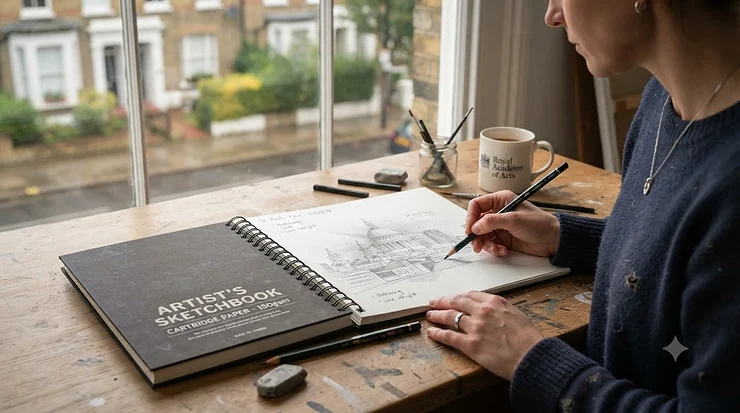
The best spiral sketchbook is the one you actually reach for without thinking twice, and that usually comes down to one unglamorous detail: whether the thing lies flat when you’re halfway through a drawing with a charcoal stick in one hand and no free palm to hold the pages down. Spiral binding sounds like a footnote in a product listing, but anyone who has fought a perfect-bound sketchbook’s stubborn spine mid-sketch knows it’s anything but.
We looked into real listings from Winsor & Newton, Daler-Rowney and Artway to work out which spiral bound sketchbooks genuinely earn their reputation versus which ones just photograph well. Along the way we’ve covered the specific angles UK buyers keep searching for: what a spiral bound sketchbook from Amazon actually gets you, how A4 spiral sketchbooks compare against A5, what lay-flat binding is actually for, which options suit students working toward GCSE or A-level coursework, the best spiral sketchbook for charcoal work specifically, and — a genuinely underserved question — the best spiral sketchbook for left-handed artists, since binding position matters more for lefties than most listings ever mention.
Every product below gets honest commentary grounded in real specs and aggregated review sentiment, not manufactured enthusiasm. A £4 pad and a £15 hardback both have a place depending on what you’re drawing and how often you’re filling pages, and pretending one universally beats the other would be doing you a disservice. As ever, check current prices before buying, since stock and pricing shift regularly on Amazon UK.
Quick Comparison Table
| Product | Best For | Paper Weight | Price Range |
|---|---|---|---|
| Winsor & Newton A4 Spiral Sketchbook | Overall lay-flat performance | 170gsm | £8-£14 range |
| Artway Studio A4 Spiral Sketchbook | Students, everyday use | 170gsm | £6-£10 range |
| Daler-Rowney Ebony A4 Spiral Sketchbook | Charcoal and dry media | 160gsm | £10-£16 range |
| A4 Hardcover Spiral Sketchbook (200GSM) | Thick paper, mixed media | 200gsm | £7-£12 range |
| Daler-Rowney Earthbound A4 Spiral Sketchbook | Eco-conscious, recycled paper | 110gsm | £6-£11 range |
| Daler-Rowney Graduate A5 Landscape Spiral Sketchbook | Left-handed artists | 160gsm | £4-£8 range |
| A5 Spiral Hardcover Sketchbook (160gsm) | Portable, on-the-go sketching | 160gsm | £5-£9 range |
Looking at the spread, paper weight tracks fairly closely with intended use rather than price alone. The Daler-Rowney Ebony A4 Spiral Sketchbook sits mid-table on price but earns its place through surface quality rather than sheer thickness, while the A4 Hardcover Spiral Sketchbook (200GSM) wins on raw paper weight for buyers layering mixed media. Budget-conscious students shouldn’t feel short-changed by the Artway Studio A4 Spiral Sketchbook, though — it’s genuinely one of the more reviewed sketchbooks on Amazon UK for good reason.
💬 Just one click — help others make better buying decisions too!😊
Top 7 Spiral Sketchbooks: Expert Analysis
1. Winsor & Newton A4 Spiral Sketchbook — best overall lay-flat performance
The Winsor & Newton A4 Spiral Sketchbook contains 50 sheets of 170gsm natural white cartridge paper with micro-perforated edges, and it’s the sketchbook on this list that best demonstrates why spiral binding exists in the first place — it genuinely opens flat on a desk or easel without needing to be held down. Key specs worth flagging: the 170gsm weight comfortably takes pencil, charcoal, ink and light watercolour washes without excessive bleed-through, and the micro-perforation means pages tear out cleanly for framing or submission without the ragged edge you get from cheaper coils.
Based on the spec comparison against thinner alternatives, what stands out is the balance between weight and flexibility — heavy enough to resist buckling under a wash, light enough that the coil doesn’t strain under a full 50-sheet pad. Reviewers consistently note the surface texture holds detail well for graphite and charcoal alike, with a recurring theme that the paper’s slight tooth suits dry media better than very smooth alternatives. One aggregated review specifically praised how sturdy the pad feels at this weight, with the binding described as “really good quality” for drawing and sketching, though a small number of buyers on lighter Winsor & Newton pads elsewhere in the range mention the paper can feel thin for heavier wash work.
Pros:
- ✅ Genuinely lies flat thanks to spiral construction
- ✅ 170gsm handles pencil, ink and light washes
- ✅ Micro-perforated pages tear out cleanly
Cons:
- ❌ Premium pricing versus basic own-brand pads
- ❌ Not thick enough for heavy watercolour layering
At around £8-£14 in the current price range, this earns its place as the benchmark A4 spiral sketchbook against which the rest of this list gets measured.
2. Artway Studio A4 Spiral Sketchbook — best for students and everyday use
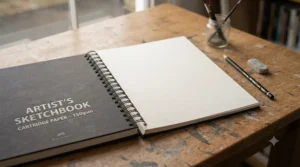
The Artway Studio A4 Spiral Sketchbook offers 48 pages (96 sides) of 170gsm cartridge paper behind a black hardback cover, and it has accumulated a genuinely substantial volume of reviews on Amazon UK — well into the thousands at the time of research, which gives buyers an unusually deep pool of aggregated feedback to draw on. The standout feature is the hardback cover, which protects loose pages inside a school bag far better than a soft-cover pad.
What most buyers overlook about a sketchbook this size is that the hardback cover doubles as a rigid drawing surface when you’re working away from a desk, which matters more for students sketching on location than the paper weight alone. Based on the spec comparison with the premium Winsor & Newton pad above, this model trades a small amount of paper refinement for a noticeably lower price point and tougher day-to-day durability — a sensible trade for coursework use where the book gets thrown in and out of a bag daily. Aggregated review sentiment consistently praises the hardback’s durability and the paper’s suitability for pencil and pen work, with a recurring theme that it performs less well under heavy watercolour washes than dedicated watercolour paper.
Pros:
- ✅ Hardback cover survives daily school bag use
- ✅ High volume of genuine aggregated reviews
- ✅ Budget-friendly without feeling flimsy
Cons:
- ❌ Not suited to heavy watercolour washes
- ❌ Fewer sheets than some competitors at this price
Priced around £6-£10, this is the sensible default for GCSE and A-level students building up a coursework sketchbook.
3. Daler-Rowney Ebony A4 Spiral Sketchbook — best for charcoal and dry media
The Daler-Rowney Ebony A4 Spiral Sketchbook is built around 160gsm acid-free natural white cartridge paper with a smooth surface, spiral bound along the long edge inside a rigid black embossed hardback cover. The standout feature is that smooth surface specifically — Daler-Rowney positions this range explicitly for pencil-to-charcoal work, and the paper’s tooth is calibrated to hold charcoal pigment without the powder simply sitting on top and smudging at the first touch.
Here’s what to weigh: a smoother surface that grips charcoal well tends to show pencil marks slightly differently than a toothier cartridge paper, so if your practice moves between multiple dry media day to day, it’s worth knowing this range leans toward charcoal, graphite and pen rather than heavily textured pastel work. Based on the spec comparison with the Winsor & Newton pad above, this model is marginally lighter at 160gsm but compensates with a smoother finish purpose-built for the exact use case its name suggests. Reviewers consistently note the paper “lays completely flat when drawing,” which lines up with what you’d expect from a well-made spiral construction, alongside occasional feedback that the coil can distort slightly after very heavy long-term use.
Pros:
- ✅ Smooth surface purpose-built for charcoal and graphite
- ✅ Rigid hardback cover adds durability
- ✅ Genuinely lies flat during extended sessions
Cons:
- ❌ Less textured than dedicated pastel papers
- ❌ Coil can loosen slightly after very heavy use
Sitting in the £10-£16 range, this is the pick to reach for if charcoal is your primary medium rather than a secondary one.
4. A4 Hardcover Spiral Sketchbook (200GSM) — best thick paper for mixed media
This A4 Hardcover Spiral Sketchbook packs 40 sheets (80 pages) of notably thick 200gsm paper behind a hardcover, and it has drawn a substantial number of reviews on Amazon UK — comfortably into the thousands at the time of research. The standout feature is straightforward: at 200gsm, this is meaningfully thicker than most of the sketchbooks on this list, which changes what you can do on the page.
On the spec sheet this reads as simply “more paper,” but in practice the extra weight buys genuine resistance to show-through when layering marker, ink wash and light acrylic on the same page — something 160-170gsm papers start to struggle with once you’re two or three media deep. Based on the spec comparison against the Daler-Rowney and Winsor & Newton options above, this is the mixed-media specialist of the group rather than the fine-art purist’s choice; it won’t have quite the same refined tooth for pure graphite work, but it earns its keep the moment you start combining tools. Aggregated feedback consistently highlights the paper’s thickness as the standout selling point, with buyers frequently mentioning it as suitable for both adults and children given its resilience to heavier-handed use.
Pros:
- ✅ 200gsm resists show-through with mixed media
- ✅ Hardcover protects pages during transport
- ✅ Strong value at this paper weight
Cons:
- ❌ Fewer sheets than lighter-weight alternatives
- ❌ Slightly less refined tooth for pure pencil work
At £7-£12, this represents strong value for anyone working across multiple media on the same page.
5. Daler-Rowney Earthbound A4 Spiral Sketchbook — best eco-conscious pick
The Daler-Rowney Earthbound A4 Spiral Sketchbook takes a different angle entirely, offering 80 sheets of 110gsm recycled, lightly textured tan paper in a spiral hardback format. The standout feature is the toned paper itself — rather than stark white, this Earthbound range gives you a warm tan base that’s genuinely useful for building up highlights and shadows in charcoal or chalk without needing to lay down a mid-tone first.
Reviewers consistently note the smooth surface and pleasant handling of the paper, alongside genuine praise for how flat the book lies during use — one aggregated review specifically described the book as lying “completely flat when drawing,” reinforcing that this isn’t just a marketing claim on the packaging. Based on the spec comparison with brighter white papers elsewhere on this list, the trade-off is that 110gsm is lighter than most competitors here, so it suits dry media and light ink work rather than washes. For artists who value recycled materials and a tinted working surface, this is a genuinely distinct option rather than simply a cheaper version of a white sketchbook.
Pros:
- ✅ Toned tan paper ideal for tonal charcoal work
- ✅ Made from recycled materials
- ✅ Reviewers consistently praise how flat it lies
Cons:
- ❌ Lighter 110gsm won’t take heavy washes
- ❌ Coil can shift shape after prolonged heavy use
Priced around £6-£11, this suits artists who want a toned ground built in rather than added separately.
6. Daler-Rowney Graduate A5 Landscape Spiral Sketchbook — best for left-handed artists
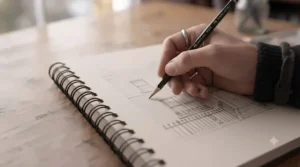
The Daler-Rowney Graduate A5 Landscape Spiral Sketchbook offers 30 pages of 160gsm acid-free cartridge paper in a landscape format, spiral bound along the short top edge rather than the long side edge. The standout feature, and the reason it earns a specific mention here, is exactly that binding position — a landscape pad bound along the top means the coil sits above your working area rather than digging into the side of your drawing hand as you work across the page.
What most buyers overlook about binding orientation is how much it affects left-handed comfort specifically. A conventionally bound A4 portrait spiral sketchbook places the coil down the left edge, which is precisely where a left-handed artist’s hand and wrist rest while drawing, leading to repeated friction against the coil throughout a session. Based on the spec comparison against the portrait-format books above, switching to a top-bound landscape layout like this one sidesteps that problem structurally rather than requiring the artist to adapt their grip. Reviewers consistently note the 160gsm paper handles pencil, pen, chalk and pastel comfortably, with the soft matte cover offering reasonable protection against spills.
Pros:
- ✅ Top-bound coil avoids friction for left-handed artists
- ✅ 160gsm paper suits pencil, pen, chalk and pastel
- ✅ Compact A5 landscape format is easy to carry
Cons:
- ❌ Only 30 pages, fewer than most A4 options here
- ❌ Landscape format isn’t ideal for tall portrait subjects
At £4-£8, this is a small investment for a meaningfully more comfortable drawing experience if you’re left-handed.
7. A5 Spiral Hardcover Sketchbook (160gsm) — best portable option
The A5 Spiral Hardcover Sketchbook packs 60 sheets (120 pages) of 160gsm paper into a genuinely pocketable A5 hardback format, and it has built up a solid base of reviews on Amazon UK, hovering around the 300-review mark at the time of research. The standout feature is sheer page count relative to size — 120 pages in an A5 footprint means this sketchbook will comfortably outlast several months of daily sketching without needing replacing.
On the spec sheet, 160gsm at A5 size reads as a fairly standard mid-weight choice, and in practice that’s exactly what it delivers: solid enough for pencil, ink and light dry media, without the bulk or price of a heavier A4 alternative. Based on the spec comparison with the larger books on this list, the genuine advantage here is portability rather than raw paper performance — this is the sketchbook that actually fits in a bag for daily carry, which matters more for consistency of practice than any single spec on the page. Aggregated feedback is more limited than for the higher-volume products above, so it’s worth treating star ratings here as an early signal rather than a settled verdict, but what’s there points toward solid performance for everyday carry use.
Pros:
- ✅ Generous 120-page count in a compact format
- ✅ Genuinely fits in a bag for daily carry
- ✅ Hardcover protects pages on the move
Cons:
- ❌ Smaller working area than A4 alternatives
- ❌ Review volume is smaller than best-selling A4 options
At £5-£9, this is the pick for artists who sketch on commutes, in cafés, or anywhere an A4 pad simply won’t fit.
Practical Usage Guide: Getting the Most From a Spiral Sketchbook
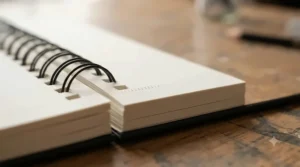
A new spiral sketchbook benefits from a little preparation before the first proper drawing session. Start by flexing the coil gently along its length — this loosens it slightly and helps the book lie flatter from day one rather than fighting a tightly-wound spine for the first few pages. If your sketchbook has micro-perforated sheets, resist tearing pages out until you’re confident in the piece; perforated edges are genuinely convenient but a torn-out page can’t easily go back in if you change your mind mid-session.
Common mistakes in the first weeks of use include starting straight in with wet media on a sketchbook not rated for it (check the gsm and any watercolour-specific labelling before reaching for a wash), storing the book flat under heavy items which can bend the coil out of shape, and ignoring the front and back covers as usable drawing space, which on a hardback book like the Artway or Daler-Rowney options can double as a sturdy lap surface. For maintenance, keep the sketchbook in a bag pocket rather than loose to avoid corner damage, and if the coil ever starts to loosen, a firm squeeze along its length at the affected point will usually re-seat it without needing to replace the whole book.
Real-World Scenarios: Which Sketchbook Fits Your Situation
Picture a GCSE art student building a coursework portfolio who needs something durable enough for a school bag, affordable enough to buy several across a two-year course, and versatile enough for pencil, pen and light collage work. The Artway Studio A4 Spiral Sketchbook suits this profile precisely, with its hardback cover and high review volume offering reassurance that it holds up to daily classroom use.
Now picture a charcoal-focused fine artist working on tonal studies at home, prioritising a surface that holds pigment cleanly without smudging on contact. Here the Daler-Rowney Ebony A4 Spiral Sketchbook is the obvious fit, given its smooth surface is explicitly calibrated for exactly this kind of dry media work.
Finally, picture a left-handed hobbyist artist who has always found spiral sketchbooks slightly uncomfortable without quite knowing why. This is exactly the gap the Daler-Rowney Graduate A5 Landscape Spiral Sketchbook fills — the top-bound coil removes the friction against the drawing hand that a standard side-bound A4 pad creates, often making a genuinely noticeable difference within the first sketching session.
Buyer’s Decision Framework
If lay-flat performance during long sessions matters most, choose the Winsor & Newton A4 Spiral Sketchbook, because its 170gsm paper and construction are specifically built around that use case. If you’re a student needing durability on a budget, choose the Artway Studio A4 Spiral Sketchbook, given its combination of hardback protection and low price. If charcoal is your primary medium, choose the Daler-Rowney Ebony A4 Spiral Sketchbook, since its surface is purpose-calibrated for dry pigment. If you’re left-handed and have struggled with standard spiral pads, choose a top-bound landscape option like the Daler-Rowney Graduate A5 Landscape Spiral Sketchbook, because binding position solves the underlying comfort problem structurally rather than requiring you to adapt.
How to Choose the Best Spiral Sketchbook
- Match paper weight to your medium. Lighter papers around 110-160gsm suit pencil and ink; 170gsm and above copes better with light washes and mixed media.
- Check the binding position, not just the binding type. Portrait spiral binds down the side; landscape spiral binds along the top, which matters significantly for left-handed comfort.
- Consider hardback versus soft cover. Hardback adds protection and a rigid drawing surface for working on location; soft cover saves weight and cost.
- Look at page count against price. A cheaper book with fewer sheets can cost more per page than a pricier one with double the sheet count.
- Check for micro-perforation if you plan to remove pages. Not all spiral sketchbooks are designed for clean tear-out.
- Read aggregated review themes around the coil, not just star averages. Recurring complaints about coil distortion under heavy use tell you more than an average star rating alone.
- Think about size against how you’ll actually use it. A4 suits studio and desk work; A5 suits daily carry and location sketching.
Common Mistakes When Buying a Spiral Sketchbook
The most common mistake is buying purely on paper weight without checking surface texture — a heavy 200gsm paper with a very smooth finish won’t necessarily outperform a lighter 160gsm paper with more tooth if your medium is graphite or charcoal. The second is overlooking binding orientation entirely; most buyers don’t realise a landscape-format spiral pad binds along a different edge until they’re already mid-drawing and the coil is pressing into their hand. The third is assuming all spiral sketchbooks are interchangeable for wet media — many, including several on this list, are explicitly designed for dry and light-wash use only, and pushing them into full watercolour territory typically causes cockling and show-through.
Spiral vs Perfect Bound Sketchbook
This is genuinely the central question underneath most of the secondary interest in this topic, and it comes down to a straightforward trade-off between flexibility and permanence.
| Factor | Spiral Bound | Perfect Bound |
|---|---|---|
| Lies flat when open | Yes, fully | No, spine resists |
| Page removal | Clean if perforated | Difficult, damages spine |
| Rotates 360° | Yes | No |
| Spine appearance | Coil visible | Printable flat spine |
| Best for | Active sketching sessions | Presentation, cohesive portfolios |
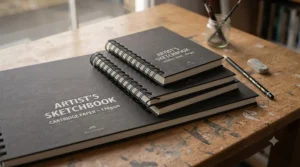
Spiral-bound books can open fully flat on a desk and rotate a full 360 degrees, which is precisely the mechanical reason spiral sketchbooks outperform perfect-bound alternatives during active drawing sessions. You can read more detail on how coil binding actually works if you want the full mechanical breakdown. Perfect binding, by contrast, uses glue along a flat spine, which gives a neater, more book-like appearance ideal for a finished portfolio piece but actively works against you mid-sketch, since the pages want to spring back toward the centre. If you’re choosing purely for the act of drawing, spiral wins on function; if you’re assembling a final presentation piece for others to view, perfect binding often looks more professional on a shelf.
What to Expect: Real-World Performance
On paper, most spiral sketchbooks in this price bracket look broadly similar — cartridge paper, a coil, a cover. In practice, the differences show up within the first few sessions. Heavier 170-200gsm papers like the Winsor & Newton and thick 200GSM options resist buckling almost immediately, even under a light wash. Lighter 110-160gsm papers handle dry media beautifully but will visibly cockle if pushed into wet techniques they weren’t designed for — this isn’t a fault, simply a mismatch between medium and product. Hardback books like the Artway and Daler-Rowney Ebony options genuinely change how usable a sketchbook is away from a desk, since the rigid cover means you’re never searching for a firm surface to lean on.
Spiral Sketchbooks for Students
Sketchbooks remain a core part of formal art assessment in the UK, which is worth knowing if you’re buying for GCSE or A-level coursework rather than personal use. Exam boards explicitly list sketchbooks and visual diaries as acceptable formats for portfolio evidence, alongside mounted studies and design sheets. You can see this reflected directly in AQA’s GCSE Art and Design specification, which names sketchbooks specifically as a valid presentation format for coursework portfolios. For students specifically, durability under daily transport tends to matter more than premium paper refinement, which is exactly why hardback options like the Artway Studio A4 Spiral Sketchbook consistently perform well for this use case — the cover survives a school bag in a way soft-cover pads simply don’t.
Lay-Flat Binding: Why It Actually Matters
It’s easy to dismiss “lays flat” as marketing filler, but the practical benefit is real and specific: when a sketchbook won’t stay open on its own, you either need a free hand to hold it down or you end up drawing on a page that’s subtly curving away from your pencil, distorting proportions without you noticing in the moment. Spiral binding solves this mechanically rather than through padding or weight — the coil allows genuine 360-degree rotation, meaning you can fold the book fully back on itself for a smaller, sturdier working surface, something no perfect-bound book can safely do without cracking its spine.
For anyone sketching outdoors, on a train, or standing at an easel without a table to brace the book against, this single feature is arguably more important than paper weight or brand reputation. It’s also worth being aware of sourcing when comparing books: several ranges reviewed here, including Daler-Rowney’s, use FSC-certified paper, meaning the material is traceable back to responsibly managed forests. You can check the Forest Stewardship Council’s explanation of what FSC certification actually verifies if sustainable sourcing factors into your buying decision.
✨ Don’t Miss These Exclusive Deals!
🔍 Take your sketching practice to the next level with these carefully selected sketchbooks. Click on any highlighted item to check current pricing and availability. The right spiral sketchbook will help you build a genuinely enjoyable, consistent drawing habit!
Frequently Asked Questions
❓ What is the best spiral sketchbook for beginners?
❓ Is spiral binding better than perfect binding for sketching?
❓ What paper weight is best for charcoal in a spiral sketchbook?
❓ Are spiral sketchbooks good for left-handed artists?
❓ Can I use a spiral sketchbook for watercolour?
Conclusion
There’s no single best spiral sketchbook, and any list claiming otherwise is glossing over how differently a charcoal artist, a GCSE student and a left-handed hobbyist actually use theirs. What the research does make clear is that paper weight, binding orientation and cover type matter far more to real-world performance than brand name alone. Budget-conscious students are well served by the Artway Studio A4 Spiral Sketchbook, charcoal specialists should look toward the Daler-Rowney Ebony A4 Spiral Sketchbook, and left-handed artists who’ve never quite worked out why spiral pads felt awkward should genuinely try the Daler-Rowney Graduate A5 Landscape Spiral Sketchbook before assuming spiral binding just isn’t for them. Whichever you choose, the core appeal of spiral binding — a book that stays open and behaves itself while you work — is worth prioritising over paper refinement alone if you sketch anywhere other than a perfectly flat desk.
Recommended for You
- Best Hardback Sketchbook 2026: 7 Picks Tested by Spec
- Best A5 Sketchbook: 7 Top Picks for Artists Reviewed 2026
- Best A4 Sketchbook 2026: 7 Top Picks & Paper Guide
Disclaimer: This article contains affiliate links. As an Amazon Associate, I earn from qualifying purchases. If you purchase products through these links, we may earn a small commission at no additional cost to you.
✨ Found this helpful? Share it with your friends! 💬🤗
