
In This Article
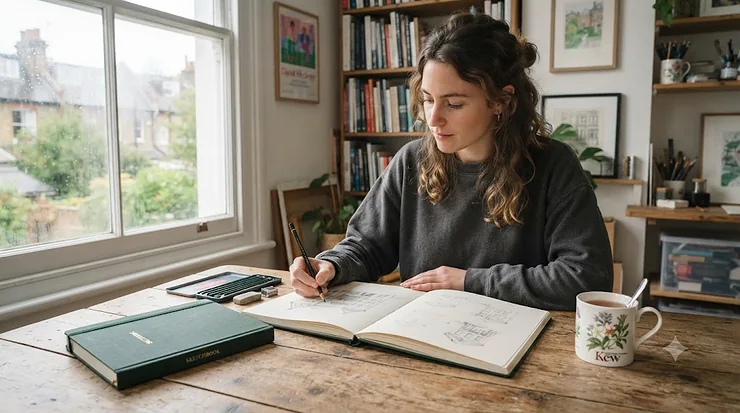
Somewhere between the biro-chewed spiral pad you had at school and the leather-bound diary your gran gave you sits the hardback sketchbook — and honestly, it’s one of those bits of stationery that punches way above its price tag. Pick the wrong one and you’ll spend more time fighting ghosting ink and buckling pages than actually drawing. Pick the right one and it becomes the thing you reach for without thinking, the book that ends up battered, coffee-ringed and full of your best work.’
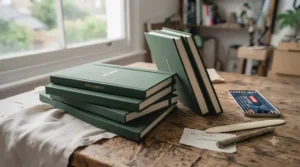
A hardback sketchbook, in the simplest terms, is a bound drawing book with a rigid, protective cover rather than a soft or spiral one — as Wikipedia’s entry on sketchbooks puts it, artists have used bound blank-page books as part of their creative process for centuries, and the format persists precisely because it protects work and travels well — built to survive being lobbed into a rucksack, a handbag, or the glovebox of a car. That rigidity matters more than it sounds like it should: it stops pages creasing, gives you a firm surface to draw on when there’s no table nearby, and keeps your sketches looking presentable if you’re the sort of person who likes to show people your work (or sell it).
This guide walks through seven genuinely available hardback sketchbooks on amazon.co.uk, from budget-friendly British-made options through to premium German paper that fountain pen users tend to go misty-eyed over. We’ll dig into paper weight, binding style, aggregated review sentiment, and — because “which sketchbook” questions always end up here — how a hardback sketchbook actually holds up against spiral-bound and softcover rivals. Whether you’re commuting with one in a coat pocket or filling one cover-to-cover at a life drawing class, there’s a sensible option below.
Quick Comparison Table
| Sketchbook | Paper Weight | Best For | Price Range |
|---|---|---|---|
| Leuchtturm1917 Sketchbook | 150gsm | Fountain pen & ink | £20-£30 |
| Hahnemühle Nostalgie Sketchbook | 190gsm | Detail work, thick paper | £10-£20 |
| Moleskine Classic Art Sketchbook | 165gsm | Everyday, travel-friendly | £15-£25 |
| Seawhite of Brighton Hardback Sketchbook | 140gsm | Travel & mixed media | Under £15 |
| Strathmore 400 Series Hardbound Sketchbook | 89gsm | Dry media (pencil/charcoal) | £10-£20 |
| Daler-Rowney Ebony Hardback Sketchbook | 160gsm | Value & watercolour washes | Under £15 |
| Artgecko Hardback Sketchbook | 150-200gsm | Budget & sustainability | Under £10 |
Looking at the spread above, the split really comes down to paper weight versus binding. The Hahnemühle Nostalgie Sketchbook and Leuchtturm1917 Sketchbook sit at the thicker, ink-safer end, which is exactly why they dominate fountain pen recommendations. Budget hunters gravitate toward the Artgecko Hardback Sketchbook and Daler-Rowney Ebony Hardback Sketchbook, both of which undercut the premium names without sacrificing a rigid cover. If you’re after raw page count for the money, the Strathmore 400 Series Hardbound Sketchbook‘s 192 pages is hard to beat, even if its lighter paper limits it to dry media.
💬 Just one click — help others make better buying decisions too!😊
Top 7 Hardback Sketchbooks: Expert Analysis
Picking a sketchbook off a shelf is one thing; understanding why it behaves the way it does under your pencil is another. Below are seven real, currently available hardback sketchbooks, covering budget, mid-range and premium price points, drawn from genuine product specifications and aggregated customer sentiment rather than marketing copy.
1. Leuchtturm1917 Sketchbook — best for fountain pen and ink work
The standout here is the 150gsm “inkproof” paper, and it’s not just a marketing label — this weight is specifically engineered to stop dark, wet ink bleeding through to the next page. For a fountain pen user, that single spec is the difference between a usable sketchbook and a frustrating one.
Beyond the paper, the Leuchtturm1917 Sketchbook ships with two ribbon page markers, a gusseted pocket on the inside back cover for loose reference material, and a set of self-adhesive labels for indexing the spine — small details, but ones that add up when you’re managing a shelf of finished books. It comes in four formats (Medium A5, Master A4+, Medium Landscape and Square), all built on FSC-certified “MIX” paper.
Based on the spec comparison, this is the pick for anyone whose primary tool is a pen rather than a pencil or brush: illustrators doing linework, urban sketchers working in fineliner, journal-style artists mixing writing and drawing. What most buyers overlook is that the smoother surface, which makes ink glide so cleanly, is slightly less forgiving for heavy graphite or pastel work, where a bit of tooth helps pigment grip the page.
Aggregated reviewer sentiment on the paper is consistently strong for ink-based media, with the format range (particularly the square and landscape options) frequently singled out as unusual and useful for sketchers who don’t want a standard portrait book.
Pros:
- ✅ Inkproof 150gsm paper resists bleed and ghosting
- ✅ Two ribbon markers plus indexing labels for organisation
- ✅ Available in four formats including square and landscape
Cons:
- ❌ Sits at the premium end of the price range
- ❌ Smooth surface less forgiving for heavy charcoal or pastel work
The Leuchtturm1917 Sketchbook typically sits in the £20-£30 range depending on format and colourway — check current price, as stock and colour availability shift often. For anyone whose sketchbook doubles as a bullet journal or ink-heavy travel diary, it’s worth the premium.
2. Hahnemühle Nostalgie Sketchbook — thickest paper for detail work
At 190gsm, the Hahnemühle Nostalgie Sketchbook carries the heaviest paper on this list by a comfortable margin, and it shows in how it behaves under fine work. The natural white, smooth-but-textured surface is designed for clearly defined hatching and pen work as well as gradients of colour, which is a fairly technical way of saying it copes well with both precise linework and softer shading.
Hahnemühle has been producing paper in Germany since 1584, and the Nostalgie range leans on that manufacturing pedigree — thread-stitched binding for durability and flatness across the spread, an anthracite linen-textured hardback cover, and acid-free construction throughout. It’s available in A6, A5 and A4, in both portrait and landscape.
Here’s what to weigh: the page count (80 pages/40 sheets in most formats) is lower than several rivals here, so per-page cost runs higher. But reviewers using it with fountain pens report zero bleed-through and minimal ghosting, even with wet, dark inks — a genuinely useful data point if you’ve been burned by thinner paper before. Architectural sketchers and those working in fine liner or coloured pencil tend to rate it particularly highly for the smooth, defined mark-making it allows.
Pros:
- ✅ Heavyweight 190gsm paper — the thickest on this list
- ✅ Reviewers report zero bleed-through with fountain pen ink
- ✅ Thread-stitched binding lies flat across the spread
Cons:
- ❌ Lower page count (around 80 pages) than several rivals
- ❌ Higher price per page than budget alternatives
Expect the Hahnemühle Nostalgie Sketchbook to sit in the £10-£20 range depending on size — smaller A6 versions come in noticeably cheaper than A4. Given the paper quality, it represents strong value for detail-focused artists despite the lower sheet count.
3. Moleskine Classic Art Sketchbook — best all-rounder for everyday sketching
The Moleskine Classic Art Sketchbook is the name most non-artists have actually heard of, and there’s a reason it’s become shorthand for “sketchbook” in the same way Hoover became shorthand for vacuum cleaner. The 165gsm acid-free ivory paper is genuinely heavy enough for pencil, charcoal, fineliner and light watercolour washes, without straying into specialist watercolour-block territory.
What tends to get missed in reviews focused purely on the notebook line is that the Art Collection sketchbooks share the same build quality as Moleskine’s famous planners: thread-bound construction, rounded corners, an elastic closure band, a ribbon bookmark, and an expandable inner pocket for loose sketches or reference photos. It’s FSC certified, and comes in a genuinely wide range of sizes from pocket up to A3.
Reviewers consistently note the sturdy cover as one of the strongest selling points — several describe it as stopping any real damage to the pages inside even after being carried loose in a bag for months. The elastic closure gets particular praise for keeping the book shut during travel, though a handful of reviewers mention adding their own extra band for rougher trips. On the flip side, some report bleed-through with heavier ink work, which tracks with the mid-weight paper — it’s built for versatility across media rather than optimised purely for wet or ink-based work the way the Hahnemühle Nostalgie Sketchbook or Leuchtturm1917 Sketchbook are.
Pros:
- ✅ Elastic closure keeps pages protected on the move
- ✅ Thick acid-free paper handles pencil, ink and light washes
- ✅ Expandable back pocket for loose sketches and references
Cons:
- ❌ Some reviewers report bleed-through with wet or heavy ink
- ❌ Premium pricing versus own-brand alternatives
Prices for the Moleskine Classic Art Sketchbook generally fall in the £15-£25 range, depending on size and whether it’s on promotion — always check current price rather than relying on RRP. As an all-rounder that handles most media reasonably well without excelling narrowly at one, it’s a sensible default pick, especially for anyone still working out what kind of artist they are.
4. Seawhite of Brighton Hardback Sketchbook — best British-made travel companion
If portability and heritage manufacturing matter to you, the Seawhite of Brighton Hardback Sketchbook is worth a proper look. Seawhite has been producing paper products in Britain for more than fifty years, and this range is case-bound with a traditional black cloth cover over 140gsm all-media cartridge paper, acid-free and specifically sized for extra wet strength.
The standout practical feature is the size range: A6 through to A3, in both portrait and landscape, which is unusually broad for a single product line. That makes it easy to find a genuinely pocketable option for travel sketching, or scale up to A3 for studio work, without switching brands entirely.
Based on the spec comparison, the extra wet-strength sizing is what separates this from a basic cartridge pad — it’s designed to cope with graphite, charcoal, pastels, fineliner and light watercolour washes without feathering, though reviewers are honest that heavier washes can still cause some warping (a common limitation for cartridge-weight paper generally, rather than a specific flaw in this range). One long-term user with several Seawhite books noted the finish works consistently well across different media, with less bleed and warping than comparable case-bound sketchbooks they’d tried.
Pros:
- ✅ British-made with over 50 years of manufacturing heritage
- ✅ 140gsm cartridge paper sized for wet strength
- ✅ Wide size range from A6 to A3, portrait and landscape
Cons:
- ❌ Some warping reported under heavy watercolour washes
- ❌ Sold through multiple third-party Amazon sellers with variable stock
The Seawhite of Brighton Hardback Sketchbook typically comes in under £15 for A4 and A5 sizes, making it one of the stronger value picks here — reviewers frequently flag it as good value for the paper quality on offer. For a travel-friendly, distinctly British option that won’t break the bank, it’s a strong contender.
5. Strathmore 400 Series Hardbound Sketchbook — best sewn binding for dry media
The Strathmore 400 Series Hardbound Sketchbook takes a different approach to durability: rather than leaning on paper weight alone, it uses Smyth-sewn binding, a method that allows the book to lie flatter over time as the spine relaxes, rather than cracking or splitting the way glued bindings sometimes do.
Strathmore’s reputation goes back to 1899, and the 400 Series specifically is aimed at students and working artists who want a dependable, general-purpose surface for practice and quick studies. The fine-tooth 89gsm paper is intended for graphite, charcoal, coloured pencil and soft or oil pastel — dry media, essentially, rather than wet washes. At 192 pages per book, it offers one of the highest page counts on this list, which matters if you’re the sort of artist who fills a sketchbook fast.
Reviewers are broadly positive on the paper’s smoothness and versatility for eraser-heavy practice work, though it’s worth noting at least one reviewer reported a spine failure shortly after purchase — Strathmore’s customer service reportedly replaced the item, but it’s a fair data point on quality consistency to weigh against the otherwise strong binding reputation. What the spec sheet won’t tell you, but reviewers note, is that the lighter paper weight means it isn’t the book to reach for if watercolour or ink washes are part of your regular practice.
Pros:
- ✅ Smyth-sewn binding allows pages to lie flatter over time
- ✅ 192 pages — among the highest page counts on this list
- ✅ Trusted brand with a manufacturing history dating to 1899
Cons:
- ❌ At least one reviewer reported an early spine failure
- ❌ Lighter 89gsm paper isn’t built for heavy wet media
Pricing for the Strathmore 400 Series Hardbound Sketchbook generally sits in the £10-£20 range depending on size. Given the page count, the cost-per-sheet works out competitively, particularly for students who burn through sketchbooks quickly with graphite and charcoal practice.
6. Daler-Rowney Ebony Hardback Sketchbook — best value UK-made durability pick
British-made and rigidly built, the Daler-Rowney Ebony Hardback Sketchbook uses 160gsm lightly textured, acid-free cartridge paper under a genuinely stiff hardback cover — reviewers repeatedly single out the cover’s rigidity as a strength, noting the pages stay flat across a spread, which makes cross-page sketches easier to manage than in some softer-cover rivals.
Daler-Rowney also offers the budget-tier Simply range alongside the Ebony line, using a lighter 100gsm paper aimed squarely at beginners and hobbyists who want a low-cost entry point without an unusable surface. The Ebony hardback sits above that as the more serious option, suitable for pencil, charcoal, pen and ink, and light watercolour.
Here’s what to weigh: one reviewer specifically praised how the paper takes watercolour with minimal wrinkling, which is a solid result for a 160gsm cartridge weight rather than a dedicated watercolour block. On the other hand, the surface texture that helps with pencil work is described by some as feeling “scratchy” with fine, fountain, or ballpoint pens — a reasonable trade-off given the paper is optimised more broadly rather than for one specific medium.
Pros:
- ✅ Made in the UK with a rigid, embossed hardback cover
- ✅ 160gsm paper takes light watercolour washes with minimal wrinkling
- ✅ Budget-friendly Simply range available for beginners
Cons:
- ❌ Textured surface can feel scratchy with fine-tip or fountain pens
- ❌ Entry-level Simply paper (100gsm) is too thin for wet media
The Daler-Rowney Ebony Hardback Sketchbook generally comes in under £15, with the Simply range often available for even less — check current price, as Daler-Rowney frequently runs promotional pricing on both lines. For UK-made durability at a genuinely accessible price, it’s one of the better-value options in this guide.
7. Artgecko Hardback Sketchbook — best budget sustainable choice
Made in Yorkshire and FSC-certified throughout, the Artgecko Hardback Sketchbook range is built around twin-wire binding paired with sturdy, wipeable “soft-touch” laminated hardback covers front and back — a slightly different construction to the fully case-bound spines of the Moleskine Classic Art Sketchbook or Seawhite of Brighton Hardback Sketchbook, but one that lets the book lie genuinely flat while working, which some artists actually prefer.
The range spans paper weights from 150gsm cartridge through to 200gsm toned card and 300gsm watercolour-ready stock, all acid-free and sourced from sustainable forests, giving buyers a reasonable amount of choice depending on the medium they favour. As a small British business supported through Amazon’s small business programme, it also appeals to buyers who want to support UK manufacturing directly.
Aggregated review sentiment (including a strong Trustpilot presence outside Amazon) is largely positive, with long-term users describing the paper as smooth and versatile across ink, pencil and blending work. That said, a handful of reviewers note that fine-liner ink can show through on the thinner 150gsm lines, which lines up with what you’d expect from a lighter cartridge paper.
Pros:
- ✅ FSC-certified and made in Britain (Yorkshire)
- ✅ Wipeable, soft-touch laminated hardback covers
- ✅ Wide range of paper weights from 150gsm to 300gsm
Cons:
- ❌ Twin-wire binding rather than a fully case-bound spine
- ❌ Fine-liner ink can show through on thinner 150gsm pages
The Artgecko Hardback Sketchbook is one of the cheapest genuinely hardback options here, generally under £10, making it a sensible starting point for students, beginners, or anyone testing the waters before investing in a premium book like the Hahnemühle Nostalgie Sketchbook.
Setting Up Your New Sketchbook: A Practical Usage Guide
Getting a new hardback sketchbook home is only step one — how you treat the first few pages genuinely affects how the whole book performs. Before you dive in, flex the spine gently by opening it flat at a few points along its length, rather than immediately forcing it open at page one; this reduces the risk of cracking the binding on case-bound books like the Moleskine Classic Art Sketchbook or Seawhite of Brighton Hardback Sketchbook.
If your book has an elastic closure, resist overstuffing the inner pocket in the first week — a bulging pocket puts constant strain on the spine and cover hinge over time. For thread-bound or Smyth-sewn books such as the Leuchtturm1917 Sketchbook or Strathmore 400 Series Hardbound Sketchbook, the binding actually improves with gentle use as it relaxes, so don’t be alarmed if the first few pages feel stiffer to turn than later ones.
A common first-30-days mistake is testing every medium you own on page one without checking how the paper responds first — do a quick swatch test on the very last page instead, since most sketchbooks are symmetrical enough that the back page won’t be missed if wet media buckles it. For wet media in cartridge-weight books like the Daler-Rowney Ebony Hardback Sketchbook or Artgecko Hardback Sketchbook, taping the edges down or using a light wash rather than a saturated one will noticeably reduce warping. Finally, date your sketchbooks as you finish them — it sounds obvious, but it’s the single most useful habit for tracking your own progress over months and years.
Real-World Scenarios: Matching the Sketchbook to the Sketcher
The daily commuter. If you’re sketching on trains or in cafés between meetings, portability and a closure mechanism matter more than sheer paper thickness. The Moleskine Classic Art Sketchbook in pocket or large size, or the smaller A6 Seawhite of Brighton Hardback Sketchbook, both fit easily into a bag without adding meaningful weight, and the elastic closure on the Moleskine specifically stops loose pages catching on other bag contents.
The fountain pen journaler. For anyone whose sketchbook doubles as a written journal with the odd illustration, ink performance trumps everything else. Between the Leuchtturm1917 Sketchbook‘s inkproof 150gsm paper and the Hahnemühle Nostalgie Sketchbook‘s 190gsm smooth surface, both consistently earn praise from fountain pen users for resisting bleed-through — the choice largely comes down to whether you prefer Leuchtturm’s organisational extras or Hahnemühle’s slightly heavier paper.
The budget-conscious art student. Working through multiple sketchbooks a term on a limited budget calls for value over prestige. The Artgecko Hardback Sketchbook and Daler-Rowney Ebony Hardback Sketchbook both undercut £15 while still offering a genuine hardback cover, and the Strathmore 400 Series Hardbound Sketchbook‘s 192-page count stretches further per pound spent on dry media practice.
How to Choose the Best Hardback Sketchbook
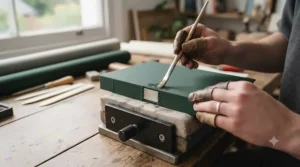
What is a hardback sketchbook? It’s a bound drawing book with a rigid front and back cover, designed to protect pages from bending and provide a firm surface for sketching without a table — as opposed to softcover or spiral-bound alternatives, which prioritise flexibility over protection.
Choosing between the seven options above comes down to a handful of practical questions:
- Identify your primary medium first. Ink and fountain pen work needs 150gsm-plus “inkproof” or smooth paper; dry media like charcoal and pastel benefits more from tooth than raw thickness.
- Decide how portable it needs to be. A6 and A5 formats suit travel and commuting; A4 and A3 make more sense for studio or classroom use where the book stays put.
- Check the binding type. Case-bound and thread-sewn books (Moleskine, Seawhite, Leuchtturm, Hahnemühle, Strathmore) tend to feel more premium and durable long-term; twin-wire bound hardbacks (Artgecko) lie flatter while working.
- Match paper weight to wet media tolerance. Anything under 150gsm will likely buckle under a genuine watercolour wash — 190gsm or a dedicated watercolour block is the safer choice for wash-heavy work.
- Factor in page count versus price. A 192-page book at a similar price to an 80-page one works out significantly cheaper per sheet, which matters if you sketch daily.
- Consider closure and protection features. Elastic bands, ribbon markers and gusseted pockets aren’t essential, but they meaningfully reduce day-to-day wear if the book travels with you.
- Weigh sourcing and sustainability if it matters to you. FSC certification appears across most of the brands here, but British-made options like Seawhite, Daler-Rowney and Artgecko carry it alongside a shorter supply chain.
Hardback Sketchbook Thick Paper: Why GSM Actually Matters
GSM — grams per square metre — is the standard way paper weight is measured, and it’s the single most useful spec on any sketchbook listing. Paper quality varies by both weight and surface texture (often called “tooth”), and different combinations naturally suit different media better than others, from dry pencil work through to wet watercolour techniques.
In practice, that plays out clearly across this list. The 89gsm Strathmore 400 Series Hardbound Sketchbook is genuinely lovely for graphite and charcoal but will cockle under a wet wash. The 140-165gsm mid-tier — Seawhite of Brighton Hardback Sketchbook, Moleskine Classic Art Sketchbook, Daler-Rowney Ebony Hardback Sketchbook — copes with light watercolour and ink reasonably well but isn’t built for saturated washes. At 190gsm, the Hahnemühle Nostalgie Sketchbook is thick enough to handle most dry and ink media confidently, though even that falls short of dedicated 300gsm watercolour paper for genuinely wet techniques. What most buyers overlook is that “thick paper” claims on generic listings often don’t specify GSM at all — always check the actual number rather than trusting adjectives like “heavyweight” on their own.
Moleskine vs Leuchtturm Sketchbook Comparison
These two names come up in almost every “which sketchbook” conversation, and for good reason — they’re the two most recognisable premium hardback brands on Amazon UK, but they’re built for slightly different priorities.
| Feature | Moleskine Classic Art Sketchbook | Leuchtturm1917 Sketchbook |
|---|---|---|
| Paper weight | 165gsm ivory | 150gsm white, inkproof |
| Binding | Thread-bound, elastic closure | Thread-bound, 2 ribbon markers |
| Extra features | Expandable pocket, rounded corners | Gusseted pocket, indexing labels |
| Best For | All-round everyday sketching | Fountain pen and ink work |
The core difference is purpose. Moleskine’s ivory paper and rounded, elastic-closed cover lean toward an all-purpose, well-rounded sketching companion that handles pencil, light ink and the odd wash competently. Leuchtturm1917’s paper is explicitly engineered to be inkproof, and the organisational extras — the indexing labels and second ribbon marker in particular — suggest a brand thinking about long-term archiving rather than single-session sketching. If ink is your primary medium, Reviewers consistently note the Leuchtturm’s paper resists ghosting better; if you want one book that handles everything reasonably, the Moleskine edges ahead on versatility.
Best Hardback Sketchbook for Fountain Pen Users
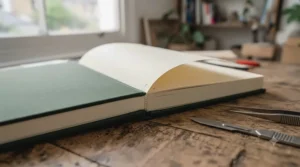
Fountain pen ink is unforgiving on the wrong paper — it feathers, bleeds through, or simply refuses to dry cleanly on anything too absorbent or too thin. Based on the spec comparison and aggregated review sentiment across this guide, two books stand out clearly: the Leuchtturm1917 Sketchbook, whose 150gsm paper is explicitly marketed and reviewed as inkproof, and the Hahnemühle Nostalgie Sketchbook, whose 190gsm smooth surface reviewers describe as handling fountain pen ink with zero bleed-through even with dye-based inks.
The Moleskine Classic Art Sketchbook‘s ivory paper is also fountain-pen-friendly for lighter inks, though its slightly more textured surface means some reviewers report occasional bleed with heavier, wetter nibs. Worth remembering: nib width and ink formulation both affect real-world results as much as the paper itself, so no single review perfectly predicts how your own pen will behave — University of the Arts London’s guide to sketchbook practice is a useful reminder that a sketchbook is ultimately a personal tool, worth testing hands-on wherever possible before committing to a full book.
Hardback Sketchbook Durability Test: What the Specs and Reviewers Actually Reveal
“Durability test” searches usually want to know one thing: will this survive being carried around and used regularly without falling apart? Rather than fabricate a lab test, here’s what genuine spec sheets and aggregated review data tell us across all seven books.
Binding method is the clearest predictor. Thread-sewn and Smyth-sewn construction — used in the Leuchtturm1917 Sketchbook, Hahnemühle Nostalgie Sketchbook, Moleskine Classic Art Sketchbook and Strathmore 400 Series Hardbound Sketchbook — is generally more resistant to pages coming loose over time than glued or perfect-bound construction, though the Strathmore’s one reported spine failure shows even sewn bindings aren’t immune to manufacturing inconsistency. Cover rigidity is the second factor: reviewers of the Daler-Rowney Ebony Hardback Sketchbook specifically praise its “good stiff cover” for protecting pages, while the Seawhite of Brighton Hardback Sketchbook‘s cloth-bound cover is described by long-term users as holding up well across multiple books.
Twin-wire bound hardbacks like the Artgecko Hardback Sketchbook trade some long-term spine durability for the practical benefit of lying completely flat while working — a genuine trade-off rather than a flaw, and one that matters more or less depending on whether you sketch at a desk or on your knee.
Common Mistakes When Buying a Hardback Sketchbook
The most frequent mistake is buying on cover aesthetics alone — a beautiful cloth or leatherette cover says nothing about the GSM or tooth of the paper inside, and paper is what actually determines whether the book suits your medium. A close second is ignoring page count relative to price: an 80-page premium book and a 192-page mid-range book can cost similarly, but work out very differently per sketch. Buyers also frequently overlook binding type, assuming all hardbacks behave the same, when in practice a case-bound spine and a twin-wire spine handle differently under daily use. Finally, don’t assume “acid-free” alone means archival quality — it’s a baseline most decent sketchbooks meet, not a differentiator on its own.
Long-Term Cost & Maintenance
Cost-per-page is the most useful long-term value metric here. The 192-page Strathmore 400 Series Hardbound Sketchbook and the higher page-count Seawhite and Daler-Rowney options generally offer the lowest cost-per-sheet, particularly useful for students filling books quickly. Premium options like the Hahnemühle Nostalgie Sketchbook cost more per page but reduce wasted pages from bleed-through or feathering, which arguably evens out the total cost of ownership for ink-heavy practices. Maintenance is minimal across the board — store sketchbooks flat or upright rather than stacked with heavy items on top, keep them away from damp, and if using an elastic closure, avoid leaving it stretched around a book that’s less than half full for extended periods, as this can warp the cover over time.
Features That Actually Matter (And Those That Don’t)
GSM, binding type and acid-free construction genuinely affect how a sketchbook performs — these are worth prioritising. Ribbon markers, indexing labels and inner pockets are genuinely useful quality-of-life features but shouldn’t be dealbreakers on their own. Cover colour, embossed branding and “designer” packaging, on the other hand, add nothing to how the book functions and are largely marketing dressing — the Artgecko Hardback Sketchbook‘s plainer presentation performs just as reliably as pricier alternatives for equivalent paper specs.
Safety, Sourcing & Sustainability
Most books in this guide carry FSC (Forest Stewardship Council) certification, meaning the paper comes from responsibly managed forests — this applies to the Leuchtturm1917 Sketchbook, Moleskine Classic Art Sketchbook, and Artgecko Hardback Sketchbook among others. For anyone storing finished sketchbooks long-term, The National Archives’ guidance on caring for archives is a genuinely useful reference on keeping paper-based work away from damp, direct sunlight and temperature swings — the same principles that protect government records apply just as well to a shelf of filled sketchbooks.
✨ Don’t Miss These Exclusive Deals!
🔍 Ready to Start Your Next Sketchbook? Take your sketching practice to the next level with one of the carefully researched picks above. Click on any highlighted sketchbook to check current pricing and availability, and find the perfect match for the artwork you actually want to create!
FAQ
❓ What GSM is best for a hardback sketchbook?
❓ Is Moleskine or Leuchtturm better for sketching?
❓ Do hardback sketchbooks lie flat?
❓ What's the difference between cartridge paper and sketch paper?
❓ Are hardback sketchbooks good for travel?
Conclusion
There’s no single “best” hardback sketchbook — only the best one for what you’re actually drawing and how you carry it. Fountain pen users and ink-heavy journalers should look hard at the Leuchtturm1917 Sketchbook or Hahnemühle Nostalgie Sketchbook; everyday sketchers wanting one dependable all-rounder will likely be happiest with the Moleskine Classic Art Sketchbook; and anyone watching their budget without wanting to compromise on a genuine hardback cover should start with the Artgecko Hardback Sketchbook or Daler-Rowney Ebony Hardback Sketchbook. Travellers and British-brand loyalists have a strong option in the Seawhite of Brighton Hardback Sketchbook, while dry-media artists filling books quickly will get the most mileage from the Strathmore 400 Series Hardbound Sketchbook‘s generous page count.
Whichever you choose, the paper spec sheet tells you more than the cover ever will — match the GSM and binding to your medium first, and the rest tends to fall into place.
✨ Found the Right Sketchbook? Grab It Before Stock Changes!
🎨 Check current prices on any of the seven picks above and start filling pages with work you’re proud of — your future sketchbook self will thank you.
Recommended for You
- Best A5 Sketchbook: 7 Top Picks for Artists Reviewed 2026
- Best A4 Sketchbook 2026: 7 Top Picks & Paper Guide
- Sketchbooks for Artists: 7 Best Picks Reviewed for 2026
Disclaimer: This article contains affiliate links. As an Amazon Associate, I earn from qualifying purchases. If you purchase products through these links, we may earn a small commission at no additional cost to you.
✨ Found this helpful? Share it with your friends! 💬🤗
