
In This Article
There’s a particular kind of guilt that comes from owning a beautiful sketchbook you’re too scared to draw in. You know the one — sitting on the shelf, spine uncreased, waiting for a drawing worthy enough to go first. Here’s the truth nobody tells beginners: the “right” sketchbook isn’t the prettiest one, it’s the one whose paper actually matches what you put on it. Sketchbooks for artists come in a bewildering range of weights, bindings and textures, and choosing badly means watercolour that buckles the page into a crisp packet, or ink that bleeds clean through to tomorrow’s drawing. This guide cuts through the noise with seven real, currently available products, pulled apart by paper weight, binding and honest reviewer sentiment rather than marketing copy. Whether you’re after a hardback sketchbook amazon shoppers keep coming back to, a no-nonsense spiral sketchbook for drawing on the train, or something sturdy enough for a full mixed-media assault, you’ll find a properly reasoned answer below — including which one to avoid if you’re heavy-handed with a water brush.
Quick Comparison Table
Before the deep dive, here’s how the seven sketchbooks for artists featured in this guide stack up at a glance.
| Sketchbook | Binding | Paper Weight | Best For |
|---|---|---|---|
| Strathmore 400 Series Sketch | Spiral | 89gsm | Budget pencil & charcoal practice |
| Seawhite of Brighton A5 Hardback | Hardback | 140gsm | All-round dry media + light washes |
| Daler-Rowney Simply Sketchbook | Hardback | 100gsm | Absolute beginners on a budget |
| Canson XL Mixed Media | Spiral | 160gsm/300gsm | Mixed media, markers, collage |
| Winsor & Newton Classic Hardbound | Hardback | 110gsm/170gsm | Heritage-quality dry media |
| Moleskine Art Plus Sketchbook | Hardback | 165gsm | Portability, journaling, style |
| Stillman & Birn Beta Series | Wirebound/Hardback | 270gsm | Watercolour, ink, heavy layering |
Looking at the spread, the pattern that jumps out is simple: paper weight climbs, so does price, and so does the range of media the book can actually survive. The Strathmore 400 Series Sketch and Daler-Rowney Simply Sketchbook sit at the accessible end for graphite-and-charcoal practice, while the Stillman & Birn Beta Series is the only one on this list built to genuinely shrug off a proper watercolour wash. If you’re buying your first sketchbook and don’t yet know your medium, the Seawhite of Brighton A5 Hardback or Canson XL Mixed Media are the sensible middle ground.
💬 Just one click — help others make better buying decisions too!😊
Top 7 Sketchbooks for Artists: Expert Analysis
We’ve researched real specifications, genuine aggregated customer sentiment and honest feature-by-feature reasoning for each pick below — no invented reviews, no fabricated hands-on testing, just grounded analysis of what the paper and binding actually mean for your practice.
1. Strathmore 400 Series Sketch — best budget spiral pad for pencil and charcoal
The standout here is sheer practicality: 100 sheets of 89gsm sketch paper at a genuinely low cost per page, which matters when you’re the sort of artist who fills a book in a fortnight. The paper measures 9 x 12 inches with a chipboard backing that gives you a rigid surface to lean on even without a table nearby, and the spiral-top binding lets the pages lie completely flat. On paper this means it’s engineered for volume practice rather than precious, finished pieces — the 89gsm weight is comfortably thick enough for graphite, charcoal and coloured pencil, but it isn’t sized for wet media, so watercolour washes will cockle and possibly bleed through. This is squarely a beginner-to-intermediate everyday practice book, the kind you’d hand a foundation-year art student or anyone building daily drawing habits without wanting to think twice about “wasting” a page. Reviewers consistently report strong satisfaction with the build quality and paper feel for dry media, and the sketchbook has accumulated a notably large volume of five-star Amazon ratings, with commentary frequently praising the sturdy backing board. What most buyers overlook is that the chipboard backing doubles as a portable drawing board, which is genuinely useful for plein air pencil work where you’ve nowhere flat to rest the book.
Pros:
- ✅ Very low price per sheet for high-volume practice
- ✅ Rigid chipboard backing works as a lap board
- ✅ Spiral binding lies completely flat when open
Cons:
- ❌ Not suitable for watercolour or heavy ink washes
- ❌ Spiral wire can snag in a crowded bag
Prices generally sit under £15 for the 100-sheet pad, and at that price per sheet, it’s hard to beat as a dedicated dry-media practice book — just don’t expect it to double as your watercolour journal.
2. Seawhite of Brighton A5 Hardback — best all-rounder hardback for UK artists
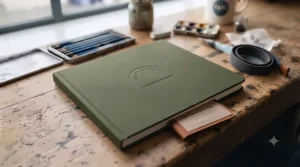
Seawhite of Brighton has been producing sketchbooks in Britain for over five decades, and the standout feature of this A5 portrait book is its 140gsm all-media cartridge paper, which is internally and externally sized for genuinely useful wet strength rather than just being dry-media paper with a fancy name. The 92 pages sit inside a black cloth hardback cover, giving real protection for work you actually want to keep, and the casebound construction means it opens close to flat without the pages trying to spring shut on you. Based on the spec comparison with lighter cartridge pads, the extra sizing on this paper is what lets it handle graphite, charcoal, fineliner ink and light watercolour washes without the feathering and instant bleed-through you’d get from a standard 90gsm sketch pad. This makes it a genuinely versatile choice for artists who haven’t settled on one medium yet, or who like to combine pen line work with the odd wash of colour on top. Aggregated customer feedback on Amazon UK is strongly positive, sitting around 4.6 out of 5 across a substantial review base, with buyers repeatedly describing the paper as high quality and the binding as durable; a recurring honest caveat in that same feedback is that heavier wet media or thick marker ink can still show some bleed-through or mild warping, which lines up exactly with what a 140gsm weight would be expected to do.
Pros:
- ✅ British-made with over 50 years of manufacturing history
- ✅ 140gsm paper handles light watercolour and ink confidently
- ✅ Sturdy cloth hardback protects finished work
Cons:
- ❌ Heavy marker use can bleed through to the next page
- ❌ Noticeable cockling under a proper watercolour wash
Typical pricing for this hardback sketchbook amazon listing sits in a modest £8-£13 range depending on size, which for British-made, all-media paper represents strong value — particularly if your work leans toward ink and pencil with the occasional colour wash rather than full wet-in-wet painting.
3. Daler-Rowney Simply Sketchbook — best starter hardback for absolute beginners
Daler-Rowney’s Simply range exists specifically to give newcomers an affordable, no-pressure way into sketching, and this A5 hardback delivers exactly that: 54-110 sheets (depending on format) of soft white, medium grain 100gsm paper inside a compact, portable hardback cover. What most buyers overlook about entry-level sketchbooks is that the medium grain surface here is doing real work — it’s textured enough to grip graphite and coloured pencil confidently without the paper feeling slick or the pencil skating around, which is exactly what a shaky-handed beginner needs. Here’s what to weigh: the 100gsm weight puts it firmly in dry-media territory, comfortable for pencil, ink line work and light pastel, but it will not survive a proper watercolour wash without significant buckling. As a first sketchbook for someone testing whether drawing is a hobby they’ll stick with, that’s a sensible trade-off; there’s little point spending on premium watercolour paper before you know if you’ll fill the thing. Aggregated reviews for the Simply range consistently highlight it as reliable, unfussy and good value, particularly among buyers explicitly shopping for a first sketchbook or a gift for a budding artist, though the review pool on some individual Amazon listings is smaller than for the bigger-name brands on this list, so it’s worth reading a handful of the most recent reviews before committing.
Pros:
- ✅ Genuinely low entry price for a hardback book
- ✅ Medium grain paper grips pencil and coloured pencil well
- ✅ Compact size is easy to carry daily
Cons:
- ❌ Not designed for watercolour or heavy wet media
- ❌ Smaller review pool than more established brands
Expect this to sit at the lower end of the £6-£10 range, making it an easy, low-stakes recommendation for anyone buying their very first sketchbook rather than upgrading an existing habit.
4. Canson XL Mixed Media — best value spiral sketchbook for mixed media
Canson’s XL Mixed Media range is the standout choice on this list if your practice jumps between markers, ink, coloured pencil and the odd watercolour swatch, because the paper is genuinely dual-surfaced: one side carries a fine grain suited to pigment absorption, the other is smooth and built for felt-tip and alcohol markers to glide without dragging fibres up. It’s available in a lighter 160gsm option (around 60 sheets) or a heavier 300gsm version (around 34 sheets) with a stronger laid texture, both wire-bound with true, micro-perforated sheets you can remove cleanly. The spec sheet won’t tell you this, but user reports suggest the 160gsm variant does still buckle noticeably under a full watercolour wash — it’s “mixed media” in the sense of handling several dry and semi-wet techniques on one page, not a substitute for a dedicated watercolour block. Where it earns its place is value: Canson designed the XL series specifically for art students who churn through large volumes of paper, so the price per sheet undercuts most premium mixed-media sketchbooks by a wide margin. Reviewers and long-term users frequently note it as a reliable, affordable staple that sits somewhere between a disposable practice pad and a “precious” finished-work book, and it’s commonly recommended as the sensible next step up once a beginner outgrows basic printer-weight paper.
Pros:
- ✅ Dual-surface paper suits markers and pigment alike
- ✅ Wire-bound with clean, removable perforated sheets
- ✅ Strong price-per-sheet value for high-volume use
Cons:
- ❌ 160gsm version still buckles under heavy watercolour
- ❌ Spiral wire bulkier to store than casebound books
Pricing generally falls in an £8-£16 range depending on weight and page count, making this arguably the best sketchbook for mixed media on a student budget, so long as “mixed media” doesn’t mean full wet-in-wet washes.
5. Winsor & Newton Classic Hardbound Sketchbook — best heritage hardback for dry media
Winsor & Newton has been supplying artists since 1832, and that pedigree shows up here as medium-textured, acid-free cartridge paper available in 110gsm or 170gsm weights, bound into a casebound hardback with a classic leather-effect cover. What stands out on the spec sheet is the perforated edge on every sheet combined with a book that genuinely opens flat — a small detail, but one that matters enormously if you scan or photograph your sketches for a portfolio, since a book that won’t lie open forces awkward angles and shadowed gutters. Based on the spec comparison with the Seawhite and Daler-Rowney options above, the 170gsm version pushes this firmly into “light watercolour wash” territory alongside pencil, pen and ink, while the 110gsm version stays a pure dry-media book more comparable to the Strathmore pad but in hardback form. Reviewers who use it for graphite and charcoal specifically praise the tooth of the paper for holding a range of pencil grades cleanly, and several long-term sketchers cite it as their pick for structured urban sketching sessions where a hard cover doubles as a lap-friendly drawing surface. It’s worth noting the brand also sells this as a wire-bound “spiral sketchbook for drawing” alternative in the same paper, if you’d rather trade the hardback protection for a book that folds flatter in a bag.
Pros:
- ✅ 170-year-plus heritage brand known for consistent quality
- ✅ Genuinely lies flat for scanning and photographing work
- ✅ Perforated sheets allow clean removal
Cons:
- ❌ 110gsm option still too light for real watercolour
- ❌ Leather-effect cover shows wear faster than cloth
Amazon pricing for this range typically spans £8-£20 depending on size and paper weight, positioning it as a mid-range, dependable choice for anyone who wants a name they can trust without stepping up to premium art-paper pricing.
6. Moleskine Art Plus Sketchbook — best premium hardback for portability and style
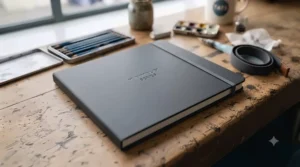
Moleskine’s reputation was built on notebooks rather than art paper specifically, and that’s an honest starting point for assessing this one: the 165gsm ivory paper, elastic closure band, ribbon bookmark and rounded corners make for a genuinely lovely object to carry daily, and the elastic strap plus sewn hardback binding mean it survives being lobbed into a bag far better than most spiral alternatives. What most buyers overlook is that the 165gsm weight, while respectable, is aimed at ink, pencil and light colour work rather than serious watercolour — several long-term reviewers who’ve directly compared it against dedicated art-paper brands like Canson note that watercolour still buckles the page more than they’d like at this weight, and that the ivory tone slightly mutes true whites and vibrant colour compared to bright-white cartridge paper. Here’s what to weigh: you are partly paying for the brand experience — the pocket for loose ephemera, the bookmark ribbon, the recognisable cover — as much as for raw paper performance, and reviewers are broadly split between loving that package and feeling it’s overpriced relative to the paper quality alone. Where it undeniably wins is portability and durability for journaling-style sketching: commuters, travel sketchers and anyone who wants one book that survives daily abuse without falling apart tend to rate it highly for exactly that reason, even when they’re lukewarm on the paper itself.
Pros:
- ✅ Elastic band and rounded corners survive daily bag life
- ✅ Instantly recognisable, well-loved brand and finish
- ✅ Ribbon bookmark and pocket add practical touches
Cons:
- ❌ Paper underperforms dedicated art brands for watercolour
- ❌ Premium price relative to actual paper weight
Expect to pay in a £15-£25 range depending on size, which places it firmly in premium territory for a 165gsm book — you’re buying the whole travel-journal experience, not just the paper.
7. Stillman & Birn Beta Series — best premium sketchbook for watercolour and ink
If your practice genuinely involves wet media, this is the one product on this list built from the ground up for it. The Beta Series uses extra-heavyweight, cold-press paper at roughly 270gsm with both internal and surface sizing, which in plain terms means the paper resists water absorption at the surface long enough for pigment to sit and glow rather than sinking in flat and dull. It’s available in wirebound and hardbound formats, both with rounded corners, and the hardbound spines are specifically designed to be broken in over time until they lie completely flat for two-page spreads or flatbed scanning. On paper this means it can handle layered watercolour washes, ink wash, gouache and heavy pencil work in the same session without the cockling that would wreck a 140-170gsm book — reviewers who’ve directly compared Stillman & Birn against cheaper mixed-media pads consistently describe noticeably better wet strength and richer colour results, which tracks with the sizing spec. The trade-off is straightforward and honestly stated by the brand itself: fewer sheets per book than a budget pad, and a price per sheet that’s the highest on this list by some margin. This is a book for artists who already know watercolour or ink wash is central to their practice, not a first sketchbook for someone still deciding what medium they enjoy.
Pros:
- ✅ Genuinely engineered for wet media without buckling
- ✅ Rounded corners and quality binding built to last
- ✅ Rich colour results reviewers link to internal sizing
Cons:
- ❌ Highest price per sheet on this list
- ❌ Fewer total pages than budget alternatives
Prices commonly sit in a £20-£35 range depending on size and binding, and for artists whose main frustration has been watercolour paper letting them down, that premium is arguably the most justifiable spend in this whole guide.
Practical Usage Guide: Getting the Most from a New Sketchbook
Buying the right book is only half the job — how you treat it in the first 30 days shapes whether it becomes a genuine practice tool or an abandoned relic. Start by testing every medium you plan to use on the very first page or an index card cut from a spare sheet, rather than your intended “good” page one; this reveals bleed-through and buckling before you’ve committed real work to it. If your book has removable perforated sheets, like the Winsor & Newton Classic Hardbound Sketchbook or Canson XL Mixed Media, decide early whether you’ll ever remove pages — if you will, avoid drawing across the gutter of a two-page spread, since a torn-out sheet from a spread ruins its neighbour too. For hardback books like the Seawhite of Brighton A5 Hardback or Moleskine Art Plus Sketchbook, gently work the spine open across its full width a few times before your first serious session; a stiff new spine that’s never been flexed will fight you when you try to work into the gutter. A common first-month mistake is protecting a new sketchbook too preciously, skipping pages or leaving the first few blank “for something good” — this is exactly backwards, since sketchbooks earn their value through volume and honest mistakes, not curated perfection. Finally, if you’re working with any wet media at all, keep a spare sheet of scrap paper behind the working page to catch bleed-through, and let washes dry fully flat before closing the book to avoid pages sticking or offsetting colour onto their neighbour.
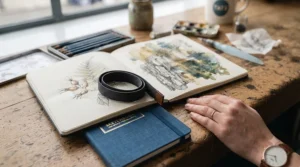
Real-World Scenario: Which Sketchbook Suits Your Practice?
Picture three different artists shopping this exact list. First, a university foundation student on a tight budget, filling pages daily with life-drawing studies in charcoal and graphite — for them, the Strathmore 400 Series Sketch or Daler-Rowney Simply Sketchbook makes obvious sense, because volume and low cost-per-sheet matter more than wet-media capability they won’t use yet. Second, a commuter who sketches on the train and wants something that survives being crushed into a bag daily while still handling the odd travel-journal watercolour wash at a café stop — here the Seawhite of Brighton A5 Hardback or Moleskine Art Plus Sketchbook fit the environment and frequency far better than a spiral pad that would get bent out of shape. Third, a hobbyist painter who’s recently discovered urban sketching and wants to combine fineliner ink work with confident watercolour washes on location, sketching perhaps twice a week for longer sessions — for that frequency and ambition, the extra investment in the Stillman & Birn Beta Series pays for itself quickly, since a cheaper book would actively sabotage the washes they’re trying to learn. Matching the book to the environment and frequency of use, not just the medium, is the piece most buying guides skip entirely.
Problem → Solution: Common Sketchbook Frustrations Solved
Problem: my ink or marker bleeds straight through the page. This almost always means the paper is under 140gsm or lacks proper sizing; switch toward the Seawhite of Brighton A5 Hardback or the smooth side of the Canson XL Mixed Media, and keep a scrap sheet behind your working page as a backstop regardless. Problem: watercolour turns the page into a crisp packet. You need genuine wet-media weight and sizing, not just a high number — the Stillman & Birn Beta Series at roughly 270gsm with internal sizing is the only book on this list built to properly resist that; anything under 200gsm will cockle to some degree. Problem: the spine won’t lie flat, so I can’t draw across two pages. Hardback casebound books like the Winsor & Newton Classic Hardbound Sketchbook need their spine gently worked open before first use; if that still doesn’t help, a wirebound option removes the problem entirely. Problem: I keep avoiding my sketchbook because it feels “too nice” to ruin. Swap to a genuinely cheap, high-volume book like the Daler-Rowney Simply Sketchbook for daily practice, and save any premium book for work you’re already confident enough to commit to. Problem: pages are curling or the cover is bending after weeks in a bag. Look for rounded corners and a proper elastic closure, both features the Moleskine Art Plus Sketchbook was specifically designed around for exactly this kind of daily wear.
How to Choose a Sketchbook for Your Medium
Matching sketchbook to medium is genuinely the single biggest factor in whether a book performs, and it comes down to seven practical checks worth running through in order.
- Identify your primary medium first. Pencil and charcoal need very little from paper beyond a bit of tooth; ink, marker and watercolour all place real demands on weight and sizing, so start here before looking at anything else.
- Check the gsm against your medium’s minimum. As a rough rule, 75-90gsm suits dry sketching only, 100-140gsm handles dry media plus light ink, and you’ll want 200gsm or above for genuine watercolour confidence.
- Look for the word “sized” or “all-media” in the description. Sizing is what actually controls how paper absorbs liquid, and it matters more than raw weight alone for wet-media performance.
- Decide how the book needs to open. If you draw across two-page spreads or plan to scan work flat, prioritise a casebound or wirebound book that genuinely lies open rather than one that springs shut.
- Match binding to how you carry it. Spiral books like the Strathmore 400 Series Sketch survive being flattened in a folder, while hardback books like the Seawhite of Brighton A5 Hardback protect corners better in a bag.
- Consider paper tone. Bright white paper (Strathmore, Canson) makes colours read truest; warmer ivory or cream paper (Moleskine) suits pencil and ink but slightly mutes vibrant colour work.
- Buy small before buying big. A single A5 book from a brand you’re considering is a cheap way to test paper feel before committing to a large-format or premium multi-book purchase.
Running through those seven steps takes minutes and avoids the single most common regret buyers report: choosing on price or looks alone and discovering the paper simply can’t do what they need three pages in.
Sketchbook Paper Weight Explained: What GSM Actually Means
If you take one number away from this whole guide, make it this: sketchbook paper weight explained gsm boils down to grams per square metre, meaning a sheet’s weight is measured against a standard one-metre square of the same paper, regardless of the actual sketchbook’s size. As the Wikipedia entry on the artistic practice notes, sketchbooks made from high quality paper are differentiated by weight and by tooth, or grain, and both properties genuinely change what a medium can do on the page. In practical terms: 75-90gsm is fine for pencil, charcoal or dry pastel but will show ink and marker bleed-through, since it’s essentially a slightly thicker cousin of standard printer paper. The 100-140gsm range, where the Seawhite of Brighton A5 Hardback and Winsor & Newton Classic Hardbound Sketchbook sit, is the practical sweet spot for artists who mix pencil, pen and the occasional light wash without wanting to buy multiple books. Anything below 200gsm will still cockle noticeably under a proper watercolour wash, however, which is why dedicated wet-media books like the Stillman & Birn Beta Series push up to 270gsm and beyond. It’s worth adding that gsm alone doesn’t guarantee performance — sizing (a chemical treatment that controls absorption) matters just as much, which is why two books at the same gsm can behave completely differently under a wet brush.
Best Sketchbook for Mixed Media: What to Look For
The phrase “best sketchbook for mixed media” gets thrown around loosely by manufacturers, so it’s worth being precise about what it should actually mean: paper that survives at least two or three different techniques layered on the same page without one ruining the others. The clearest example on this list is the Canson XL Mixed Media range, whose dual-surface design — one fine-textured side for pigment absorption, one smooth side for markers — is a genuine engineering response to that layering problem rather than a marketing label slapped on standard paper. When shopping specifically for mixed media, prioritise three things over anything else: a minimum weight of 160gsm to resist warping under combined wet and dry techniques, some form of sizing description in the listing (all-media or heavy sizing are the phrases to look for), and a binding that lets pages lie flat if you plan to collage or add texture that changes the page’s physical thickness. As Creative Bloq’s own sketchbook testing notes, heavier paper generally signals higher quality but isn’t the only variable worth checking. Reviewers consistently note that even labelled “mixed media” books show their limits once genuine wet-in-wet watercolour enters the mix, which is a useful honest baseline to set your expectations against before buying — a book can be excellent for markers-plus-ink-plus-collage while still being a poor choice for anyone painting full watercolour washes.
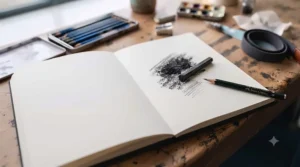
Hardback vs Spiral Sketchbooks: Which Binding Wins?
There’s no single correct answer here, but the trade-offs are consistent enough to reason through properly. A hardback sketchbook amazon shoppers gravitate toward — like the Seawhite of Brighton A5 Hardback or Moleskine Art Plus Sketchbook — offers real protection for the pages inside, survives being thrown in a bag far better, and generally looks and feels more like a “finished” object worth keeping. The trade-off is that casebound hardback spines often need working in before they lie flat, and once full, the whole book is committed; there’s no removing a disappointing page without damaging the binding. A spiral sketchbook for drawing, by contrast — the Strathmore 400 Series Sketch and Canson XL Mixed Media both fall here — lies completely flat from the very first page, since the wire binding has no spine tension to overcome, and pages can typically be torn out cleanly along a perforated edge. What the spec sheet won’t tell you is that spiral binding is genuinely more vulnerable in transit: the wire can bend, snag on other bag contents, or dig into your hand during long drawing sessions if you’re left-handed and working near the coil. If you draw primarily at a desk or table, spiral wins on flat-opening convenience; if you carry your sketchbook daily in a bag or pocket, hardback protection generally proves worth the trade-off over a few months of use.
Common Mistakes When Buying a Sketchbook
The single most common mistake is buying on paper weight alone without checking sizing, which explains most of the “it buckled immediately” reviews scattered across marketplace listings for otherwise decent mid-weight books. A close second is buying a large-format book before establishing a daily sketching habit — an A3 pad is genuinely intimidating to fill and far easier to abandon than an A5, so it’s worth building consistency on a smaller book first. Buyers also frequently underestimate how much binding affects real-world use: choosing a beautiful casebound hardback and then discovering it won’t lie flat for the two-page landscape spreads they actually wanted to draw is an avoidable disappointment if binding is checked against intended use beforehand. Another recurring error is assuming “sketchbook” and “watercolour paper pad” are interchangeable when shopping — they’re regularly not, and only genuinely wet-media-rated books like the Stillman & Birn Beta Series should be trusted with serious washes. Finally, price-anchoring on the cheapest option available regardless of medium wastes more money long-term than it saves, since a £6 dry-media pad ruined by three watercolour attempts costs more per usable page than a single correctly chosen book would have.
Sketchbook Review Roundup: What Aggregated Reviews Reveal
Rather than inventing a composite “our verdict,” it’s more honest to summarise what genuinely aggregated reviewer sentiment across these seven products actually shows, since that’s more useful than any single opinion. Sketchbook review patterns for the Seawhite of Brighton A5 Hardback are unusually consistent: strong praise for paper quality and binding durability sits alongside a near-universal, honestly stated caveat about marker bleed-through and mild warping under heavier wet media — buyers who accept that trade-off tend to be extremely satisfied. The Strathmore 400 Series Sketch shows a similarly strong pattern skewed toward dry-media satisfaction, with the sturdy chipboard backing repeatedly singled out as a practical bonus rather than an afterthought. Premium picks split reviewer opinion more sharply: the Moleskine Art Plus Sketchbook earns consistent praise for durability and design but a recurring minority of reviews comparing it unfavourably to dedicated art-paper brands on raw paper performance, while the Stillman & Birn Beta Series attracts fewer total reviews but a notably higher proportion of detailed, technically-informed feedback from artists specifically praising its wet-media performance — the kind of review pattern typical of a specialist product bought by people who already know what they’re comparing it against. Where verified review data is thin, as with some individual Daler-Rowney listings, it’s more honest to say so directly than to imply a confidence the numbers don’t support; reading the most recent handful of reviews on the specific listing before buying remains the most reliable check available to any shopper.
Long-Term Cost & Value: Sketchbooks vs Traditional Alternatives
| Format | Approx. Cost per Sheet | Reusability | Best For |
|---|---|---|---|
| Strathmore 400 Series Sketch (budget spiral) | Lowest | Single-use pages | High-volume daily practice |
| Seawhite of Brighton A5 Hardback (mid hardback) | Moderate | Single-use, archival | All-round keeping quality |
| Stillman & Birn Beta Series (premium) | Highest | Single-use, archival | Finished wet-media work |
| Loose watercolour sheets | Variable, often higher | Single-use, framable | Exhibition-ready pieces |
| Digital sketching app/tablet | High upfront, £0 per page after | Infinite reuse | Volume practice, no paper cost |
Comparing these options, the case for a dedicated sketchbook over loose sheets is really about continuity and archive value: a bound book creates a chronological record of your progress that a folder of loose sheets rarely does, which is precisely why institutions like the V&A’s drawing collection hold sketchbooks from historic artists as a record of process, not just finished output. Against digital tools, the maths favours physical books for anyone sketching frequently over years, since the per-page cost of even a premium book like the Stillman & Birn Beta Series is trivial compared to tablet and stylus costs, though digital wins decisively on total cost for someone sketching only occasionally. The honest total-cost-of-ownership takeaway is that budget dry-media books pay for themselves fastest through sheer volume of practice, while premium wet-media books justify their price only once you’re producing work good enough to want archived rather than practised-and-discarded.
✨ Ready to build your sketchbook collection?
🔍 Grab Your Perfect Match Today!Take your sketching practice to the next level with a book properly matched to your medium. Click through to check current pricing and availability on any of the seven picks above, and start filling pages with genuinely good paper behind you.
FAQ
❓ What gsm is best for a sketchbook?
❓ Is a hardback or spiral sketchbook better for beginners?
❓ Can you use watercolour in a normal sketchbook?
❓ How many pages should a sketchbook have?
❓ What is the difference between a sketchbook and a drawing pad?
Conclusion
Choosing between sketchbooks for artists doesn’t need to feel like guesswork once you separate the marketing language from the paper specification underneath it. If you’re starting out and mostly work in pencil or charcoal, the Strathmore 400 Series Sketch or Daler-Rowney Simply Sketchbook give you volume and low cost without over-buying capability you won’t use yet. If you want one dependable, protective book that handles pencil, ink and the odd wash without fuss, the Seawhite of Brighton A5 Hardback earns its reputation honestly. Mixed-media artists juggling markers and collage should look hardest at the Canson XL Mixed Media, while anyone whose practice genuinely centres on watercolour or heavy ink wash owes it to their work to invest in the Stillman & Birn Beta Series rather than fighting unsuitable paper session after session. As the V&A’s research into architects’ sketchbooks puts it, a sketchbook is a personal record of thoughts and problems being worked through — and that only holds true if the paper survives the process. Match the book to the medium, buy small before you buy big, and the right sketchbook stops being an obstacle and starts doing its actual job.
Recommended for You
- Copic Pens Amazon: 7 Best Alcohol Markers & Inking Pens (2026)
- Best Illustration Pens: 7 Top Picks Every Artist Needs in 2026
- Technical Drawing Pens: 7 Precision Picks Architects Trust (2026)
Disclaimer: This article contains affiliate links. As an Amazon Associate, I earn from qualifying purchases. If you purchase products through these links, we may earn a small commission at no additional cost to you.
✨ Found this helpful? Share it with your friends! 💬🤗
