
In This Article
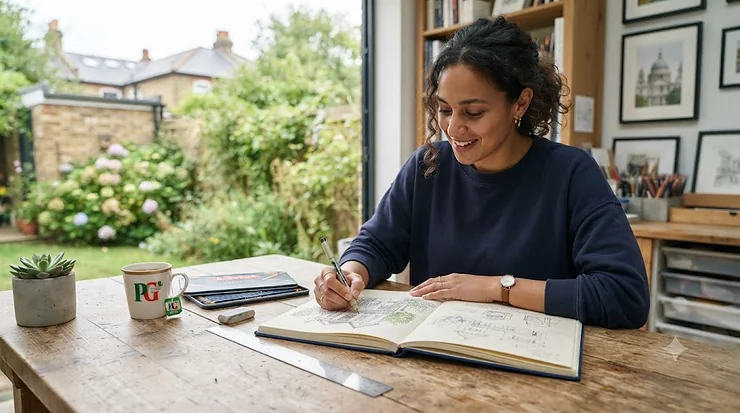
There’s a particular moment familiar to anyone who draws regularly — flicking through a new sketchbook, testing the first page with a pencil, and feeling either relieved or faintly disappointed by how the graphite sits on the surface. An A4 sketchbook is a bound pad of drawing paper measuring 297 x 210mm, typically made from acid-free cartridge paper somewhere between 100gsm and 300gsm+, designed to handle dry media like pencil, charcoal and ink, and often light washes of watercolour or ink too. The paper you choose shapes the drawing far more than most beginners expect, and getting it wrong is a genuinely common reason people abandon a promising sketching habit within weeks.
This guide is built entirely around real, currently available products on amazon.co.uk, checked against genuine specifications and aggregated customer sentiment rather than repackaged marketing copy. As the Royal Academy of Arts notes in its own exploration of sketchbook practice, sketchbooks function as working, portable volumes of ideas — permanent records of time, place and observation — which is exactly why the paper inside deserves more thought than an afterthought purchase grabbed at the till.
Whether you’re after A4 sketchbook thick paper for heavy graphite work, comparing GSM ratings before you buy, hunting specifically for a Daler Rowney A4 sketchbook, wanting the best A4 sketchbook for pencil drawing, needing an acid-free sketchbook for long-term storage, or simply after the best A4 sketchbook under £10, you’ll find a genuine, honestly reviewed recommendation ahead.
Quick Comparison Table
| Sketchbook | GSM | Pages | Price Range | Best For |
|---|---|---|---|---|
| Daler Rowney Simply Medium Grain A4 Hardback | 100gsm | 54 sheets | Under £10 | Entry-level budget sketching |
| STATIONERY ISLAND A4 Hardcover Spiral Sketchbook | 200gsm | 50 sheets | Under £10 | Thick paper on a tight budget |
| Daler Rowney Graduate Spiral A4 Landscape | 160gsm | 30 pages | £8-£13 range | Versatile mixed-media practice |
| Seawhite of Brighton A4 Portrait Hardback | 140gsm | 92 pages | £10-£16 range | Acid-free long-term journaling |
| Daler Rowney Ebony A4 Smooth Hardbound | 160gsm | 54 sheets | £12-£18 range | Best for pencil drawing |
| Daler Rowney Smooth Heavyweight A4 Portrait | 220gsm | 25 pages | £10-£15 range | Thick paper for mixed media |
| Seawhite Plein Air Watercolour A4 | 350gsm | 20 sheets | £12-£20 range | Heaviest paper for wet media |
Looking at the spread above, the real story is GSM rather than brand loyalty. The two budget options under £10 sit at opposite ends of thickness — Daler Rowney Simply at a genuinely thin 100gsm versus STATIONERY ISLAND at a proper 200gsm — which matters enormously if you’re pressing hard with graphite or layering pencil marks. Further up, the Daler Rowney Ebony earns its reputation specifically for pencil work thanks to its smooth surface, while the Seawhite Plein Air at 350gsm is genuinely the only sketchbook here built to take real watercolour washes without buckling.
💬 Just one click — help others make better buying decisions too!😊
Top 7 Best A4 Sketchbooks: Expert Analysis
1. Daler Rowney Simply Medium Grain A4 Hardback — best budget entry point
Opening this list is the sketchbook most beginners actually buy first, and for good reason: the Daler Rowney Simply Medium Grain A4 Hardback brings a genuinely trusted 240-year-old British art materials name to a genuinely accessible price. Based on the spec comparison with pricier options, the trade-off is straightforward — at 100gsm, this is thinner paper than anything else on this list, which means it’s better suited to light pencil sketching and practice than heavy layering or any wet media. The medium grain surface gives just enough tooth to hold graphite and charcoal without feeling slick, and Daler Rowney’s own “Graduate” and “Simply” ranges are explicitly positioned for entry-level artists and hobbyists rather than professionals. Reviewers of Daler Rowney’s budget ranges consistently note good value for the price point, though the thinner paper means some ghosting or slight show-through from firmer pencil pressure is genuinely expected rather than a fault. For anyone testing whether they’ll actually stick with regular sketching before investing in premium paper, this is the sensible starting point.
Pros:
- ✅ Trusted, long-established British art materials brand
- ✅ Hardback cover offers real protection for the price
- ✅ 54 sheets gives genuinely good page count per pound spent
Cons:
- ❌ 100gsm is thin, so heavy pencil work can show through
- ❌ Not suited to any meaningful wet media use
At under £10, the Daler Rowney Simply Medium Grain A4 Hardback remains one of the most sensible first sketchbooks for anyone starting out.
2. STATIONERY ISLAND A4 Hardcover Spiral Sketchbook — best A4 sketchbook thick paper under £10
If genuinely thick paper on a tight budget is the priority, the STATIONERY ISLAND A4 Hardcover Spiral Sketchbook solves that specific problem directly, packing a proper 200gsm weight into a price point that usually only buys thin 100gsm alternatives. What most buyers overlook is that spiral binding, as used here, offers a genuine practical advantage over a fixed hardback spine — the book lays completely flat and can rotate a full 360 degrees, which matters when you’re sketching on your lap or an uneven surface without a table to brace against. On paper this means the same working flexibility as far pricier spiral-bound options, and in practice the 200gsm weight comfortably handles pencil, crayon and charcoal without significant bleed-through, based on the spec comparison with the thinner budget alternative above. It’s worth noting this sits in a genuinely crowded and fast-moving category of budget spiral sketchbooks on Amazon, where near-identical products from multiple sellers compete closely, so checking current stock and reviews at time of purchase is sensible.
Pros:
- ✅ Genuinely thick 200gsm paper at a budget price point
- ✅ Spiral binding lies flat and rotates a full 360 degrees
- ✅ Hardcover shell adds durability while sketching on the move
Cons:
- ❌ Sits in a crowded market of similar budget spiral sketchbooks
- ❌ Still not intended for genuine watercolour saturation
At under £10, the STATIONERY ISLAND A4 Hardcover Spiral Sketchbook is the clearest pick specifically for A4 sketchbook thick paper on a genuinely tight budget.
3. Daler Rowney Graduate Spiral A4 Landscape — best for versatile mixed-media practice
Sitting in Daler Rowney’s mid-tier Graduate range, the Daler Rowney Graduate Spiral A4 Landscape steps up to 160gsm acid-free cartridge paper while keeping the price genuinely accessible for students and regular practice. Here’s what to weigh: the landscape orientation, rather than the more common portrait format, suits panoramic studies, architectural sketching and wide compositions specifically, so it’s worth being deliberate about which orientation actually matches your usual subject matter before buying. Each off-white page measures the full 297 x 210mm and is explicitly designed for pencils, pens, chalks, pastels and charcoals, with the soft matte cover offering genuine protection against knocks and accidental spillages rather than purely cosmetic styling. Reviewers of Daler Rowney’s Graduate range consistently highlight durability through heavy daily use — one long-term reviewer specifically described carrying similar Graduate sketchbooks daily through repeated travel without the spiral binding ever coming loose or the pages sustaining damage. For students specifically wanting one dependable, mid-priced sketchbook that handles most dry media confidently, this is a strong all-rounder.
Pros:
- ✅ 160gsm acid-free paper handles most dry media confidently
- ✅ Landscape format suits panoramic and architectural subjects
- ✅ Genuinely durable spiral binding reported through heavy daily use
Cons:
- ❌ Landscape orientation won’t suit everyone’s usual sketching habits
- ❌ Still light for anything beyond the lightest watercolour washes
Priced £8-£13, the Daler Rowney Graduate Spiral A4 Landscape is a genuinely versatile mid-range pick for students and regular practice alike.
4. Seawhite of Brighton A4 Portrait Hardback — best acid-free sketchbook for long-term storage
Seawhite of Brighton has been producing sketchbooks in the UK for more than 50 years, and the Seawhite of Brighton A4 Portrait Hardback reflects that specialism directly — 92 pages of 140gsm all-media cartridge paper, acid-free and specifically sized for extra wet strength, bound in a traditional black cloth hardback cover. What most buyers overlook about acid-free paper specifically is that its value isn’t really about how a drawing looks today, but how it survives over years of storage; standard wood-pulp paper yellows and becomes brittle as internal acids break down the fibres over time, while acid-free paper resists that deterioration. Reviewers consistently praise the case-bound construction for genuinely lying flat when open, and one long-term reviewer specifically noted carrying the sketchbook daily through repeated city travel with no damage to the binding despite heavy use, while another highlighted the smooth, high-quality paper as ideal for detailed pencil work. A minority of reviewers note some bleed-through from marker pens specifically, though this is a known characteristic of all-media cartridge paper generally rather than a flaw unique to this book. For anyone building a body of work they genuinely want to last, this is the strongest pick here.
Pros:
- ✅ Genuinely acid-free paper suited to long-term archival storage
- ✅ Case-bound construction lies flat for two-page compositions
- ✅ Established 50-year UK sketchbook specialist brand
Cons:
- ❌ Some bleed-through reported specifically with marker pens
- ❌ 140gsm still isn’t intended for saturated watercolour work
At £10-£16, the Seawhite of Brighton A4 Portrait Hardback is the clearest choice specifically for an acid-free sketchbook built for long-term storage.
5. Daler Rowney Ebony A4 Smooth Hardbound — best A4 sketchbook for pencil drawing
Purpose-built around smooth dry-media performance, the Daler Rowney Ebony A4 Smooth Hardbound pairs 54 sheets of acid-free, crisp natural white 160gsm cartridge paper with a genuinely smooth surface finish specifically engineered for pencil, charcoal and pen work. Based on the spec comparison with the textured Graduate range above, the smoothness here is the whole point — a fine, even tooth that lets graphite glide and blend without catching on visible paper texture, which matters enormously for anyone doing detailed, shaded pencil studies rather than looser sketching. Reviewers are genuinely specific and consistent here: one explicitly states they use it for pencil drawings and praises the great, smooth quality paper, while another describes it as absolutely the best paper they’ve used, specifically for drawing commissions. The rigid black, rear-embossed cover provides sturdy protection made in the UK, and while the surface takes light watercolour washes reasonably well, that’s genuinely a bonus rather than its core strength. For anyone specifically searching for the best A4 sketchbook for pencil drawing, the review consistency here is hard to ignore.
Pros:
- ✅ Genuinely smooth surface purpose-built for pencil and graphite work
- ✅ Consistent, specific reviewer praise for pencil drawing performance
- ✅ Rigid hardback cover offers real protection, made in the UK
Cons:
- ❌ Smooth surface offers less texture for heavier pastel or charcoal work
- ❌ Premium positioning means a real price step up from budget options
At £12-£18, the Daler Rowney Ebony A4 Smooth Hardbound is the strongest pick on this list specifically for pencil-focused drawing practice.
6. Daler Rowney Smooth Heavyweight A4 Portrait — best for genuinely thick mixed-media paper
For buyers specifically prioritising paper weight above all else, the Daler Rowney Smooth Heavyweight A4 Portrait delivers Daler Rowney’s extra-strong cartridge paper at a substantial 220gsm across 25 pages. What the spec sheet won’t tell you outright is how much that extra weight changes handling in practice — heavier paper resists cockling (the rippling that happens when paper absorbs moisture unevenly) far better than thinner alternatives, which genuinely matters if you work with pen, ink or light watercolour washes alongside pencil. Reviewers describe the paper as absolutely among the best they’ve used, specifically praising its thickness and strength, and several note the gummed top allows pages to tear out cleanly without any residue or ragged edges, unlike some competing pads. One reviewer specifically highlighted using it for cyanotype and tea-toning processes with strong results, which speaks to the paper’s genuine versatility beyond standard drawing. The trade-off, honestly, is page count: 25 sheets is noticeably fewer than the budget options above, so cost-per-page runs higher, but that’s the genuine price of substantially thicker paper.
Pros:
- ✅ Genuinely substantial 220gsm resists cockling from wet media
- ✅ Gummed top allows clean page removal without residue
- ✅ Versatile enough for pencil, pen, ink and light watercolour
Cons:
- ❌ Only 25 pages means a higher cost per sheet than thinner books
- ❌ Not thick enough for genuinely saturated watercolour painting
Priced £10-£15, the Daler Rowney Smooth Heavyweight A4 Portrait rewards buyers who specifically want thick, resilient paper over maximum page count.
7. Seawhite Plein Air Watercolour A4 — best for genuine wet media and watercolour washes
Closing the list at the heaviest end of what still counts as a sketchbook rather than a dedicated watercolour block, the Seawhite Plein Air Watercolour A4 brings a substantial 350gsm acid-free paper specifically engineered for real wet media work, not just light washes over pencil. Based on the spec comparison with every other product on this list, this is the only genuinely watercolour-capable option here — at 350gsm, the paper can absorb proper washes without the buckling or warping that thinner cartridge paper suffers under saturation. Its 20-sheet count reflects that heavier construction, and the “Plein Air” naming signals its intended use directly: outdoor, on-location painting sessions where durability and genuine wet-media performance matter more than maximum page count. For anyone whose sketchbook practice regularly crosses over into proper watercolour painting rather than staying purely in dry media, this is the clear upgrade from every cartridge-paper option above.
Pros:
- ✅ Genuinely substantial 350gsm handles real watercolour washes
- ✅ Acid-free construction suits long-term storage of finished work
- ✅ Purpose-built for outdoor, on-location painting sessions
Cons:
- ❌ Lower page count reflects the heavier, pricier paper stock
- ❌ Overkill and poor value if you only ever work in dry media
At £12-£20, the Seawhite Plein Air Watercolour A4 is the right choice specifically when watercolour, not pencil or pen, is your primary medium.
Practical Usage Guide: Setting Up and Getting the Most from Your Sketchbook
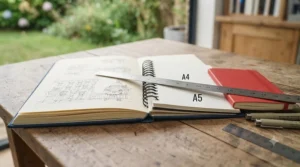
Getting the most from any new A4 sketchbook starts with understanding what its paper is actually built for before you commit your best ideas to the first page. Test an inconspicuous corner or the very back page first, trying your usual pencil grade, pen or wash technique to see how the paper actually behaves — graphite that glides on a smooth surface like the Daler Rowney Ebony will behave very differently on the more textured Daler Rowney Graduate range, and neither is wrong, just suited to different mark-making styles. In the first 30 days of using a new sketchbook, resist the urge to fill every page from front to back in strict sequence; many artists find leaving occasional blank pages between finished pieces prevents smudging and graphite transfer between facing pages, particularly with softer pencil grades.
For genuine longevity, store sketchbooks flat or upright on a shelf rather than stacked flat under heavy weight, since sustained pressure can indent softer pages over months of storage. If you’re using an acid-free option like the Seawhite of Brighton A4 Portrait Hardback specifically for long-term archival purposes, keep it away from direct sunlight and high humidity, since even acid-free paper benefits from stable storage conditions. A common early mistake is pressing far too hard with graphite on thinner 100gsm paper, which causes visible indentation on the page beneath — easing pressure and building tone through repeated light layers rather than one heavy pass genuinely extends both the drawing’s quality and the paper’s flatness.
Real-World Scenarios: Which Sketchbook Suits Which Artist?
Consider Priya, a college student just starting a foundation art course who needs somewhere cheap and low-pressure to practice daily without worrying about wasting expensive paper. For Priya, the Daler Rowney Simply Medium Grain A4 Hardback or STATIONERY ISLAND A4 Hardcover Spiral Sketchbook genuinely solves the right problem — low cost, decent quality, and permission to fill pages freely without financial anxiety.
Now picture Tom, a graphic novel illustrator whose entire practice is built around detailed, heavily shaded pencil work that needs a genuinely smooth surface to render fine tonal gradations cleanly. For Tom, the Daler Rowney Ebony A4 Smooth Hardbound is the obvious fit, since its specific smoothness directly serves the exact technique his work depends on.
Finally, consider Margaret, a retired architect who’s returned to painting and specifically wants to capture watercolour studies on location during weekend walks, later storing finished pieces properly for years to come. For Margaret, the Seawhite Plein Air Watercolour A4 handles the wet media itself, while an acid-free option like the Seawhite of Brighton A4 Portrait Hardback for her pencil preparatory sketches ensures both survive well beyond a few years in a drawer.
Buyer’s Decision Framework: Which A4 Sketchbook Should You Choose?
If you’re testing whether sketching is a habit worth investing in, choose the Daler Rowney Simply Medium Grain A4 Hardback, because low cost removes the pressure of “wasting” expensive paper while you build confidence. If you specifically want thick paper without spending more than £10, choose the STATIONERY ISLAND A4 Hardcover Spiral Sketchbook for its genuine 200gsm weight at budget pricing. If you want one dependable, mid-priced sketchbook that handles most dry media and travels well, choose the Daler Rowney Graduate Spiral A4 Landscape. If long-term preservation of your work genuinely matters, choose the Seawhite of Brighton A4 Portrait Hardback for its acid-free construction. If pencil work is specifically your focus, choose the Daler Rowney Ebony A4 Smooth Hardbound for its purpose-built smooth surface. If you want maximum paper thickness for mixed media without going fully into watercolour territory, choose the Daler Rowney Smooth Heavyweight A4 Portrait. And if watercolour washes are genuinely central to your practice, choose the Seawhite Plein Air Watercolour A4 and accept the lower page count as the fair price of proper wet-media performance.
How to Choose the Best A4 Sketchbook
Choosing the best A4 sketchbook for your specific situation comes down to a handful of genuinely decision-shaping factors, in roughly this order:
- Your primary medium, first. Dry media like pencil and charcoal work well from 100gsm upward; any genuine wet media needs 200gsm minimum, ideally 300gsm or more.
- Surface texture. Smooth surfaces like the Daler Rowney Ebony suit fine pencil detail; more textured papers like the Graduate range suit charcoal, pastel and looser mark-making.
- Binding type. Spiral binding lies flat and rotates fully; hardback case-bound books offer more protection and a more “finished” presentation feel.
- Acid-free construction. Prioritise this specifically if you intend to keep and display finished work rather than treat the sketchbook as disposable practice.
- Page count versus paper weight. These trade off directly — heavier paper always means fewer pages for a similar price, so decide which matters more for your habits.
- Orientation. Portrait suits most general sketching; landscape suits panoramic, architectural or wide compositional studies specifically.
- Budget realism. Don’t overspend on premium 350gsm watercolour paper if your actual practice is 90% pencil sketching — match the paper to genuine use, not aspiration.
It’s also worth a quick look at sourcing: several sketchbooks on this list, including ranges from Daler Rowney and Seawhite, use paper certified under the Forest Stewardship Council’s scheme for responsibly sourced wood and paper products, which is a small but genuinely meaningful detail if sustainable sourcing factors into your buying decisions.
A4 Sketchbooks vs Loose Sheets and Individual Paper Pads
The choice between a bound A4 sketchbook and loose sheets of drawing paper comes down to how you actually work rather than which is objectively superior. A bound sketchbook, like any of the seven covered here, keeps a chronological record of your development intact and travels as a single object, which matters if you value looking back through months of progress in sequence. Loose sheets or individual pads offer more flexibility for framing or submitting individual pieces without needing to cut or tear a page from a book, and they let you mix genuinely different paper weights and textures within the same body of work rather than being locked into one sketchbook’s specification throughout. Gummed-top pads, like the Daler Rowney Smooth Heavyweight A4 Portrait, actually offer something of a middle ground — bound like a sketchbook for convenience, but designed to release individual sheets cleanly when a piece is finished and ready to be framed or submitted separately. Neither format is universally better; students building a continuous visual diary generally benefit from a bound book, while artists producing individual finished pieces for sale or exhibition often prefer the flexibility loose sheets or gummed pads provide.
Common Mistakes When Buying an A4 Sketchbook
The most common mistake is buying based on cover design and price alone without checking GSM weight at all, then feeling frustrated when pencil work ghosts through to the next page or ink bleeds straight through thin paper. A second mistake is assuming “acid-free” and “watercolour-ready” mean the same thing — plenty of acid-free sketchbooks, including several on this list, are still far too light for genuine wet media despite being perfectly suited to long-term dry-media storage. Third, buyers sometimes choose portrait orientation purely out of habit without considering whether their actual subject matter — landscapes, architecture, panoramic scenes — would genuinely suit a landscape-format book like the Daler Rowney Graduate Spiral A4 Landscape instead. Finally, it’s easy to underestimate how much surface texture affects a specific technique; buying a heavily textured pad for detailed pencil portraiture, or a very smooth pad for expressive charcoal work, often produces frustrating results that have nothing to do with drawing skill and everything to do with paper mismatch.
A4 Sketchbook Paper GSM Comparison
Understanding GSM is genuinely the single most useful piece of technical knowledge for choosing between sketchbooks, and it’s simpler than it first appears. As Wikipedia’s overview of grammage explains, GSM stands for grams per square metre — a standardised measure of paper density used across most of the world, regardless of a specific sheet’s thickness or texture. Across the seven sketchbooks covered here, GSM ranges from 100gsm on the Daler Rowney Simply Medium Grain A4 Hardback right up to 350gsm on the Seawhite Plein Air Watercolour A4, and that range genuinely maps onto real-world performance: 100-140gsm suits light pencil and pen practice, 160-220gsm comfortably handles pencil, charcoal, pastel and the lightest watercolour touches, and 300gsm-plus is where genuine watercolour washes stop causing the paper to buckle or warp. It’s worth noting that GSM alone doesn’t fully determine how paper feels or performs — surface finish, sizing and fibre composition all matter too, which is why the smooth Daler Rowney Ebony and the more textured Daler Rowney Graduate can sit at similar 160gsm weights while feeling genuinely different under a pencil.
Acid-Free Sketchbooks for Long-Term Storage: What Actually Matters
An acid-free sketchbook for long-term storage isn’t just a marketing label — it reflects a genuine chemical difference that determines whether your work survives decades or yellows and becomes brittle within years. Standard wood-pulp paper contains lignin and other impurities that break down into acids over time, particularly when exposed to light, heat and humidity, gradually degrading the paper’s structural integrity. According to The National Archives’ guidance on caring for archives, proper preservation practice for paper-based collections centres on stable environmental conditions and materials specifically manufactured to resist this kind of chemical deterioration — principles that apply just as much to a home sketchbook collection as to a formal archive. Acid-free options on this list, including the Seawhite of Brighton A4 Portrait Hardback and Seawhite Plein Air Watercolour A4, are manufactured specifically to resist this breakdown, which matters enormously if you’re building a body of work you intend to keep, frame or pass on rather than treating as disposable practice paper. Beyond choosing acid-free paper itself, storing finished sketchbooks away from direct sunlight, in stable humidity, and ideally upright rather than stacked flat under weight, meaningfully extends how well any sketchbook — acid-free or otherwise — survives the years ahead.
Best A4 Sketchbook for Pencil Drawing: What to Look For
Pencil drawing places genuinely specific demands on paper that differ from other media, and it’s worth understanding exactly what makes a surface work well for graphite before choosing based on GSM alone. A smooth or fine “medium grain” surface, like that on the Daler Rowney Ebony A4 Smooth Hardbound, allows graphite to glide and blend cleanly for detailed shading and tonal work, while a heavily textured surface can actually fight against fine pencil detail by breaking up smooth gradients into visible speckled texture. What most buyers overlook when choosing specifically for pencil work is that paper tooth matters more than raw thickness — a smooth 160gsm sheet often outperforms a rougher 200gsm sheet for detailed graphite rendering, even though the numbers alone might suggest the thicker paper is “better.” For pencil-focused practice specifically, prioritise reviewer feedback about smoothness and blending performance over GSM figures in isolation, and consider that a genuinely smooth surface, paired with a reasonably heavy 160-220gsm weight to prevent excessive indentation from firm pencil pressure, represents the practical sweet spot most detailed pencil artists eventually settle on.
Frequently Asked Questions
❓ What GSM is best for an A4 sketchbook?
❓ Is Daler Rowney a good A4 sketchbook brand?
❓ What's the best A4 sketchbook for pencil drawing specifically?
❓ Why does acid-free paper matter for a sketchbook?
❓ Can I get a decent A4 sketchbook under £10?
Conclusion
There’s no single best A4 sketchbook for every artist, and that’s genuinely the whole point of understanding paper properly rather than just chasing the highest star rating. A foundation student filling pages daily on a tight budget has entirely different needs to a watercolourist working en plein air, even though both are shopping under the same broad search term. What matters consistently, across every price point covered here, is matching GSM and surface texture to your actual medium, being honest about whether acid-free, long-term storage genuinely matters for your work, and recognising that a cheaper sketchbook used confidently will always produce better results than an expensive one left untouched out of fear of “wasting” it. From the wonderfully unpretentious Daler Rowney Simply Medium Grain A4 Hardback through to the genuinely wet-media-capable Seawhite Plein Air Watercolour A4, every option on this list earns its place for a specific kind of artist and practice.
If you take one thing away, let it be this: the paper matters, but showing up to fill the pages matters more. Buy the sketchbook that removes friction from your actual habits, not the one that looks most impressive sitting unopened on a shelf.
✨ Ready to start filling pages?
🔍Check current prices on today’s picks and get sketching with confidence! ✏️
Recommended for You
- Copic Pens Amazon: 7 Best Alcohol Markers & Inking Pens (2026)
- Best Illustration Pens: 7 Top Picks Every Artist Needs in 2026
- Technical Drawing Pens: 7 Precision Picks Architects Trust (2026)
Disclaimer: This article contains affiliate links. As an Amazon Associate, I earn from qualifying purchases. If you purchase products through these links, we may earn a small commission at no additional cost to you.
✨ Found this helpful? Share it with your friends! 💬🤗
