
In This Article
There’s a very specific kind of crafting rage that comes from squeezing a flimsy plastic punch through a double layer of 300gsm cardstock, only to end up with a mangled, half-torn hole instead of a crisp circle. If you’ve ever abandoned a beautiful layout halfway through because your tool simply wasn’t up to the job, you already understand why choosing the right hole punch for scrapbooking matters far more than most beginners assume.
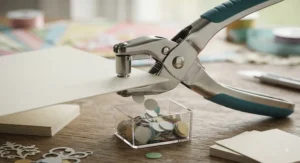
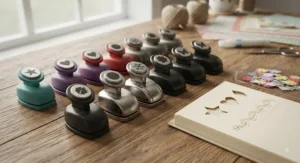
What is a hole punch for scrapbooking? At its simplest, it’s a hand tool that cuts clean holes — plain, decorative, or structural — through paper, cardstock, and sometimes chipboard, letting you add embellishments, set eyelets, create binding holes for albums, or simply punch a shape to stick onto a layout. But “simplest” is doing a lot of work in that sentence, because the punch that effortlessly cuts a delicate snowflake from thin vellum is rarely the same tool that will survive punching binding holes through a stack of 6mm chipboard covers.
This guide walks through seven genuinely available UK products, spanning budget decorative punches through to heavy-duty, multi-function tools, with honest analysis of what each one is actually built for. We’ll also dig into the difference between decorative punches and functional hole punches, how to handle thick paper without wrecking your blades, what “binding holes” really means for album-makers, and the paper crafting fundamentals that make everything else click into place. Let’s get your toolkit sorted properly.
Quick Comparison Table
| Product | Type | Best For | Price Range |
|---|---|---|---|
| We R Memory Keepers Crop-A-Dile II Big Bite Punch | Multi-function heavy-duty | Chipboard, eyelets and binding holes in one tool | £20-£30 range |
| Vaessen Creative Heavy Duty Craft Punch (Circle Ø1.5″) | Heavy-duty decorative | Punching thick paper up to 500gsm | £10-£20 range |
| Fiskars 1-inch Round-n-Round Medium Squeeze Punch | Decorative squeeze punch | Low-effort circle punching for regular cardstock | Under £15 |
| Vaessen Creative Paper Hole Punch (XXXXL) | General-purpose hole punch | Everyday hole punching up to 220gsm | Under £15 |
| Vaessen Creative Star/Flower Craft Punch Sets | Decorative punches | Themed embellishments and multi-size sets | £10-£20 range |
| 6 Hole Punch Binder Puncher (Adjustable A5) | Binding punch | Junk journal and planner binding holes | Under £15 |
| LAMXD 3-in-1 Corner Rounder Punch | Multi-function corner and hole punch | Rounding corners plus binder-ring holes in one pass | Under £20 |
Scanning across the table, there’s a clear split between decorative punches designed for embellishment work and structural punches designed for functional holes — binding, eyelets, ring binders. The We R Memory Keepers Crop-A-Dile II Big Bite Punch sits at the top of the price range precisely because it straddles both jobs, while single-purpose decorative punches like the Vaessen Creative Star/Flower Craft Punch Sets stay cheaper by doing one thing very well. Reviewers consistently note that buying one heavy-duty tool up front saves money over replacing cheap punches that fail on thicker cardstock, a theme we’ll return to throughout this guide.
💬 Just one click — help others make better buying decisions too!😊
Top 7 Hole Punches for Scrapbooking: Expert Analysis
1. We R Memory Keepers Crop-A-Dile II Big Bite Punch — the all-in-one workhorse for serious scrapbookers
The We R Memory Keepers Crop-A-Dile II Big Bite Punch is built to punch two hole sizes — 1/8 inch and 3/16 inch — through materials that would destroy a standard craft punch, including chipboard, thin metal, leather and multiple layers of cardstock. Its 2-inch reach means you’re not limited to the edge of your page, and a sliding measurement guide helps you place holes consistently across a 12-inch layout, which matters enormously once you’re binding album pages or setting eyelets in a repeatable pattern.
Based on the spec comparison with lighter punches further down this list, what sets the Crop-A-Dile apart is genuine mechanical leverage: the handle locks flat for storage and the jaw is engineered to “chomp” rather than squeeze, which is why reviewers describe it lasting years of regular use where flimsier tools fail within months. Who should care about this one? Anyone assembling mixed-media albums, punching binding holes through book board covers, or setting eyelets and snaps as part of their layouts — this is a genuinely different category of tool to a decorative punch.
Aggregated reviewer sentiment across UK and international listings is strongly positive, with buyers particularly praising the comfort-grip handle for reducing hand fatigue during long crafting sessions, though a handful note the tool is noticeably heavier than pocket-sized punches.
Pros:
- ✅ Punches through chipboard, leather and multi-layer cardstock cleanly
- ✅ Doubles as an eyelet and snap-setting tool
- ✅ Sliding measurement guide for consistent hole placement
Cons:
- ❌ Bulkier and heavier than single-purpose decorative punches
- ❌ Higher price point than basic hole punches
Priced roughly £20-£30, it’s a genuine investment piece, but for anyone serious about album-making or mixed-media layouts, it earns that price back by replacing several weaker tools.
2. Vaessen Creative Heavy Duty Craft Punch (Circle Ø1.5″) — the specialist for thick paper and cardstock
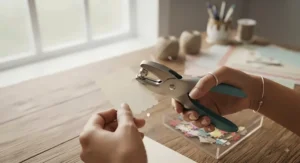
This is where “hole punch for thick paper” stops being a vague wish and becomes a genuine spec: the Vaessen Creative Heavy Duty Craft Punch is rated for paper weights from 80 all the way up to 500gsm, plus cork, shrink plastic, thin EVA foam and even thin metal sheet. That range matters because most standard decorative punches top out around 160-220gsm, leaving anyone working with heavyweight cardstock or layered pages stuck.
What most buyers overlook about this product is that the reinforced circle blade is specifically engineered so that repeated punching through dense material doesn’t dull the cutting edge as quickly as a standard punch would. The comfortable handle locks flat for storage, which is a small but genuinely useful detail once you own more than two or three punches and need to store them compactly. Reviewers consistently describe it as reliable “over and over again,” a phrase that matters more than it sounds for anyone who’s had a cheaper punch’s spring mechanism fail after a few dozen uses.
Who should care? Anyone working regularly with heavyweight cardstock, mixed-media layouts, or craft foam, where a standard-duty punch simply won’t cut cleanly.
Pros:
- ✅ Rated for paper up to 500gsm, plus foam, cork and thin metal
- ✅ Locking handle for flat, compact storage
- ✅ Reinforced blade holds its edge under repeated heavy use
Cons:
- ❌ Limited to circle shapes at this specific size
- ❌ Overkill (and unnecessary cost) for occasional light paper use
Sitting in the £10-£20 range, it represents strong value for anyone whose current punch keeps jamming or tearing on thicker stock.
3. Fiskars 1-inch Round-n-Round Medium Squeeze Punch — the low-effort decorative favourite
Fiskars built its reputation on the “squeeze punch” mechanism, and the 1-inch Round-n-Round Medium Squeeze Punch is a textbook example: an ergonomic handle design that requires noticeably less force than a standard lever punch, which makes a genuine difference during long crafting sessions or for anyone with reduced hand strength. It’s designed for use on cardstock rather than thin paper, and Fiskars backs it with a lifetime warranty — a detail worth knowing given how often craft punches get replaced rather than repaired.
Here’s what the spec sheet won’t tell you, but long-term reviewers note: this squeeze mechanism reduces the “snap” force compared with a lever punch, but the trade-off is that thin printer paper can crumple rather than cut cleanly, so it performs best on proper 65lb-plus cardstock. Based on the spec comparison with the Vaessen Creative Heavy Duty Craft Punch, the Fiskars punch is the better pick for regular decorative work on standard cardstock, while the Vaessen model wins once you’re working with genuinely heavyweight or unusual materials.
One long-term UK reviewer, having amassed a collection of these punches over 15 years, specifically praised the reliability and comfortable grip, which speaks to the brand’s staying power in scrapbooking circles.
Pros:
- ✅ Ergonomic squeeze action reduces hand fatigue
- ✅ Backed by a lifetime warranty from Fiskars
- ✅ Consistent, clean punches on proper cardstock
Cons:
- ❌ Not ideal on thin printer paper — can crumple rather than cut
- ❌ Single shape and size per unit, so variety means buying more
At under £15 per punch, it’s an accessible way to start building a themed punch collection without committing to a full multi-punch set immediately.
4. Vaessen Creative Paper Hole Punch (XXXXL) — the everyday all-rounder
If you need one dependable hole punch that isn’t tied to a specific decorative shape, the Vaessen Creative Paper Hole Punch covers the basics well. Rated for paper between roughly 80 and 220gsm, it’s aimed squarely at everyday tasks: gift labels, greeting cards, and general paper crafting where you need a clean, functional hole rather than a themed embellishment.
The honest analytical take here is that this punch occupies the sensible middle ground most scrapbookers actually live in day to day — not the specialist heavy-duty tool, not a single-shape decorative punch, just a reliable everyday puncher. The manufacturer notes you can sharpen the cutting blade by punching through aluminium foil a few times, a maintenance trick worth knowing regardless of which punch you own, since it meaningfully extends the working life of the blade.
Who should care about this one? Beginners building their first punch toolkit, or anyone who wants a dependable backup punch for basic tasks so their decorative punches stay reserved for feature work rather than everyday holes.
Pros:
- ✅ Handles paper up to 220gsm without straining
- ✅ Child-friendly, easy-to-use mechanism
- ✅ Blade can be resharpened using household foil
Cons:
- ❌ Not rated for genuinely thick cardstock or chipboard
- ❌ Purely functional — no decorative shape options
Priced under £15, this is a sensible first purchase for anyone starting out in paper crafting who doesn’t yet know which specialist punches they’ll actually need.
5. Vaessen Creative Star/Flower Craft Punch Sets — themed decorative punches for embellishment work
Decorative punches are where scrapbooking pages get their personality, and Vaessen Creative’s Star and Flower Craft Punch Sets deliver exactly that: three punches per set at graduated sizes (commonly around 15mm, 25mm and 37.5mm), letting you layer matching shapes at different scales across a single layout. Rated for paper between 90 and 250gsm, with thinner or thicker stock recommended to be punched alongside a compatible weight for a cleaner cut.
What most buyers overlook about punch sets like this is the layering potential — using the small, medium and large cut-outs from the same shape family together creates a far more polished, dimensional look than a single punch size ever can. Reviewers describe the results as consistently crisp, though several UK buyers note that the cut-out stencil left behind (the negative space in the paper) is just as usable as the punched-out shape itself, effectively doubling the creative value of each punch.
Who should care? Anyone building themed layouts — a summer holiday spread with sun and flower motifs, a winter page with stars — where matching, graduated decorative shapes do more visual work than a single plain hole ever could.
Pros:
- ✅ Three graduated sizes per set for layered designs
- ✅ Both the punched shape and the stencil cut-out are usable
- ✅ Works across cardstock, photos, cork and thin foam
Cons:
- ❌ Struggles with paper outside the 90-250gsm range without backing
- ❌ Fixed shape means less versatility than a plain circle punch
Typically priced in the £10-£20 range per set, these represent solid value given you’re effectively getting three punches for one price.
6. 6 Hole Punch Binder Puncher (Adjustable A5) — purpose-built for binding holes
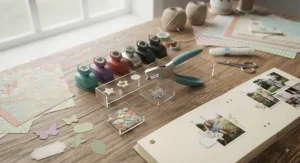
This is the product to reach for when “binding holes” is the actual goal rather than decoration. The 6 Hole Punch Binder Puncher is adjustable across multiple positions to suit A5, personal and pocket-size ring-bound formats, with an integrated ruler and hole-position marking so repeated pages line up consistently — essential for any multi-page album, planner insert, or junk journal bound with a ring mechanism rather than stitching or tape.
On paper, this means considerably more precision than eyeballing hole placement with a single hole punch, which matters enormously once you’re binding more than a handful of pages and need every sheet to sit flush against the last. The built-in waste chamber keeps punched chips contained rather than scattered across your workspace, a small detail that reviewers repeatedly flag as more useful in daily use than it sounds on the spec sheet. It punches roughly 6-8 sheets at a time depending on paper weight, so thicker scrapbook pages may need punching individually rather than in a stack.
Who should care? Anyone building refillable, ring-bound scrapbook albums, travel journals, or planner-style memory books where consistent binding holes matter more than decorative flourish.
Pros:
- ✅ Adjustable spacing suits A5, personal and pocket ring formats
- ✅ Integrated ruler ensures consistent page-to-page alignment
- ✅ Enclosed waste chamber keeps punched chips contained
Cons:
- ❌ Limited sheet capacity per punch on heavier cardstock
- ❌ Only useful for ring-bound formats, not stitched or tape-bound albums
At under £15, it’s an inexpensive but genuinely essential purchase for anyone moving from single-layout cards into full ring-bound scrapbook albums.
7. LAMXD 3-in-1 Corner Rounder Punch — corners, holes and binder rings in a single tool
Rounding sharp photo and page corners is one of those small finishing touches that noticeably lifts a layout’s overall polish, and the LAMXD 3-in-1 Corner Rounder Punch combines that function with a built-in hole puncher and a loose-leaf binder ring, covering three common scrapbooking needs in a single compact tool. It offers multiple corner radius options, so you’re not locked into one rounding style across an entire project.
Here’s what the spec sheet won’t tell you, but practical use makes clear: combining functions in one tool inevitably means each individual function is slightly less specialised than a dedicated single-purpose punch, but for anyone without space or budget for a full toolkit, that trade-off is usually worth it. Based on the spec comparison with the 6 Hole Punch Binder Puncher, the LAMXD tool is better suited to lighter, occasional binding needs, while the dedicated 6-hole punch wins for anyone doing serious, repeated multi-page album work.
Who should care? Beginners building their first scrapbooking toolkit who want maximum function per pound spent, or anyone who only occasionally needs corner rounding and binder-ring holes rather than as a core, repeated task.
Pros:
- ✅ Combines corner rounding, hole punching and binder ring in one tool
- ✅ Multiple corner radius options for varied finishing styles
- ✅ Compact and genuinely portable for craft fairs or classes
Cons:
- ❌ Individual functions are less robust than dedicated single-purpose tools
- ❌ Not rated for the heaviest cardstock or chipboard
Priced under £20, it’s a smart multi-function starter buy, particularly for anyone still working out which specialist tools they’ll want to invest in next.
Getting Started: A Practical Guide to Using Your Hole Punch
The single biggest mistake newcomers make is testing a brand-new punch straight on their best cardstock. Instead, run a few practice sheets of scrap paper at the same weight through it first — this reveals how much force the mechanism actually needs, and whether the punch is centred correctly before you commit to your finished layout. For decorative punches especially, check the underside window (where fitted) so you can see exactly where the design will land before you press down, since even a millimetre of misalignment is obvious on a finished page.
Maintenance matters more than most beginners expect. A blade that’s cutting cleanly today will eventually dull, and the classic fix — running the punch through a few sheets of aluminium foil — genuinely works, resharpening the cutting edge without needing to buy a replacement tool. For heavy-duty punches like the We R Memory Keepers Crop-A-Dile II Big Bite Punch, occasional storage with the handle locked flat also protects the spring mechanism from unnecessary wear when it’s not in use.
The most common mistake in the first month of scrapbooking with a new punch collection is forcing a tool beyond its rated paper weight — jamming a 300gsm punch by pushing it through 500gsm board, for instance. Check the manufacturer’s gsm rating before you start a project, not after a punch jams halfway through your favourite piece of cardstock; it’s a five-second check that saves both your materials and your tool.
Real-World Scenarios: Matching Your Punch to Your Project
Picture three different scrapbookers, each with a genuinely different punching need.
First, there’s the card-maker and casual layout hobbyist, working mostly with standard 200-250gsm cardstock and wanting the occasional decorative flourish. For this profile, a combination of the Fiskars 1-inch Round-n-Round Medium Squeeze Punch and a Vaessen Creative Star/Flower Craft Punch Set covers most needs — reliable everyday cutting plus themed embellishments for special layouts, without overspending on heavy-duty capability that would rarely get used.
Second, consider the junk journal and album-maker who works with thick, layered pages, chipboard covers and multiple binding formats. Here, the We R Memory Keepers Crop-A-Dile II Big Bite Punch paired with the 6 Hole Punch Binder Puncher becomes essential — one for punching through dense cover material and setting eyelets, the other for consistent, aligned binding holes across dozens of interior pages.
Third, picture the newer crafter still building a first toolkit on a tighter budget, wanting maximum flexibility without five separate purchases. The LAMXD 3-in-1 Corner Rounder Punch genuinely earns its place here, covering corner rounding, basic hole punching and binder-ring holes in a single affordable tool, buying time to work out which specialist punches are actually worth the upgrade later.
How to Choose a Hole Punch for Scrapbooking
- Check the maximum rated paper weight first. A punch rated to 220gsm will jam or tear on anything heavier, so match the tool to your actual materials rather than assuming “one punch fits all.”
- Decide between decorative and functional first. Punches designed to cut shapes for embellishment work very differently to punches designed to create structural or binding holes — buying the wrong category wastes money.
- Consider your hand strength and session length. Squeeze-mechanism punches like the Fiskars range need noticeably less force than traditional lever punches, which matters over a long crafting session.
- Think about storage and portability. A locking, flat-storing punch is far easier to keep organised as your collection grows than one that stays permanently open.
- Factor in reach. Standard punches only reach an inch or two from the paper’s edge; if you need to punch holes in the middle of a 12-inch layout, you’ll need a long-reach or specialist tool.
- Match binding punches to your actual binding format. A 6-hole punch is useless if your album uses a 2-ring or comb-binding mechanism, so confirm compatibility before buying.
- Weigh multi-function versus single-purpose. Combination tools like the LAMXD punch save money and space early on, but dedicated single-purpose punches generally outperform them once a specific task becomes a core, repeated part of your process.
For a broader sense of how paper weight and grammage actually work — genuinely useful background before buying any punch — Wikipedia’s overview of paper grammage explains the gsm measurement system clearly.
Decorative Punches vs Functional Hole Punches: The Full Comparison
| Factor | Decorative Punches | Functional Hole Punches |
|---|---|---|
| Primary purpose | Cutting themed shapes for embellishment | Creating plain, structural or binding holes |
| Typical paper range | 80-250gsm depending on model | Often rated higher, up to 500gsm on heavy-duty models |
| Design variety | Wide — stars, flowers, circles, borders | Narrow — usually round or standard sizes only |
| Best For | Fiskars 1-inch Round-n-Round Medium Squeeze Punch, Vaessen Creative Star/Flower Craft Punch Sets | 6 Hole Punch Binder Puncher, We R Memory Keepers Crop-A-Dile II Big Bite Punch |
| Ideal user | Card-makers, layout decorators | Album-binders, planner and journal makers |
The table makes the distinction fairly clear: decorative punches are about visual variety and embellishment, while functional punches are about structural consistency and durability under thicker materials. Most experienced scrapbookers end up owning both categories rather than choosing one, since a finished album genuinely needs both — decorative touches on individual pages, and reliable binding holes holding the whole thing together. Reviewers who’ve built collections over several years consistently recommend starting with one solid functional punch and one solid decorative punch before expanding into themed sets.
✨ Don’t Miss These Exclusive Deals!
🔍 Take your scrapbooking toolkit to the next level with these carefully selected punches. Click on any highlighted item to check current pricing and availability. These tools will help you create beautifully finished layouts and albums your friends and family will treasure!
Common Mistakes When Buying and Using Scrapbooking Punches
The most frequent mistake is buying based on shape alone without checking the rated paper weight, which leads directly to jammed mechanisms and torn cardstock down the line. A close second is assuming a single punch can handle every job — using a delicate decorative punch to try to create binding holes through chipboard will damage the blade quickly, since it was never engineered for that kind of repeated structural stress.
Many beginners also skip test punches on scrap material before committing to their actual project sheet, which means the first “mistake” happens on a piece of cardstock they actually wanted to keep. Storage is another overlooked issue — leaving punches in a squeezed or locked-closed position for extended periods can weaken the spring mechanism over time, whereas storing them flat and unlocked (or locked flat where the tool supports it) preserves performance considerably longer. Finally, skipping basic blade maintenance, like the aluminium foil sharpening trick, means replacing punches sooner than necessary when a two-minute fix would have extended their working life significantly.
Paper Crafting Essentials: What Actually Belongs in Your Toolkit
Paper crafting as a broader hobby extends well beyond punches, and understanding where punches fit into that wider toolkit helps clarify what to prioritise first. A reliable trimmer for straight cuts, a bone folder for crisp creases, adhesive suited to your paper weight, and a small selection of punches cover the genuine essentials for most scrapbookers — everything else is expansion rather than necessity. The scrapbooking and papercraft hobby itself has deep roots in the UK, tracing back through Victorian-era commonplace books and keepsake albums into the structured, embellished layouts recognisable today, a lineage explored in detail through the Victoria and Albert Museum’s writing on the history and craft of bookbinding.
When building out a paper crafting toolkit, prioritise versatility before variety: one dependable general-purpose punch, one heavy-duty option for thicker materials, and a small themed decorative set will cover the overwhelming majority of layouts most hobbyists actually create. Specialist tools — corner rounders, eyelet setters, multi-hole binding punches — are worth adding once a specific technique becomes a repeated part of your process rather than a one-off experiment.
Punching Thick Paper Without Ruining Your Blades
Thick paper and cardstock genuinely separates capable punches from disappointing ones, and the difference usually comes down to blade geometry and mechanical leverage rather than brand name alone. What most buyers overlook is that “heavy duty” isn’t just marketing language — products like the Vaessen Creative Heavy Duty Craft Punch, rated to 500gsm, use a reinforced cutting edge specifically engineered to resist dulling under repeated pressure on dense material, unlike standard punches that simply weren’t built for that stress.
A few practical techniques make a genuine difference regardless of which punch you own: punching on a firm, flat surface rather than a soft mat improves clean-cut consistency, and for card at the very top of a punch’s rated range, a brief warm-up on scrap material of the same weight helps identify whether the tool can handle it before you risk your finished project. If a punch is rated to, say, 220gsm and you’re working with 250gsm card, backing it with a single sheet of thinner scrap paper during the punch can sometimes produce a cleaner cut than forcing the heavier sheet through alone — though this isn’t a substitute for simply buying a punch rated for your actual materials.
Understanding Binding Holes for Albums and Journals
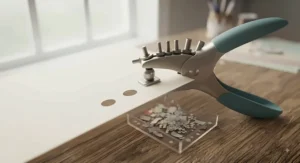
Binding holes serve a genuinely different function to decorative or embellishment holes, and getting them wrong is one of the more frustrating mistakes in scrapbook album-making, since misaligned holes mean every subsequent page sits slightly askew. The core principle is consistency: every page in a ring-bound album needs its holes in precisely the same position, which is exactly why a dedicated tool with a built-in ruler and positioning guide, like the 6 Hole Punch Binder Puncher, outperforms eyeballing hole placement with a basic single punch.
Different binding formats need different hole configurations entirely — a 2-ring album, a 6-ring personal planner format, and a comb or coil-bound journal are not interchangeable, so confirming your album’s actual binding mechanism before punching a single hole saves considerable frustration. For thicker album covers specifically, a heavy-duty tool capable of handling chipboard, such as the We R Memory Keepers Crop-A-Dile II Big Bite Punch, is often necessary since standard binding punches are rated for interior pages rather than dense cover board.
Frequently Asked Questions
❓ What's the best hole punch for scrapbooking thick cardstock?
❓ Can decorative punches be used to create binding holes?
❓ How do I stop my hole punch from jamming on thick paper?
❓ What's the difference between a squeeze punch and a lever punch?
❓ How often should I sharpen or replace a scrapbooking punch?
Conclusion
There’s no single “best” hole punch for scrapbooking — there’s the right punch for what you’re actually making. For everyday decorative work on standard cardstock, the Fiskars 1-inch Round-n-Round Medium Squeeze Punch and Vaessen Creative Star/Flower Craft Punch Sets offer reliable, low-effort results that fit comfortably into most budgets. For thick paper, chipboard and genuinely heavy-duty projects, the Vaessen Creative Heavy Duty Craft Punch and We R Memory Keepers Crop-A-Dile II Big Bite Punch earn their higher price tags through durability and versatility that lighter tools simply can’t match. And for anyone building ring-bound albums or journals, the 6 Hole Punch Binder Puncher and LAMXD 3-in-1 Corner Rounder Punch solve the specific, structural challenge of consistent binding holes.
What matters more than any single purchase is matching the tool to the task: check paper weight ratings before you buy, keep decorative and functional punches distinct in your toolkit, and maintain your blades so they last years rather than months. Build that foundation, and whichever project you tackle next — a card, a layout, or a full album — you’ll have the right tool already in hand.
Recommended for You
- Desk Stapler Under £10: 7 Best Budget Picks for 2026
- PVA Glue for Kids Crafts: 7 Best Picks Parents Trust (2026)
- Washi Tape Sets: 7 Brilliant Picks for Every Craft Box
Disclaimer: This article contains affiliate links. As an Amazon Associate, I earn from qualifying purchases. If you purchase products through these links, we may earn a small commission at no additional cost to you.
✨ Found this helpful? Share it with your friends! 💬🤗
