
In This Article
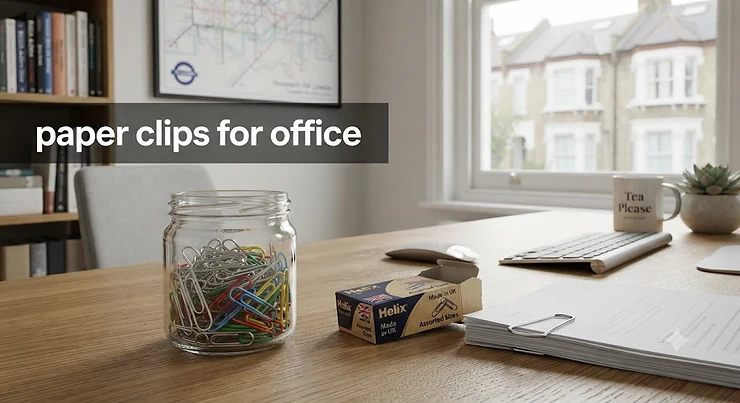
You wouldn’t think a strip of bent wire could ruin your afternoon, but anyone who has watched a stack of invoices slide off a desk and scatter under three filing cabinets knows better. Paper clips for office use are one of those things nobody thinks about until the cheap ones start rusting on a client’s contract or snapping mid-grip during a board meeting. Paper clips for office settings are small wire or plastic fasteners designed to hold sheets together without punching holes or leaving adhesive residue, and the right ones save real time across a working week. The basic wire design has barely changed since it first solved this practical problem, and that staying power says something about how well the concept works when the execution is right.
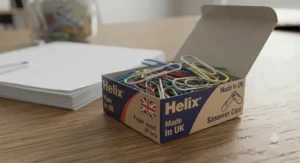
This guide isn’t a rehash of a supplier’s spec sheet. We’ve dug into real UK stationery brands, aggregated genuine reviewer feedback, and worked out which products earn their place on a busy desk versus which ones look fine in a listing photo and fall apart in week two. Whether you’re restocking a small accountancy practice, kitting out a home office, or trying to stop the finance team raiding the stationery cupboard every Friday, you’ll find a practical match here. We’ll also cover the wider stationery picture — drawing pins for cork boards, general document fastening choices, and desk organisation that actually sticks — because a good paper clip rarely works in isolation from the rest of your desk setup.
Prices below are shown as ranges rather than fixed figures, since Amazon pricing shifts often; always check the current price on the listing before buying.
Quick Comparison Table
| Product | Type | Price Range | Best For |
|---|---|---|---|
| Rapesco Supaclip 40 Dispenser | Refillable clip dispenser | £8-£14 | No-pierce fastening at speed |
| Q-Connect No.1 Paper Clips (100 pack) | Standard steel clips | Under £3 | Everyday budget use |
| Whitecroft Essentials Steel Paperclip (1000 pack) | Bulk steel clips | £8-£15 | High-volume offices |
| Vinaco Coloured Assorted Paper Clips | Vinyl-coated colour clips | £6-£10 | Colour-coded filing |
| Fellowes Paperclip Value Pack | Standard steel clips | £4-£9 | Reliable mid-range stock |
| APLI Jumbo 50mm Paper Clips | Large steel clips | £5-£11 | Thick reports and bundles |
| RS PRO Giant Wavy Paperclips (76mm) | Non-slip jumbo clips | £6-£12 | Heavy, slippery document stacks |
Looking at the spread above, the gap isn’t really about who holds paper — nearly all of them do that adequately — it’s about how they behave under real office pressure. The Rapesco Supaclip 40 Dispenser earns its higher price by removing the fumbling that standard clips involve when you’re processing a tall stack quickly, while the Whitecroft Essentials Steel Paperclip pack wins on pure economics for anyone burning through hundreds of clips a month. If your documents are consistently thick or glossy, skip straight to the jumbo or wavy options rather than doubling up standard clips, which is a false economy reviewers flag repeatedly.
💬 Just one click — help others make better buying decisions too!😊
Top 7 Paper Clips for Office: Expert Analysis
1. Rapesco Supaclip 40 Dispenser — no-pierce fastening at speed
The standout here is simple: you press, the clip grips, no bending wire by hand. The Rapesco Supaclip 40 Dispenser houses a stack of stainless steel Supaclips that snap onto paper in one motion, holding up to 40 sheets without punching a hole or leaving the ugly kink a folded clip leaves behind. Reviewers consistently note that the mechanism is smoother than budget plastic dispensers and that the stainless clips resist the rust that plagues cheaper steel after a few months in a humid stockroom. Based on the spec comparison, this is the pick for reception desks, post rooms, and anyone processing dozens of small bundles daily, since the speed gain adds up fast when you’re clipping invoices one after another. A common theme in aggregated feedback is that first-time buyers underestimate how much friction ordinary paper clips add to repetitive tasks until they switch. The refill cartridges cost more per clip than a bag of loose paper clips, so budget-conscious buyers doing occasional clipping may not recoup the premium.
Pros:
- ✅ One-handed application with no bent wire fumbling
- ✅ Stainless steel resists rust in damp storerooms
- ✅ Holds up to 40 sheets without piercing paper
Cons:
- ❌ Refill cartridges cost more per clip than loose packs
- ❌ Dispenser itself is an extra upfront purchase
Prices sit around £8-£14 depending on refill bundle size, and for high-throughput desks the time saved on clip fumbling makes this one of the better value picks on this list despite the higher unit cost.
2. Q-Connect No.1 Paper Clips (100 pack) — best British-brand value pick
What most buyers overlook about this model is that it’s the exact clip most UK offices have used for decades — no gimmicks, just a reliable No.1 size steel clip in a 100-pack. Each clip is roughly 28mm, the standard size for a handful of A4 sheets, made from polished steel wire that holds a firm grip without the plastic coating that can peel and leave residue on documents over time. Based on the spec comparison, this is the pick for anyone who just wants a dependable, no-fuss clip for general filing, memos, and everyday paperwork without paying for features they won’t use. Aggregated reviewer sentiment describes the Q-Connect No.1 Paper Clips as consistent batch to batch, with few complaints about snapping or slipping compared with unbranded imports at a similar price. What the spec sheet won’t tell you, but reviewer patterns suggest, is that buying the 100-pack rather than jumbo multipacks reduces the temptation to overstock a drawer that then goes stale and rusts before it’s used.
Pros:
- ✅ Trusted UK stationery brand with consistent quality
- ✅ Standard 28mm size fits most everyday document stacks
- ✅ Genuinely low price for the pack size
Cons:
- ❌ Plain steel can mark glossy paper over long storage
- ❌ Not ideal for thick bundles above 10-15 sheets
At under £3 for the pack, this is close to the cheapest genuinely reliable option available, and it’s the clip most likely to already be sitting in a UK stationery cupboard right now.
3. Whitecroft Essentials Steel Paperclip (1000 pack) — best for high-volume offices
The standout feature is scale — a 1000-count box designed for offices that go through clips by the handful every single day rather than the odd envelope here and there. The Whitecroft Essentials Steel Paperclip pack uses standard-gauge steel wire in the common 33mm size, and the bulk packaging format means restocking desk trays and post-room bins happens far less often. Based on the spec comparison, per-unit cost drops sharply at this volume, which matters for procurement teams tracking stationery spend across a whole floor. Reviewers consistently report that the finish holds up reasonably well in dry office conditions, though a handful of comments mention the need to store the box somewhere dry, since loose bulk steel is more exposed to moisture than individually wrapped packs. This is genuinely a case where buying bigger saves money without sacrificing quality, provided the office has the through-put to use the stock before it sits untouched for a year.
Pros:
- ✅ Lowest per-clip cost of any option on this list
- ✅ Reduces how often stock needs reordering
- ✅ Standard size suits the vast majority of office paperwork
Cons:
- ❌ Bulk box takes up more drawer or shelf space
- ❌ Loose steel needs dry storage to avoid rust
Typically priced in the £8-£15 range for the full 1000-count box, this works out as one of the cheapest per-unit options reviewed here, best suited to teams rather than a single desk.
4. Vinaco Coloured Assorted Paper Clips — best for colour-coded filing
The hook is straightforward: eight or more colours in one tub, useful the moment you need to tell three different clients’ paperwork apart at a glance. The Vinaco Coloured Assorted Paper Clips are vinyl-coated steel, which means the coating protects both the clip from rust and the paper from the metal-on-paper marks plain steel sometimes leaves on softer stock. Here’s what to weigh: the coating adds a small amount of bulk compared with bare wire, so very thick stacks may need a slightly larger clip size rather than a standard one. Reviewers frequently mention using these for colour-coding invoice status, client folders, or teaching materials, and a common theme in feedback is that the coating resists chipping better than some cheaper coloured alternatives that flake within weeks. For anyone managing a colour-coded filing system — accountants tracking payment stages, teachers sorting by class, project managers separating priority tiers — this is the most practically useful product on the list, not just the prettiest.
Pros:
- ✅ Multiple colours enable at-a-glance filing systems
- ✅ Vinyl coating protects paper from metal marks
- ✅ Good rust resistance versus bare steel clips
Cons:
- ❌ Coating adds slight bulk versus plain wire clips
- ❌ Assorted colour mix means fewer of each individual shade
Expect to pay around £6-£10 for a mixed-size, mixed-colour tub, which is solid value once you factor in the time saved not having to label or sort documents manually.
5. Fellowes Paperclip Value Pack — best reliable mid-range stock
The short version: a well-established stationery brand offering a dependable steel clip without the premium price tag of dispenser systems. The Fellowes Paperclip Value Pack sits in that comfortable middle ground — sturdier gauge wire than the cheapest own-brand imports, but without the added mechanism cost of a Supaclip-style dispenser. Based on the spec comparison, the wire gauge here holds its shape better under repeated bending than budget unbranded clips, which matters if staff regularly unclip and reclip the same document during a review cycle. Aggregated review sentiment for Fellowes stationery products broadly describes them as consistent and long-lasting, echoing the brand’s wider reputation in office equipment. What most buyers overlook is that a slightly thicker gauge clip, while marginally more expensive, actually survives more reuse cycles than the thinnest wire options, so it can be the cheaper choice over a year of active use rather than a single purchase.
Pros:
- ✅ Well-known brand with consistent manufacturing quality
- ✅ Wire gauge holds shape through repeated use
- ✅ Solid middle ground between budget and premium options
Cons:
- ❌ Not the cheapest per-unit price on this list
- ❌ Standard packaging, no dispenser convenience
Pricing generally falls in the £4-£9 range depending on pack size, positioning it as a sensible default for offices that want dependable stock without shopping at either extreme.
6. APLI Jumbo 50mm Paper Clips — best for thick reports and bundles
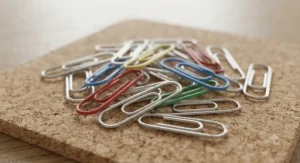
The standout advantage is sheer holding capacity — a 50mm clip built specifically to grip document bundles that would slide straight out of a standard 28mm clip within minutes. The APLI Jumbo 50mm Paper Clips use a wider wire loop and stronger tension, which means a 20-30 page report stays put through a commute or a courier bag rather than shedding pages en route. Based on the spec comparison, the extra size is the entire point here: reviewers note that standard clips simply aren’t rated for anything beyond light bundles, and trying to force one onto a thick report tends to bend the clip out of shape permanently. This is honest analysis worth repeating rather than marketing spin — jumbo clips genuinely solve a problem standard clips can’t, rather than being an oversized novelty. On the flip side, using a jumbo clip on a two or three-page memo is overkill and makes the stack bulkier than necessary in a filing tray.
Pros:
- ✅ Holds thick bundles that standard clips can’t manage
- ✅ Wider loop distributes tension across more sheets
- ✅ Sturdy build reduces permanent bending under load
Cons:
- ❌ Too large and bulky for thin, everyday documents
- ❌ Slightly pricier per unit than standard-sized clips
At roughly £5-£11 depending on pack size, these earn their place specifically for reports, dissertations, and courier-bound bundles rather than general desk use.
7. RS PRO Giant Wavy Paperclips (76mm) — best for heavy, slippery document stacks
The distinguishing feature is the wavy profile — a zigzag wire shape designed to bite into glossy or slippery paper stock that a smooth clip simply slides off. The RS PRO Giant Wavy Paperclips measure a substantial 76mm, aimed squarely at bulky specification documents, tender submissions, or glossy printed reports that standard clips can’t grip reliably. Reviewers consistently note that the wavy design noticeably reduces slippage compared with straight-wire jumbo clips, particularly on laminated covers or coated paper stock used for client-facing documents. Here’s what to weigh: the size that makes these effective on thick bundles also makes them impractical and slightly awkward for anything smaller, so they’re a specialist tool rather than a desk-drawer default. For legal firms, architecture practices, or anyone regularly binding glossy tender documents, this is genuinely the most fit-for-purpose option on the list rather than a general everyday clip.
Pros:
- ✅ Wavy grip resists slipping on glossy paper stock
- ✅ Handles genuinely bulky document bundles
- ✅ Sturdy gauge suited to specification-heavy documents
Cons:
- ❌ Impractical for everyday, thinner paperwork
- ❌ Bulkier storage footprint than standard clip sizes
Expect around £6-£12 for a pack, a reasonable spend for the specific niche these clips solve, though not a substitute for your everyday stock.
Practical Usage Guide: Setting Up Your Office Fastening System
Getting the most out of paper clips for office use starts before you even open the packet. Assign a dedicated tray or magnetic holder near the printer, not a random drawer three desks away, since the biggest time-waster reviewers mention isn’t the clip itself but hunting for one mid-task. Sort by size on day one — standard, jumbo, and coloured clips in separate compartments — because mixing them defeats the point of having specialised sizes at all. A quick maintenance habit worth adopting: check bulk boxes for surface rust every few months if they’re stored anywhere near a window or radiator, since humidity is the single biggest cause of premature failure reviewers report.
One optimisation trick that rarely makes it onto Amazon listings: pre-clip recurring document types, like weekly timesheets or standard client packs, in batches during a quiet moment rather than one at a time under deadline pressure. It sounds trivial, but it removes a small daily friction point that adds up across a working month. A common mistake in the first 30 days of restocking an office is over-ordering jumbo or specialty clips because they look more useful in the listing photos, when in practice the bulk of daily use is still standard-size clips for everyday paperwork.
✨ Restocking the stationery cupboard this month?
🔍 Compare current prices on the picks above before you order — a five-minute check now can save a repeat order next quarter.
Real-World Scenarios: Which Paper Clips Suit Your Job
The sole trader invoicing weekly: if you’re a freelance bookkeeper working through a stack of client invoices every Friday, the Q-Connect No.1 Paper Clips cover nearly everything you’ll touch, with a handful of Vinaco Coloured Assorted Paper Clips kept aside to flag overdue accounts at a glance.
The busy reception desk: a front-of-house role handling deliveries, signed forms, and visitor paperwork all day benefits most from the Rapesco Supaclip 40 Dispenser — the one-motion application matters when you’re processing documents between phone calls and can’t afford fiddly manual clipping.
The small architecture or legal practice: teams regularly binding glossy tender documents or thick specification packs should stock the RS PRO Giant Wavy Paperclips and APLI Jumbo 50mm Paper Clips as standard, since the volume and stock type genuinely call for both jumbo grip strength.
The busy procurement office: anyone ordering stationery centrally for twenty-plus desks should default to the Whitecroft Essentials Steel Paperclip 1000 pack for baseline stock, supplementing with smaller specialty packs for teams with specific needs rather than trying to bulk-buy every variant.
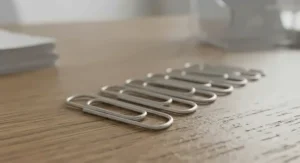
Problem → Solution: Common Paper Clip Headaches Solved
Problem: clips keep slipping off glossy or coated paper. Standard smooth-wire clips rely on friction that coated paper simply doesn’t offer. Switch to a wavy-profile clip like the RS PRO Giant Wavy Paperclips, which bite into the surface rather than sliding along it.
Problem: clips are rusting in storage before they’re even used. This nearly always comes down to humidity. Move bulk boxes away from windows, kettles, or radiators, and consider coated clips like the Vinaco Coloured Assorted Paper Clips, which resist surface rust noticeably better than bare steel.
Problem: thick reports won’t stay clipped together. A standard 28mm clip simply isn’t rated for 20+ pages. Move up to the APLI Jumbo 50mm Paper Clips, which are built with a wider loop specifically for this load.
Problem: staff keep “borrowing” clips from other departments. This is a stock visibility issue more than a product one — a dedicated, clearly labelled dispenser like the Rapesco Supaclip 40 Dispenser on a shared desk reduces the ad hoc raiding that loose tubs invite.
Problem: filing looks identical across multiple ongoing projects. Colour-coding solves this instantly and costs almost nothing extra — the Vinaco Coloured Assorted Paper Clips let you assign a colour per project or client without buying separate labelling systems.
How to Choose Paper Clips for Office Use
Choosing the right paper clips for office use comes down to matching the clip to the actual paperwork rather than picking whatever’s cheapest per hundred. Work through these criteria in order:
- Count your typical stack thickness. Most everyday office paperwork is under 10 sheets, which suits a standard 28-33mm clip; anything regularly thicker calls for a jumbo size from the start.
- Check your paper finish. Glossy, laminated, or coated stock needs a wavy or textured grip clip rather than smooth wire, which will simply slide off.
- Estimate monthly volume. Occasional use suits a small pack; offices going through hundreds of clips a month save meaningfully with bulk boxes like the Whitecroft Essentials Steel Paperclip.
- Decide if speed matters more than cost. High-throughput desks benefit from dispenser systems like the Rapesco Supaclip 40 Dispenser, even at a higher per-clip price.
- Consider whether colour-coding would help. If you’re managing multiple ongoing projects or clients, coloured clips remove a whole layer of manual labelling.
- Factor in storage humidity. Bare steel in a damp stockroom rusts faster than vinyl-coated alternatives, so your storage conditions should influence the material you buy.
- Don’t over-buy specialty sizes. Jumbo and wavy clips solve specific problems; stocking too many relative to actual thick-document volume just wastes drawer space and budget.
Common Mistakes When Buying Office Stationery
The most frequent mistake buyers make with office stationery generally, not just clips, is treating price-per-unit as the only variable that matters. A slightly pricier clip that survives ten reuse cycles instead of three is cheaper over a year, even though the sticker price looks worse on day one. Another recurring pattern in aggregated review feedback is buying a single size and material for an entire office, then discovering weeks later that reception needs a fast dispenser while the archive room needs rust-resistant bulk stock — one product rarely serves every desk equally well.
A third mistake is ignoring paper finish entirely. Reviewers who bought smooth wire clips for glossy marketing materials consistently reported slippage, when a wavy-grip clip would have solved the issue for a few pence more per unit. Finally, buyers sometimes stock up on decorative or novelty clips that look appealing online but offer weaker wire tension than functional stock — fine for pinning a memo to a noticeboard, less fine for holding together a 15-page contract that needs to survive a courier bag.
Paper Clips vs Document Fastening Alternatives
Paper clips aren’t the only document fastening option, and knowing when to reach for something else matters as much as picking the right clip. Staples create a permanent bind, which suits archived documents that will never be reordered or added to, but they punch holes and can’t be removed without damage — a real downside for anything that might need amending later. Binder clips grip far more sheets than any paper clip and free-stand without a folder, making them better for thick reports that need to sit upright in a tray, though they’re bulkier and less tidy for filing flat in a drawer. Treasury tags and split pins allow full reordering of pages within a bound document, which paper clips can’t offer once a stack exceeds a handful of sheets, but they’re slower to apply for quick, temporary groupings.
For anything temporary, reorderable, or likely to be added to later — draft reports, working files, client correspondence still in progress — paper clips remain the most flexible document fastening choice, and that flexibility is exactly why they’ve outlasted more elaborate alternatives in daily office use. Where you genuinely need a permanent bind, staples still make more sense; where you need to stand a bulky report upright, a binder clip wins. The comfortable habit of workstation organisation — knowing which fastening method suits which task — is itself something HSE’s official DSE workstation guidance touches on as part of keeping a workspace genuinely functional rather than just tidy-looking, treating desk clutter and poor furniture organisation as a real contributor to strain over a working day, not just an aesthetic issue.
Drawing Pins for Cork Boards: The Complete Buying Guide
Drawing pins for cork boards solve a different problem to paper clips entirely — they’re for display, not bundling — but they belong in the same stationery drawer conversation because most offices need both. A drawing pin, known as a thumb tack in North American English, is a short pin with a flat, broad head that presses into place with thumb pressure, commonly used for hanging light items on a wall or noticeboard, and that simplicity is exactly why the design has barely needed reinventing. For a genuine cork board — as opposed to a magnetic or felt board — you want a sharp steel point rather than the softer, chunkier plastic-headed pins sold mainly for decoration, since a blunt point compresses cork instead of piercing it cleanly and eventually leaves the board looking pockmarked.
Brass-plated pins, like traditional StarPack Drawing Pins, resist corrosion better than plain steel and suit boards that see daily use for rotating memos, rotas, or notices. For genuinely heavy items — thicker printouts, laminated signs, multiple sheets pinned together — go for a longer pin length rather than doubling up standard pins, which tends to tear the cork rather than hold better. If the board is shared and gets pinned and unpinned constantly, a flat, wide head is easier on fingertips than the narrow domed heads found on some decorative designs. Buy these in bulk boxes rather than small blister packs; cork board pins have a habit of disappearing into carpets and desk gaps at a surprising rate, and a genuinely well-stocked board keeps a rotation of spares rather than running down to the last three pins before a big notice needs putting up.
Desk Organisation: Building a System That Works
Desk organisation isn’t really about looking tidy for a video call — it’s about not losing five minutes a day hunting for a paper clip, a pin, or a spare pen. Start with a simple hierarchy: whatever you touch most often — clips, a stapler, a pen — sits within arm’s reach in the top drawer or a desktop tray, while backup stock and specialty items like jumbo clips or spare pins live one drawer or shelf further away. Magnetic clip holders and small desktop dispensers, like the Rapesco Supaclip 40 Dispenser, do double duty here by keeping loose clips contained rather than rattling around a drawer bottom mixed in with pins, staples, and rubber bands.
A weekly two-minute reset — clearing loose clips back into their tray, binning bent or rusted ones, and topping up from bulk stock — prevents the slow creep of clutter that eventually makes a desk unusable without a proper clear-out. Colour-coded stationery, using something like the Vinaco Coloured Assorted Paper Clips, doubles as a desk organisation tool as well as a filing one, since a specific colour assigned to “urgent” or “pending review” is visible at a glance without opening a single folder. None of this needs to be elaborate or expensive — the goal is simply removing small daily frictions, and stationery that’s genuinely fit for purpose does most of that work on its own.
Long-Term Cost & Maintenance of Office Stationery
Paper clips look like a negligible line item on an office budget, and individually they are, but volume changes that picture. An office going through several hundred clips a month spends noticeably less per unit buying the Whitecroft Essentials Steel Paperclip 1000-count box than repeatedly restocking small packs, even accounting for some waste from rusted or bent clips over time. The real hidden cost isn’t the clip price at all — it’s staff time lost to fumbling with the wrong tool for the job, which is where a modest investment in a proper dispenser system like the Rapesco Supaclip 40 Dispenser tends to pay for itself over a few months in a high-throughput role.
Maintenance is minimal by design, which is part of the appeal — there’s no charging, no replacing parts, and no servicing required for basic wire clips. The only real maintenance consideration is storage: keeping bulk stock dry prevents the rust that otherwise shortens a clip’s usable life and wastes the money spent on it. Total cost of ownership for a decent stationery setup, spread across a full year, is genuinely one of the smallest line items in any office budget, but getting it wrong in small, repeated ways — the wrong size, the wrong material, poor storage — adds up in wasted time far more than it does in wasted pounds.
Features That Actually Matter (And Those That Don’t)
Wire gauge and grip design matter — a clip that holds its shape and bites properly into the paper is doing its actual job. Coating quality matters, since it directly affects rust resistance and how long stock survives in storage before use. Size accuracy matters too, because a genuinely 28mm clip that’s slightly undersized won’t grip a standard document stack reliably.
What doesn’t matter nearly as much as marketing photos suggest: elaborate decorative shapes, novelty colours beyond basic colour-coding needs, and premium packaging that adds cost without adding function. A clip shaped like a heart or a star holds paper exactly as well, or as poorly, as a standard clip of the same gauge — the shape is aesthetic, not functional. Similarly, branded dispensers that look sleek but hold fewer clips than a basic tub aren’t necessarily a practical upgrade if speed of refilling isn’t actually a bottleneck in your office. The spec sheet won’t tell you this directly, but reviewer patterns across multiple product categories suggest buyers regularly pay a premium for visual appeal on genuinely functional stationery items, when the underlying wire and coating quality is what determines whether the product actually performs.
Safety, Sustainability & Recycling Guide
Paper clips and drawing pins are low-risk items, but a few basics are worth knowing. Loose pins and clips left on desks or floors are a genuine, if minor, workplace trip and puncture hazard, particularly around shared boards where pins fall during changeovers — worth a mention in any basic office housekeeping routine. On the environmental side, steel paper clips and pins are fully recyclable as scrap metal rather than general waste; most UK local authorities accept small metal items like this at household waste and recycling centres or through scrap metal collection points, and several London boroughs’ waste guidance specifically confirms loose scrap metal can go through a reuse and recycling centre or a local scrap merchant rather than the general bin.
Vinyl-coated clips are slightly more complicated to recycle purely as metal because of the plastic coating, so if sustainability is a priority for your office, plain steel clips are marginally easier to process at end of life than coated alternatives, even though the coating offers better rust resistance while in use — a genuine trade-off worth weighing rather than a clear-cut choice either way. For offices tracking sustainability metrics, batching up a jar of spent or bent clips for a proper metal recycling run, rather than binning them individually, is a small but easy habit to build into a quarterly office clear-out.
Frequently Asked Questions
❓ What size paper clip should I use for office documents?
❓ Are paper clips or staples better for office paperwork?
❓ Do coloured paper clips work the same as plain steel ones?
❓ Can drawing pins damage a cork board over time?
❓ How many paper clips does a typical small office use per month?
Conclusion
There’s no single “best” paper clip for every office, and that’s really the honest takeaway here — the right pick depends on what you’re actually clipping, how often, and under what storage conditions. For general everyday use, the Q-Connect No.1 Paper Clips cover most desks without fuss. High-throughput reception or post-room roles get real value from the Rapesco Supaclip 40 Dispenser, while thick reports and glossy tender documents need the grip that only the APLI Jumbo 50mm Paper Clips or RS PRO Giant Wavy Paperclips can reliably provide. Bulk buyers managing a whole floor’s stationery cupboard save the most with the Whitecroft Essentials Steel Paperclip box, and anyone running a colour-coded filing system should keep the Vinaco Coloured Assorted Paper Clips within reach. Pair whichever clip suits your workload with proper drawing pins for the noticeboard and a genuinely organised desk drawer, and this small, unglamorous stationery category stops being something you think about at all — which, honestly, is the whole point.
✨ Ready to restock your desk properly?
🔍Check current prices on the picks above and pick the one that actually matches how your office works, not just the cheapest tub on the shelf.
Recommended for You
- Bulldog Clips vs Binder Clips: 7 Best UK Picks for 2026
- Hole Punch for Scrapbooking: 7 Best Picks Tested for 2026
- Desk Stapler Under £10: 7 Best Budget Picks for 2026
Disclaimer: This article contains affiliate links. As an Amazon Associate, I earn from qualifying purchases. If you purchase products through these links, we may earn a small commission at no additional cost to you.
✨ Found this helpful? Share it with your friends! 💬🤗
