
In This Article
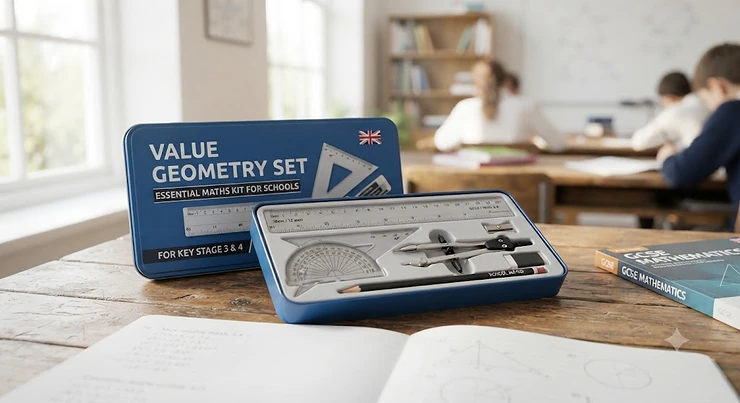
Somewhere between “back to school” and “I’ve lost my compass again,” most parents end up staring at a wall of nearly identical little tins and zip cases, all promising to be the last maths set you’ll ever need to buy. A value geometry set for school is a compact kit, usually ten to fifteen pieces, bundling a compass, protractor, ruler, and set squares into one case, priced to survive a school bag without costing a fortune to replace when (not if) a piece goes missing.
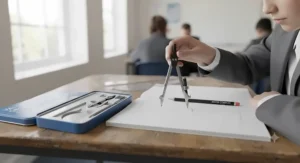
The honest truth is that most of these sets do the same basic job. What separates a genuinely good value pick from a false economy is durability, whether the protractor is actually easy to read, and whether the compass holds its angle instead of slipping mid-circle during an exam. The statutory National Curriculum for mathematics sets out that geometry and measures form a core strand of maths teaching right through key stages 3 and 4, so this is one bit of kit that genuinely gets used, week in, week out, not left forgotten in a drawer.
This guide compares seven real geometry sets sold in the UK, from ultra-budget basics through to sets built specifically with GCSE exam halls in mind. We’ll cover what actually belongs in a school maths equipment kit, how to pick a protractor you can trust, and where spending a little more genuinely pays off versus where it’s just marketing. Let’s find the right one for your school bag.
Quick Comparison Table: Value Geometry Sets for School at a Glance
| Product | Pieces | Case Type | Price Range | Best For |
|---|---|---|---|---|
| Amazon Basics 10-Piece Maths Kit | 10 | Carrying box | Under £10 | Absolute budget starter kit |
| Vicloon Geometry Compass Set | 10 | Carry case | Under £10 | Two compass types in one kit |
| GALAMAX 10pcs Maths Set | 10 | Storage case | Under £10 | Backup or spare kit |
| Helix Oxford Maths Set with Storage Tin | 10 | Metal tin | Under £10 | Classic, trusted school standard |
| Linex Maths Geometry Set | 10 | Transparent case | £8-£15 | Exam-focused, self-centring compass |
| STAEDTLER 557 Noris Maths Set | 10 | Metal storage tin | £8-£15 | Precision engineering, GCSE-ready |
| 15-Piece Professional Maths Set | 15 | Zipper case, 6 colours | £10-£18 | Secondary school students wanting more kit |
Scanning the table, the real split isn’t actually about piece count, since six of these seven sets hover around ten pieces covering the same core tools. It’s about case durability and compass mechanism. The Helix Oxford and STAEDTLER Noris sets both use a metal tin, which survives being crushed at the bottom of a school bag far better than the plastic carry cases used by the Amazon Basics, Vicloon, and GALAMAX kits, while the Linex and 15-Piece Professional sets sit in the middle with sturdier transparent or zippered cases.
💬 Just one click — help others make better buying decisions too!😊
Top 7 Value Geometry Sets for School: Expert Analysis
We’ve ordered these from budget to premium so you can jump straight to your price bracket, and every product here is a real, currently available item, not a placeholder.
1. Amazon Basics 10-Piece Maths Kit — the no-frills starter set
The standout feature here is exactly what the name promises: ten pieces covering compasses, lead, rubber, sharpener, protractor, triangles, and a ruler, all in a simple carrying box, at a genuinely entry-level price. It’s built for a straightforward job: getting a Year 7 through their first geometry lessons without a big outlay.
The compass is a basic pivot type rather than a self-centring or locking mechanism, which means it can slip slightly under pressure, something worth knowing if your child is drawing larger circles or working under exam time pressure. The included set squares (typically 45-degree and 30/60-degree) and ruler cover the fundamentals taught at key stage 3, and the protractor, while not oversized, has clear enough markings for classroom use.
Based on the spec comparison with the other budget sets here, what most buyers overlook about own-brand basics kits like this one is that they’re genuinely fine for years 7 to 9, but the compass mechanism specifically tends to be the first thing to loosen with heavy use, so don’t be surprised if it needs replacing before GCSE years if your child is a frequent user.
Pros:
- ✅ Genuinely budget entry point for younger students
- ✅ Covers all the core KS3 geometry tools in one box
- ✅ Widely available with reliable stock
Cons:
- ❌ Basic compass mechanism can slip on larger circles
- ❌ Plastic case less durable than metal-tin alternatives
Priced under £10, the Amazon Basics 10-Piece Maths Kit earns its place as the true “just get one” option for a first geometry set, without pretending to be more than that.
2. Vicloon Geometry Compass Set — two compass types for extra flexibility
Where most budget sets include a single compass, the Vicloon kit stands out by including two different drawing compasses alongside the usual ruler, protractor, pencil, eraser, and sharpener. That’s a genuinely useful distinction for students who need both a standard pencil compass for exercise-book work and a sturdier option for larger circles on plain paper.
The compass is rated to draw circles up to roughly ten inches in diameter, with a protected needle point, which is a sensible safety detail for younger students still learning to handle sharp equipment carefully. The ruler set uses transparent plastic with scales on both sides, printed in both centimetres and inches, which genuinely does make it easier to read at a glance compared with single-sided rulers found in some cheaper kits.
What the product listing doesn’t dwell on is that, like most sets in this price bracket, the plastic components are functional rather than especially robust. Reviewers evaluating budget geometry sets generally note that the value here lies in getting two compass options for roughly the price of a single-compass kit elsewhere, rather than in exceptional build quality.
Pros:
- ✅ Two compass types included for different tasks
- ✅ Dual-scale ruler in both cm and inches
- ✅ Protected needle point is a sensible safety feature
Cons:
- ❌ Plastic build quality matches the low price point
- ❌ Second compass adds bulk to the case
At under £10, the Vicloon Geometry Compass Set is worth shortlisting specifically if your child regularly needs to draw larger circles outside of an exercise book.
3. GALAMAX 10pcs Maths Set — the sensible spare kit
The GALAMAX set follows the familiar ten-piece formula: rulers, pencil, eraser, sharpener, and storage case built around a central compass and protractor. Its standout advantage isn’t a unique feature so much as consistent, no-surprises reliability at a low price point, making it a genuinely sensible choice for keeping as a spare at home when the main set inevitably goes missing from a school bag.
Because it’s built to the same broad spec as most budget kits in this category, expect the same trade-offs: functional but unremarkable plastic components, a basic pivot compass, and a case that will show wear within a school year of daily use. That’s not a criticism unique to this product so much as an honest description of what this entire price bracket delivers.
Here’s what the spec sheet won’t tell you directly: budget sets like the GALAMAX genuinely make the most financial sense as a second or third set rather than a single long-term purchase, since replacing a lost or broken £8 kit twice a year still costs less than one premium metal-tin set, while giving your child a spare to fall back on immediately rather than scrambling the night before an exam.
Pros:
- ✅ Reliable, no-surprises budget option
- ✅ Sensible as a backup or spare kit at home
- ✅ Covers standard drafting and drawing needs
Cons:
- ❌ No standout features beyond price
- ❌ Case durability limited over a full school year
Under £10, the GALAMAX 10pcs Maths Set makes most sense bought in pairs: one for the school bag, one kept safely at home.
4. Helix Oxford Maths Set with Storage Tin — the classic school standard
This is the geometry set most UK parents will recognise instantly, and for good reason. The Helix Oxford set has been a fixture in British classrooms for decades, packaged in a sturdy metal tin rather than a plastic case, with the familiar ten-piece contents of compass, ruler, protractor, and pencil that generations of students have used through both key stage 3 and GCSE years.
Genuine aggregated buyer feedback consistently makes the same two points: the metal tin genuinely survives school-bag life far better than plastic equivalents, and the design has barely changed in decades because, frankly, it doesn’t need to. Reviewers repeatedly describe it as the standard kit for secondary school and beyond, with several specifically noting it as exactly what was needed for GCSE maths.
What most buyers overlook about the Helix Oxford tin specifically is that its familiarity is itself a practical advantage: teachers know this exact set, can identify each piece at a glance, and it rarely raises questions during exam equipment checks precisely because it’s so widely recognised. For a value pick that also carries brand trust built over forty-plus years, this is genuinely hard to beat.
Pros:
- ✅ Durable metal tin outlasts plastic cases
- ✅ Long-established design trusted by UK schools
- ✅ Widely recognised, reducing exam equipment queries
Cons:
- ❌ Basic aesthetic compared with colourful modern alternatives
- ❌ Standard compass, not a self-centring mechanism
At under £10, the Helix Oxford Maths Set with Storage Tin is arguably the single best value pick on this list: budget pricing with genuinely above-budget durability.
5. Linex Maths Geometry Set — built with exams in mind
The Linex set’s standout feature is its self-centring compass, a mechanism that locks the pivot point in place more securely than the basic pivot compasses found in most budget kits, reducing the chance of an angle slipping mid-circle. Paired with a transparent exam-style case, this set is clearly aimed at students who need reliability under time pressure rather than just classroom use.
Alongside the self-centring compass, the ten-piece set includes a protractor, ruler, set squares, and eraser, all housed in a transparent case that makes it easy to see at a glance whether every piece is present before heading into an exam hall, which matters more than it sounds given how strict exam equipment checks can be.
Based on the spec comparison with the Helix Oxford and budget sets above, the self-centring compass is the genuine functional upgrade here rather than a marketing label. For students in GCSE years specifically doing regular constructions, loci, and circle-based questions under timed conditions, that extra stability is a real, practical benefit rather than a nice-to-have.
Pros:
- ✅ Self-centring compass reduces slipping mid-construction
- ✅ Transparent case for quick equipment checks
- ✅ Exam-focused design suits GCSE-level work
Cons:
- ❌ Higher price than basic budget sets
- ❌ Overkill for younger students not yet doing precise constructions
In the £8-£15 range, the Linex Maths Geometry Set is the pick for GCSE-stage students who genuinely need compass reliability rather than just a box of tools.
6. STAEDTLER 557 Noris Maths Set — precision engineering from a trusted name
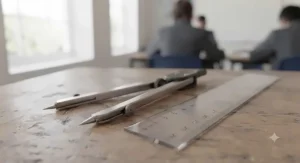
STAEDTLER brings its German engineering reputation to this ten-piece set, and the metal compass and metal divider are the standout features: noticeably sturdier than the plastic-only compasses found in most budget kits, with a more precise pivot that holds its radius through a full circle rather than gradually drifting.
The set includes two set squares (a 45/90-degree triangle and a 30/60-degree triangle), a 6-inch (15cm) ruler, a protractor, a sharpener, an eraser, and, slightly unusually for this category, an alphabet stencil, which adds genuine versatility for labelling diagrams and technical drawing tasks beyond pure geometry homework. Everything is housed in a reusable metal storage tin similar in spirit to the Helix Oxford set.
What the spec sheet undersells is how much of a difference the metal compass makes specifically for circle theorems and constructions work at GCSE level, where a wandering pivot point can genuinely cost marks on accuracy. Reviewers consistently rate this set highly for durability and precision, which tracks with STAEDTLER’s broader reputation in technical drawing equipment generally, not just this one product.
Pros:
- ✅ Metal compass and divider hold precision better than plastic
- ✅ Alphabet stencil adds versatility beyond geometry
- ✅ Durable metal tin from a trusted German brand
Cons:
- ❌ Priced above the most basic budget kits
- ❌ Metal compass parts require more careful handling
At £8-£15, the STAEDTLER 557 Noris Maths Set justifies its slightly higher price with genuinely better compass precision, which matters more the further into GCSE-level geometry a student progresses.
7. 15-Piece Professional Maths Set & Geometry Sets for Secondary School — the extra-kit premium pick
This set’s standout feature is simply more: fifteen pieces rather than the standard ten, housed in a premium zipper case available in six colourways, aimed squarely at secondary school students who want a more complete kit and a bit of personal style alongside it. The extra pieces typically extend the basic ten-tool formula with additional set squares, a spare compass point or lead refills, and sometimes a small eraser and sharpener set.
The zipper case is a genuine practical upgrade over a simple hinged tin or box: it holds pieces more securely against being tipped out inside a school bag, and the six colour options let students personalise their kit, which, while not a functional feature in the strictest sense, does make a set less likely to get mixed up with a classmate’s identical tin during group work.
Here’s the honest trade-off: extra pieces are only valuable if they’re pieces your child will actually use. A spare compass point or extra lead refills genuinely extend a set’s working life, but if the additional pieces are largely duplicates of tools already covered, you’re mostly paying for the case and the colour choice rather than functional upgrades. Weigh that against your child’s specific subject needs before assuming more pieces automatically means better value.
Pros:
- ✅ 15 pieces cover extras like spare compass parts
- ✅ Secure zipper case reduces spillage in a school bag
- ✅ Six colourways for easy personalisation
Cons:
- ❌ Highest price point on this list
- ❌ Extra pieces add limited value if mostly duplicates
At £10-£18, the 15-Piece Professional Maths Set suits secondary students who want a fuller kit and don’t mind paying a bit more for the extras and the case upgrade.
Top 7 Products: Specs, Pricing and Best-Fit Comparison
| Product | Compass Type | Case | Price Range | Best For |
|---|---|---|---|---|
| Amazon Basics 10-Piece Maths Kit | Basic pivot | Carrying box | Under £10 | First-time KS3 starter |
| Vicloon Geometry Compass Set | Two compasses | Carry case | Under £10 | Larger circles, mixed tasks |
| GALAMAX 10pcs Maths Set | Basic pivot | Storage case | Under £10 | Home spare kit |
| Helix Oxford Maths Set with Storage Tin | Standard | Metal tin | Under £10 | Trusted school standard |
| Linex Maths Geometry Set | Self-centring | Transparent case | £8-£15 | GCSE exam reliability |
| STAEDTLER 557 Noris Maths Set | Metal precision | Metal tin | £8-£15 | GCSE circle theorems and constructions |
| 15-Piece Professional Maths Set | Standard + spares | Zipper case, 6 colours | £10-£18 | Fuller secondary school kit |
Reading down the table, the four sub-£10 sets are functionally similar enough that the real differentiator is case durability, with the Helix Oxford tin standing out as the strongest budget-durability combination. Once you move into the £8-£15 bracket, the Linex and STAEDTLER Noris sets both offer a genuine compass-precision upgrade over basic pivot mechanisms, which matters most for students doing regular GCSE-level constructions rather than younger students still on basic shape work.
✨ Don’t Miss These Exclusive Deals!
🔍 Take your school maths kit to the next level with these carefully selected geometry sets. Click on any highlighted item to check current pricing and availability. The right set means fewer lesson interruptions and one less thing to worry about before an exam! ✏️📐
What Should Be in a School Maths Equipment Kit?
A genuinely complete school maths equipment kit covers four core jobs: measuring straight lines (a ruler), measuring and drawing angles (a protractor), drawing circles and arcs (a compass), and drawing accurate right angles or standard angles quickly (a pair of set squares). Everything else, from pencils to erasers to sharpeners, supports those four core tools rather than replacing them.
Beyond the core four, a properly stocked kit for secondary school should include a sharp pencil (ideally HB or 2H for cleaner geometric lines), a soft eraser that won’t smudge or tear paper, and a case sturdy enough to survive being dropped into a school bag repeatedly. Some sets, like the STAEDTLER 557 Noris, add extras such as an alphabet stencil, while others, like the 15-Piece Professional Maths Set, include spare compass points or lead refills, both genuinely useful additions rather than filler.
What a kit doesn’t strictly need, despite what some listings imply, is a calculator or specialist protractor beyond a standard 180-degree (semicircular) or 360-degree (full-circle) design. A calculator is a separate purchase entirely, generally needing to meet exam board approval rules, while a standard protractor covers the overwhelming majority of school and GCSE-level angle work without needing anything more elaborate.
How to Choose a Value Geometry Set for School: 7 Steps
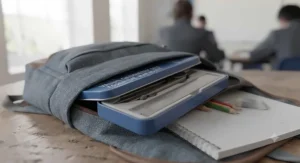
- Match the set to your child’s key stage. Younger students at key stage 3 are well served by basic budget kits like the Amazon Basics 10-Piece Maths Kit, while GCSE-stage students doing precise constructions benefit more from a self-centring or metal compass like the Linex or STAEDTLER Noris sets.
- Check the compass mechanism specifically. A basic pivot compass is fine for occasional use, but a self-centring or metal compass holds its angle far better for repeated, precise circle work, which matters more as geometry topics get harder.
- Prioritise case durability over piece count. A ten-piece set in a sturdy metal tin, like the Helix Oxford, will genuinely outlast a fifteen-piece set in a flimsy plastic box.
- Consider buying a backup kit for the price of one premium set. Two budget sets, such as the GALAMAX or Vicloon kits, cost roughly the same as one premium option and mean a lost school-bag set doesn’t derail homework.
- Check the protractor size and markings. A larger, clearly marked protractor is genuinely easier to read accurately than a small, cramped one, regardless of overall set price.
- Look for exam-hall practicality if buying for GCSE years. Transparent cases, like the one on the Linex set, make equipment checks faster and reduce the chance of a piece being left behind by accident.
- Weigh personalisation against function for older students. Colour options, like those on the 15-Piece Professional Maths Set, genuinely help avoid mix-ups with classmates’ identical kits, which is a bigger practical issue in secondary school than it might sound.
Geometry Set for GCSE Maths: What’s Actually Required in the Exam Hall
GCSE maths exams in England generally require students to bring their own basic equipment: pens, pencils, an eraser, a ruler marked in millimetres and centimetres, a protractor, a pair of compasses, and an approved calculator, since exam boards don’t supply these items on the day. Getting the right geometry set well before exam season, rather than the week of, avoids a last-minute scramble.
It’s worth understanding a little about how GCSEs themselves are structured if this is your first time navigating the system. Since the move to the 9-to-1 grading scale, Ofqual’s own explainers on GCSE grading note that grade boundaries are set individually each summer rather than fixed in advance, which is a useful bit of context for parents wondering why a “good” mark can vary year to year even on ostensibly similar papers.
On the equipment itself, the practical detail that matters most is compass reliability under time pressure. Local authority guidance on exam equipment rules makes clear that students are responsible for ensuring their own kit meets the relevant standards and works reliably on the day, and a compass that’s been slipping for months is exactly the kind of thing that causes an unnecessary construction-question mark loss in a real exam. This is precisely why the self-centring compass on the Linex set or the metal compass on the STAEDTLER 557 Noris genuinely earn their slightly higher price for GCSE-stage students specifically, rather than being an unnecessary upgrade.
Choosing the Right Protractor: Features That Actually Matter
Not all protractors included in geometry sets are equal, and the differences matter more than most buyers expect going in. Size is the first practical factor: a larger protractor, generally 10cm or more across the flat edge, is genuinely easier to align accurately against a drawn angle than a small, cramped 6cm version, even though the smaller one takes up less space in a pencil case.
Clarity of markings is the second factor, and it’s where cheaper protractors most often fall short. Faint or poorly contrasted degree markings force a student to squint or guess, which introduces exactly the kind of small measurement error that costs marks on angle and bearing questions. Both the Helix Oxford and STAEDTLER Noris sets include protractors with clearly printed, high-contrast markings, which is a small detail that pays off disproportionately in exam accuracy.
The third factor, less obvious but genuinely useful, is whether the protractor is a semicircular (180-degree) or full-circle (360-degree) design. A semicircular protractor covers the vast majority of school-level angle work and is what most sets, including every product reviewed in this guide, include as standard. A 360-degree protractor is occasionally useful for bearings work specifically, but it’s not a requirement most students need to seek out separately, since standard semicircular protractors handle bearings questions perfectly well with the right technique.
Getting the Most from Your Geometry Set: A Practical Usage Guide
Getting real value from a geometry set starts before the first lesson: label every individual piece, not just the case, with your child’s name or initials, since loose compasses and set squares are exactly what goes missing first when kit gets passed around a classroom during group work. A simple label on the ruler and set squares specifically saves more replacement purchases than almost any other single habit.
In the first thirty days of owning a new set, get into the routine of checking the compass tightness before homework sessions, particularly with basic pivot compasses that can loosen gradually with use. A quick check-and-tighten habit, where the mechanism allows it, extends a budget compass’s useful life considerably compared with only noticing the problem mid-construction during actual homework.
Store the geometry set in the same place in a school bag every single time, ideally a dedicated pencil case pocket rather than loose at the bottom, where compass points can work their way out and damage other items. For compass-heavy topics specifically, such as circle theorems, constructions, and loci at GCSE level, practising with the actual exam-day set at home beforehand, rather than a different set used only for revision, builds the muscle memory that genuinely helps under time pressure.
Common early mistakes include buying a set purely on piece count without checking compass quality, and leaving equipment purchases until the week before term starts, when popular options like the Helix Oxford Maths Set are more likely to be temporarily out of stock at the cheapest sellers.
Real-World Scenarios: Matching the Right Set to Your Child’s Stage
The Year 7 just starting secondary school. For a student new to secondary-level maths and geometry, a straightforward budget kit like the Amazon Basics 10-Piece Maths Kit or Helix Oxford Maths Set covers everything needed without overspending on features a younger student won’t yet use.
The GCSE-stage student tackling constructions and circle theorems. A student in Years 10 and 11 working regularly with loci, bearings, and circle theorems benefits genuinely from the compass precision offered by the Linex Maths Geometry Set or STAEDTLER 557 Noris, where a reliably steady pivot point directly supports exam accuracy.
The student who’s lost three sets already this year. For families dealing with a habitually forgetful student, buying two budget sets such as the GALAMAX or Vicloon kits, one for school and one kept at home as backup, is more cost-effective over a school year than repeatedly replacing a single premium set.
Common Mistakes When Buying a Geometry Set for School
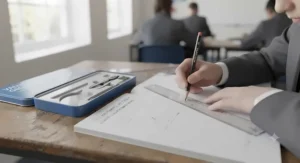
The most frequent mistake is buying based on piece count alone, assuming a fifteen-piece set is automatically better value than a ten-piece one. In practice, extra pieces only add value if they’re genuinely useful additions like spare compass points, not simply duplicate rulers or set squares padding out the listing.
A second common error is ignoring case durability until the case has already cracked or the tin lid has bent, at which point loose pieces start disappearing at a much faster rate. Checking whether a set uses a metal tin, like the Helix Oxford or STAEDTLER Noris, versus a basic plastic box, like several of the budget options here, is worth doing before purchase rather than after the first term of use.
Third, some parents assume any compass is fine for GCSE-level work, when in practice a slipping basic pivot compass genuinely can cost accuracy marks on construction questions. If your child is entering GCSE years and doing regular circle theorem or loci work, it’s worth the small price step up to a self-centring or metal compass rather than sticking with the same basic kit used since Year 7.
Finally, leaving equipment shopping until the last minute before term or exams causes entirely avoidable stress. Popular, well-reviewed sets can sell out of the cheapest listings first, and buying with a bit of lead time avoids paying inflated last-minute prices or settling for a less suitable option.
Budget Set vs Premium Set: What’s the Real Difference?
The honest answer is: less than the price gap suggests, for most students, most of the time. A £6-£8 budget set and a £12-£15 premium set both draw the same circles and measure the same angles when new. The real difference shows up over months of use, not on day one.
Budget vs Premium: Head-to-Head
| Factor | Budget Set (Under £10) | Premium Set (£10-£18) |
|---|---|---|
| Compass mechanism | Basic pivot, can slip over time | Self-centring or metal, holds precision |
| Case durability | Plastic, wears within a school year | Metal tin or reinforced zipper case |
| Best suited to | KS3 and general homework use | GCSE constructions, circle theorems |
| Replacement frequency | May need replacing yearly | Often lasts multiple school years |
| Best For | Younger students, spares, tight budgets | GCSE-stage students, heavy daily use |
Looking at the comparison, the case makes a bigger practical difference than most buyers expect, since a cracked plastic case is usually what causes pieces to go missing, not the tools themselves wearing out. For a younger student with light, occasional use, a budget set genuinely represents better value; for a GCSE-stage student using the set most days across multiple subjects, the premium compass precision and tin durability of something like the STAEDTLER 557 Noris pays for itself in fewer replacement purchases.
Long-Term Value & Durability: Is a Premium Set Worth It?
Working out genuine long-term value means looking past the sticker price to how many school years a set realistically survives. A budget set under £10, like the Amazon Basics 10-Piece Maths Kit or GALAMAX 10pcs Maths Set, commonly needs replacing within a single school year of regular use, particularly the compass and case, which puts its realistic cost closer to £8-£10 per year if bought annually.
A premium metal-tin set like the Helix Oxford or STAEDTLER 557 Noris, by contrast, regularly lasts multiple school years with the same basic care, spreading its £8-£15 price across two, three, or more years of use. On a strict cost-per-year basis, the premium option often works out cheaper over a GCSE course despite the higher upfront price, which is worth bearing in mind before defaulting to the cheapest available option purely on sticker price.
That said, durability only pays off if the set is actually looked after: a premium tin left open at the bottom of a bag will still lose pieces just as fast as a budget box. Value here comes from pairing a durable set with the storage habits covered in the practical usage guide above, not from the product alone.
Looking After Your Maths Equipment: Care and Safety Guide
Compass points are the main safety consideration in any geometry set, and it’s worth building a simple habit of storing the compass with its point retracted or capped, where the design allows it, rather than loose in a pencil case where it can catch on fingers or other items. Several sets reviewed here, including the Vicloon Geometry Compass Set, specifically include a protected needle point as a safety feature worth checking for if buying for a younger student.
Basic maintenance extends any set’s working life regardless of price point. Wipe protractors and set squares clean of pencil smudging periodically, since built-up graphite can make markings harder to read over time. For compasses with an adjustable pivot screw, an occasional gentle tightening, without overtightening, keeps the mechanism from developing the slippage that eventually undermines accuracy.
When it’s genuinely time to shop, a little planning goes a long way. Practical government guidance on back-to-school shopping recommends shopping around, checking what’s already owned from previous years, and setting a realistic budget before buying new supplies, and it’s a genuinely useful habit for keeping back-to-school costs under control across the whole shopping list, not just maths equipment.
Features That Actually Matter (And Those That Don’t)
Compass precision matters, genuinely, and it’s the single biggest factor separating a set that lasts through GCSEs from one that needs replacing every term. Case durability matters almost as much, since a broken case is the most common reason pieces go missing in the first place. Clear, high-contrast protractor markings matter for measurement accuracy, particularly under exam time pressure.
What matters considerably less than the marketing suggests: exact piece count beyond the core ten tools, since extra pieces are only as useful as whether they’re genuinely used, and elaborate colour or pattern designs, which are a nice personalisation touch but have zero bearing on how accurately a set measures an angle or draws a circle. Claims of being “professional grade” without specifying what’s actually different about the compass or ruler should be treated with a healthy amount of scepticism rather than automatic trust.
Frequently Asked Questions
❓ What's the best value geometry set for school on a tight budget?
❓ Do I need a special geometry set for GCSE maths specifically?
❓ How many pieces should a school geometry set have?
❓ Is a metal or plastic compass better for schoolwork?
❓ How often should I replace a school geometry set?
Conclusion
A value geometry set for school doesn’t have to mean choosing between cheap and good, and the seven sets in this guide prove there’s a genuinely sensible option at every price point. For younger students or as a home spare, the budget kits from Amazon Basics, Vicloon, and GALAMAX do the job without overspending. For general secondary school use where durability matters most, the Helix Oxford Maths Set remains a genuinely hard-to-beat classic. And for GCSE-stage students doing serious constructions and circle theorem work, the compass precision on the Linex and STAEDTLER 557 Noris sets earns its slightly higher price.
Whichever set you land on, the habits around it, labelling pieces, checking compass tightness, storing it properly, matter just as much as the product itself for getting real value out of the purchase. Buy with a bit of lead time before term starts, match the set to your child’s actual key stage, and you’ll spend far less time this year hunting for a missing protractor five minutes before homework is due.
✨ Ready to Sort Out the School Maths Kit?
🔍 Browse the geometry sets featured in this guide and find the piece count, case, and price point that fits your family’s needs. One good kit means fewer replacement trips all year! 📐✏️
Recommended for You
- Best Compass Set Under £10: 7 UK School Picks for 2026
- Paper Clips for Office: 7 Best Picks (2026)
- Bulldog Clips vs Binder Clips: 7 Best UK Picks for 2026
Disclaimer: This article contains affiliate links. As an Amazon Associate, I earn from qualifying purchases. If you purchase products through these links, we may earn a small commission at no additional cost to you.
✨ Found this helpful? Share it with your friends! 💬🤗
