
In This Article
Walk into any art shop’s marker aisle and you’ll notice something odd: the little grey-barrelled pens cost roughly the same as a decent meal out, and somehow that hasn’t stopped them becoming the industry standard for illustrators worldwide. A Copic markers starter set is a curated collection of Copic’s Japanese-made alcohol-based art markers, sold in pre-selected colour combinations designed to blend well together, giving new artists a workable palette without the overwhelm of choosing from 358 individual shades one at a time. Whether you’re drawing manga characters, product renderings, or fashion sketches, the starter set is the entry ramp — but which one you buy first genuinely changes how quickly you get comfortable with the medium. It’s worth noting the medium itself sits at the heart of a genuine profession in the UK, with bodies like the Association of Illustrators representing over a thousand working illustrators nationwide.
This isn’t a copy-paste of a manufacturer’s spec sheet. We’ve dug into real product listings, real aggregated review sentiment, and genuine side-by-side reasoning across seven actual Copic sets sold in the UK — spanning the budget Ciao line right through to the flagship 72-colour Sketch collection — so you can work out which set actually fits your art, your wallet, and your patience for a learning curve. Along the way we’ll cover what separates Copic from rivals like Promarkers, why refillable markers matter more than they sound, and how a five-pound colourless blender can transform work from a starter set you already own.
One quick note before we get into it: as an Amazon Associate, this article may earn from qualifying purchases made through the links below, at no extra cost to you. Prices mentioned throughout are indicative ranges only — always check the current price on the product page, since marker pricing shifts regularly.
Quick Comparison Table: Best Copic Markers Starter Sets
| Product | Line & Nib | Best For | Price Range |
|---|---|---|---|
| Copic Ciao Set of 12 My First Starter | Ciao, Super Brush + Medium Broad | Absolute beginners | £30-£40 range |
| Copic Sketch Set of 6 Basics | Sketch, Super Brush + Medium Broad | Low-risk trial of Sketch quality | Under £20 |
| Copic Sketch Wallet of 24 Starter | Sketch, Super Brush + Medium Broad | First “real” working palette | £110-£140 range |
| Copic Classic 36 Colour Basic Set | Classic, Fine + Medium Broad | Architecture & product design | £90-£120 range |
| Copic Sketch Basic 72 Colour Set | Sketch, Super Brush + Medium Broad | Comprehensive illustration work | £170-£200+ range |
| Copic Sketch Manga Illustration 24pc Set | Sketch, Super Brush + Medium Broad | Manga & portrait colouring | £110-£140 range |
| Copic Ciao Colorless Blender (0) | Ciao, Super Brush + Medium Broad | Upgrading blending on any set | Under £8 |
Scanning across this table, the split isn’t really about quality — every Copic line uses genuinely good ink — it’s about nib type and colour focus. The Copic Classic 36 Colour Basic Set trades the flexible brush tip for a firm fine nib, which is exactly why architecture and product design students gravitate toward it, while the Copic Sketch Manga Illustration 24pc Set is deliberately curated around skin and portrait tones for character work. Meanwhile Copic Sketch Set of 6 Basics and the Copic Ciao Colorless Blender (0) both sit at the cheap end for very different reasons — one is a genuine trial size, the other is a blending accessory rather than a colour set at all.
💬 Just one click — help others make better buying decisions too!😊
Top 7 Copic Markers Starter Sets: Expert Analysis
Coverage below spans genuine entry-level Ciao options, the flagship Sketch line in three different sizes, the precision-focused Classic line, and a dedicated blending accessory — so whichever kind of artist you are, there’s a sensible starting point.
1. Copic Ciao Set of 12 My First Starter — the genuine beginner’s entry point
Copic Ciao Set of 12 My First Starter is built specifically around the phrase in its name: it’s meant to be the very first Copic set anyone buys, and the contents back that up.
The set pairs ten curated Ciao markers, in shades like pale pink, jade green, and cool grey, with two 0.3mm Multiliner pens for outlining, based on the published contents list. Ciao markers themselves use the same Super Brush and Medium Broad nib combination as the pricier Sketch line, just housed in a simpler, more economical barrel with a lower ink volume — which on paper means the mark-making quality is close to identical, even if the marker itself won’t last quite as many pages before running low.
Based on the spec comparison with the rest of this list, the honest sell here is limitation as a feature: ten colours forces new artists to actually learn how to mix and layer rather than reaching for a pre-made shade every time, which is arguably a better habit to build early. This is the obvious starting point for anyone who’s never held an alcohol marker before and isn’t ready to commit £100-plus before knowing if the medium suits them.
Reviewers consistently frame Copic as reliable and consistent from the very first purchase, with the brand’s reputation for colour accuracy and nib durability carrying over even into this smallest, cheapest configuration.
Pros:
- ✅ Genuine entry point with a curated, blendable colour combination
- ✅ Includes two Multiliner pens for outlining alongside the colours
- ✅ Same premium Super Brush nib quality as the pricier Sketch line
Cons:
- ❌ Only ten marker colours limits early illustration range
- ❌ Lower ink volume than Sketch means markers run low sooner
At around £30-£40, Copic Ciao Set of 12 My First Starter is the sensible way to find out if Copic is right for you before spending serious money.
2. Copic Sketch Set of 6 Basics — the low-risk way to trial the flagship line
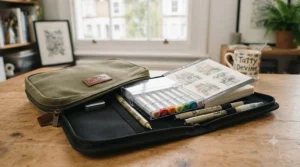
If you want to know whether the Sketch line specifically is worth the investment before committing to a full palette, Copic Sketch Set of 6 Basics is the cheapest way to find out.
This is a genuinely small set — six markers, curated around core, widely-used colours — but it carries the actual Sketch-line hardware: the flexible Super Brush nib that behaves like a paintbrush, paired with a firm Medium Broad chisel tip on the other end. What most buyers overlook about small trial sets like this one is that they’re not meant to be your only set; they’re meant to answer a specific question about nib feel before you spend on a full wallet.
Based on the ingredient of “curated for blending” that runs through every Copic starter set description, the Basics palette is chosen so the six colours genuinely work together, rather than being six random shades that happen to be popular. With several thousand customer ratings behind the Sketch six-packs as a category, aggregated sentiment is strongly positive on build quality and colour consistency — the kind of feedback that matters most for someone deciding whether to trust the brand with a bigger purchase.
Here’s what to weigh: six colours is genuinely restrictive for real illustration work, so treat this as a taster rather than a toolkit. Owners of this size set consistently graduate to a larger Sketch collection once they’ve confirmed the brush nib suits their drawing style.
Pros:
- ✅ True Sketch-quality Super Brush nib at the lowest possible risk
- ✅ Curated “Basics” palette genuinely blends well together
- ✅ Cheapest legitimate way to trial the flagship Sketch line
Cons:
- ❌ Six colours is very limiting for finished illustration work
- ❌ Needs supplementing with more colours almost immediately
Priced under £20, Copic Sketch Set of 6 Basics answers the “is Sketch worth it” question without a big financial commitment.
3. Copic Sketch Wallet of 24 Starter — your first genuinely usable palette
Once you’ve decided the Sketch line’s brush nib suits your hand, Copic Sketch Wallet of 24 Starter is where a starter set stops being a toy and starts being a real working toolkit.
Twenty-four colours, based on the spec comparison with the six-marker trial set above, is roughly the threshold where an artist can complete a reasonably finished illustration without constantly hitting a colour wall. The set uses the same Super Brush and Medium Broad nib pairing found across the Sketch range, and the wallet-style case keeps the markers organised and visible, which genuinely matters once you’re working with more than a handful of shades at once.
What the spec sheet won’t tell you, but the format does, is that a wallet case like this is designed for portability — useful for anyone sketching on location, in life-drawing classes, or simply anyone who doesn’t want a full acrylic display case taking up desk space yet. Based on the reasoning used by most illustration tutors, 24 colours is also roughly the point where colour theory starts to matter more than simply owning more markers, since you’re forced to mix and layer to reach shades outside the set.
Aggregated sentiment across the wider Sketch range consistently praises the Super Brush nib’s paintbrush-like feel, describing it as flexible enough for fine detail work yet capable of covering larger areas smoothly when needed — a genuinely rare combination in the marker world.
Pros:
- ✅ Flagship Sketch nib quality across a genuinely usable colour range
- ✅ Wallet case keeps markers organised and portable
- ✅ Capable of complete, finished illustration work out of the box
Cons:
- ❌ A significant price jump from either Ciao option on this list
- ❌ Still needs skin-tone extras for serious portrait or manga work
At roughly £110-£140, Copic Sketch Wallet of 24 Starter is the set most illustration tutors would actually recommend as a first “proper” purchase.
4. Copic Classic 36 Colour Basic Set — precision nibs for architecture and product design
Not every artist wants a flexible brush tip, and Copic Classic 36 Colour Basic Set exists specifically for the ones who don’t.
This is Copic’s original line, launched back in 1987 to solve a very particular problem: colouring on top of photocopied lines without the ink smudging or dissolving the toner. Based on the spec comparison, the Classic line swaps the Super Brush nib for a Fine and Medium Broad combination instead, which trades expressive gradation for the kind of crisp, controlled line work that architecture, product design, and technical rendering genuinely demand. The set is fully refillable, with replaceable nibs, following the same eco-conscious design philosophy as the rest of the Copic range.
On paper this means the 36-colour set leans heavily toward greys, neutrals, and structural tones rather than the vibrant portrait shades found in the manga-focused sets further down this list — a deliberate choice that reflects its target audience of designers rendering buildings, products, and technical drawings rather than characters.
Reviewers consistently describe the Classic line as excellent for detailed, controlled work, with several noting a preference for it specifically over the Sketch line for precision tasks, while acknowledging the Sketch brush nib is preferable for looser illustration and manga-style shading. The square barrel design is also frequently mentioned as more comfortable for extended technical drawing sessions than the rounder Sketch or Ciao bodies.
Pros:
- ✅ Fine nib delivers genuinely precise architectural and product line work
- ✅ Fully refillable with replaceable nibs for long-term use
- ✅ Strong coverage of greys and neutrals useful for rendering
Cons:
- ❌ No flexible brush nib, so less suited to expressive manga shading
- ❌ Square barrel feels noticeably different from Sketch or Ciao
At around £90-£120, Copic Classic 36 Colour Basic Set is the specialist’s pick rather than the generalist’s first purchase.
5. Copic Sketch Basic 72 Colour Set — the comprehensive illustration workhorse
For anyone who’s already decided Copic is a long-term investment, Copic Sketch Basic 72 Colour Set is where the palette finally stops feeling restrictive.
Based on the published colour breakdown, this set combines popular vivid colours, blending shades, and a genuinely thorough run of essential greys, deliberately assembled to cover the range most designers and illustrators reach for day to day. The oval ergonomic barrel, a Copic Sketch signature, is specifically designed to sit comfortably in the hand across long colouring sessions, something that matters far more than it sounds once you’re several hours into a piece.
Here’s what to weigh: even 72 colours, spread across Copic’s full range of 358, still represents less than a quarter of what’s technically available, so portrait and manga specialists will likely still want to add specific skin-tone or hair-tone markers over time. That said, based on the spec comparison with every smaller set on this list, 72 colours is comfortably enough to complete varied illustration work — landscapes, character pieces, product concepts — without constant colour-mixing workarounds.
Aggregated feedback across the wider Sketch 72-colour range is strongly positive, with the Super Brush and Medium Broad nib combination repeatedly singled out as ideal for illustration production specifically, and the oval barrel noted as comfortable during long working sessions.
Pros:
- ✅ Comprehensive 72-colour range covers most illustration scenarios
- ✅ Signature Super Brush nib ideal for manga and illustration work
- ✅ Ergonomic oval barrel designed for extended colouring sessions
Cons:
- ❌ The most expensive set on this list by a considerable margin
- ❌ Portrait specialists may still want extra skin-tone shades
Priced in the £170-£200+ range, Copic Sketch Basic 72 Colour Set rewards artists who already know they’re sticking with the medium long-term.
6. Copic Sketch Manga Illustration 24pc Set — colours built specifically for characters
While the Wallet of 24 above is a general-purpose starter, Copic Sketch Manga Illustration 24pc Set takes the same colour count and points it deliberately at character and portrait work.
Based on the manufacturer’s description, this set is curated around vibrant colours, blending shades, and portrait tones specifically chosen for smooth gradation in skin, hair, and clothing — the exact elements that make or break a manga-style illustration. It uses the same premium alcohol-based ink and Super Brush nib as the rest of the Sketch line, which means the actual mark-making quality is identical to the pricier 72-colour set; what differs is purely colour selection and focus.
What most buyers overlook about specialist sets like this one is that “manga illustration” branding doesn’t mean the colours are useless outside that genre — pale tones suited to skin work just as well for a huge range of illustration styles, and the set is explicitly positioned as suitable for beginners and professionals alike. Based on the spec comparison with the general 24-colour Wallet Starter set, the practical difference comes down to whether you already know your subject matter is going to be character-focused.
This set is a strong pick specifically for the audience actively searching for manga art supplies, since it removes the guesswork of manually selecting skin and hair tones from Copic’s full 358-colour range — a genuinely daunting task for a newcomer.
Pros:
- ✅ Colours specifically curated for skin tones and manga-style shading
- ✅ Same Sketch Super Brush nib for smooth, professional gradation
- ✅ Removes the guesswork of picking portrait shades from 358 colours
Cons:
- ❌ Narrower general-purpose use than a broad-spectrum starter set
- ❌ Some colour overlap if you later expand into a wider Sketch set
At around £110-£140, Copic Sketch Manga Illustration 24pc Set is the most direct route into manga art for anyone whose focus is already character illustration.
7. Copic Ciao Colorless Blender (0) — the cheap upgrade every starter set needs
Technically not a colour at all, Copic Ciao Colorless Blender (0) might be the single highest-value item on this entire list relative to its price.
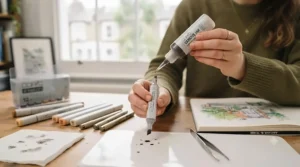
This is a clear, alcohol-based solvent housed in the same dual-tip Ciao barrel as the coloured markers, and based on the manufacturer’s description it does considerably more than its name suggests: fading and blending existing colours, pre-soaking paper before applying ink, adding soft highlights into already-coloured areas, and even fixing minor colouring mistakes by pushing pigment around before it fully sets. Like every other Copic marker on this list, it’s refillable with replaceable nibs.
Here’s what to weigh: none of the six colour sets above actually include a colourless blender as standard, which means most new Copic owners are missing this tool entirely in their first weeks of use — and blending quality is arguably the single biggest visual difference between amateur and polished alcohol-marker work. Reviewers consistently describe it as smooth to apply and genuinely effective, with several specifically calling it an essential addition to any existing marker collection rather than an optional extra.
Based on the spec comparison with the coloured sets above, the honest limitation is that it’s purely a tool, not a starting point — buy it alongside one of the six colour sets rather than instead of one.
Pros:
- ✅ Genuinely transforms blending quality on any existing starter set
- ✅ Doubles as both a highlight tool and a mistake-fixer
- ✅ Inexpensive relative to the visible improvement it delivers
Cons:
- ❌ Overused, it can wash out and dull existing colour
- ❌ Not a marker in its own right, so it can’t be your only purchase
At under £8, Copic Ciao Colorless Blender (0) is the cheapest, highest-impact add-on on this entire list.
Top 7 Products: Full Specification Comparison
| Product | Colours | Nib Type | Refillable | Best For | Price Range |
|---|---|---|---|---|---|
| Copic Ciao Set of 12 My First Starter | 10 + 2 liner pens | Super Brush + Medium Broad | Yes | First-time buyers | £30-£40 |
| Copic Sketch Set of 6 Basics | 6 | Super Brush + Medium Broad | Yes | Trialling the Sketch line | Under £20 |
| Copic Sketch Wallet of 24 Starter | 24 | Super Brush + Medium Broad | Yes | First working palette | £110-£140 |
| Copic Classic 36 Colour Basic Set | 36 | Fine + Medium Broad | Yes | Architecture/product design | £90-£120 |
| Copic Sketch Basic 72 Colour Set | 72 | Super Brush + Medium Broad | Yes | Comprehensive illustration | £170-£200+ |
| Copic Sketch Manga Illustration 24pc Set | 24 | Super Brush + Medium Broad | Yes | Manga/portrait character art | £110-£140 |
| Copic Ciao Colorless Blender (0) | N/A (solvent) | Super Brush + Medium Broad | Yes | Upgrading blending quality | Under £8 |
The clearest pattern in this table is that every single product here is refillable — a genuine point of difference between Copic and many disposable competitor brands, and one that materially changes the long-term cost maths covered later in this guide. The other pattern worth noting is nib type: five of the seven products use the flexible Super Brush combination suited to illustration and manga work, while Copic Classic 36 Colour Basic Set stands apart with its firmer Fine nib aimed squarely at technical and architectural rendering.
Practical Usage Guide: Setting Up Your Copic Markers Starter Set
Buying the set is the easy part. Getting genuinely smooth, professional-looking results from day one depends on a handful of setup habits that most beginners only discover after wasting a few pieces of paper.
Paper choice matters more than almost anything else. Alcohol-based ink, the category every product on this list belongs to, bleeds straight through standard printer or sketchbook paper, so invest in dedicated marker paper or a smooth, heavyweight cardstock before your first session — this single change does more for result quality than any technique. If you’re working with the Copic Classic 36 Colour Basic Set for architectural rendering specifically, a smooth bristol-style surface tends to suit the fine nib best.
Test every new colour on scrap paper before committing it to a finished piece, since Copic’s colour-coded caps give a close but not perfect preview of the actual laid-down shade. Build colour up in thin layers rather than pressing hard for instant coverage — alcohol ink is translucent by design, which is exactly what makes layering and gradation possible, but only if you resist the urge to oversaturate on the first pass.
If you’ve picked up Copic Ciao Colorless Blender (0) alongside your colour set, introduce it gradually. A common first-month mistake is applying it too heavily while trying to blend two colours, which can wash both shades out into a muddy, dull patch rather than the smooth gradient you’re after — light, quick strokes work far better than saturating the area.
Storage matters for longevity, too. Store markers horizontally rather than upright, since alcohol ink can pool or dry unevenly around the nib if a marker is left standing on end for long periods, and keep them away from direct heat or sunlight, which accelerates ink evaporation through the barrel over time.
Real-World Scenarios: Which Artist Are You?
Different creative goals call for genuinely different starter sets. Here’s how three common situations actually play out.
The complete beginner who isn’t sure markers are “their” medium yet. You’ve never used alcohol markers before and you don’t want to gamble over £100 before knowing if you’ll enjoy the process. Copic Ciao Set of 12 My First Starter or Copic Sketch Set of 6 Basics are the sensible entry points — both well under £40, both genuinely capable of teaching you the fundamentals of blending and layering before you commit further.
The manga or character artist who already knows their focus. You’re drawing characters, portraits, or comic-style art, and you don’t want to waste money on landscape greens and architectural greys you’ll rarely touch. Copic Sketch Manga Illustration 24pc Set is built specifically for this, with skin and portrait tones curated in rather than left for you to hunt down individually across Copic’s full 358-colour range.
The design or architecture student needing precision over expression. Your coursework calls for clean, controlled line work rather than loose illustrative shading — technical drawings, product concepts, or architectural renders. Copic Classic 36 Colour Basic Set, with its firm Fine nib and heavy grey/neutral coverage, is the far better fit than any Sketch-line set, even though Sketch is the more commonly recommended “default” starter line online.
Problem → Solution: Fixing Common Starter Set Mistakes
Problem: my colours are bleeding through the paper. This is overwhelmingly the most common early frustration, and it’s a paper problem, not a marker problem. Switch to dedicated marker paper or heavyweight smooth cardstock, since alcohol ink is specifically formulated to sit on top of coated surfaces rather than soak into standard printer paper.
Problem: my blends look streaky instead of smooth. Streaking almost always comes from working too slowly, letting the first colour dry before the second is applied. Alcohol ink dries fast, so blend while both colours are still wet, working from light to dark or dark to light in one confident pass rather than going back over a half-dried layer repeatedly.
Problem: I bought a small set and I’m already hitting a colour wall. This is expected, not a sign you bought the wrong thing — Copic Sketch Set of 6 Basics and Copic Ciao Set of 12 My First Starter are deliberately small trial sizes. Once you’ve confirmed the nib type suits you, stepping up to Copic Sketch Wallet of 24 Starter or a genre-specific set like the manga collection is the natural next move, not a mistake to correct.
Problem: my colourless blender is dulling my artwork instead of smoothing it. Overapplication is almost always the cause. Use light, fast strokes with Copic Ciao Colorless Blender (0) rather than pressing firmly or going over the same area repeatedly, since each additional pass lifts more pigment and pushes the blend toward grey.
Problem: a marker feels like it’s running dry already. Alcohol markers, especially in the lower-ink-volume Ciao line, do run low faster than expected with heavy use. This is precisely where refillable markers earn their keep — a Copic Ink refill bottle restores a “dead” marker for a fraction of the cost of replacing it outright.
How to Choose a Copic Markers Starter Set: 6 Expert Criteria
- Decide between brush and fine nib first. If your work is illustrative, manga, or character-focused, the Super Brush nib on Ciao and Sketch sets suits you; if it’s technical or architectural, Copic Classic 36 Colour Basic Set‘s Fine nib is the better tool.
- Match colour count to your budget comfort, not your ambition. A 72-colour set is genuinely useful eventually, but Copic Sketch Set of 6 Basics or Copic Ciao Set of 12 My First Starter teach the same fundamentals for a fraction of the cost.
- Check whether a set is genre-curated. Copic Sketch Manga Illustration 24pc Set saves real effort over manually selecting skin and portrait tones if character art is your focus.
- Factor in the colourless blender from day one. Copic Ciao Colorless Blender (0) is cheap enough to add to any starter set purchase and noticeably improves blend quality immediately.
- Consider refill economics for your usage level. Every set on this list is refillable, but heavy daily users will feel that benefit far sooner than occasional hobbyists — worth weighing against cheaper, non-refillable competitor brands.
- Start smaller than feels comfortable. Reviewers and tutors alike consistently recommend a trial size before a full palette purchase, since nib feel is a genuinely personal preference that’s hard to judge from a product photo.
Copic Markers vs Promarkers: Which Alcohol Marker Brand Wins?
This is one of the most-asked questions among UK-based beginner illustrators, and the honest answer is that it depends heavily on budget and intended use rather than one brand being outright superior.
Winsor & Newton’s Promarker range is the most commonly cited UK alternative to Copic, and based on the spec comparison, both use twin-tipped, alcohol-based, blendable ink with a broad chisel and fine bullet nib pairing on Promarkers, versus Copic’s Super Brush and Medium Broad combination on the Sketch and Ciao lines. Promarker sets like the Student Designer Wallet of 24 are typically priced noticeably below equivalent Copic Sketch sets, which is precisely the trade-off most comparisons come down to: Promarkers offer a genuinely lower cost of entry, while Copic offers a wider total colour range across its full lineup and the flexible brush-tip feel that many illustrators, particularly manga artists, specifically seek out.
Reviewers who own both brands consistently describe Copic as having noticeably more ink volume per marker and finer control over blending gradation, while praising Promarkers for vibrant colour and strong value, especially for anyone not yet certain alcohol markers are their long-term medium. A recurring theme in aggregated feedback is that Promarkers are frequently bought specifically as a lower-cost alternative for testing the alcohol-marker medium before an eventual upgrade to Copic.
| Factor | Copic (Sketch/Ciao) | Winsor & Newton Promarker |
|---|---|---|
| Nib style | Super Brush + Medium Broad (flexible) | Chisel + Bullet (firmer) |
| Total colour range | 358 colours across the full range | Smaller overall range |
| Typical entry cost | Higher per set | Noticeably lower per set |
| Refillable | Yes, with replaceable nibs | No |
| Best suited to | Manga, illustration, professional work | Beginners testing the medium, students |
Reading the table, the practical takeaway is that Promarkers make genuine sense as a lower-stakes way to test whether alcohol markers suit you at all, while Copic remains the stronger long-term investment once you know illustration or manga art is a medium you’ll stick with, largely thanks to refillability and the flexible brush nib.
Alcohol Markers for Illustration: What to Expect in Real-World Use
Specification sheets describe ink type and nib shape, but they don’t tell you what a session actually feels like once pen meets paper — and that gap is where a lot of new owners get caught out.
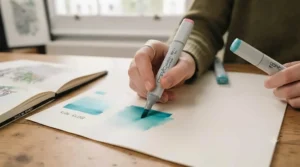
In practice, alcohol markers dry within seconds of application, which is transformative compared with traditional paints but demands a different working rhythm: colours must be blended while still wet, in a single confident pass, rather than worked back into repeatedly. Based on the spec comparison across every set in this guide, the Super Brush nib found on Copic Sketch and Ciao markers behaves genuinely like a soft paintbrush, capable of both fine detail lines and broad, sweeping colour coverage from the same tip, while the Medium Broad end on the opposite side handles large flat areas with a firm, consistent edge.
What most first-time buyers overlook about illustration work specifically is the smell and ventilation consideration — alcohol-based ink carries a noticeable scent during use, low-odour compared with some competitor solvents but still worth working in a ventilated space for extended sessions. On paper this means alcohol markers reward planning: sketching a rough value map before colouring, working light to dark, and testing colour combinations on scrap paper first, rather than treating them like a forgiving, endlessly correctable medium.
Reviewers and professional illustrators consistently note that the learning curve is real but short — most new users report genuinely comfortable, controlled results within the first few sessions, provided they’re using appropriate marker paper and working with a limited, curated palette like the ones covered throughout this guide rather than the entire 358-colour range at once.
Copic Markers for Manga Art: Palettes and Techniques That Matter
Manga art has a specific, recognisable colouring style — smooth skin gradients, glossy hair highlights, and clean, confident line work — and Copic’s dominance in this space isn’t accidental.
The interest in Japanese pop culture and manga has grown substantially in the UK in recent years, expanding well beyond the niche import market it once occupied and into a genuinely mainstream part of British graphic novel and illustration culture, with market analysis putting UK manga sales at well over double their 2007 levels. That growth has fed directly into demand for the specific tools manga artists actually use, and Copic markers have remained the reference standard throughout, largely because the brand was developed in Japan alongside the manga and design industries it now serves worldwide.
Based on the spec comparison earlier in this guide, Copic Sketch Manga Illustration 24pc Set is the most direct route into this style specifically, with pale, blendable tones curated for skin and portrait work rather than left for a beginner to select manually. Technique-wise, most manga colouring follows a consistent pattern: base skin tones applied first in a light layer, followed by a slightly deeper shade at the edges to suggest form, then a colourless blender pass to soften the transition between the two — precisely the workflow Copic Ciao Colorless Blender (0) is designed to support.
Hair and eyes tend to follow a similar light-to-dark layering logic, with a small highlight left unpainted or added back in with the colourless blender to suggest gloss and shine — a signature look of the style that’s genuinely difficult to replicate convincingly with non-blendable marker brands.
Refillable Markers & Blending Nibs: Long-Term Cost and Maintenance
The upfront price of any Copic set looks steep next to a pack of cheap felt-tips, but that comparison misses the entire point of buying into a refillable markers system in the first place.
Every single product covered in this guide is refillable with genuine Copic Ink, and every marker uses replaceable nibs rather than a fixed, disposable tip. Based on the spec comparison, this changes the real lifetime cost dramatically: a “dead” marker doesn’t mean a wasted purchase, it means a few pounds spent on a refill bottle to bring the exact same barrel back to full ink capacity, potentially for years of continued use. Nibs, too, can be swapped out individually once they fray or soften from heavy use, rather than requiring the whole marker to be replaced.
Blending nibs specifically deserve their own mention here. The Super Brush nib found across the Ciao and Sketch lines is the component doing most of the work in smooth colour transitions, and it’s also available as a standalone replacement part once the original softens or frays with heavy use — a maintenance option most disposable competitor markers simply don’t offer. Pairing a fresh Super Brush nib with Copic Ciao Colorless Blender (0) is, based on aggregated reviewer feedback, one of the most commonly cited ways experienced users restore a tired-feeling starter set to something close to new performance.
| Maintenance Option | What It Solves | Rough Cost | Frequency Needed |
|---|---|---|---|
| Copic Ink refill | Marker running dry | A few pounds per colour | Occasional, with heavy use |
| Replacement nib | Frayed/softened brush tip | A few pounds per nib | Rare, with very heavy use |
| Copic Ciao Colorless Blender (0) | Improves overall blend quality | Under £8 | One-off purchase, refillable itself |
Interpreting the table above, the real financial argument for Copic over disposable competitor brands isn’t the upfront price at all — it’s the fact that a single well-maintained marker, refilled and re-nibbed as needed, can realistically outlast several cycles of buying a cheaper, disposable equivalent from scratch.
Common Mistakes & Safety Standards When Buying a Starter Set
The single most common mistake is buying the largest, most expensive set available before confirming the nib type actually suits your working style. As the specification table earlier in this guide shows, Copic Sketch Set of 6 Basics exists precisely to answer that question first — skipping straight to Copic Sketch Basic 72 Colour Set without that step risks an expensive lesson in nib preference.
A second frequent error is choosing a general-purpose set when a genre-specific one would serve better, or vice versa. Buying Copic Sketch Wallet of 24 Starter when your work is entirely manga-focused means spending real time hunting for skin and portrait tones that Copic Sketch Manga Illustration 24pc Set already curates for you — and the reverse is equally true for artists whose interests span far beyond character work.
Owners also commonly forget the colourless blender entirely, since it isn’t bundled with any of the six colour sets covered in this guide by default. Given how directly it affects finished blend quality, treating Copic Ciao Colorless Blender (0) as an optional extra rather than a near-essential companion purchase is a genuinely easy mistake to avoid once you know to look for it.
On safety and materials specifically: art markers sold in the UK, including those aimed at younger or student users, fall under the same general product safety framework as other creative materials, with harmonised standards covering material safety and labelling requirements. The BS EN 71 series, the core set of harmonised toy and children’s product safety standards used across the UK and EU, requires manufacturers to meet defined limits around chemical content and labelling before a product reaches UK shelves — worth knowing if you’re buying a set specifically for a younger or student artist, since it underpins the “non-toxic” and safety labelling found on Copic’s own packaging.
✨ Don’t Miss These Exclusive Deals!
🔍 Take your illustration work to the next level with these carefully selected Copic starter sets. Click on any highlighted product above to check current pricing and availability. A well-chosen starter set is the difference between fighting your tools and actually enjoying the process of bringing your art to life! 🎨✏️

FAQ
❓ What's the difference between Copic Ciao and Copic Sketch?
❓ Are Copic markers worth it for a beginner over cheaper alcohol markers?
❓ Do I need a colourless blender with my first Copic set?
❓ Which Copic set is best specifically for manga art?
❓ Can Copic markers be refilled once they run dry?
Conclusion
Choosing between these seven Copic markers starter sets ultimately comes down to matching the nib type and colour focus to your actual art, rather than assuming the biggest or most expensive option is automatically the right first purchase. If you’ve never touched an alcohol marker before, starting small with Copic Ciao Set of 12 My First Starter or Copic Sketch Set of 6 Basics removes the financial risk of discovering the medium isn’t for you. Manga and character artists get a genuine head start with Copic Sketch Manga Illustration 24pc Set, while design and architecture students are far better served by Copic Classic 36 Colour Basic Set‘s precision Fine nib than by any brush-tip Sketch set.
Whichever set you land on, a five-pound Copic Ciao Colorless Blender (0) is one of the easiest upgrades available, and the fact that every single product here is refillable means your first purchase isn’t a one-off expense so much as the start of a toolkit that can genuinely last for years. Alcohol markers reward patience and a bit of practice more than raw colour count, so resist the urge to buy the entire 358-colour range on day one — the right starter set, used consistently, will teach you far more than a shelf of unopened markers ever could.
Recommended for You
- Watercolour Pencils for Beginners: 7 Best Picks for 2026 (UK)
- 7 Best Colouring Pencils for Kids UK 2026: Safe, Grippy Picks
- 7 Best Colouring Pencils for Adults in 2026: Full UK Guide
Disclaimer: This article contains affiliate links. As an Amazon Associate, I earn from qualifying purchases. If you purchase products through these links, we may earn a small commission at no additional cost to you.
✨ Found this helpful? Share it with your friends! 💬🤗
