
In This Article
Every illustrator has a drawer somewhere full of pens that promised crisp lines and delivered a smudged, feathery mess the moment a wash of watercolour touched the page. Micro pens for drawing exist to solve that exact problem: fine-tipped, pigment-based fineliners with needle-point nibs ranging from roughly 0.03mm to 0.8mm, designed to lay down a precise, consistent line that won’t bleed, fade or dissolve under water. Unlike a standard ballpoint or a dye-based marker, a genuine micro pen uses archival-quality pigment ink, which sits on the paper surface as suspended particles rather than soaking in and spreading the way water-soluble dye does. That distinction is the whole reason manga artists, architects, comic inkers and sketchbook illustrators reach for the same handful of trusted brands again and again.
This guide compares seven real, currently available micro pens spanning budget fineliners through to premium refillable systems, with honest analysis grounded in genuine specs and aggregated reviewer experience rather than recycled marketing copy. We’ll cover fineliner pens for illustration work specifically, what waterproof micro pens actually guarantee once dry, what a sensible micro pens set amazon buyers should look for, the best micro pens for sketchbooks given different paper weights, why archival ink pens for artists matter beyond the price tag, the best pen nib size for detail work, and what actually happens in a micro pen bleed test on sketchbook paper. Whether you’re filling a travel sketchbook, inking a comic page, or adding fine detail over a watercolour wash, there’s a sensible pick below.
Quick Comparison Table
| Product | Ink Type | Nib Sizes Available | Best For | Price Range |
|---|---|---|---|---|
| Sakura Pigma Micron (6-pack) | Pigment, archival | 005-08 (0.20-0.50mm) | All-round archival standard | £15-£25 |
| Staedtler Pigment Liner | Pigment, archival | 0.05-1.2mm (11 widths) | Technical drawing, rulers/stencils | £12-£18 |
| Faber-Castell PITT Artist Pen | Indian ink, pigment | XS-B (brush) | Expressive sketching, brush work | £15-£25 |
| Uni Pin Fine Line Pen | Pigment, lightfast | 0.05-0.8mm | Budget value, watercolour washes | £10-£18 |
| Copic Multiliner SP | Pigment, refillable | 0.03-1.0mm | Manga, illustration workflows | £20-£35 |
| Winsor & Newton Fineliner | Pigment, acid-free | 0.1-0.8mm | General sketching, journaling | £10-£18 |
| Edding 1800 Profipen | Pigment, lightfast | 0.05-0.7mm | Budget entry point | £8-£14 |
Looking across this table, the real split isn’t between expensive and cheap — it’s between disposable and refillable systems, and between pens optimised for technical precision versus expressive line variation. The Staedtler Pigment Liner and Sakura Pigma Micron sit at the precise, controlled end of the spectrum, ideal for technical illustration and consistent linework, while the Faber-Castell PITT Artist Pen and Copic Multiliner SP allow more expressive, brush-influenced marks. According to Jackson’s Art guide to pens, pigment-based ink is specifically defined by its high permanence and lightfastness compared with dye-based alternatives, which is the technical reason every pen on this list outperforms a standard biro for archival work.
💬 Just one click — help others make better buying decisions too!😊
Top 7 Micro Pens for Drawing: Expert Analysis
1. Sakura Pigma Micron — the archival gold standard
If there’s one pen every illustration tutor recommends first, it’s this one, and the reputation is earned rather than inherited. The Pigma Micron range uses single-pigment, pH-neutral ink that’s waterproof, fade-resistant and chemically stable once dry, sold in multi-tip sets typically spanning 005 (0.20mm) through to 08 (0.50mm), with a needle-point plastic tip that gives a touch of give under pressure. Based on the spec comparison with the rest of this list, the Micron’s single-pigment formulation is what prevents colour shift over time, a detail that matters enormously for artists selling original work or exhibiting in galleries. Reviewers consistently note that even pens left unused in storage for years still write perfectly when uncapped, though a recurring complaint in more recent feedback is occasional quality-control inconsist
✅ Single-pigment ink prevents colour variation over decades
✅ Wide size range from ultra-fine to bold in one set
✅ Genuinely waterproof once dry, even under heavy washes
❌ Occasional quality-control inconsistency reported by buyers
❌ Finest nibs splay easily under heavy-handed pressure At roughly £15-£25 for a 6-pack, it remains the sensible default for anyone building their first proper inking kit.
2. Staedtler Pigment Liner — built for rulers, stencils and technical work
Staedtler’s drafting heritage shows in every detail of this pen, starting with the long, metal-sleeved nib that glides smoothly along a ruler’s edge without catching or snagging — a genuine problem with plastic-tipped fineliners. The archival pigment ink is indelible, lightfast and waterproof, and the line widths span an unusually broad 0.05mm to 1.2mm across eleven sizes, more range than almost any rival on this list. What stands out, based on independent testing, is the “Dry Safe” cap mechanism, which according to manufacturer claims keeps the nib usable for up to 18 hours uncapped, verified by artists who specifically tested leaving pens open overnight without failure. Here’s what to weigh: some long-term users report the ink reads as slightly lighter or greyer than true black compared with rivals like the Pigma Micron, occasionally requiring layered strokes to achieve full opacity in solid fill areas. For anyone working with rulers, French curves or architectural templates, that metal tip alone justifies the pen’s place in a serious toolkit.
✅ Metal-sleeved tip glides along rulers without catching
✅ Broadest nib size range of any pen in this guide
✅ Dry Safe cap resists drying for extended uncapped use
❌ Black ink can read slightly lighter than true black
❌ May need layering to achieve fully opaque fill areas Priced around £12-£18 for a set, it’s the natural choice for technical illustrators and anyone drawing with straightedges regularly.
3. Faber-Castell PITT Artist Pen — rich black ink with expressive range
Where the Staedtler is engineered for precision, the Faber-Castell PITT leans toward natural, expressive mark-making, and the difference is genuinely visible on the page. It uses a highly pigmented, waterproof India ink with strong lightfastness, and the range extends beyond simple fineliner tips into brush (B) and soft calligraphy (SC) nibs that flex under pressure for variable line weight — something none of the strictly technical pens in this guide can replicate. Based on the spec comparison, the brush-tip variants specifically retain a firm, responsive spring rather than the mushy, splayed feel common in cheaper brush pens, allowing a whisper-thin line and a bold stroke within the same continuous movement. What most buyers overlook is that the standard fineliner tips in the PITT range sit between Staedtler’s technical precision and a true sketching pen’s softness, giving it a more natural drawing feel that suits illustrators who layer ink with watercolour or coloured pencil afterward. Reviewers consistently praise the brush nibs specifically, with the standard fineliner tips earning solid but less standout feedback compared with the brush variants.
✅ Genuinely rich, deep black tone compared with rivals
✅ Brush nib variants offer real line-weight variation
✅ Performs reliably in layered ink-and-paint workflows
❌ Standard fineliner tips less distinctive than the brush range
❌ Sits at a premium price point for a full multi-nib set At roughly £15-£25 for a set, it’s the pick for illustrators who want one brand covering both precise lines and expressive brushwork.
4. Uni Pin Fine Line Pen — the value pick that punches above its price
It would be easy to dismiss the Uni Pin as the budget option in this lineup, but independent fineliner comparisons consistently rank it among the most balanced pens tested, regardless of price. The ink is waterproof, lightfast, acid-free and specifically Copic-proof, meaning it won’t bleed or smear when alcohol-based markers are layered on top — a detail that matters enormously for illustrators who combine fineliner work with marker rendering. The tip is notably firm and precise, holding consistent line widths across sizes from 0.05mm to 0.8mm without the slight give found in the Pigma Micron’s plastic nib. On paper this means a harder-wearing pen for heavy daily use, though some artists specifically prefer the Micron’s softer tip for the subtle line variation it allows. Aggregated reviewer sentiment across multiple independent pen comparisons singles out the Uni Pin asoffering the best value-for-money in the category, with one detailed fineliner review naming it the personal favourite specifically for its hard-wearing nib and genuine watercolour compatibility.
✅ Genuinely Copic-proof, ideal for marker-and-fineliner workflows
✅ Firm, hard-wearing tip holds up to heavy daily use
✅ Strong value relative to premium-priced alternatives
❌ Less line variation than pens with softer or brush tips
❌ Smaller colour range than some rival brands At around £10-£18 for a set, this is the sensible recommendation for anyone wanting professional-grade reliability without premium-brand pricing.
5. Copic Multiliner SP — refillable precision for illustration workflows
Most pens on this list are disposable by design, which is precisely what makes the Copic Multiliner SP stand apart: it’s a refillable system built around replaceable nib units and ink cartridges, designed specifically for illustration workflows where consistency matters across long projects. The pigment ink is waterproof and Copic-proof, with nib sizes spanning a genuinely wide 0.03mm to 1.0mm, giving illustrators both the extreme fine detail needed for stippling and texture work and bold tips for confident outlining. Based on the spec comparison with disposable rivals, the refillable nib system means a worn or damaged tip can be swapped out individually rather than discarding the entire pen, which meaningfully changes the long-term cost equation for artists who draw daily. What most buyers overlook is that the initial investment is higher than any other pen in this guide, and the system does require keeping spare nibs and ink cartridges stocked rather than simply repurchasing a fresh pen. Reviewers who work specifically in manga and illustration consistently describe the controlled, stable feel during detailed line construction as the standout quality, particularly when working alongside Copic markers.
✅ Replaceable nibs significantly reduce long-term waste and cost
✅ Genuinely wide size range from ultra-fine to bold
✅ Stable, controlled feel favoured by professional illustrators
❌ Higher upfront cost than any disposable pen in this guide
❌ Requires maintaining a stock of spare nibs and cartridges Expect to pay around £20-£35 for a starter set, justified for anyone inking professionally on a regular basis.
6. Winsor & Newton Fineliner — dependable mid-range all-rounder
Winsor & Newton’s long history in fine art materials extends naturally into its fineliner range, which uses a non-fading, acid-free ink formulated for genuine archival permanence. Nib sizes run from 0.1mm to 0.8mm, a slightly narrower range than the Staedtler or Copic systems but comfortably enough for the vast majority of sketching, journaling and illustration tasks. Here’s what to weigh: independent comparison testing found the ink takes marginally longer to dry than the fastest-drying rivals on this list, with one detailed review specifically noting smudged test dots from premature handling, though the trade-off is genuinely strong precision once the ink has set. What most buyers overlook is that the slightly slower drying time can actually be an advantage for artists who like a brief working window to soften or blend a line before it locks in completely. For general sketchbook use and journaling where ultra-fast drying isn’t the top priority, this remains a dependable, well-regarded choice from a trusted art materials brand.
✅ Acid-free, archival-quality ink from a trusted fine art brand
✅ Strong line precision once fully dry
✅ Comfortable nib range for most sketching and journaling needs
❌ Slower drying time than the fastest rivals in this guide
❌ Narrower nib range than technical-focused competitors Sitting around £10-£18 for a set, it’s a sensible mid-range choice for general sketchbook and journaling use.
7. Edding 1800 Profipen — accessible budget entry point
For anyone testing whether they actually need a dedicated set of artist-grade pens before committing to a premium brand, the Edding 1800 Profipen is a sensible place to start. It delivers genuinely lightfast, waterproof pigment ink, putting it in the same archival category as considerably pricier rivals, though the nib size range is narrower, typically covering around 0.05mm to 0.7mm rather than the eleven-size spread offered by Staedtler. Based on the spec comparison, the limitation here isn’t ink quality so much as choice — fewer sizes means less flexibility for artists who like to vary line weight extensively across a single piece. On paper this means a perfectly capable everyday sketching pen that simply doesn’t offer the specialist range a working illustrator might eventually want. Independent pen reviewers consistently rate the ink quality as genuinely good despite the budget price point, with the main critique centring on the restricted size selection rather than any compromise in line quality, drying speed or waterproofness.
✅ Genuinely archival-quality ink at a budget price point
✅ Reliable, consistent line quality for everyday sketching
✅ Sensible low-commitment way to trial fineliner drawing
❌ Narrower nib size range than specialist rivals
❌ Fewer colour options than premium competing brands At roughly £8-£14 for a set, it’s the right starting point for beginners before investing in a more specialist system.
Practical Usage Guide: Getting Started With Micro Pens
Getting consistent results starts with how you store and use the pens, not just which brand you buy. Always store micro pens horizontally or nib-down, never nib-up, since gravity helps keep ink flowing to the tip rather than pooling away from it — a detail that genuinely extends the working life of finer nibs. Test every new pen on a scrap corner of your actual paper before committing to a finished piece, since ink behaviour varies meaningfully between coated, uncoated, smooth and toothy papers. In the first 30 days, the most common mistake is pressing too hard on the finest nib sizes (005 and below), which splays the tip permanently and ruins the precision that made the fine size worth buying in the first place — let the pen’s own weight do the work rather than bearing down. For maintenance, always recap pens immediately after use, even disposable ones, since exposed tips dry out within minutes in a warm room. If you’re working with multiple sizes in a single piece, establish your linework hierarchy before starting — lay down your finest detail lines first, then build up to bolder outlines, since it’s far easier to add weight than to remove it once ink is down.
Real-World Scenarios: Matching Pens to Your Project
Consider three different artists and the genuinely different calculations each one is making. First, a travel sketchbook artist filling pages on location, often standing or working quickly: the Sakura Pigma Micron or Uni Pin Fine Line Pen make sense here, since both are compact, reliable in a single quick stroke, and forgiving of the inconsistent pressure that comes with sketching on the move. Second, a comic or manga illustrator inking finished pages for print, working at a desk over extended sessions: the Copic Multiliner SP or Faber-Castell PITT Artist Pen with brush nibs suit this far better, since refillable systems and expressive brush tips matter more when a project spans dozens of pages and weeks of work. Third, a technical or architectural illustrator working with rulers, stencils and straightedges: the Staedtler Pigment Liner is the obvious fit, purpose-built with a metal tip designed specifically not to catch on a ruler’s edge. In each case, the “best” micro pen isn’t the most expensive — it’s the one whose tip design and ink behaviour actually match the working conditions the artist faces day to day.
How to Choose Micro Pens for Drawing
- Decide your primary use case first. Technical drawing, expressive sketching and comic inking each favour different tip designs, and this single decision narrows the field immediately.
- Check the nib size range against your detail needs. Finer work (stippling, tiny text, technical detail) needs access to 0.1mm or below; bolder outlining needs 0.5mm and up.
- Confirm the ink is genuinely pigment-based, not dye. Pigment ink resists fading and bleeding far better than dye-based alternatives, which matters for anything intended to last.
- Consider disposable versus refillable. Refillable systems cost more upfront but reduce long-term waste and cost for artists drawing daily.
- Match the pen to your paper. Thinner or more absorbent paper increases bleed risk regardless of pen quality, so heavier sketchbook paper pairs better with finer nibs.
- Test compatibility with your other media. If you layer watercolour or alcohol markers over linework, confirm the ink is specifically waterproof or Copic-proof before buying a full set.
- Budget for a small multi-size starter set rather than one pen. Most genuine drawing work benefits from at least two or three nib sizes rather than relying on a single width throughout.
Fineliner Pens for Illustration: What Actually Matters
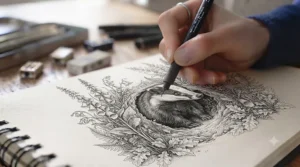
When buyers search specifically for fineliner pens for illustration, they’re usually trying to solve a slightly different problem than someone simply wanting a reliable everyday pen. Illustration work typically demands consistent line weight across long sessions, genuine waterproofing for layered media, and a range of sizes within one cohesive ink colour and finish. The Staedtler Pigment Liner and Copic Multiliner SP both excel here specifically because their size ranges are broad enough to cover an entire illustration’s hierarchy — from fine background detail to bold foreground outlines — without switching brands and risking subtle colour or sheen mismatches between inks. According to ARTdiscount’s artists’ pens buyer’s guide, pigment-based inks are generally far more lightfast than dye-based equivalents, which is precisely why professional illustration work intended for print, exhibition or sale should avoid dye-based pens entirely and stick to pigment-only ranges. For illustrators working digitally afterward, scanning bleed-free, consistently black linework also produces dramatically cleaner results than ink that’s patchy or slightly grey, reinforcing why ink quality matters as much as nib precision.
Waterproof Micro Pens: What “Waterproof” Actually Guarantees
The term waterproof micro pens gets used loosely across product listings, and it’s worth being precise about what it actually means in practice. A genuinely waterproof pen uses pigment ink that, once fully dry, will not dissolve, smear or bleed when water or watercolour paint is applied over the top — this is distinct from “water-resistant,” which typically means the ink merely resists light contact rather than full submersion or washing. Every pen featured in this guide is marketed as waterproof, but drying time before that waterproofing kicks in genuinely varies: faster-drying inks like the Uni Pin and Sakura Pigma Micron reach a stable, washable state more quickly than the Winsor & Newton Fineliner, which independent testing found took noticeably longer to fully set. In practice this means giving any inked line at least a few minutes — and ideally longer in humid conditions — before applying a wet wash on top, regardless of how waterproof the pen claims to be on the packaging. For artists working specifically in pen-and-wash techniques, testing a small swatch and applying water after the manufacturer’s stated drying time is the only reliable way to confirm genuine waterproof performance on your particular paper.
| Pen | Drying Time Before Wash-Safe | Waterproof Once Dry |
|---|---|---|
| Sakura Pigma Micron | Fast | Yes |
| Uni Pin Fine Line | Fast | Yes |
| Faber-Castell PITT | Moderate | Yes |
| Winsor & Newton Fineliner | Slower | Yes, once fully set |
The analysis here is straightforward: nearly every genuine pigment-based micro pen eventually becomes fully waterproof, but the window before that point varies enough to matter for anyone working quickly in mixed media, so building in a buffer of patience before reaching for the watercolour brush avoids most accidental smudging.
✨ Don’t Miss These Exclusive Deals!
🔍 Take your sketchbook to the next level with these carefully selected micro pens. Click on any highlighted product above to check current pricing and availability. These pens will help you create crisp, lasting linework for every project!
Micro Pens Set Amazon: What’s Actually in the Box
Searching for a micro pens set amazon listing throws up a genuinely wide spread of quality, and it’s worth knowing what a sensible set should include before adding one to a basket. A useful starter set covers at least three distinct nib sizes — something fine (around 0.1-0.2mm) for detail, something mid-range (0.3-0.5mm) for general linework, and something bold (0.7mm or above) for outlining and fills. Sets from established brands like Sakura, Staedtler and Faber-Castell typically list exact tip sizes in millimetres directly on the packaging, while some budget multi-packs from less established sellers list sizes vaguely or inconsistently, which is a reasonable warning sign to read reviews carefully before purchasing. Genuine archival-quality sets will explicitly state the ink is pigment-based, waterproof and lightfast on the product listing itself, language that’s worth specifically checking for rather than assuming from price or packaging alone. Aggregated buyer feedback across multiple comparable Amazon listings for fineliner sets consistently flags two recurring issues worth watching for: a small proportion of pens arriving dry out of the box, and colour sets where the non-black inks fade noticeably faster than the black ink in the same pack.
Best Micro Pens for Sketchbooks: Why Paper Matters
The best micro pens for sketchbooks aren’t necessarily the same pens that perform best on smooth, coated illustration board, because sketchbook paper varies enormously in weight, texture and absorbency. Thinner sketchbook paper, typically below around 100gsm, increases the risk of both feathering (ink spreading sideways into surrounding fibres) and bleed-through (ink visible on the reverse side), regardless of how good the pen’s ink quality actually is. Heavier, more textured sketchbook papers — generally 150gsm and above, particularly those marketed for mixed media or watercolour — give pigment ink a more stable surface to sit on, reducing both feathering and bleed-through even with the same pen. Based on the spec comparison across this guide, finer nib sizes (0.1mm and below) generally perform more predictably on thinner sketchbook paper than bold tips, simply because less ink volume is being deposited per stroke. For artists who frequently combine fineliner work with watercolour washes in the same sketchbook, choosing a heavier, more absorbent paper weight upfront solves more bleed and feathering problems than switching pen brands ever will.
Archival Ink Pens for Artists: Why It Matters Beyond the Page
The phrase archival ink pens for artists refers specifically to ink formulated to resist fading, yellowing and chemical degradation over years or decades, a quality that matters far more than most casual sketchers initially realise. Pigment-based archival ink typically carries a strong lightfastness rating, meaning it resists fading under prolonged light exposure considerably better than dye-based ink, which can visibly fade within months if displayed in direct sunlight. According to Jackson’s Art’s guide to inks, dye-based inks are generally recommended only for sketchbook work or pieces intended purely for reproduction, while pigment-based archival inks are the appropriate choice for any artwork likely to be framed, displayed or sold. This distinction matters practically for illustrators who scan and sell prints of original linework too, since archival ink resists the subtle colour shifts that can otherwise alter how a scanned image reproduces months or years after the original was drawn. Every pen featured in this guide uses genuinely pigment-based, archival-quality ink, which is precisely why they’re recommended here over cheaper dye-based fineliners sold for general office or stationery use.
Best Pen Nib Size for Detail Work
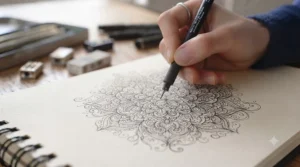
Choosing the best pen nib size for detail work depends heavily on the scale and density of the detail being rendered, and getting this wrong is one of the most common frustrations new illustrators report. For genuinely fine detail — stippling, fine cross-hatching, tiny text, or detailed botanical and technical illustration — nib sizes around 0.1mm to 0.2mm (Sakura’s 005 and 01, or equivalent sizes from Staedtler and Uni Pin) offer the precision needed without the line becoming visually dominant. For general linework and confident outlining, a mid-range 0.3mm to 0.5mm nib strikes a practical balance between control and speed, which is why most professional illustrators reach for this range as their default working size. Bold nibs of 0.7mm and above suit filling solid areas, creating strong panel borders in comic work, or adding emphasis lines, but are genuinely unsuitable for fine detail since the ink volume deposited per stroke is simply too high for precision marks. Based on the spec comparison across this guide, the Copic Multiliner SP and Staedtler Pigment Liner offer the widest practical range for detail work specifically because their finest sizes (0.03mm and 0.05mm respectively) extend below what most budget fineliner sets include at all.
Micro Pen Bleed Test on Sketchbook Paper
Running a genuine micro pen bleed test on sketchbook paper before committing to a full piece is one of the simplest habits that separates frustrated beginners from confident illustrators. The test itself is straightforward: draw a series of lines, cross-hatching and solid dots using each pen on a spare corner of the actual sketchbook you intend to use, wait the recommended drying time, then check the reverse side of the page for visible bleed-through and the front for feathering at the edges of each mark. Independent fineliner comparisons specifically testing this on absorbent, lower-weight sketchbook paper found that even pens marketed as bleed-free showed some feathering under heavy, repeated strokes in the same spot, while a single clean pass produced crisp, contained lines across nearly every pen tested. What this means in practice is that bleed risk often has more to do with technique and paper choice than pen quality alone — pressing hard, going over the same line repeatedly, or using a thin, uncoated paper will increase bleed regardless of how premium the pen is. For anyone filling a new sketchbook for the first time, running this five-minute test before starting a finished piece avoids the genuinely disheartening experience of discovering bleed-through halfway through a page you’ve already invested real time in.
Common Mistakes When Buying Micro Pens
A handful of avoidable errors come up repeatedly among new buyers. The first is assuming all “fineliner” pens use archival pigment ink by default — many budget office and stationery fineliners use dye-based ink that will fade and isn’t genuinely waterproof, despite looking near-identical on a shelf. The second is buying a single nib size rather than a small starter set, then discovering mid-project that the available width simply can’t render the level of detail or boldness the piece actually needs. The third is ignoring paper compatibility entirely, buying premium pens but using thin, low-quality sketchbook paper that causes bleed and feathering regardless of ink quality. The fourth is over-pressing on fine nibs, which permanently damages the tip within weeks of regular use and is one of the most common reasons artists report a “faulty” pen that was, in fact, simply mishandled. The fifth is overlooking Copic or marker compatibility specifically, buying a beautiful set of fineliners only to discover the ink smears the moment an alcohol-based marker is layered on top.
Long-Term Cost and Maintenance
The upfront price of a pen set is only part of the real cost calculation, particularly for artists drawing regularly. Disposable pens like the Sakura Pigma Micron, Staedtler Pigment Liner and Edding 1800 are cheaper individually but need full replacement once the nib wears or the ink runs dry, which adds up over months of heavy daily use. Refillable systems like the Copic Multiliner SP cost considerably more to start with but allow individual nib units and ink cartridges to be replaced separately, meaningfully reducing both ongoing cost and plastic waste for artists drawing several hours a week. According to Jackson’s Art’s brush pen guide, refilling disposable pens with matching ink type is possible for some ranges but can be fiddly, and many disposable pens are difficult to recycle through standard household routes, which is worth factoring in for environmentally conscious buyers. Maintenance for any micro pen is minimal but consistent: always recap promptly, store nib-down or horizontally, and avoid leaving pens in direct heat or sunlight, which can dry out ink reservoirs considerably faster than normal use alone.
FAQ: Micro Pens for Drawing Questions
❓ What is a micro pen for drawing?
❓ Which micro pen nib size is best for detail work?
❓ Are micro pens for drawing actually waterproof?
❓ Do micro pens bleed through sketchbook paper?
❓ Are Sakura Pigma Microns better than Staedtler Pigment Liners?
Conclusion
There’s no single best micro pen for drawing, only the right pen for how you actually work. For a dependable, all-round archival standard, the Sakura Pigma Micron remains the sensible default that most illustration tutors reach for first. For technical work involving rulers and stencils, the Staedtler Pigment Liner’s metal-sleeved tip and broad size range earn their place, while the Faber-Castell PITT Artist Pen suits anyone wanting expressive brush-tip variation alongside precise fineliners. Budget-conscious buyers shouldn’t overlook the Uni Pin Fine Line Pen or Edding 1800 Profipen, both of which deliver genuinely archival ink without premium-brand pricing, and anyone inking professionally on a daily basis should seriously weigh the long-term economics of the refillable Copic Multiliner SP. Whichever you choose, test it properly on your actual sketchbook paper first, respect the finest nibs by keeping your touch light, and remember that genuine archival, pigment-based ink is what separates a drawing that lasts decades from one that fades within a year.
Recommended for You
- Best Graphite Sticks for Drawing in the UK: 7 Top Picks (2026)
- Vine Charcoal vs Charcoal Pencils: 7 Best UK Picks (2026)
- Best Charcoal Pencils UK 2026: 7 Expert Picks for Every Artist
Disclaimer: This article contains affiliate links. As an Amazon Associate, I earn from qualifying purchases. If you purchase products through these links, we may earn a small commission at no additional cost to you.
✨ Found this helpful? Share it with your friends! 💬🤗
