
In This Article
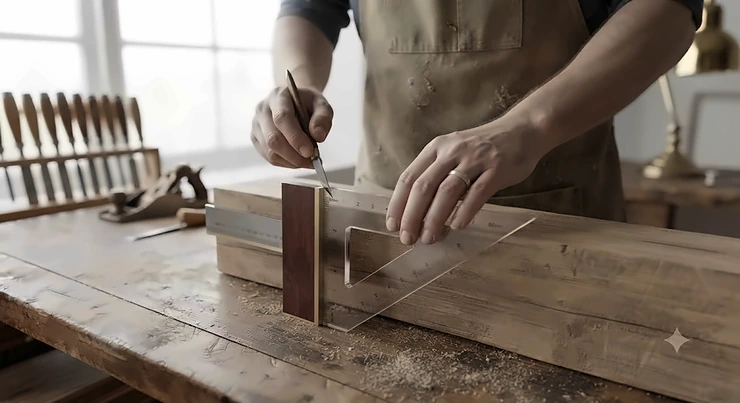
Stand in front of a blank sheet of paper with a pencil and a wobbly hand, and you’ll understand within about thirty seconds why draughtsmen invented straightedges in the first place. The t square vs set square for drawing debate isn’t really a rivalry — it’s more like asking whether you need a hammer or a screwdriver. Both live in the same toolbox. Both solve different halves of the same problem. And if you’ve ever tried to draw a wall elevation freehand and watched it drift three degrees off true by the time you reach the far edge of the page, you already know why this matters.
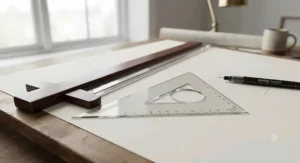
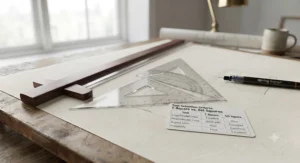
A T-square rides along the edge of your board and gives you dead-straight horizontal lines, board after board, without you needing to think about it. A set square sits on top of that T-square (or works alone against any straight edge) and gives you fixed angles — usually 45° or 30°/60° — for verticals and diagonals. Put them together properly and you’ve got a complete drawing system that architecture students, engineers and hobbyist draughtsmen have relied on since long before CAD software existed. This guide walks through seven real tools currently available on amazon.co.uk, spanning budget classroom kit right through to a full parallel-motion board that quietly retires the T-square altogether, so you can work out which combination actually suits your bench, your budget and your drawing habits.
Quick Comparison Table
| Tool | Type | Best For | Price Range |
|---|---|---|---|
| Helix 90cm Wooden T-Square | T-square | Large classroom boards | Under £15 |
| Helix 78490 18-inch T-Square | T-square | Compact desks & travel | Under £10 |
| Alvin ALT18 Aluminium T-Square | T-square | Professional precision work | £20-£30 range |
| Helix Oxford 31cm Set Squares | Set square pair | Students & general geometry | Under £10 |
| STAEDTLER Mars 567 Set Squares | Set square pair | Ink work & fine detail | £15-£25 range |
| Linex Adjustable Set Square | Adjustable set square | Non-standard angles | £10-£20 range |
| Liquidraw A2 Parallel Motion Board | Board + set square | Replacing loose T-squares entirely | £70-£150 range |
Look closely at that spread and a pattern emerges: price correlates far more tightly with material rigidity and calibration accuracy than with brand prestige alone. On paper, a wooden T-square and an aluminium one look interchangeable — both give you a straight edge — but the aluminium version resists warping in a way that matters enormously if you’re drawing to a tight scale. Meanwhile, the parallel-motion board sits in its own category entirely, because it isn’t really competing with a £10 T-square so much as replacing the whole workflow that a loose T-square requires.
💬 Just one click — help others make better buying decisions too!😊
Top 7 T-Squares and Set Squares: Expert Analysis
Real specs, real trade-offs, and honest commentary on who each tool actually suits — no invented hands-on claims, just what the spec sheets and aggregated reviewer sentiment tell us.
1. Helix 90cm Wooden T-Square — the classroom classic that never needs charging
The full-length Helix 90cm Wooden T-Square (sold as the Helix T-Square Ruler 90cm, model T36000) is built from laminated wood with a clear acrylic edge running the length of the blade, and it carries both metric and imperial graduations. That acrylic strip matters more than it sounds: it lets you see your pencil line right up to the edge instead of guessing where the wood ends and your paper begins.
At 90cm, this is sized for A1 and large A2 boards rather than a cramped desk, so it’s really aimed at students and hobbyists working on proper drafting tables rather than a kitchen table setup. Based on the spec comparison with plastic alternatives, wood offers better rigidity over a long blade without the flex you sometimes get in cheap acrylic-only T-squares of the same length — a genuine advantage when you’re drawing a horizontal line across an entire sheet. Reviewers consistently note it as reliable classroom kit that holds up to repeated use over a school year, though a handful mention the wood can warp slightly if stored somewhere damp.
Pros:
- ✅ Dual metric and imperial scale on one edge
- ✅ Long 90cm blade suits A1/A2 board work
- ✅ Rigid wood construction resists flex
Cons:
- ❌ Too long for small desks or travel use
- ❌ Wood can warp if stored in damp conditions
Sitting comfortably under £15, this is genuinely hard to beat as a first “proper” T-square, and the value case is clear: you’re paying classroom-kit prices for a tool that will outlast several sheets of paper’s worth of homework.
2. Helix 78490 18-inch T-Square — the pocket-sized option for tight desks
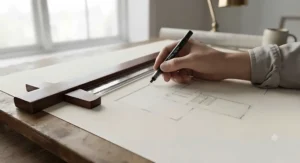
The Helix 78490 18-inch T-Square (45cm, part of Helix’s wider drafting range aimed at engineers, architects, artists and crafters) shrinks the whole concept down to something that actually fits on a standard desk without hanging off the edge. Helix has been making rulers and drawing instruments in the West Midlands since 1887, and this model reflects that heritage in a fairly unglamorous but reassuring way — it’s built to the same T-shaped stock-and-blade design that’s barely changed in over a century.
At 18 inches, this suits A3 work comfortably and A2 at a stretch if your board is small. What most buyers overlook about compact T-squares is that the shorter blade actually improves accuracy for detail work, because there’s less length for the ruler to bow or drift out of true. On the other hand, if you’re regularly drawing full-sheet elevations, you’ll find yourself constantly repositioning the square, which slows you down and increases the chance of a small misalignment creeping in.
Pros:
- ✅ Compact size fits small desks and bags
- ✅ Less blade length means less flex or bow
- ✅ From an established 130-year-old UK stationery brand
Cons:
- ❌ Too short for full A1/A2 sheet horizontals
- ❌ Requires more repositioning on larger drawings
Priced comfortably under £10, this is the sensible pick for students working mostly on A3 sheets or anyone who needs a T-square that travels between home and college without becoming a logistical headache.
3. Alvin ALT18 Aluminium Graduated T-Square — the professional’s choice for dead-straight lines
Step up to the Alvin ALT18 Aluminium Graduated T-Square and you’re in genuinely professional territory. Alvin has built drafting equipment for architects and engineers for decades, and this 18-inch model swaps wood and acrylic for solid graduated aluminium — a material choice that all but eliminates the warping risk you get with timber-based squares.
Here’s what the spec sheet won’t tell you outright: aluminium T-squares hold their calibration far more consistently across temperature and humidity swings than wood ever will, which is exactly why architecture practices and engineering departments lean toward metal instruments for anything that needs to stay accurate over months of studio use. The graduated scale running along the blade also means you can take rough measurements without reaching for a separate ruler, saving a genuinely useful few seconds on every line. Aggregated reviewer sentiment on comparable Alvin drafting tools tends to highlight build quality and edge straightness as the standout strengths, with occasional comments that the aluminium edge can mark softer drawing surfaces if you’re heavy-handed.
Pros:
- ✅ Aluminium construction resists warping long-term
- ✅ Graduated scale doubles as a quick ruler
- ✅ Trusted by architecture and engineering professionals
Cons:
- ❌ Noticeably pricier than wood or plastic squares
- ❌ Metal edge can mark delicate drawing surfaces
In the £20-£30 range, this isn’t the cheapest T-square on this list, but if you’re drawing to scale regularly rather than occasionally, the long-term accuracy justifies the extra outlay.
4. Helix Oxford 31cm 45° & 60° Set Squares — the classic pairing every student starts with
The Helix Oxford 31cm 45° & 60° Set Squares are sold as a matched pair — one 45/45/90 triangle and one 30/60/90 triangle — which between them cover the vast majority of angles you’ll ever need in standard technical drawing, plus 15° and 75° when you combine the two hypotenuses together. Made from clear plastic with metric graduations along each edge, they include a hand-hole cut into the centre that makes lifting and repositioning them noticeably easier than gripping a solid triangle by its thin edges.
Based on the spec comparison with unmarked craft triangles, having graduations built into the edge means you can measure short distances directly without swapping tools mid-drawing, which genuinely speeds up isometric and orthographic work. One real reviewer noted using the 30/60 pairing specifically to introduce isometric drawing to students, which lines up with how these are actually used in classrooms across the country — as a first, forgiving introduction to fixed-angle drafting rather than a specialist professional instrument.
Pros:
- ✅ Matched pair covers 45°, 30°/60°, 15° and 75°
- ✅ Hand-hole makes lifting and repositioning easier
- ✅ Metric scale built into every edge
Cons:
- ❌ Plastic edges scratch more easily than metal
- ❌ Not calibrated to professional drafting tolerances
At under £10 for the pair, this is the obvious starting point if you don’t already own set squares, and it remains genuinely useful even once you’ve outgrown “beginner” status.
5. STAEDTLER Mars 567 36cm Set Squares — the ink-safe pair serious draughtsmen swear by
The STAEDTLER Mars 567 36cm Set Squares — a 60°/30° and a 45°/45° pair in translucent blue plastic — are built around a detail that matters far more than it first appears: a raised inking edge. Rather than sitting flush against the paper, the underside is slightly recessed so that ink from a technical pen can’t creep underneath and bleed into a smudged mess along your straightedge.
That single design choice tells you exactly who these are aimed at — anyone still finishing drawings in fineliner or technical pen rather than pencil alone, which remains common in fine art, architecture presentation drawings, and certain engineering disciplines even in a largely digital 2026. At 36cm, they’re also noticeably larger than typical student set squares, giving you longer clean edges for bigger sheets. What most buyers overlook is that the scale on Staedtler’s Mars range begins directly at the very edge of the ruler rather than a few millimetres in, which removes a small but constant source of measurement error that catches people out on cheaper squares.
Pros:
- ✅ Raised inking edge stops ink bleeding underneath
- ✅ Scale starts exactly at the edge, no offset error
- ✅ Larger 36cm size suits bigger drawing sheets
Cons:
- ❌ Overkill if you only ever draw in pencil
- ❌ Costs noticeably more than standard student pairs
Sitting in the £15-£25 range for the pair, these earn their price back the first time you avoid re-drawing a smudged ink line — a small but very real form of return on investment.
6. Linex Adjustable Set Square — one tool, any angle you need
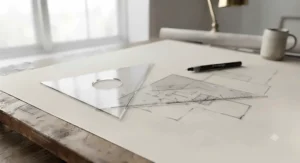
The Linex Adjustable Set Square (300mm, model LXB1120/12B) takes a fundamentally different approach: instead of fixed 45° or 60° triangles, the body is hinged at the centre and marked with a graduated scale, so you can dial in any angle up to 180° and lock it in place. Linex — a long-established Danish precision-instrument brand widely stocked across UK stationers — builds this to a claimed 0.5° precision scale, which is tight enough for genuine technical work rather than rough sketching.
Here’s what most buyers overlook about adjustable set squares: they don’t replace a fixed pair so much as fill the gap those pairs leave behind. A 45° and a 60°/30° triangle cover common angles brilliantly, but the moment a drawing calls for, say, 38° roof pitch or an unusual isometric variant, a fixed set square simply can’t help you — you’d need a protractor and a lot of patience. This tool solves exactly that problem in a single adjustable unit, at the cost of being slightly less rigid at the hinge than a solid one-piece triangle, which a small number of reviewers flag as something to handle carefully rather than a dealbreaker.
Pros:
- ✅ Adjusts to any angle up to 180°, not just fixed ones
- ✅ 0.5° precision scale suits genuine technical work
- ✅ Bevelled clear edge for clean pencil lines
Cons:
- ❌ Hinge mechanism is less rigid than a solid triangle
- ❌ Fiddlier to set accurately than grabbing a fixed pair
Priced in the £10-£20 range, this is the set square to add once you’ve discovered a fixed pair doesn’t cover every angle your drawings demand — a genuinely useful specialist rather than a first purchase.
7. Liquidraw A2 Drawing Board with Parallel Motion — retires your T-square altogether
The Liquidraw A2 Drawing Board with Parallel Motion takes the boldest approach on this list: rather than pairing a loose T-square with loose set squares, it builds a straightedge directly into the board via a cross-wire parallel motion system, with six adjustable working angles and a set square plus board clips included in the box. The straightedge stays mechanically linked to the board as you slide it up and down, so it never drifts out of parallel the way a hand-held T-square can if you nudge it mid-line.
On paper, this means every horizontal line on the board is automatically true without you needing to press the square firmly against an edge and hope it hasn’t slipped — genuinely transformative if you’re drawing dozens of parallel lines across a full sheet, as you would on a floor plan or elevation. Based on the spec comparison with a loose T-square-and-board setup, the trade-off is obvious: portability. This is a piece of furniture, not something you slip into a folder, and it needs a stable, level surface to sit on. Reviewers of comparable parallel-motion boards in this category commonly praise the accuracy gain over loose T-squares, while a smaller number mention that the included set square, while functional, is the first accessory serious users tend to upgrade.
Pros:
- ✅ Straightedge stays mechanically parallel automatically
- ✅ Six adjustable angles cover most drafting needs
- ✅ Includes set square and board clips in the box
Cons:
- ❌ Bulky — not portable like a standalone T-square
- ❌ Needs a stable, dedicated surface to work properly
At around £70-£150 depending on the exact configuration, this sits well above everything else on this list, but for anyone drawing regularly rather than occasionally, it replaces two categories of tool at once and arguably pays for itself in saved re-drawing time.
Setting Up Your T-Square for Drafting: A Practical Usage Guide
Getting a T-square for drafting to actually earn its keep comes down to a handful of habits most beginners skip in their first few weeks. Start by checking your board itself: a T-square only draws a true horizontal if the left-hand edge of your drawing board is genuinely straight and square, so run a set square against it before you even tape down paper. Tape your sheet down with masking tape at all four corners rather than just the top two — a loose sheet shifting half a millimetre under your T-square defeats the whole point of the exercise.
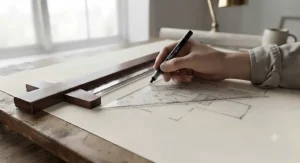
When drawing, always keep firm, even pressure holding the stock (the short crossbar) flush against the board edge with your non-drawing hand, and slide the whole T-square as one unit rather than pivoting it — pivoting is the single most common cause of a line that looks straight at one end and drifts by the other. A common mistake in the first thirty days is drawing pencil lines with the square positioned below the intended line rather than above it; keeping the blade above your working line means graphite dust and eraser debris fall away from your straightedge instead of smearing under it.
For maintenance, wipe the blade edge with a soft, slightly damp cloth every few sessions to remove graphite build-up, which otherwise transfers onto your next sheet as grey smudging along every line you draw. Store wooden T-squares flat, or hung vertically by the stock — never leaning at an angle for weeks, which is exactly how blades develop a slow, permanent bow. A T-square that’s gone even slightly out of true is worse than useless, because it will confidently produce wrong lines rather than obviously wrong ones.
Real-World Scenarios: Matching the Tool to the Job
If you’re a first-year architecture student sketching floor plans on A2 paper most evenings, a mid-range wooden T-square paired with the classic 45°/60° set square pair is genuinely all you need — the Helix 90cm Wooden T-Square and Helix Oxford 31cm 45° & 60° Set Squares combination covers roughly 90% of standard orthographic drawing without you spending serious money before you even know if the course suits you.
If you’re a hobbyist illustrator working at a small home desk, mostly on A3 or A4 sheets, portability matters more than sheer length — the Helix 78490 18-inch T-Square fits a cramped desk and a bag far better than a 90cm blade ever will, and pairing it with the Linex Adjustable Set Square means you’re not limited to only 45° and 60° angles when a design calls for something unusual.
If you’re a working draughtsman or engineering student producing inked technical drawings several times a week, the calculus changes again: the Alvin ALT18 Aluminium Graduated T-Square holds calibration far longer under daily use than wood does, and the STAEDTLER Mars 567 36cm Set Squares with their inking edge prevent the smudged-line problem that plagues anyone still finishing drawings by pen. And if you’ve reached the point of drawing full sheets regularly enough that repositioning a loose T-square is genuinely costing you time, the Liquidraw A2 Drawing Board with Parallel Motion removes that friction permanently, at the cost of desk space and portability.
What Is the Difference Between a T-Square and a Set Square?
A T-square is a T-shaped straightedge that slides along the edge of a drawing board to guide straight horizontal lines, while a set square is a flat triangle (typically 45°/45°/90° or 30°/60°/90°) used against a T-square, or on its own, to draw fixed-angle verticals and diagonals. In short: the T-square gives you horizontals, the set square gives you angles, and together they form a complete manual drafting system.
That’s the textbook definition, but the practical distinction runs a bit deeper. A T-square only really works well when it has a true, straight board edge to register against — take it off the board and it’s just a slightly awkward straightedge. A set square, by contrast, is fully self-contained; you can use it against literally any straight edge, including a ruler, another set square, or even the edge of a stack of books in a pinch. That’s exactly why the pair is so effective together: the T-square anchors your horizontal reference, and the set square rides that reference to generate everything else.
Rulers for Technical Drawing: How T-Squares, Set Squares and Scale Rules Work Together
Formal architectural drawing conventions rely on this same three-tool relationship, and neither a T-square nor a set square is really a measuring tool in the strict sense — they’re guiding tools. For actual dimensions, technical drawing traditionally leans on a third category: rulers for technical drawing, most commonly triangular scale rules with multiple ratios etched along their edges (1:20, 1:50, 1:100 and similar), letting you read a real-world dimension directly off a scaled drawing without doing mental arithmetic on every measurement.
Used together, the three tools divide labour cleanly. Your T-square (or parallel motion straightedge) sets the horizontal reference across the whole sheet. Your set square rides that reference to produce accurate verticals and standard angles. Your scale ruler tells you exactly where along those lines a wall, a window or a component edge actually needs to sit, at whatever scale you’re drawing to. Skip any one of the three and the workflow breaks down — a beautifully straight line drawn to the wrong length is still a wrong line. Several of the products above, including the Helix Oxford 31cm 45° & 60° Set Squares, include their own metric graduations along each edge specifically so short measurements don’t require constantly reaching for a separate scale rule.
How to Choose a T-Square or Set Square
- Match the size to your board, not your ambition. A 90cm T-square is wasted on an A3 desk setup; measure your actual drawing surface before buying.
- Decide pencil or ink. If you finish drawings in technical pen, prioritise squares with a raised or bevelled inking edge like the STAEDTLER Mars 567 36cm Set Squares to avoid smudged lines.
- Weigh material against budget. Wood and plastic cost less upfront; aluminium and rigid acrylic resist warping over years of use, which matters more the more often you draw.
- Check what angles you’ll actually need. A fixed 45°/60° pair covers most standard work; an adjustable square like the Linex Adjustable Set Square earns its place only if your drawings regularly demand non-standard angles.
- Consider whether a board upgrade makes more sense. If you’re drawing full sheets several times a week, a parallel-motion board such as the Liquidraw A2 Drawing Board with Parallel Motion may cost more upfront but save real time over a loose T-square.
- Look for graduated edges. A set square with a built-in ruler scale, like the Helix Oxford 31cm 45° & 60° Set Squares, saves constantly swapping tools mid-drawing.
- Buy the pair, not just one. A lone T-square without a set square (or vice versa) only gives you half a drafting system — budget for both from the start.
T-Square vs Set Square: Which Wins for Different Drawing Tasks
Framed as a straight contest, “t-square vs set square” is really the wrong question, but it’s worth breaking down where each pulls its weight on its own. For long, unbroken horizontal lines across a full sheet — floor plans, elevation baselines, table headers — a T-square wins outright; nothing else guides a straightedge across 60-90cm as reliably. For verticals, diagonals and any fixed angle, the set square wins just as clearly; a T-square physically cannot produce a 45° line on its own.
Where it gets interesting is the middle ground: shorter lines, quick angle checks, and situations where you don’t have a proper board edge to register a T-square against. Here, a set square alone — or a pair used against each other — often does the job faster than fetching a full-length T-square for a two-inch line. What the spec sheet won’t tell you, but experienced draughtsmen will, is that the two tools are almost never used in true isolation; a T-square sets your horizontal, then a set square rides its top edge to drop a vertical at any point along that line, which is precisely how a rectangle, a section, or a floor plan grid gets built up stroke by stroke. Judged purely on versatility, the set square edges ahead simply because it works without a board edge at all — but judged on accuracy across a full sheet, the T-square remains irreplaceable, which is exactly why serious drafting kits always include both rather than picking one.
✨ Still Deciding Between the Two?
🔍 Grab a T-square and set square pair together and cover both horizontals and angles from day one. Click through to check current stock and pricing on the options above — your future straight lines will thank you!
Choosing a Drafting Board: Common Mistakes to Avoid
Buying a drafting board sounds like the simplest purchase in this whole guide, and that’s exactly why people get it wrong. The first common mistake is buying on size alone without checking parallel motion quality — a board with a loose, wobbly straightedge is arguably worse than no built-in straightedge at all, because it creates a false sense of accuracy. Second, buyers regularly overlook working angle range; a board fixed at a single tilt might suit ink work but becomes uncomfortable for extended pencil sessions, so look for at least four or five adjustable positions like those on the Liquidraw A2 Drawing Board with Parallel Motion.
Third, people underestimate desk space requirements — an A2 board with its stand extended needs considerably more room than the board’s flat dimensions suggest, and a board wedged against a wall with no clearance for the parallel motion mechanism to travel simply won’t function properly. Fourth, some buyers assume a drafting board replaces set squares entirely; in reality, most boards (including this one) ship with a single set square, and most serious users find themselves wanting a second, specialist pair — such as the ink-safe STAEDTLER Mars 567 36cm Set Squares — fairly quickly. Finally, don’t ignore surface material: a board that’s too soft dents under repeated compass or ruler pressure, while one that’s too hard and glossy can cause a technical pen to skip.
Getting Perfect Right Angles Every Time
Right angles sound like the easiest thing in technical drawing to get correct, and yet a surprising number of drawings end up subtly off-square because of small, avoidable habits. The most reliable method is the T-square-plus-set-square combination: rest a 45°/45°/90° set square’s short edge flush against the top of your T-square blade, and the square’s vertical edge is guaranteed to sit at exactly 90° to your horizontal, regardless of how carefully (or carelessly) you’ve eyeballed anything else on the page.
The mistake that ruins this reliability is subtle: pressing down on the set square while it’s only lightly touching the T-square, rather than held firmly flush along its full length. Even a hair’s-width gap at one end compounds into a visibly skewed angle by the time your pencil line reaches the far side of the paper. A second common error is checking squareness only once, at the start of a drawing session — as sheets shift slightly under repeated handling, it pays to re-check your T-square’s registration against the board edge every few lines, especially on longer drawing sessions. For anyone learning this from scratch, practising on scrap paper until flush contact becomes an automatic habit is far more valuable than any tool upgrade; even the Alvin ALT18 Aluminium Graduated T-Square, precise as it is, can’t compensate for a set square held at a slight angle by an inattentive hand.
T-Squares and Set Squares in Architecture Drawing
Architecture drawing has arguably done more than any other field to keep manual drafting tools relevant well into the CAD era, and the reasons are practical rather than nostalgic. Concept sketches, quick massing studies, and site diagrams often move faster by hand than by opening a full CAD package, and the Royal Institute of British Architects holds an archive of nearly a million architectural drawings spanning from Christopher Wren’s era to the present day — a reminder that hand-drafted convention, scale, and line weight discipline still underpins how architects are trained to think, even once they move to a screen.
For students specifically, working through orthographic plans, sections and elevations by hand with a T-square and set square builds an intuitive sense of scale and proportion that’s genuinely harder to develop when a computer handles every measurement automatically. A 90cm T-square such as the Helix 90cm Wooden T-Square suits the standard A1/A2 boards most architecture courses issue in first year, while a fixed 45°/60° set square pair covers the vast majority of orthographic and isometric conventions used in early studio modules. As courses progress toward inked presentation drawings, many students find themselves reaching for something closer to the STAEDTLER Mars 567 36cm Set Squares, purely because smudge-free ink lines matter far more once a drawing is being marked or presented rather than sketched for personal reference.
Long-Term Cost & Maintenance
It’s tempting to treat a £6 plastic set square and a £25 aluminium T-square as different price points for the same job, but the total cost of ownership tells a different story once you factor in replacement cycles. A cheap plastic set square that scratches, chips at the corners, or slowly loses its edge accuracy after a term of daily classroom use might need replacing every year or two; an aluminium T-square, properly cared for, can realistically last a decade or more without losing calibration.
Run the numbers roughly: buying a £6 set square annually for five years costs £30, while a single £20 aluminium-edged alternative that lasts the full five years (and beyond) works out cheaper in the long run while also delivering more consistent accuracy throughout — a real, if unglamorous, ROI case for spending more upfront if you know you’ll be drawing regularly for years rather than one term. The same logic applies at the top end: the Liquidraw A2 Drawing Board with Parallel Motion, at £70-£150, looks expensive next to a £10 T-square, but if it removes the need to buy and eventually replace a separate T-square altogether, the real gap narrows considerably over a multi-year course or career. Maintenance costs stay low across the board either way — a soft cloth and dry, flat storage account for nearly all the upkeep any of these tools need.
Features That Actually Matter (And Those That Don’t)
Marketing copy on drafting tools loves to lean on words like “premium” and “professional-grade” without explaining what’s actually different underneath, so it’s worth separating genuine functional features from cosmetic ones. Features that actually matter: a scale that begins precisely at the edge with no offset gap (present on the STAEDTLER Mars 567 36cm Set Squares), material rigidity appropriate to blade length (aluminium genuinely does outperform thin plastic over 60cm+ spans), and a raised or bevelled inking edge if you ever finish work in pen.
Features that matter far less than the packaging suggests: colour-tinted plastic (blue-tinted acrylic on set squares is purely aesthetic and does nothing for accuracy), branded storage tins bundled with beginner sets (nice to have, irrelevant to drawing quality), and marketing claims of “unbreakable” plastic, which in practice usually just means “more flexible,” not necessarily more durable under a straightedge’s specific stresses. A hand-hole cut into a set square, like the one on the Helix Oxford 31cm 45° & 60° Set Squares, sits somewhere in between — genuinely useful for grip and lifting, but not something that affects the accuracy of a line drawn against the edge itself.
Frequently Asked Questions
❓ What's the difference between a T-square and a set square?
❓ Do I need both a T-square and a set square?
❓ What size T-square should I buy for A2 drawing?
❓ Can a set square replace a protractor?
❓ Are wooden or aluminium T-squares better for architecture drawing?
Conclusion
The honest answer to “t-square vs set square for drawing” is that you’re not really choosing one over the other — you’re deciding how each fits into a system that’s worked, largely unchanged, for well over a century. A T-square gives you dependable horizontals across a full sheet; a set square gives you the fixed angles and verticals a T-square physically can’t produce alone; and depending on how often you draw, a parallel-motion board can eventually fold both jobs into a single piece of furniture.
For most students and hobbyists starting out, a mid-range wooden T-square paired with a classic 45°/60° set square pair — the Helix 90cm Wooden T-Square and Helix Oxford 31cm 45° & 60° Set Squares — covers the overwhelming majority of standard technical and architecture drawing without overspending before you know how much you’ll actually use them. For anyone drawing daily, inking finished work, or simply tired of a loose T-square drifting mid-line, stepping up to aluminium, an inking-edge set square, or a full parallel-motion board pays for itself in accuracy and saved time. Whichever combination you land on, the real skill isn’t the tool itself — it’s the habit of checking your square is flush before every single line, a five-second discipline that separates a confidently wrong drawing from a genuinely accurate one.
Recommended for You
- Metal Ruler vs Plastic Ruler for Durability: 7 Picks (2026)
- Value Ruler Set for School: 7 Best Picks for 2026 (Budget Guide)
- 7 Best Circle Template Set Picks for UK Drafters in 2026
Disclaimer: This article contains affiliate links. As an Amazon Associate, I earn from qualifying purchases. If you purchase products through these links, we may earn a small commission at no additional cost to you.
✨ Found this helpful? Share it with your friends! 💬🤗
