
In This Article
Anyone who’s handed a toddler a paintbrush for the first time knows the real question isn’t “which paint looks nicest in the bottle” — it’s “which paint is still washable three hours later when it’s dried into a school jumper.” Poster paint for kids sits in a strange spot: it needs to be vivid enough to hold a five-year-old’s attention, forgiving enough to survive an overenthusiastic hand, and safe enough that nobody panics when a toddler decides to taste-test the yellow.
What is poster paint? It’s a water-based, opaque paint (technically a form of tempera paint) designed to give bold, flat colour on paper and card, and it’s been the default choice in UK primary classrooms for decades, sitting alongside drawing and printmaking in the national curriculum for art and design, which explicitly expects children to become proficient in painting from key stage 1 onwards. Unlike watercolours, poster paint doesn’t rely on transparency or careful water control, which is exactly why it suits younger, less controlled hands so well.
This guide sticks to real, currently available UK products, honest comparisons of what each actually offers, and straight answers on the two questions that come up in every parent group: does “washable” really mean washable, and is “non-toxic” a genuine safety standard or just marketing. Seven real sets, spanning pocket-money starter packs to full classroom bulk buys, so you can pick with confidence.
Quick Comparison Table
| Set | Format | Best For |
|---|---|---|
| Scola Readymix Tempera Paint | 6 x 600ml bottles | Best overall, school-grade quality |
| Crayola Washable Paints and Brush | 18-pot set with brush | Best value beginner set |
| Creative Deco Poster Paint Set | 24 x 20ml pots + 2 brushes | Best colour and finish variety |
| Baker Ross Bumper Pack | 12 x 600ml bottles | Best bulk classroom value |
| Giotto Poster Paint Set | 6 x 18ml pots | Best small premium starter set |
A quick scan of this table shows the split that matters most for most buyers: large-format bottles (Scola, Baker Ross) built for repeated, heavy use over months, versus smaller pot-based sets (Creative Deco, Giotto, Crayola) built around colour variety and a manageable first experience for a younger painter. If you’re buying for a single child at home, the pot-based sets generally offer more excitement per pound; if you’re stocking a playroom, childminding setting, or classroom, the 600ml bottle formats work out considerably cheaper per session.
💬 Just one click — help others make better buying decisions too!😊
Top 7 Poster Paint for Kids Sets: Expert Analysis
1. Scola Readymix Tempera Paint — best overall, school-grade quality
Scola Readymix Tempera Paint earns the top spot here for a simple reason: it’s the paint UK schools have relied on for decades, and that track record shows in the formulation rather than just the marketing copy. The set comes as six 600ml bottles in assorted bright colours, ready-mixed straight from the bottle with no dilution or preparation needed, which matters enormously when you’re trying to get a group of children painting quickly rather than managing a mixing station. Based on the spec comparison with smaller pot-based sets, the sheer volume here changes how you can use it: at 600ml per bottle, this isn’t a paint you ration carefully, which lets younger children paint freely and make the inevitable mistakes that come with learning brush control. Reviewers consistently note that one of the most practical things about buying paint in this quantity is that a young painter genuinely goes through it fast, and this format avoids the frustration of running out mid-session, which smaller starter pots can’t match. What most buyers overlook is that Scola manufactures specifically for the UK education market and formulates its paints to be wheat and gluten-free, a detail that matters more than it might seem for settings with allergy policies to consider. The paint is explicitly labelled safe and non-toxic, suitable from age 3 upward, and works well straight from the bottle or thinned slightly with water for a more watercolour-like effect.
Pros:
- ✅ Large 600ml bottles reduce running-out frustration
- ✅ Formulated specifically for the UK education market
- ✅ Wheat and gluten-free formulation
Cons:
- ❌ Bulkier bottles are less practical for travel or small kits
- ❌ Fewer specialty finishes than smaller novelty sets
Typically priced around £12-£18 for the six-bottle pack, this is the sensible choice if your child paints regularly rather than occasionally.
2. Crayola Washable Paints and Brush — best value beginner set with brush
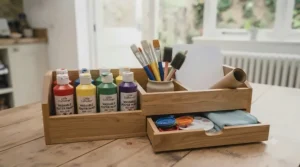
Crayola Washable Paints and Brush takes the guesswork out of a first purchase by bundling 18 pots of paint with a brush included, which genuinely matters for anyone buying a painting set for beginners rather than restocking an existing collection. Here’s what to weigh: at roughly 5ml per pot across 18 pots, the total volume here is modest compared with a 600ml bottle format, so treat this as an introduction to colour variety rather than a long-term bulk supply. Based on the spec comparison with bottle-format paints, the individual pot format genuinely suits a first-time painter better, since a child can dip a brush into a manageable, contained amount of colour rather than navigating a squeeze bottle, which younger hands often struggle to control cleanly. Reviewers consistently note the washability claim holds up in practice; one parent reported that even after their toddler experimented with the paint on furniture and clothing, everything came clean with just soap and water when tackled within the hour. What the spec sheet won’t tell you, but reviewers note, is that individual pots empty at different rates depending on a child’s favourite colours, so within a few sessions you may find yourself topping up specific shades rather than working through the full set evenly — a minor but genuinely common observation across reviews.
Pros:
- ✅ Includes a brush, ready to use out of the box
- ✅ 18 colours support genuine colour exploration
- ✅ Confirmed washable from skin and clothing within reviews
Cons:
- ❌ Smaller pot sizes deplete quickly with heavy use
- ❌ Favourite colours run out unevenly across the set
Typically priced around £5-£10, this is one of the most accessible starting points on this list for a child’s very first poster paint set.
3. Creative Deco Poster Paint Set — best colour and finish variety
Creative Deco’s 24-pot poster paint set stands out from the rest of this list by leaning into variety: alongside the expected basic colours, the range includes fluorescent, glitter, metallic and neon finishes, giving a child considerably more creative range than a standard primary-colour set. The set includes two brushes and each pot holds 20ml, dries to a matte finish in around 20-25 minutes at room temperature, and is explicitly formulated to work across multiple surfaces including canvas, wood, paper, card and even stencils. Based on the spec comparison with straightforward single-finish paint sets, the mixed-finish format here genuinely extends how long a child stays engaged, since glitter and metallic pots offer a different sensory and visual payoff from flat colour, which is particularly valuable for slightly older children who’ve outgrown the novelty of basic colour mixing alone. What most buyers overlook is the manufacturer’s specific EU manufacturing and ASTM D-4236 compliance claim, which is a genuinely useful safety signal to look for rather than just marketing language, since it indicates the formulation has been assessed against a recognised art-material safety standard rather than a general toy standard alone. Reviewers consistently note the paint remains usable even after some surface drying in the pot, since a small amount of added water reactivates it, extending the useful life of the set considerably compared with paints that dry out and become unusable.
Pros:
- ✅ 24 pots spanning basic, glitter, metallic and neon finishes
- ✅ Works across paper, canvas, wood and stencils
- ✅ Reactivates with water if it dries out slightly in the pot
Cons:
- ❌ Smaller 20ml pots suit shorter sessions, not heavy daily use
- ❌ Novelty finishes cost more per ml than basic colours
Typically priced around £14-£20, this is the strongest pick if colour and finish variety matters more to your child than raw paint volume.
4. Baker Ross Ready Mixed Poster Paints Bumper Pack — best bulk classroom value
Baker Ross’s Ready Mixed Poster Paints Bumper Pack is built explicitly with volume in mind: twelve 600ml bottles across a genuinely wide colour range, including standard primaries alongside black, white and less common shades, all ready-mixed and squeezy-bottle-dispensed. On paper this means considerably more total paint than any pot-based set on this list, and that positioning is deliberate — Baker Ross has supplied UK schools, nurseries and craft groups for decades, and this bumper format reflects genuine classroom and multi-child household demand rather than being scaled up from a smaller retail set. Based on the spec comparison with smaller sets, the cost-per-millilitre here is meaningfully lower than any pot-based alternative, which matters if you’re painting with more than one child, running a childminding setting, or simply have a particularly prolific young artist who goes through paint faster than most. What the spec sheet won’t tell you is that this pack is specifically not designed for finger painting, a detail worth knowing before you buy if that’s your primary use case, since the squeezy-bottle dispensing format and paint consistency are optimised for brush application onto paper and card rather than direct hand contact. Reviewers consistently note strong value for money in this format compared with buying multiple smaller sets to reach the same total volume.
Pros:
- ✅ Twelve 600ml bottles for genuinely heavy use
- ✅ Lowest cost-per-millilitre on this list
- ✅ Wide, classroom-appropriate colour range
Cons:
- ❌ Not designed or recommended for finger painting
- ❌ Bulky storage compared with compact pot sets
Typically priced around £25-£30 for the full bumper pack, this is the clear choice for classrooms, nurseries or households with more than one enthusiastic painter.
5. Giotto Poster Paint Set — best small premium starter set
Giotto’s poster paint set takes a more compact approach than the bulk options on this list, offering six 18ml pots of ultra-fine, water-based poster paint specifically positioned for children and beginners. Here’s what to weigh: the pot count and volume here sit closer to a pocket-money purchase than a long-term supply, but Giotto’s positioning as a specialist European art-supply brand for schools and craft projects reflects a different priority — pigment quality and consistency over sheer quantity. Based on the spec comparison with mass-market paint sets, the “ultra-fine” formulation typically translates into smoother application and more even colour laydown, which matters more as a child develops finer brush control and starts noticing streaky or patchy coverage from less refined paints. What most buyers overlook is that Giotto has built a long-standing reputation specifically within school and craft supply circles across Europe, rather than as a general toy brand that happens to sell paint, which is a genuinely different quality signal worth factoring in in for anyone prioritising finish quality over volume. This is a set best suited to topping up an existing collection or as an introduction for a slightly older child ready to notice the difference in pigment quality, rather than a first-ever painting session for a toddler who’ll get through the small pots in one sitting.
Pros:
- ✅ Ultra-fine pigment formulation for smoother coverage
- ✅ Established European school and craft supply reputation
- ✅ Compact size suits gifting or topping up a set
Cons:
- ❌ Small 18ml pots don’t suit heavy or daily use
- ❌ Higher price per ml than bulk bottle formats
Typically priced around £6-£10, this is worth choosing specifically for finish quality on a smaller scale rather than as a primary ongoing supply.
6. Baker Ross Pearlised Ready Mixed Poster Paint Pack — best specialty finish for pocket-money gifts
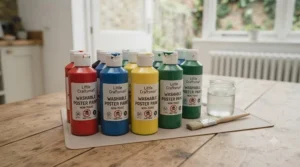
Baker Ross’s Pearlised Ready Mixed Poster Paint Pack takes a genuinely different angle from the rest of this list by focusing entirely on a shimmering, pearlised finish across six 150ml bottles, rather than trying to be a general-purpose everyday paint. The format is water-based and washable, explicitly labelled for children aged 3 and up under adult supervision, with the standard age caution relating specifically to the bottle lid rather than the paint formulation itself. Based on the spec comparison with standard matte poster paints on this list, the pearlised finish here changes what a child notices about their finished work — light-catching shimmer rather than flat colour — which makes this a genuinely good fit for seasonal craft projects, cards, or decorative pieces rather than everyday painting practice. What most buyers overlook is that a specialty finish like this works best layered on top of, rather than instead of, a standard paint set, since a whole painting session in only pearlised tones can feel visually one-note compared with a full colour range. Reviewers consistently note that this format suits gifting well, particularly for a child who already owns a basic paint set and would appreciate something a little different to add to their collection rather than duplicate it.
Pros:
- ✅ Distinctive pearlised, light-catching finish
- ✅ Washable, water-based formula
- ✅ Well suited to seasonal and decorative craft projects
Cons:
- ❌ Not a substitute for a standard everyday colour set
- ❌ Smaller 150ml bottles limit heavy daily use
Typically priced around £5-£8, this works best as a fun add-on to an existing set rather than a first purchase.
7. Crayola Children’s Washable Paint Set with Brush — best all-in-one starter kit
Crayola’s 12-colour washable paint set rounds out this list as the most complete beginner package, combining paint, a palette and a brush together in resealable, refillable tempera jars, which removes the need to buy a separate palette or brush alongside the paint itself. On paper this means a genuinely simpler first purchase for anyone assembling a painting set for beginners from scratch, since the palette in particular is a piece that’s easy to forget when buying paint and brushes separately. Based on the spec comparison with pot-only sets, the resealable and refillable jar design is a meaningfully practical detail, since it means the paint stays usable for longer between sessions rather than drying out in an open pot, and the jars can, in principle, be topped up rather than the whole set discarded once emptied. Reviewers consistently note that Crayola’s washable formula performs as advertised across skin, most fabrics and hard surfaces when addressed within roughly an hour of a mess happening, which is a genuinely realistic and useful window to know in advance rather than assuming any washable paint comes out regardless of how long it’s been left. What most buyers overlook is that the included palette, while a small and easy-to-miss inclusion on the product listing, meaningfully speeds up setup for a parent trying to get a painting session started with minimal fuss.
Pros:
- ✅ Complete kit: paint, palette and brush included
- ✅ Resealable, refillable jars reduce paint drying out
- ✅ Washable performance holds up within an hour of mess
Cons:
- ❌ Washability weakens noticeably after paint has fully dried in
- ❌ Fewer total colours than larger sets on this list
Typically priced around £10-£15, this is the most complete single-purchase option for a genuinely first-time young painter.
Practical Usage Guide: Setting Up a Mess-Manageable Painting Session
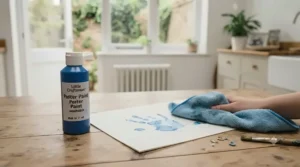
Getting the most out of any poster paint for kids set starts well before the brush touches paper. Cover the table with a wipeable surface or old newspaper rather than relying on the paint’s washability alone, since even genuinely washable formulas perform best when they’re not left to sit and dry into a surface for hours. Pour only a small amount of paint into a palette or tray at a time rather than handing over an open bottle, particularly with younger children, since this both limits mess and makes colour mixing far easier to manage. A common mistake in a child’s first few painting sessions is over-loading the brush with paint, which leads to drips and streaky application rather than clean colour — a quick demonstration of tapping excess paint off the brush edge before applying it to paper solves this quickly. It’s also worth keeping a damp cloth within reach throughout rather than only at clean-up time, since addressing spills and smudges on skin or clothing immediately, rather than after the session ends, is exactly the window in which washable formulas perform best.
✨ Don’t Miss These Exclusive Deals!
🔍 Take your child’s next art session to the next level with these carefully selected paint sets. Click through to check current pricing and availability before you buy — the right set makes the difference between a fun afternoon and a frustrating one.
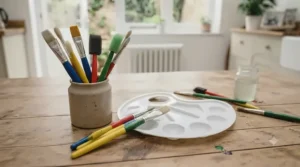
Real-World Scenario: Matching Paint to Your Child’s Age and Setting
Picture three different painting situations, each genuinely suited to a different product from this list. First, a toddler or young child painting for the very first time at home: Crayola’s Washable Paints and Brush or the Crayola all-in-one starter kit both fit well here, since the manageable pot format and included brush and palette remove decision fatigue and reduce the initial mess factor for a parent who isn’t yet sure how the session will go.
Second, a primary-school-aged child with an established interest in painting who goes through paint quickly: Scola Readymix or the Baker Ross Bumper Pack make more sense, since both offer considerably more total volume per pound, and a child at this stage is typically painting with more confidence and less caution, meaning paint gets used up faster regardless of format.
Third, a childminder, nursery setting, or household with multiple children painting simultaneously: the Baker Ross Bumper Pack is the clear fit, since twelve 600ml bottles supports genuinely group-sized use without constant restocking, and the standard matte finish across a wide colour range suits everyday group painting sessions better than a novelty or specialty finish set.
Buyer’s Decision Framework: Which Poster Paint Fits Your Situation?
If this is your child’s first ever painting set, choose Crayola’s all-in-one starter kit, because bundling paint, palette and brush together removes the guesswork of assembling separate pieces. If your budget is tight and you want a genuine introduction without overcommitting, choose Crayola’s 18-pot Washable Paints and Brush set, because its lower price point and included brush make it the most accessible entry point on this list. If your child paints regularly and burns through paint quickly, choose Scola Readymix or the Baker Ross Bumper Pack, because both offer significantly more volume per pound than pot-based alternatives. If you’re supplying a classroom, nursery or multi-child setting, choose the Baker Ross Bumper Pack specifically, because its twelve-bottle format is built for exactly that scale of use. If your child is craving more creative variety, such as glitter or metallic finishes, choose Creative Deco’s 24-pot set, because it’s the only set on this list built around finish diversity rather than a single standard formula. If you want a smaller, higher-finish-quality set for a slightly older child, choose Giotto, because its ultra-fine pigment formulation is a genuine step up in application quality on a smaller scale.
How to Choose Poster Paint for Kids
- Match total paint volume to how often your child actually paints. A daily painter needs a 600ml bottle format; an occasional painter is often better served by a smaller pot-based set that won’t dry out before it’s used.
- Check the age guidance and understand what it actually refers to. Age warnings on poster paint often relate to bottle lids or small components rather than the paint formulation itself, so read the specific reasoning rather than assuming the paint itself is unsuitable.
- Confirm the paint is genuinely washable, not just labelled as such. Look for real customer reviews describing washability from clothing and skin specifically, not just the manufacturer’s own claim.
- Consider surface compatibility if you’re not just painting on paper. Some sets, like Creative Deco, are explicitly formulated for canvas, wood and stencils, while others, like the Baker Ross Bumper Pack, are specifically not recommended for surfaces like skin.
- Factor in whether brushes and a palette are included. A painting set for beginners that includes both removes an easy-to-forget extra purchase and gets a first session started faster.
- Look for non-toxic labelling backed by a recognised standard, such as EN71-3 or ASTM D-4236, rather than the word “non-toxic” alone with no standard referenced.
- Think about storage and format practicality, since large bottle formats offer better value but take up considerably more shelf space than compact pot sets.
Painting Set for Beginners vs Advanced Craft Paint
There’s a genuine and worthwhile distinction between a painting set for beginners and the acrylic or artist-grade craft paints aimed at older children and adults, and it’s worth understanding before assuming “more expensive” automatically means “better” for a young child. Poster and tempera paint, the category every product on this list falls into, is specifically formulated to be more forgiving: it’s water-based, easier to clean, less pigment-intensive, and generally far cheaper per session, which matters enormously when the paint is genuinely going to end up on the table, the floor and occasionally the family cat. Acrylic paint, by contrast, is more permanent once dry, often requires more careful clean-up, and is generally aimed at children old enough to have developed the fine motor control and patience that acrylic work demands. On paper this means poster paint trades some of acrylic’s vibrancy and permanence for practicality and forgiveness, and for the vast majority of children under roughly eight or nine, that trade is exactly the right one. A sensible approach is staying with poster and tempera paint, like every set on this list, through the primary school years, and introducing acrylics gradually and under closer supervision only once a child has shown consistent, careful brush control and an interest in more permanent, detailed work.
Common Mistakes When Buying Poster Paint for Kids
The most common mistake is buying based on colour count alone, assuming a 24-colour set is automatically better value than a 6-colour set, without checking the actual volume per pot; a 24-pot set with 10ml pots can work out to less total paint, and a higher cost per millilitre, than a smaller set with larger bottles. A closely related mistake is overlooking surface compatibility before buying, particularly assuming all poster paint suits finger painting, when several formats, including the Baker Ross Bumper Pack, are explicitly formulated for brush application on paper rather than direct skin contact. Parents also frequently underestimate how quickly young children go through paint once they gain confidence, buying a small starter pot set expecting it to last months when a genuinely enthusiastic painter can work through it in weeks. Another frequent misstep is assuming “washable” means indefinitely washable regardless of how long the paint has been left to dry; most washable formulas perform best when addressed within about an hour, and effectiveness drops considerably after paint has fully dried into fabric. Finally, it’s worth flagging that buying purely on price without checking for a genuine safety standard reference, such as EN71-3 or ASTM D-4236, means missing the actual signal that separates a properly tested product from one simply labelled “non-toxic” with no supporting standard behind the claim.
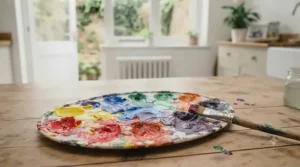
What to Expect: Real-World Performance
Specs and packaging claims only tell part of the story, so here’s what these paint formats tend to deliver in practice. Bottle-format ready-mixed paints like Scola and Baker Ross tend to perform most consistently in terms of colour coverage and opacity straight from the bottle, since they’re formulated for reliable, repeated classroom-style use rather than novelty effects, and most reviewers report minimal separation or thinning even after storage. Pot-based starter sets like Crayola and Creative Deco tend to show their value most clearly in the first few sessions, when colour variety and manageable portions matter more than raw volume, though several reviewers across pot-based sets note that pots can dry out at the edges between uses if lids aren’t sealed properly, a genuinely common and avoidable issue rather than a formulation flaw. Specialty finish paints like Baker Ross’s Pearlised range perform differently depending on lighting and surface, showing their shimmer most clearly on darker paper or card rather than white paper, which is worth knowing before a child is disappointed that a pearlised effect looks more subtle than expected on a standard white sheet. Across every format on this list, the single biggest predictor of a good real-world experience isn’t the paint brand at all — it’s whether the paint is used promptly after purchase and properly resealed between sessions, since even the best-formulated paint performs poorly once it’s been left open and allowed to dry out or thicken.
Washable Paint: What “Washable” Actually Means (and Doesn’t)
Washable paint is one of the most reassuring labels on any kids’ art product, but it’s worth understanding precisely what it does and doesn’t guarantee. In practice, “washable” means the paint has been formulated to lift cleanly from common surfaces, typically skin and most washable fabrics, when addressed with ordinary soap and water relatively soon after contact — generally within around an hour, based on manufacturer guidance and consistent reviewer experience across the products on this list. What it doesn’t mean is that the paint is somehow immune to staining regardless of how long it’s left, what fabric it’s on, or how it’s cleaned; delicate or non-washable fabrics, upholstery, and paint that’s been allowed to fully dry in over several hours or days behave very differently, and washability claims specifically don’t extend to those scenarios. Toy and craft product safety standards, including the EN71 series that covers materials used in children’s toys and craft products across the UK and EU, address chemical safety rather than staining performance specifically, so “washable” and “non-toxic” are related but genuinely separate claims worth checking independently rather than assuming one implies the other. In practice, the most reliable approach is treating any washable claim as “generally true under reasonable conditions” rather than an absolute guarantee, and pairing it with sensible precautions, like an apron and a wipeable table surface, rather than relying on washability alone to manage mess.
Non-Toxic Paint: Safety Standards Explained
Non-toxic paint claims are common on virtually every kids’ art product, but the phrase carries far more weight when it’s backed by a recognised, testable standard rather than used alone. In the UK and EU, children’s craft materials including poster paint fall under the Toys (Safety) Regulations, which require compliance with designated safety standards covering chemical, physical and other properties, and manufacturers demonstrate this through UKCA or CE marking on packaging and documentation. Specifically for paint intended for direct hand or finger contact, a dedicated standard, EN71-7, sets out requirements and test methods for finger paints to ensure their safety for children, covering both the materials used and labelling requirements, which is a more specific and relevant benchmark than the general EN71-3 chemical migration standard applied to toys more broadly, as detailed in this overview of products covered by EN71. In practice, this means the most reassuring products aren’t necessarily the ones using the boldest “100% non-toxic” language, but the ones that specifically reference compliance with a recognised standard like EN71-3, EN71-7, or ASTM D-4236, since that reference indicates independent testing against defined chemical limits rather than a general safety assurance alone. For most mainstream UK-sold poster paint aimed at children, compliance is the norm rather than the exception, but checking for the specific standard referenced, rather than the word “non-toxic” in isolation, is a genuinely useful five-second check before buying.
School Art Projects: Getting the Most from Poster Paint at Home and in Class
Poster paint sits at the centre of art and design teaching throughout UK primary education, and understanding what schools expect helps make sense of why certain products, like Scola and Baker Ross, are formulated the way they are. The statutory national curriculum for art and design at key stages 1 and 2 specifically requires pupils to become proficient in painting alongside drawing and sculpture, and to develop skills in using colour, pattern, texture, line, shape, form and space through genuinely hands-on work, which is exactly the kind of open-ended exploration poster paint’s forgiving, easy-clean format supports well. For school art projects done at home, whether that’s supplementing classroom learning or simply keeping a child occupied on a rainy weekend, the same principles schools use apply directly: starting with primary colour mixing before moving to more complex compositions, letting a child experiment freely rather than aiming for a “correct” result, and using a format (bottle or pot) that matches how much genuine hands-on practice you’re expecting the session to involve. What most parents overlook is that school art cupboards typically stock exactly the bulk, ready-mixed formats featured on this list, like Scola and Baker Ross, rather than novelty pot sets, precisely because reliability and volume matter more in a classroom setting than variety of finish — a useful cue for anyone trying to recreate a school-quality painting experience at home.
Features That Actually Matter (And Those That Don’t)
Not every feature on a poster paint label carries equal weight, so here’s an honest filter. Features that genuinely matter: a clearly referenced safety standard (EN71-3, EN71-7 or ASTM D-4236) rather than “non-toxic” alone, realistic volume for how often your child actually paints, a resealable lid or pot to prevent premature drying out, and an included brush or palette if you’re buying a first-ever set. Features that sound impressive but matter less in isolation: very high colour counts without checking individual pot volume, since a 24-colour set with tiny pots can offer less usable paint than a 6-colour bottle set; elaborate packaging or branded characters, which affect appeal but not performance; and vague marketing language like “premium quality” without any specific formulation detail to back it up. The takeaway, based on the spec comparison across all seven products here, is that format-to-usage fit beats headline colour count — a smaller, well-matched set used consistently will outperform an impressive-looking large set that dries out unused in a cupboard.
Long-Term Cost & Value
Thinking beyond the sticker price changes how these seven sets compare over months rather than a single session. Small pot-based starter sets like Crayola’s 18-pack and Giotto offer the lowest upfront cost but the shortest useful lifespan for a genuinely regular painter, since their value comes from a manageable first introduction rather than sustained heavy use. Bulk bottle formats like Scola and the Baker Ross Bumper Pack cost more initially but deliver considerably lower cost-per-session over time, particularly once you factor in that a single 600ml bottle can outlast several smaller pot sets combined. Specialty and all-in-one sets, like Creative Deco’s finish variety pack and Crayola’s palette-and-brush starter kit, sit in between: they cost a little more than the most basic starter options but reduce the need for separate purchases (brushes, palettes, or novelty finishes bought individually), which can work out better value once those additional costs are accounted for. A sensible long-term approach for most households is starting with a genuine beginner set (Crayola’s all-in-one kit is a strong fit) to establish interest and routine, then transitioning to a bulk bottle format like Scola once it’s clear painting is a regular, ongoing activity rather than an occasional one.
Frequently Asked Questions
❓ What is the best poster paint for kids?
❓ Is washable paint really washable from clothing?
❓ What age is poster paint suitable for?
❓ Is poster paint non-toxic and safe for young children?
❓ What's the difference between poster paint and acrylic paint for kids?
Conclusion
Choosing the right poster paint for kids really comes down to matching format and volume to how your child actually paints, rather than picking whichever set has the most colours listed on the box. For a genuine first painting session, Crayola’s all-in-one starter kit removes the guesswork by bundling paint, brush and palette together. For a child who paints often and confidently, Scola Readymix or the Baker Ross Bumper Pack deliver the volume and reliability that occasional-use pot sets simply can’t match. And if variety of finish matters more than raw quantity, Creative Deco’s 24-pot set offers genuine creative range a standard set doesn’t. Whichever set you land on, the strongest predictor of a good experience isn’t the brand on the label — it’s using paint promptly, resealing it properly between sessions, and matching the format to how your child genuinely paints, rather than how you imagine they might.
Recommended for You
- Best Paint Brush Set Under £15: 7 UK Picks for 2026
- Watercolour Paint Set: 7 Best Picks Tested by Reviewers (2026)
- Acrylic Paint Set For Beginners: 7 Best Picks & Guide (2026)
Disclaimer: This article contains affiliate links. As an Amazon Associate, I earn from qualifying purchases. If you purchase products through these links, we may earn a small commission at no additional cost to you.
✨ Found this helpful? Share it with your friends! 💬🤗
