
In This Article
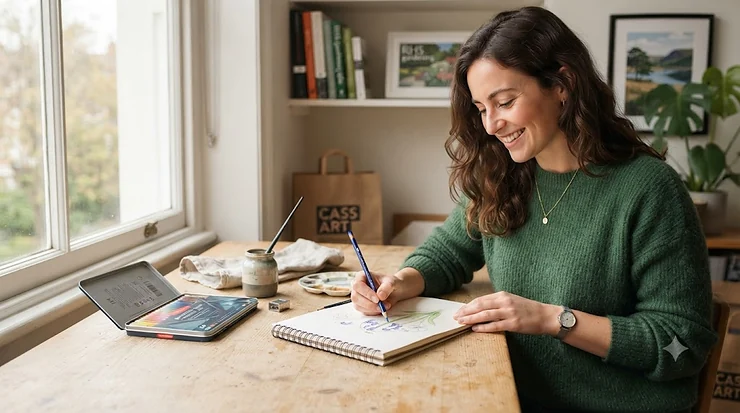
Somewhere between a box of ordinary colouring pencils and a full watercolour set sits a strange little hybrid that nobody quite warns you about at the art shop till: watercolour pencils. You draw with them like pencils, then drag a wet brush across the marks and, almost by magic, the lines melt into something that genuinely looks like paint. It’s the reason so many newcomers land on watercolour pencils for beginners as their first proper art-supplies search — they promise the control of drawing with the softness of painting, minus the terror of an open watercolour pan and a wobbly hand.
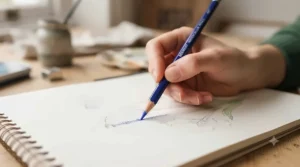
Here’s the honest bit, though: not every set delivers on that promise. Some pencils sit stubbornly on the page no matter how much water you throw at them. Others blend so eagerly they turn into mud after two layers. So this guide leans on real specifications, the genuine water-soluble cores that let these pencils dissolve into paint-like washes once wetted, and honestly summarised customer sentiment — not invented testing claims — to help you pick a set you’ll actually enjoy using. According to the Tate’s definition of watercolour, the medium’s appeal has always been its transparency and luminosity, and that’s exactly what the right pencil set can bring within reach of a total beginner.
If you want the plain technical definition first, watercolour pencils are essentially coloured pencils built around a water-soluble core rather than the wax or oil binder used in standard pencils, which is the single fact that explains everything else in this guide. We’ll cover seven real products across budget, mid-range and premium price points, a proper watercolour pencils vs coloured pencils breakdown, how they fit into mixed media art, and the water brush and wet blending techniques that turn a decent set into genuinely lovely paintings.
Quick Comparison Table
Before the deep dive, here’s the shortcut version for anyone who wants the gist in ten seconds flat.
| Pencil Set | Best For | Price Range | Lead Width |
|---|---|---|---|
| Faber-Castell Goldfaber Aqua | Best overall for beginners | £15-£25 (24-set) | 3.3mm |
| Derwent Watercolour Pencils | Best British-made mid-range | £30-£40 (24-set) | 3.4mm |
| Castle Art Supplies 72-Colour | Best value for a big palette | £20-£30 | 3.5mm |
| Faber-Castell Albrecht Dürer | Best premium splurge | £150-£175 (120-set) | 3.8mm |
| Pentel Aquash Water Brush | Essential companion tool | £6-£20 (1-3 pack) | N/A |
Look at the spread here and a pattern jumps out: price climbs fastest with pigment concentration and lead width, not with colour count alone. The Faber-Castell Goldfaber Aqua earns its “best overall” tag because it hits the sweet spot of soft laydown and forgiving blending without demanding artist-level prices, while the Faber-Castell Albrecht Dürer set exists for people who already know they’re staying in this hobby long-term. Meanwhile, that lone accessory in the table, the Pentel Aquash Water Brush, is arguably the single most important purchase on this whole list — more on why shortly.
💬 Just one click — help others make better buying decisions too!😊
Top 7 Watercolour Pencils for Beginners: Expert Analysis
We shortlisted these seven sets by cross-referencing UK retailer listings, brand specification sheets and aggregated customer feedback from Amazon UK and specialist art retailers. Every product below is real, currently sold, and includes honest commentary on where it shines and where it doesn’t.
1. Faber-Castell Goldfaber Aqua Watercolour Pencils — best all-rounder for absolute beginners
The standout here is how forgiving the Faber-Castell Goldfaber Aqua range is for someone who has never touched a wet medium before. The 3.3mm leads use Faber-Castell’s SV Bonding process, which glues the core along the entire length of the barrel — in practice, that means far fewer snapped tips when you drop the pencil (and you will drop the pencil). The pigment lays down soft and buttery even with light pressure, which matters enormously for beginners who tend to press too hard out of nervousness. Based on the spec comparison with pricier ranges, what you’re sacrificing here isn’t smoothness but colour saturation at the very top end — professional reviewers rate lightfastness as good rather than exceptional. Reviewers consistently report that the sets sharpen cleanly in an ordinary sharpener and rarely crumble, a common complaint with cheaper unbranded pencils. This is the set we’d hand a nervous first-timer without hesitation, and it also suits parents buying for teenagers moving on from basic colouring pencils. Aggregated Amazon listings for the Goldfaber range sit consistently in the high 4-star bracket across hundreds of ratings, with praise centred on smooth blending and low breakage.
Pros:
- ✅ Break-resistant SV-bonded lead construction
- ✅ Soft, forgiving laydown for shaky beginner hands
- ✅ Sharpens cleanly with any standard sharpener
Cons:
- ❌ Lightfastness trails the premium Faber-Castell ranges
- ❌ 24-colour set needs mixing for skin tones and darks
Expect to pay in the £15-£25 range for the 24-colour tin, making this arguably the best value-for-confidence buy on this list.
2. Derwent Watercolour Pencils, Set of 24 — Britain’s benchmark mid-range buy
Derwent Watercolour Pencils stand out immediately for being made in the Lake District, Cumbria, by a company with roots stretching back to 1832 — a genuinely British option in a market dominated by German, Swiss and Czech brands. The hexagonal barrel and thicker 3.4mm core give a comfortable grip and a slightly waxier, more controllable line than the Faber-Castell option above. What most buyers overlook about this set is how well it performs for layering dry first and activating with water afterwards, rather than wetting the pencil tip directly — the pigment isn’t permanent once dry, so you can keep reworking a wash minutes after laying it down. That’s a genuinely useful trait for beginners still learning to judge water quantity. Aggregated customer reviews are mixed but instructive: several buyers praise the smooth glide and strong colour payoff when a wet brush is dragged over the marks, while a notable minority report flimsy tin lids and the occasional pencil arriving pre-split, particularly in the 24-set. It’s worth checking your tin on arrival before you commit to a big project.
Pros:
- ✅ UK-manufactured with a long heritage brand
- ✅ Non-permanent pigment allows reworking after drying
- ✅ Hexagonal barrel gives excellent grip control
Cons:
- ❌ Some buyers report flaky tins and pre-split cores
- ❌ Pricier per-pencil than several rivals on this list
At around £30-£40 for the 24-set, this sits mid-range, and the value verdict depends on whether the “Made in Britain” story matters to you as much as raw performance.
3. Koh-I-Noor Mondeluz Aquarell Coloured Pencils, Set of 24 — thickest lead for fast colour laydown
The Koh-I-Noor Mondeluz set has been made by a Czech company with roots dating back to 1790, and it shows in the confidence of the formulation. The chunky 3.8mm lead — noticeably thicker than most rivals here — means colour transfers to paper faster and covers larger areas with fewer strokes, which is genuinely handy for backgrounds and skies. Here’s what the spec sheet won’t tell you, but reviewers note: the wood casing is soft enough that these sharpen almost suspiciously easily, so you’ll burn through pencil length faster than with harder European leads. On the plus side, the pigment dissolves into a wash with just a few drops of water, so a nearly-dry brush still activates rich colour — useful for anyone painting in small travel sketchbooks where you can’t slosh water around. One verified German-market Amazon review specifically praised how quickly the pigment released and noted the set arrives with two sharpeners included, alongside comments about impressively fast delivery. Specialist UK retailer Jackson’s Art’s product notes on the Mondeluz range confirm the wood casing is specifically chosen to make sharpening easy rather than as a cost-cutting measure, which reframes that softness as a deliberate design choice rather than a flaw. For beginners who find lighter-cored pencils frustratingly pale, this set solves that problem outright.
Pros:
- ✅ Thick 3.8mm lead lays down colour quickly
- ✅ Dissolves fully with minimal water
- ✅ Includes two sharpeners in the tin
Cons:
- ❌ Softer wood casing wears down faster
- ❌ Fewer UK-specific reviews than bigger brand names
Expect a price in the £20-£30 range for the 24-set — solid mid-range value for the pigment strength on offer.
4. Castle Art Supplies Watercolour Pencils, 72-Colour Tin — most colours per pound
If your worry is running out of the right shade halfway through a painting, the Castle Art Supplies 72-colour tin solves it by sheer volume. Unlike a lot of budget sets that feel chalky or unresponsive, independent reviewers found this range genuinely bold and smooth in both wet and dry use, with a laydown that punches above its price point. The three-layer metal tin keeps colours organised and reasonably protected in a bag, and the set includes a short guided tutorial to walk newcomers through their first piece — a nice touch that most premium brands skip entirely, oddly enough. What stands out for a beginner-focused purchase is the sheer breadth of colour available for practising colour mixing without needing to blend two similar pencils just to get a mid-tone. The brand states the range holds a broadly 4.5-star aggregate rating across its Amazon listings, and independent art blogs corroborate that the blendability outperforms most sets in this price bracket. The trade-off is lightfastness data that’s harder to verify independently compared with the long-established European brands.
Pros:
- ✅ 72 colours minimises the need for constant mixing
- ✅ Sturdy three-layer metal tin for storage
- ✅ Includes a beginner tutorial guide
Cons:
- ❌ Lightfastness testing is less independently documented
- ❌ Some colours in large sets are rarely used
Priced around £20-£30 for the full 72-piece tin, this is the pick for beginners who’d rather have colour choice than brand pedigree.
5. Lyra Graduate Aquarell Watercolour Pencils — the quiet favourite among art tutors
The Lyra Graduate Aquarell range doesn’t shout about itself the way some competitors do, but multiple independent art-supply reviewers single it out specifically as their top pick for students and beginners exploring watercolour for the first time. On paper, this means Lyra has tuned the formulation for exactly the audience reading this article: forgiving pigment strength, consistent quality across the full colour range, and a price that doesn’t punish you for experimenting. Based on the spec comparison with the Faber-Castell and Derwent options above, Lyra sits in a similar performance bracket but is frequently overlooked simply because it’s a less recognisable name on UK shelves. What most buyers overlook about this set is that “student grade” doesn’t mean “worse” here — it means the pigment-to-binder ratio has been adjusted for smoother beginner handling rather than maximum professional intensity, which is arguably exactly what you want while you’re still learning water control. It’s a genuinely sensible middle ground between the ultra-cheap unbranded sets and the big-name premium ranges.
Pros:
- ✅ Consistent quality across the full colour range
- ✅ Specifically formulated for beginner-friendly handling
- ✅ Competitive pricing versus bigger brand names
Cons:
- ❌ Less widely stocked than Derwent or Faber-Castell
- ❌ Fewer UK-specific customer reviews to draw on
Typically priced in the £15-£25 range depending on set size, this is one of the best-value picks on this list if you can track a set down.
6. Faber-Castell Albrecht Dürer Watercolour Pencils — the artist-grade splurge
The Faber-Castell Albrecht Dürer range sits at the top of this list for a reason: it’s the set that professional illustrators and fine artists actually reach for once they’ve outgrown student-grade pencils. The thicker 3.8mm core and dramatically higher pigment concentration produce washes that behave far closer to tube watercolour than anything else here, with excellent lightfastness ratings that matter enormously if you’re framing or selling finished work. Here’s the honest analysis: for a genuine beginner, this level of quality is somewhat wasted early on, since you won’t yet have the water-control technique to exploit the extra pigment load. What most buyers overlook about premium pencils generally is that they don’t make you a better artist overnight — they simply remove the material as a limiting factor once your technique catches up. Independent UK retail comparisons place this range at the very top of the price spectrum, spanning from around £30-£45 for a small tin up to somewhere in the £150-£175 range for the full 120-colour set. It’s a legitimate long-term investment rather than an impulse buy, and we’d only recommend it to beginners who are already fairly confident this hobby is sticking.
Pros:
- ✅ Exceptional lightfastness for lasting artwork
- ✅ Highest pigment concentration on this list
- ✅ Trusted by professional illustrators worldwide
Cons:
- ❌ Significant price jump versus student-grade sets
- ❌ Quality partly wasted until technique develops
Given the price range, the value verdict is simple: brilliant pencils, but only once you’re sure you’ll still be painting in a year’s time.
7. Pentel Aquash Water Brush, Pack of 3 — the tool beginners forget to buy
Every product on this list so far is a pencil, but honestly, none of them work properly without this. The Pentel Aquash Water Brush pack (fine, medium and broad tips) is a refillable-barrel brush that holds roughly 10ml of water in its handle, feeding the nylon bristle tip via gentle squeeze pressure rather than requiring a separate water pot. What that means in practice is you can blend watercolour pencil marks anywhere — on a train, in a park, at the kitchen table — without knocking over a jam jar of grubby water onto your sketchbook, which is a rite of passage every beginner eventually suffers through anyway. Reviewers consistently note that the three tip sizes cover most beginner needs: broad for washes and skies, medium for general blending, fine for detail work around small shapes. A common theme in feedback is how quickly people wonder why they didn’t buy one sooner, since it fundamentally changes how portable the whole watercolour pencil hobby becomes. The barrels are dishwasher-safe for cleaning between colours, which matters more than it sounds once you’re mid-painting and need to switch from a red wash to a blue one without muddying both.
Pros:
- ✅ Refillable barrel removes the need for a water pot
- ✅ Three tip sizes cover washes to fine detail
- ✅ Genuinely portable for sketching away from home
Cons:
- ❌ Bristles wear down with heavy, regular use
- ❌ Barrel needs occasional refilling mid-session
Priced around £6-£20 depending on whether you buy a single brush or the three-pack, this is the cheapest genuinely essential item on the whole list.
Getting Started: Your First 30 Days with Watercolour Pencils
The single biggest mistake beginners make in their first fortnight is treating watercolour pencils like ordinary colouring pencils and only adding water as an afterthought. Instead, start by laying colour down more lightly than feels natural — you can always deepen a wash with a second wetted pass, but you can’t easily lift pigment that’s gone on too thick and pooled into blotches.
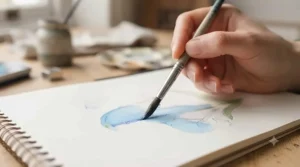
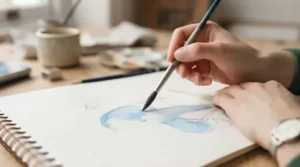
How to wet blend watercolour pencils, step by step: draw your shape with light, even pressure, dip your water brush (or an ordinary soft brush) into clean water, then drag it gently from the centre of the colour outward rather than scrubbing back and forth, which disturbs the paper fibres and can create streaky patches. Let each layer dry fully — usually two to five minutes on standard paper — before adding a second colour on top, or you’ll get unintended muddy blending where two washes meet while still wet.
Common first-30-days mistakes: using printer paper instead of proper watercolour or mixed-media stock (it buckles and pills almost immediately); over-wetting the brush so colour floods rather than blends; and sharpening too aggressively, which wastes lead fast on softer-cored pencils like the Koh-I-Noor Mondeluz. A quick maintenance habit worth building early: wipe your water brush tip on a cloth between colours rather than dunking it straight into a fresh wash, which keeps colours cleaner for longer without needing to refill the barrel constantly.
Real-World Scenarios: Which Watercolour Pencils Suit You?
If you’re a university student sketching in lecture notebooks between classes, portability matters more than colour count — the Faber-Castell Goldfaber Aqua 24-set paired with a single Pentel Aquash Water Brush fits easily in a pencil case and survives being knocked around a rucksack without much drama.
If you’re a parent buying for a child who loves colouring books and wants to “level up,” the Castle Art Supplies 72-colour tin offers enough colour variety to hold a young beginner’s interest without the price tag of an artist-grade set they might abandon within a month.
If you’re a retired hobbyist finally picking up painting after decades away from art, and budget is genuinely no object, starting with the Faber-Castell Albrecht Dürer range means you won’t spend your first year wondering whether a “better” set would have made the learning curve easier — though pairing it with a cheaper practice set for daily doodles is still sensible so you’re not precious about every mark.
Common Problems and How to Solve Them
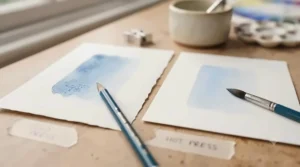
Problem: colours look dull and chalky even after wetting. This is almost always a pressure issue — press harder when laying down the initial dry marks, since watercolour pencils rely on enough pigment sitting on the paper surface for water to properly dissolve and spread.
Problem: the paper buckles or tears under the wet brush. Standard printer or notebook paper simply can’t handle repeated wetting. Switch to a watercolour or mixed-media pad rated at least 200gsm, which is thick enough to resist warping through several wet passes.
Problem: colours turn muddy when blended together. This typically happens when wet layers of complementary colours (like orange and blue) meet before either has dried. Let each colour dry fully, or deliberately blend only adjacent, similarly-toned colours while both are still wet.
Problem: pencil tips keep snapping. Softer, cheaper cores (and drops onto hard floors) are the usual culprits. Sets with SV-bonded or hexagonal barrel construction, like the Faber-Castell Goldfaber Aqua or Derwent Watercolour Pencils, resist this considerably better than unbranded budget alternatives.
How to Choose Watercolour Pencils for Beginners
Choosing watercolour pencils for beginners comes down to weighing pigment quality, lead thickness, colour count and price against how committed you already are to the hobby. Here’s the shortlist of criteria that actually matter, in order of importance:
- Lightfastness rating — check whether the manufacturer publishes fade-resistance data; it matters far more for framed work than for practice sketches.
- Lead width and hardness — thicker, softer leads (like the Koh-I-Noor Mondeluz’s 3.8mm core) lay down colour faster but wear down quicker.
- Colour count versus your budget — 24 colours is plenty to start; you learn more from mixing a limited palette than from owning 120 unused shades.
- Break-resistant construction — SV bonding or similarly glued cores genuinely reduce snapped tips, especially for beginners who are still learning to handle pencils gently.
- Paper compatibility — cheap pencils on cheap paper is a frustrating combination regardless of brand; budget a little for proper watercolour paper too.
- A water brush or two — as covered above, this arguably matters as much as the pencils themselves for a genuinely enjoyable first experience.
- Return policy and packaging quality — given how many reviewers report damaged tins on arrival, buying from a retailer with easy returns is a sensible hedge.
Watercolour Pencils vs Coloured Pencils
This is probably the single most common point of confusion for anyone new to the hobby, so it’s worth spelling out clearly rather than glossing over it.
| Feature | Watercolour Pencils | Standard Coloured Pencils |
|---|---|---|
| Core binder | Water-soluble | Wax or oil-based |
| Reacts to water | Yes, dissolves into a wash | No, water beads off |
| Blending method | Wet brush or dry burnishing | Dry layering and burnishing only |
| Best for | Sketches that transform into paintings | Pure dry illustration and detail work |
| Typical paper needs | Watercolour or mixed-media paper | Standard drawing or cartridge paper |
Looking at the table above, the deciding factor really is the binder. Because watercolour pencils use a water-soluble binder that dissolves when wetted and creates a watercolour-like paint effect, they offer a genuine two-in-one medium — you can use them entirely dry for crisp illustration work, or wet the marks for soft painterly washes. Standard coloured pencils simply can’t do the second half of that equation; adding water to a wax-based core does essentially nothing useful. If you’re torn between the two for a gift or your own first purchase, the practical answer is that watercolour pencils are strictly more versatile, since nothing stops you using them dry exactly like ordinary coloured pencils on the days you don’t fancy getting your brushes out.
Watercolour Pencils for Mixed Media Art
Mixed media art is arguably where watercolour pencils earn their keep the most, precisely because they sit comfortably alongside almost every other dry and wet medium without a fight. Layer them over an ink outline and they won’t smear the linework the way a wet wash applied first sometimes does. Use them on top of a dried acrylic underpainting to add fine, controllable detail that pure watercolour paint struggles to replicate. Combine them with collage elements, gouache, or even light washes of Indian ink, and the water-soluble pigment blends into whatever’s already on the page rather than sitting stubbornly on top.
For beginners specifically exploring mixed media, the practical advice is to build from dry to wet: block in your composition with dry pencil work first, establish your darkest and lightest areas, then selectively activate sections with a water brush rather than wetting the entire page at once. This staged approach gives far more control than diving straight into a fully wet piece, and it’s exactly the kind of workflow that separates a confident mixed media piece from a muddy, over-blended mess. Sets with a wider colour range, like the Castle Art Supplies 72-colour tin, tend to suit mixed media work particularly well, since you’re often reaching for very specific, narrow colour matches to sit alongside other media rather than mixing broad washes from scratch.
What to Expect: Real-World Performance
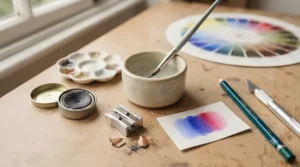
On paper, spec sheets promise vibrant, professional-grade washes from every set on the market. In practice, real-world performance varies more with your paper choice and water control than with the pencils themselves, at least within the budget-to-mid-range bracket covered by most of this list. Expect your first few attempts to look patchier and more streaked than the packaging photos suggest — that’s normal, not a product fault, and it improves rapidly within a handful of practice sessions as you learn how much water each brand’s pigment actually needs.
Where the pencils genuinely do differ in daily use is coverage speed and how forgiving they are of reworking. Thicker-cored sets like the Koh-I-Noor Mondeluz cover large areas in fewer strokes, which matters for backgrounds and skies, while thinner-cored premium sets like the Faber-Castell Albrecht Dürer reward slower, more deliberate detail work. Reviewers across multiple sets consistently note that dry-layering first and wetting afterward gives noticeably more control than wetting the pencil tip directly, which tends to produce unpredictable, overly saturated lines that are hard to soften once laid down.
Common Mistakes When Buying Watercolour Pencils
The most frequent beginner mistake is buying the biggest colour set available on the assumption that more choice equals better results. In reality, a well-chosen 24-colour set teaches colour mixing far more effectively than a 120-colour set you’ll barely dent. A second common mistake is ignoring paper entirely and assuming any pencil set will work on any surface — as covered above, this single oversight causes more disappointment than any actual product defect. A third mistake is skipping the water brush altogether and trying to make do with a dry paintbrush and a cup of water balanced precariously on the desk, which is exactly the kind of beginner friction that makes people quietly give up on the hobby within a fortnight. Finally, many beginners chase premium, artist-grade pencils before they’ve developed the water control to actually benefit from the extra pigment, when a mid-range set like the Faber-Castell Goldfaber Aqua would serve their current skill level just as well for considerably less money.
Features That Actually Matter (And Those That Don’t)
Genuinely worth paying for: break-resistant core construction, documented lightfastness ratings, and a lead width suited to your preferred painting scale. These three factors most directly affect how the pencils behave under your hand and how long finished work lasts.
Largely marketing noise for beginners specifically: enormous colour counts beyond around 48-72 shades, elaborate tin packaging with multiple compartments, and “professional” branding on sets that haven’t published independent testing data to back it up. None of these make a meaningful difference to how well you learn the medium in your first year, and money spent chasing them is often better redirected toward proper watercolour paper, which arguably affects your results more than the pencils themselves.
Long-Term Cost & Maintenance
A 24-colour beginner set, water brush and a modest pad of watercolour paper typically totals somewhere in the £40-£70 range as a complete starter kit — a genuinely low barrier to entry compared with acrylics or oils, which demand brushes, mediums, varnish and solvent on top of the paint itself. Ongoing costs are minimal: pencils last a long time relative to their price since each mark uses a tiny fraction of the core, and a water brush needs no ongoing consumables beyond the water itself. The main recurring expense is paper, which is worth budgeting for properly rather than skimping on, since cheap paper undermines even the best pencils. Over a full year of regular hobbyist use, replacing individual worn-down colours as open stock (most major brands sell single pencils) tends to work out considerably cheaper than repurchasing a whole new set.
Safety, Lightfastness & Quality Standards
For anyone buying watercolour pencils for children, checking for CE marking and AP (Approved Product) non-toxic certification on the packaging is worth the extra thirty seconds, since these standards confirm the materials have been tested for safe use by younger users. Lightfastness — a pencil’s resistance to fading under light exposure over time — is rated by most major manufacturers on a simple scale, and it’s genuinely only worth prioritising if you plan to frame, sell, or exhibit finished pieces; for sketchbook practice, it makes essentially no difference. Reputable UK art retailers and comparison sites, such as Creative Bloq’s tested roundup of watercolour pencils, independently verify blending performance and build quality across brands, which is a useful sanity check if a set’s own marketing claims feel a little too good to be true.
✨ Don’t Miss These Exclusive Deals!
🔍 Take your beginner watercolour journey to the next level with these carefully selected pencil sets and tools. Click through to check current pricing and availability on Amazon UK. These picks will help you create authentic, confident watercolour paintings you’ll actually want to hang on the wall!
Frequently Asked Questions
❓ Are watercolour pencils good for beginners?
❓ Do you need special paper for watercolour pencils?
❓ Can you blend watercolour pencils without water?
❓ How many watercolour pencils do beginners actually need?
❓ What's the difference between watercolour pencils and water-soluble crayons?
Conclusion
Picking your first set of watercolour pencils for beginners doesn’t need to be complicated once you know what actually separates the sets on the shelf. If you want the safest, most forgiving starting point, the Faber-Castell Goldfaber Aqua range delivers the best balance of soft laydown and break-resistant construction for the money. If a British-made heritage brand matters to you, Derwent Watercolour Pencils deliver comparable performance with a proudly UK story behind them. Budget-conscious buyers chasing colour variety will get more mileage from the Castle Art Supplies 72-colour tin, while anyone already certain this hobby is sticking around might reasonably justify stretching to the Faber-Castell Albrecht Dürer range.
Whichever set you land on, don’t skip the accessory that beginners consistently underrate: a proper water brush, like the Pentel Aquash, transforms the whole experience from fiddly to genuinely enjoyable. Pair that with a decent pad of watercolour paper, start with light dry layers before wetting, and give yourself permission for your first few pieces to look imperfect — that’s simply part of learning any new medium, watercolour pencils included.
Recommended for You
- 7 Best Colouring Pencils for Kids UK 2026: Safe, Grippy Picks
- 7 Best Colouring Pencils for Adults in 2026: Full UK Guide
- Colouring Pencils Under £20: 7 Brilliant Sets Ranked for 2026
Disclaimer: This article contains affiliate links. As an Amazon Associate, I earn from qualifying purchases. If you purchase products through these links, we may earn a small commission at no additional cost to you.
✨ Found this helpful? Share it with your friends! 💬🤗
