
In This Article
There’s a particular kind of heartbreak reserved for artists: you’ve nailed the composition, the proportions finally look right, and then your pen skips. Or bleeds. Or the “waterproof” ink you trusted turns your careful linework into a grey smudge the second a watercolour wash touches it. The best illustration pens aren’t the ones with the prettiest packaging — they’re the ones that disappear from your awareness entirely, leaving nothing between your hand and the page except a clean, confident line.
Here’s what nobody tells beginners: there isn’t one perfect pen, there’s a perfect pen for what you’re actually doing. A fineliner built for architectural drafting behaves completely differently under a loose ink wash than a brush pen designed for expressive comic lettering, and using the wrong one is a bit like trying to butter toast with a fork — technically possible, mostly frustrating. This guide walks through seven real, testable pens spanning fineliners and brush pens, budget and premium, so you can figure out which one actually belongs in your hand.
What are illustration pens? They’re precision drawing tools — typically fineliners with felt or plastic microfibre tips, or brush pens with flexible bristle-style nibs — filled with pigment-based ink designed for consistent, controlled linework, crosshatching, and inking finished artwork.
Quick Comparison Table
| Pen | Type | Waterproof | Tip Range | Best For |
|---|---|---|---|---|
| SAKURA Pigma Micron Set of 6 + Brush | Fineliner + brush | Yes | 0.2mm-0.8mm + brush | All-round illustration |
| STAEDTLER 308 SB8 Pigment Liner | Fineliner (8-pack) | Yes | 0.05mm-1.2mm | Precision linework |
| Uni Pin Fineliner Drawing Pen Set | Fineliner (multi-nib) | Yes | 0.03mm-1.2mm+brush | Crosshatching, heavy hands |
| Faber-Castell Pitt Artist Pen (Brush) | Brush pen | Yes | Brush tip | Bold expressive inking |
| Tombow Fudenosuke Hard/Soft | Brush pen (twin) | Water-soluble | Brush tip | Beginners, comic lettering |
| AKARUED 12-Pack Fineliner Set | Fineliner + brush | Yes | 0.05mm-3mm + brush | Budget starter kit |
| Pentel Arts Sign Pen Touch | Colour brush pen | Water-soluble | Flexible brush | Crosshatching, blending, colour |
What jumps out immediately: waterproof isn’t a given across the board. If you’re planning to lay watercolour over your linework, that column is the one to actually read twice, because a brush pen that bleeds the moment water touches it will undo an afternoon of careful inking in about four seconds.
💬 Just one click — help other artists find the right pen too!😊
Top 7 Best Illustration Pens: Expert Analysis
1. SAKURA Pigma Micron Fineliner Pens Set of 6 + Brush Pen — best all-rounder for illustration and watercolour
Ask a room full of illustrators to name their go-to fineliner and the Pigma Micron comes up more than any other pen, and there’s a reason that reputation has held for decades rather than fading with the next trend. The set pairs six assorted nib widths with a brush pen, all sharing the same archival pigment ink — waterproof, fade-resistant, and specifically formulated not to feather when watercolour is laid over the top. That last point genuinely matters: reviewers testing fineliners specifically for ink-and-wash work consistently rate the Pigma Micron among the smoothest performers, with a slight give in the plastic nib that lets the line breathe without losing control.
Based on the spec comparison with other pens in this list, what sets the Micron apart isn’t raw toughness — the ultra-fine tips can bend if you lean on them — but consistency. The ink lays down evenly from the first stroke to the last, without the patchy, greying-out effect some budget fineliners develop halfway through a page. For anyone building watercolour illustrations on top of ink linework, this is the pen most experienced artists reach for first, precisely because it disappears into the process rather than fighting it.
Pros:
- ✅ Genuinely waterproof, watercolour-safe archival ink
- ✅ Consistent line quality from first stroke to last
- ✅ Includes a brush pen alongside five fineliner widths
Cons:
- ❌ Ultra-fine nibs can bend under heavy pressure
- ❌ Narrower colour range than some competitor sets
Typically priced around £8-£14 for the set, this sits comfortably in the mid-range and earns every penny for illustrators who regularly combine ink and watercolour.
2. STAEDTLER 308 SB8 Pigment Liner (8-pack) — best for precision and reliability
There’s a specific kind of frustration that comes from uncapping a fineliner you haven’t used in a week and finding it’s dried up, and the Staedtler Pigment Liner is built explicitly to solve that problem. Its CAP OFF technology keeps the pen usable even after being left open for up to twelve hours, which sounds like a minor spec until you’ve actually lost a good sketch to a dead nib mid-session. The eight-pen set spans assorted line widths, each with a long metal-clad tip that stays rigid against rulers and stencils rather than splaying under lateral pressure.
What most buyers overlook about this pen is how much that metal tip changes the experience for technical or architectural illustration specifically — a plastic-tipped fineliner tends to wear unevenly against a straight edge, while the Staedtler’s reinforced tip holds its line width consistently over hundreds of ruled strokes. Reviewers consistently praise the reliability of the ink itself, describing it as darker and more consistent than several rival micron-style pens, with one recurring theme being that these pens simply don’t dry out or lose their edge the way cheaper alternatives do after a few months of regular use.
Pros:
- ✅ Can be left uncapped for up to 12 hours without drying
- ✅ Metal-clad tip holds up well against rulers and stencils
- ✅ Waterproof, lightfast, indelible pigment ink
Cons:
- ❌ Fewer ultra-fine sizes than some Japanese-brand competitors
- ❌ The stand-up box, while practical, adds bulk to a pencil case
At around £10-£16 for the set, the STAEDTLER liner is a smart investment for anyone doing detailed technical or architectural illustration alongside freehand sketching.
3. Uni Pin Fineliner Drawing Pen Set — best for crosshatching and heavy-handed artists
If you’re the kind of artist who presses hard and draws fast, a lot of fineliners will let you down within a few sessions — nibs fray, ink flow becomes patchy, lines start to feel scratchy rather than smooth. The Uni Pin range solves this with a genuinely tough steel-supported felt tip that resists fanning out under pressure, which is precisely the quality that makes it a favourite for sustained crosshatching work, where you’re laying down dozens of closely spaced parallel lines in quick succession. As one illustrator reviewing fineliners for drawing put it, the Uni Pin offers smooth ink flow “but with enough resistance to keep the pen controlled” — a balance that becomes noticeably valuable once you’re several layers deep into a hatched shadow.
Here’s what the spec sheet won’t tell you but aggregated feedback consistently does: Uni’s proprietary “Super Ink” isn’t just water-resistant, it’s genuinely tamper-resistant, meaning it holds its ground under repeated water-brush passes far better than many rival fineliners. That durability comes with a minor trade-off — a small number of reviewers report the odd pen arriving dry from a batch, which is worth checking before you commit to inking a finished piece with one.
Pros:
- ✅ Steel-supported tip resists fraying under heavy pressure
- ✅ Excellent for sustained crosshatching and hatched shading
- ✅ Tamper-resistant, water- and light-resistant ink
Cons:
- ❌ Occasional dry pen reported within a batch
- ❌ Larger sets can feel like overkill if you only need two or three widths
Priced roughly around £9-£18 depending on set size, the Uni Pin is the pen to reach for specifically when your illustration style leans on dense, controlled linework rather than loose gesture drawing.
4. Faber-Castell Pitt Artist Pen (Brush) — best waterproof brush pen for bold inking
Somewhere between a fineliner and a paintbrush sits the Pitt Artist Pen Brush, and it’s earned a loyal following among illustrators specifically because its India ink formula does something most brush pens can’t: it stays put once it’s dry, completely unbothered by watercolour, water brushes, or an accidental coffee spill. The medium-sized brush tip is flexible enough to swing from a hairline flick to a confident, thick downstroke within a single word, which is exactly the range that makes bold, expressive inking possible rather than merely decorative.
On paper this sounds like a small distinction, but reviewers consistently flag it as the pen’s defining trait: unlike water-soluble brush pens, the Pitt won’t smear or lift once you start layering colour on top, which makes it a genuine workhorse for finished illustration rather than just practice lettering. The trade-off is durability of the nib itself — the flexible tip can fray relatively quickly on textured paper, though one clever workaround reviewers have discovered is that the nib can actually be reversed once one side wears down, effectively doubling its working life.
Pros:
- ✅ Waterproof India ink stays put under watercolour and washes
- ✅ Flexible tip produces genuine thick-to-thin line variation
- ✅ Nib can be flipped to extend its usable life
Cons:
- ❌ Tip frays faster than harder brush pens on rough paper
- ❌ Doesn’t blend with other pens the way water-based inks do
At around £3-£5 per pen, the Faber-Castell brush is a premium choice at the individual-pen level, but its permanence makes it worth the spend for finished pieces meant to survive contact with other media.
5. Tombow Fudenosuke Brush Pen (Hard & Soft twin pack) — best budget brush pen for beginners
Brush pens have a reputation for being intimidating, and fairly so — an overly soft, floppy tip can turn confident lettering into an anxious scribble fast. The Tombow Fudenosuke sidesteps that problem cleverly by coming as a pair: one hard-tip pen that behaves almost like a firm felt marker, and one soft-tip pen that introduces genuine brush-like flex once you’re ready for it. What most first-time brush pen users overlook is that starting with the hard tip specifically builds the muscle memory for pressure control before the softer nib demands more finesse, which is exactly why this twin pack is so consistently recommended as a beginner’s entry point.
Reviewers consistently describe the Fudenosuke’s nibs as genuinely long-lasting compared with pricier rivals, provided they’re used on reasonably smooth paper — texture is the real enemy here, fraying the tip faster than ink usage ever will. The water-based ink isn’t waterproof, which is worth flagging honestly: it’s brilliant for expressive lettering and comic-style inking, but it will lift and smear the moment a wet brush passes over it, so it’s not the pen to reach for if watercolour is coming next.
Pros:
- ✅ Hard and soft tips let beginners build up control gradually
- ✅ Genuinely durable nibs on smooth paper
- ✅ Excellent value for a twin-pen set
Cons:
- ❌ Water-based ink is not waterproof or wash-safe
- ❌ Tips fray quickly on rougher, more textured paper
Usually priced around £4-£7 for the pair, the Tombow twin pack remains one of the most recommended low-cost entry points into brush pen illustration and comic lettering.
6. AKARUED 12-Pack Fineliner Set — best budget starter kit for new illustrators
Committing serious money to art supplies before you know what you actually like using is a classic beginner trap, and the AKARUED set exists precisely to sidestep it. Twelve pens covering eight fineliner widths from 0.05mm through to 3mm, plus a brush pen, all for roughly the price of two or three premium individual pens elsewhere on this list — it’s a genuinely sensible way to figure out whether you gravitate toward fine detail work, bold outlining, or brush-based expression before investing further.
Aggregated customer feedback paints an honest, mixed picture that’s worth knowing upfront: buyers consistently praise the range of nib sizes and describe the ink as smooth and non-bleeding for detailed artwork, but durability is a genuine, recurring concern — several reviewers note the pens wearing out or the printed nib-size labels fading within a matter of weeks. That’s the trade-off with a set this affordable: for learning, experimenting, and filling in adult colouring books, it performs admirably; for a professional finishing a commissioned illustration meant to last, it’s not the pen you’d reach for.
Pros:
- ✅ Twelve nib sizes for genuine experimentation
- ✅ Smooth, non-bleeding ink for detailed work
- ✅ Very low cost per pen given the range included
Cons:
- ❌ Durability concerns after a few weeks of regular use
- ❌ Some bleed-resistance complaints in mixed feedback
At around £8-£12 for the full set of twelve, the AKARUED pens are an easy, low-stakes way to start building an illustration toolkit without overcommitting.
7. Pentel Arts Sign Pen Touch (Fude Brush Tip) — best colour brush pen for crosshatching and blending
Most crosshatching guidance assumes you’re working in black ink, but colour crosshatching is its own genuinely satisfying technique, and the Pentel Sign Pen Touch is specifically built to handle it well. Its flexible, pressure-sensitive brush tip is explicitly marketed for feathering, crosshatching, outlining and detailed line work, and unlike many water-soluble brush pens, the ink stays rich and consistent in saturation from the first stroke of a crosshatched pass to the last, rather than fading out unevenly.
What sets it apart from the Tombow on this list is durability under heavier use — reviewers repeatedly describe the Pentel’s tip as more wear-resistant, which matters considerably if crosshatching is your regular technique, since that motion puts far more repeated stress on a nib than standard lettering does. The ink is water-based rather than waterproof, so it blends beautifully with a water brush for soft colour transitions, but that same solubility means finished work needs to stay away from wet media afterwards unless deliberate blending is the goal.
Pros:
- ✅ Wear-resistant, pressure-sensitive tip suited to repeated hatching
- ✅ Rich, consistent colour saturation throughout a stroke
- ✅ Blends beautifully with water for soft transitions
Cons:
- ❌ Not waterproof once dry — smears under later wet media
- ❌ Individual pens add up in cost if buying a full colour range
Priced around £2-£4 per pen, the Pentel Sign Pen Touch is a smart pickup for illustrators wanting to bring crosshatching technique into colour work rather than sticking to black ink alone.
What Is an Illustration Pen, Really?
It’s worth pausing on this because “illustration pen” gets used loosely to mean almost anything with a tip and ink. In practice, the category narrows down to two genuinely distinct families: fineliners, which use a rigid or semi-rigid microfibre or plastic nib to produce a consistent, unchanging line width regardless of pressure, and brush pens, which use a flexible bristle-style or felt tip that varies line width based on how hard you press. Both families can use waterproof pigment ink or water-soluble dye ink, and that distinction — waterproof versus water-soluble — often matters more to your final result than the fineliner-versus-brush choice itself.
The V&A’s illustration collection spans centuries of artists working across pen and ink, watercolour, and print, and one thing that’s clear looking across that history is how consistently artists have combined tools rather than relying on just one — a fineliner for structure, a brush for expression, a wash for atmosphere. Modern illustration pens are really just a portable, disposable evolution of that same combination, packaged into something you can carry in a coat pocket rather than a studio.
Brush Pens for Illustration: What Makes Them Different
A brush pen earns its name honestly — the tip genuinely mimics the pressure-sensitivity of a traditional paintbrush, meaning a light touch produces a hairline and a firm press produces a bold, confident stroke, all within a single continuous mark. That range is precisely what makes brush pens so beloved for expressive figure work, dynamic comic panels, and hand lettering, where line weight variation communicates energy and movement that a uniform fineliner simply can’t replicate on its own.
Of the three brush pens covered in this list, each targets a slightly different need: the Faber-Castell Pitt Brush trades flexibility for permanence, ideal when your ink needs to survive contact with watercolour or other wet media afterward. The Tombow Fudenosuke trades permanence for control, giving beginners a gentler on-ramp into brush technique. The Pentel Sign Pen Touch splits the difference, offering genuine colour range and crosshatching-friendly durability at the cost of full waterproofing. Choosing between them really comes down to one honest question: does your finished piece need to survive being painted over, or does it need to blend beautifully with water when you want it to?
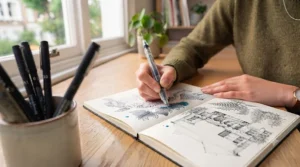
Pens for Comic Illustration: Building a Working Toolkit
Comic and manga inking has its own particular demands — consistent panel borders, crisp outlines that read clearly at small print sizes, and enough line-weight variation to separate foreground characters from background detail without switching tools every ten seconds. A dedicated comic toolkit typically combines a rigid fineliner for panel borders and fine detail with a brush pen for expressive outlines and speed lines, which is exactly why several of the sets in this list bundle both tip types together rather than shipping fineliners alone.
The STAEDTLER Pigment Liner’s metal-clad tip earns particular credit here for panel borders specifically, since its resistance against a ruler edge keeps lines crisp over dozens of repeated straight strokes without the tip splaying the way a softer plastic nib eventually will. For the expressive, energetic linework — hair, motion lines, dynamic outlining — the Faber-Castell or Tombow brush pens step in, giving that satisfying thick-to-thin taper that makes comic art feel alive rather than mechanically traced.
Fineliner Pens Set for Illustration: Why Sets Beat Singles
Buying a single fineliner might feel like the cautious choice, but in practice it’s almost always a false economy for illustration work. A finished piece typically needs several line weights working together — a fine 0.1mm or 0.2mm for detail and texture, a mid-range 0.3mm or 0.5mm for general linework, and a bolder 0.7mm or 0.8mm for outlining and emphasis — and buying these individually usually costs more than a well-assembled set while leaving gaps in your range.
This is exactly why sets like the Sakura Micron six-pack, the Staedtler eight-pack, and the AKARUED twelve-pack dominate this list rather than single pens: illustration genuinely benefits from having the right weight on hand for each part of a drawing, rather than forcing one width to do every job. The trade-off, worth being honest about, is that you’ll inevitably use some widths in a set far more than others — most illustrators report reaching for their 0.3mm or 0.5mm constantly while the ultra-fine 0.05mm sits mostly unused until a specific detailed project calls for it.
Brush Pen vs Fineliner for Illustration: Which Should You Reach For First?
This is one of the most common questions new illustrators ask, and the honest answer is that it depends entirely on what your linework needs to communicate. A fineliner gives you consistency and control — every line comes out the same width regardless of pressure, which makes it ideal for technical illustration, detailed crosshatching, architectural work, and anything where precision matters more than expressiveness. A brush pen gives you range and energy — the same pen can produce a whisper-thin line or a bold, confident stroke depending entirely on how hard you press, which suits expressive figure work, comic lettering, and loose gestural sketching far better.
| Factor | Fineliner | Brush Pen |
|---|---|---|
| Line consistency | Very high | Variable by design |
| Learning curve | Low | Moderate to high |
| Best for | Detail, crosshatching, technical work | Expressive lines, lettering, comics |
| Typical waterproofing | Usually yes | Varies by brand |
| Beginner-friendly | Yes | Requires practice |
Looking at this comparison, most working illustrators genuinely end up owning both rather than choosing one camp permanently — the Sakura Micron set even hedges its bets by including a brush pen alongside five fineliner widths in a single pack. If you’re only buying one pen to start with, though, a fineliner is generally the gentler introduction, since it removes pressure-sensitivity from the list of things you need to think about while you’re still learning composition and proportion.
Best Pen for Crosshatching Technique: What to Look For
Crosshatching lives or dies on consistency — you’re laying down dozens, sometimes hundreds, of closely spaced parallel lines, and any variation in width or ink flow shows up immediately as an uneven, patchy tone rather than smooth gradation. As the technique’s long history in engraving and ink drawing shows, from Dürer’s shading through to modern illustration, the tool matters enormously because hatching relies on precise, repeatable control rather than expressive variation.
That’s exactly why the Uni Pin and the Staedtler Pigment Liner both earn strong recommendations for this specific technique: their reinforced tips resist the fraying that turns a crisp hatching line into a fuzzy, inconsistent one after a hundred strokes. For colour crosshatching specifically, the Pentel Sign Pen Touch’s wear-resistant flexible tip holds up unusually well to the repeated motion, while still offering the pressure sensitivity needed to vary line weight within a hatched pass for more dynamic shading. Whichever pen you choose, the underlying principle stays the same: a tip that holds its shape under repetition beats a pen that merely feels nice for the first ten lines.
Waterproof Pens for Watercolour Over Ink: Getting the Layering Right
Nothing ruins a carefully inked illustration faster than watching your linework dissolve the second a wet brush touches it, so understanding which pens are genuinely waterproof — not just marketed as such — matters enormously if watercolour is part of your process. Of the seven pens covered here, the Sakura Pigma Micron, the Staedtler Pigment Liner, the Uni Pin fineliners, and the Faber-Castell Pitt Brush all use pigment-based or India-ink formulas specifically engineered to dry into the paper fibres rather than sitting soluble on the surface, which is what allows watercolour to be layered confidently on top once the ink has fully cured.
The Tombow Fudenosuke and Pentel Sign Pen Touch, by contrast, both use water-based dye ink, which is brilliant for direct blending techniques but genuinely unsuitable if your plan is to ink first and paint second — the moment water touches that ink, it lifts and smudges. A useful habit worth building regardless of which waterproof pen you’re using: let the ink cure for a full 24 hours before painting over it, since even genuinely waterproof formulas can smear slightly if watercolour is applied while the ink is still freshly dry rather than fully set.
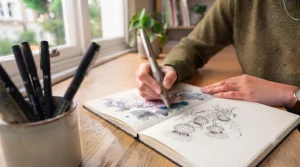
Practical Usage Guide: Getting the Most From Your Pens
Storage matters more than most illustrators realise until a favourite pen dies unexpectedly. Always store fineliners and brush pens horizontally rather than upright, nib-down, since gravity alone can cause ink to pool unevenly at the tip over weeks of storage, leading to blotting or dried-out patches. Keep caps firmly on between sessions — even pens marketed with dry-resistant technology, like the Staedtler’s CAP OFF system, still benefit from being capped for anything longer than a working session.
Paper choice affects pen lifespan more than ink usage ever will. Smoother, more sized papers — the kind typically used for ink illustration and bristol board — extend the life of both fineliner and brush pen tips considerably compared with toothy, textured watercolour papers, which grind down fibre tips noticeably faster. Jackson’s Art’s guide to hatching techniques makes a similar point about tool and surface pairing across drawing, painting and printmaking more broadly, which is worth a browse if you want to see how the same principle plays out beyond pen and ink specifically. In the first few weeks of owning a new set, it’s worth testing each width on a scrap sheet before committing to a final piece, both to check for any dry or faulty pens in a batch and to build a feel for how each width behaves under your particular hand pressure.
Common Mistakes When Buying Illustration Pens
The single most common mistake is buying based on nib count alone without checking waterproofing, only to discover halfway through a watercolour illustration that half the set bleeds the moment it gets wet. A second frequent error is assuming brush pens are simply “fancier fineliners” rather than a genuinely different skill to learn — jumping straight into an unfamiliar flexible brush tip for a finished piece, rather than practising pressure control first, tends to produce shaky, inconsistent lines that undermine confidence unnecessarily.
A third mistake worth flagging is over-investing in a single expensive pen before understanding your own drawing habits. As covered in the AKARUED review above, a genuinely affordable starter set often teaches you more about your preferences in a month than a single premium pen ever could, simply because it exposes you to a wider range of widths and tip types at once. Finally, many buyers underestimate how much paper choice affects pen performance, blaming a perfectly good pen for fraying or bleeding when the real culprit is overly textured or poorly sized paper.
What to Expect: Real-World Performance
Setting realistic expectations helps avoid disappointment, so here’s roughly what aggregated experience across this list suggests. Fineliners like the Sakura Micron and Staedtler Pigment Liner typically maintain consistent line quality for weeks to months of regular use, with ultra-fine nibs below 0.1mm being noticeably more fragile than mid-range 0.3mm-0.5mm widths, which tend to be the genuine workhorses of most illustration practices. Budget sets like the AKARUED pens perform admirably at first but show wear — fading nib labels, occasional patchy ink flow — within a matter of weeks under regular use, which is a fair trade for their low upfront cost.
Brush pens behave quite differently depending on paper choice more than any other factor: on smooth bristol or marker paper, the Tombow Fudenosuke and Pentel Sign Pen Touch can last for dozens of sessions, while the same pens on textured watercolour paper may fray within just a handful of uses. The Faber-Castell Pitt Brush sits in between, with its firmer tip resisting wear better than the softer Tombow but still showing fraying faster than any of the rigid fineliners in this list — which is simply the nature of a flexible brush tip doing genuinely different work.
Buyer’s Decision Framework
If you’re new to illustration and unsure what style you’ll gravitate toward, start with an affordable, varied fineliner set like the AKARUED pack, since experimentation matters more than premium quality at this stage. If watercolour is a core part of your process, prioritise genuinely waterproof options — the Sakura Micron, Staedtler Pigment Liner, or Faber-Castell Pitt Brush — over anything water-soluble, regardless of how appealing the price or colour range looks. If your style leans toward comics or expressive lettering, invest in at least one brush pen alongside your fineliners, since line-weight variation is difficult to fake convincingly with a rigid tip alone. And if crosshatching or dense technical linework is your bread and butter, choose pens specifically praised for tip durability under repetition — the Uni Pin and Staedtler both hold up noticeably better here than softer alternatives.
Features That Actually Matter (And Those That Don’t)
Cutting through the marketing noise, a handful of features genuinely predict how well an illustration pen performs: waterproofing (verified rather than merely claimed), tip material and reinforcement (metal-clad or steel-supported tips resist fraying far longer than plain plastic or felt), and consistency of ink flow across a full page rather than just the first few strokes. Nib size range matters too, but less than people assume — most illustrators settle into two or three go-to widths regardless of how many are included in a set.
Features that matter considerably less than their marketing suggests include exotic colour ranges (a black or grey pen genuinely does 90% of illustration work) and elaborate packaging, which has zero bearing on how a pen actually performs on paper despite often being the most heavily photographed detail in a listing. Ergonomic barrel shaping is a nice comfort feature for long sessions but isn’t a meaningful predictor of line quality or durability on its own.
Frequently Asked Questions
❓ What's the best all-round pen for illustration beginners?
❓ Are brush pens harder to use than fineliners?
❓ Which illustration pens are genuinely waterproof for watercolour?
❓ What pen is best for crosshatching?
❓ How long do illustration pens typically last?
Conclusion
Choosing the best illustration pens really comes down to being honest about what you actually draw, not what looks impressive in a stationery haul. If precision and crosshatching are your priority, the Staedtler Pigment Liner and Uni Pin fineliners earn their reputation through genuinely tough, reinforced tips. If watercolour is part of your process, the Sakura Pigma Micron and Faber-Castell Pitt Brush deliver ink that stays exactly where you put it. And if you’re still working out your style, the AKARUED set or Tombow Fudenosuke twin pack offer a low-stakes way to figure out what you actually enjoy using before spending more.
Whatever you land on, the underlying principle holds steady: the right pen is the one that gets out of your way. Buy for how you draw, not for the packaging, and don’t be afraid to keep both a fineliner and a brush pen in rotation — most working illustrators use several tools in a single piece rather than relying on just one.
Recommended for You
- Micro Pens for Drawing: 7 Best Picks Tested for 2026
- Best Graphite Sticks for Drawing in the UK: 7 Top Picks (2026)
- Vine Charcoal vs Charcoal Pencils: 7 Best UK Picks (2026)
Disclaimer: This article contains affiliate links. As an Amazon Associate, I earn from qualifying purchases. If you purchase products through these links, we may earn a small commission at no additional cost to you.
✨ Found this helpful? Share it with your friends! 💬🤗
