
In This Article
There’s a particular kind of heartbreak that only draughtsmen understand: the moment a pen you’ve trusted for years suddenly blobs, right in the middle of a hairline detail, on the one sheet you can’t start over. Technical drawing pens are unforgiving tools. They don’t do “nearly right.” A line is either the correct, consistent width from corner to corner, or it isn’t — and the difference between a pen that delivers that and one that doesn’t is often just a few pounds and a bit of homework.
This guide is that homework, already done. We’ve researched seven real, currently available technical drawing pens spanning the full spectrum from disposable fineliners to refillable precision instruments, cross-checked their specs against genuine aggregated review sentiment, and built the whole thing around one question: which pen actually earns its place on your drawing board? A technical drawing pen, put simply, is a fine-tipped instrument engineered to lay down a fixed, repeatable line width in dense, waterproof ink — the exact opposite of a normal biro’s inconsistent scrawl. We’ll cover technical pens for architects, Rotring technical pens specifically, precision drawing pens more broadly, refillable technical pens, the eternal isograph pen vs disposable technical pen debate, technical pen line weights explained properly, and the best technical pen for drafting on tracing paper. Line convention itself isn’t arbitrary, either — it’s governed by international standards such as ISO 128, which is precisely why line-weight consistency matters as much as it does to anyone drawing for professional use.
Quick Comparison Table: Technical Drawing Pens at a Glance
| Pen | Type | Best For | Price Range |
|---|---|---|---|
| Rotring Isograph Technical Pen Master Set | Refillable, multi-width | Architecture students, serious draughting | £60-£90 range |
| Faber-Castell TG1-S Set (4 widths) | Refillable | Mixed studio/site use, great value refillable | £35-£55 range |
| Staedtler Mars Matic 700 | Refillable | Long ink sessions, smooth flow on vellum | £15-£25 range |
| Staedtler Pigment Liner 308 Set | Disposable | Budget line-weight variety pack | £10-£20 range |
| uni-ball PIN Fineliner (Pack of 5) | Disposable | Architects on site, portfolio sketching | under £15 |
| Sakura Pigma Micron Set | Disposable | Archival-quality illustration and drafting | £10-£20 range |
| Rotring Tikky Graphic 0.5mm | Disposable | Rotring quality without refilling hassle | under £10 |
The split here is deliberate, because “best technical pen” genuinely depends on how much abuse and how many hours you’re planning to put a pen through. Refillable technical pens dominate the upper half of this table for a reason: over a few years of regular use, the ink-bottle economics comfortably beat buying disposables one after another. But disposables aren’t the lesser option they’re sometimes made out to be — for occasional use, site sketching, or anyone who’s never quite mastered cleaning an ink helix without getting it on their trousers, a good fineliner does the job with zero maintenance faff.
💬 Just one click — help others make better buying decisions too!😊
Top 7 Technical Drawing Pens: Expert Analysis
Choosing a technical pen properly means looking past the brand name stamped on the barrel and into the details that actually determine whether a line survives contact with tracing paper. Here are seven real, currently stocked pens spanning budget, mid-range and premium, assessed on genuine specs and aggregated review sentiment rather than marketing copy.
1. Rotring Isograph Technical Pen Master Set — best overall for serious, long-term draughting
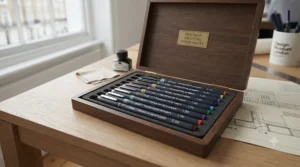
The standout feature is the sheer completeness of the kit: three Isograph pens (typically 0.20mm, 0.30mm and 0.50mm), a 0.5mm mechanical pencil, leads, an eraser, ink and a compass attachment, all in one case. This is the set that architecture tutors have been quietly recommending to first-years for decades, and there’s a reason the recommendation never seems to go out of fashion.
Each Isograph pen uses a hard chrome-plated tip built specifically to survive repeated contact with tracing paper, vellum, and lineboard without wearing down or snagging — a genuinely different proposition to the soft nylon tips found on most disposable fineliners. Based on the spec comparison with cheaper multi-pens, the refillable ink reservoir is the real long-game feature here: once you own the barrels, ongoing cost is just ink, not new pens. Reviewers consistently describe the line quality as genuinely “flawless” once the pen is properly bled and cleaned, though several also note the learning curve — these aren’t grab-and-go pens, they reward a bit of technique and punish neglect with clogging.
Pros:
- ✅ Complete drafting kit in one case
- ✅ Chrome-plated tips built for tracing paper and vellum
- ✅ Refillable reservoir keeps long-term costs low
Cons:
- ❌ Needs regular cleaning to avoid clogging
- ❌ Steeper learning curve than disposable pens
Priced in the £60-£90 range depending on retailer and included accessories, this is a genuine investment piece — but for anyone drawing several hours a week, the cost-per-year works out lower than it looks on day one.
2. Faber-Castell TG1-S Technical Drawing Pen Set (0.25/0.35/0.5/0.7mm) — best mid-range refillable value
The standout feature is accessibility: a stainless steel point built for water-soluble ink, offered across four genuinely useful line widths, at a price that undercuts the Isograph line while still being refillable. It’s the “I want to go refillable but I’m not ready to commit to premium prices” pen, and it does that job well.
What most buyers overlook about the TG1-S range is how straightforward the refill mechanism is compared with rivals — several reviewers specifically note it’s easier to refill than both Rotring and Staedtler equivalents, using a simple push-fit cartridge or piston-converter system rather than a fiddly ink-helix clean. On paper this means less maintenance friction for someone switching from disposables for the first time. Aggregated sentiment describes solid, consistent lines and a comfortable, lightweight barrel, with the main caveat being that the ISO-marked tip, while precise, is a touch more delicate than the Isograph’s chrome-plated equivalent under heavy pressure.
Pros:
- ✅ Easiest refill mechanism of the major brands
- ✅ Four useful line widths in one set
- ✅ Lighter, more comfortable barrel for long sessions
Cons:
- ❌ Tip is more delicate than chrome-plated alternatives
- ❌ Fewer line-width options than the full Isograph range
At £35-£55 for the set, this sits as the sensible middle ground — refillable enough to save money long-term, without the Isograph’s price tag or steeper learning curve.
3. Staedtler Mars Matic 700 — best for smooth, uninterrupted ink flow
The standout feature is mechanical: this pen is built entirely differently from the piston-and-helix design used by Rotring and older Faber-Castell pens, which owners consistently single out as the reason it glides rather than scratches across the page. If you’ve ever fought a technical pen that drags on cheap tracing paper, this is the model most likely to fix that specific complaint.
Here’s what the spec sheet won’t tell you outright: the internal mechanism lays down ink on demand without the momentary starvation that causes hairline gaps in other technical pens, which matters enormously when you’re inking a long, continuous line and can’t afford a break in it. Based on aggregated reviewer experience — including from people who’ve used technical pens since the 1970s — the Mars Matic is frequently rated above both Rotring and older Koh-I-Noor pens specifically for reliability with difficult inks like India ink. The trade-off, honestly, is that this design difference means cleaning routines aren’t interchangeable with other brands, so it pays to read Staedtler’s own guidance rather than applying Isograph habits to it.
Pros:
- ✅ Distinct mechanism resists ink starvation mid-line
- ✅ Glides smoothly even on textured tracing paper
- ✅ Long-standing reputation among veteran draughtsmen
Cons:
- ❌ Cleaning routine differs from other refillable brands
- ❌ Less widely stocked than Rotring or Faber-Castell equivalents
Typically priced in the £15-£25 range per pen, this is arguably the best-value refillable option on this list for anyone whose main complaint with technical pens has always been inconsistent flow.
4. Staedtler Pigment Liner 308 Set — best budget line-weight variety pack
The standout feature is range: this set typically bundles multiple line widths — anything from 0.05mm up to 1.2mm depending on the pack — giving newcomers a genuine feel for how line weight changes a drawing’s visual hierarchy, without committing to a refillable system straight away.
What most buyers overlook about pigment liner sets like this is that they’re not a lesser category of “toy pen” — the pigment ink itself is the same archival, waterproof formulation used across Staedtler’s professional range, just delivered through a disposable nib rather than a refillable barrel. That’s a meaningful distinction: on paper this means the line quality holds up for technical use, it’s simply the hardware that’s built to be replaced rather than refilled. Reviewer sentiment consistently praises the consistency across widths within a single set, with the main gripe being that the finest nibs (0.05mm-0.1mm) wear down noticeably faster than the mid-range widths under regular pressure.
Pros:
- ✅ Genuine archival pigment ink, not a lesser formulation
- ✅ Wide range of widths in one affordable set
- ✅ Zero cleaning or maintenance required
Cons:
- ❌ Finest nibs wear down fastest under pressure
- ❌ Not refillable — full set replacement eventually
At £10-£20 for a multi-pen set, this is the pen to hand a student before they’ve decided whether refillable technical pens are worth the investment.
5. uni-ball PIN Fineliner (Pack of 5) — best for architects working on site
The standout feature is portability without compromise: these are explicitly marketed toward architects, sketchers, and technical drafters, and the water- and fade-resistant ink means a sketch made on a rainy site visit isn’t ruined by the first drop of drizzle that lands on the page.
Based on the spec comparison with heavier refillable pens, the PIN’s genuine advantage is that it needs absolutely nothing from you beyond uncapping it — no ink bottle, no cleaning fluid, no risk of a leak ruining a laptop bag on the train to site. That’s precisely why it turns up so often in architects’ site kits rather than exclusively at the drawing board: reviewers consistently describe it as the pen they reach for when a proper technical pen would be overkill, but a standard biro would be too inconsistent for annotating a detail sketch. The archival-quality ink is a genuine bonus for anyone filing site sketches that might later need scanning or referencing months down the line.
Pros:
- ✅ Zero maintenance, genuinely grab-and-go
- ✅ Water- and fade-resistant ink survives site conditions
- ✅ Consistent, fine line ideal for on-site annotation
Cons:
- ❌ Disposable — ongoing cost adds up with heavy use
- ❌ Line width less precisely calibrated than refillable pens
At under £15 for a pack of five, this is an easy addition to any bag, and honestly one of the best-value entries on this whole list.
6. Sakura Pigma Micron Set — best archival-quality disposable pen
The standout feature is a genuine historical first: Pigma Micron was the original disposable technical pen to use archival pigmented ink, and that pedigree still shows in how the line holds up decades later without fading, smearing, or bleeding through most paper.
What most buyers overlook about the Pigma Micron range is the protective metal sleeve around the tip, which gives noticeably more control when working against a ruler or straight edge than the plastic-tipped fineliners many competitors offer — a small detail that matters a lot when you’re inking a precise architectural elevation freehand against a guide. Reviewers, including designers, scientists, and archivists who rely on the ink’s permanence for record-keeping, consistently rate the line consistency highly across the full range of nib sizes. The honest caveat here is that, like most disposables, the finest tips soften with heavy use over tracing paper’s slightly abrasive surface, so it’s better suited to smooth cartridge or layout paper than repeated vellum work.
Pros:
- ✅ Genuinely archival, fade-resistant pigment ink
- ✅ Metal-sleeved tip aids control against rulers
- ✅ Consistent line quality across the nib range
Cons:
- ❌ Finest nibs soften faster on abrasive tracing paper
- ❌ Not refillable, so cost accumulates with regular use
Priced around £10-£20 for a multi-pen set, this is the pick for anyone whose work needs to survive being filed away and referenced years later.
7. Rotring Tikky Graphic 0.5mm Fiber Pen — best budget entry into the Rotring name
The standout feature is straightforward: it’s genuine Rotring build quality and line consistency, in a disposable fibre-tip format, at a fraction of the Isograph’s price. For anyone curious whether Rotring’s reputation is deserved before committing to a refillable set, this is the low-risk way to find out.
Here’s what to weigh with fibre-tip technical pens generally: they trade the pin-sharp precision of a metal Isograph tip for genuine convenience, and the Tikky Graphic’s fibre nib is specifically engineered to hold its shape better than a generic felt-tip under drafting pressure, which is exactly the detail that separates it from a bargain-bin fineliner. Aggregated review sentiment places it comfortably above generic disposable fineliners for line consistency, while acknowledging it doesn’t quite match the Isograph or Mars Matic for genuinely fine, hairline detail work. It’s a sensible “always in the bag” pen rather than a primary drafting instrument.
Pros:
- ✅ Genuine Rotring line quality at disposable pricing
- ✅ Fibre nib holds shape better than generic fineliners
- ✅ Low-risk way to trial the Rotring name
Cons:
- ❌ Can’t match Isograph-level fine detail precision
- ❌ Disposable, so it’s an ongoing rather than one-off cost
At under £10, this is a smart, low-commitment addition to a pen case that already leans toward disposables.
Practical Usage Guide: Setting Up and Maintaining Technical Pens
Buying the right pen only solves half the equation — how you set it up and maintain it determines whether it lasts a semester or a decade. For refillable pens straight out of the box, the first thing to do is bleed a small amount of ink through the tip onto scrap paper before your first real drawing; a brand-new nib often needs a few strokes to start flowing evenly, and testing this on your actual project sheet is asking for trouble. Store refillable technical pens horizontally, or with the tip capped and pointing down if you must stand them, since an upright pen with the tip pointing up is one of the most common causes of dried, clogged nibs within the first month.
A simple maintenance schedule keeps ink flowing reliably: clean the ink helix or reservoir every few uses if you’re drawing regularly, and don’t leave ink sitting in a pen you won’t use again for weeks — dried ink inside the mechanism is the single most common reason a good pen ends up “faulty” within its first year. One optimisation trick that rarely appears on packaging: keep a dedicated bottle of manufacturer-matched cleaning fluid on your desk rather than buying it only after a clog happens, because prevention takes minutes while a full clean-out can take the better part of an evening. The most common first-month mistake with a new refillable set is mixing ink brands between different pen systems — Rotring ink in a Staedtler pen, for instance — which can react unpredictably with the seals and cause exactly the kind of clogging that gives refillable pens their unfair reputation for unreliability.
Real-World Scenarios: Matching Pens to Your Drawing Life
Consider three genuinely different people reaching for a technical pen. First, a first-year architecture student working mostly on studio crits and portfolio sheets, on a tight budget and still learning line-weight discipline. Here, the smart move is starting with a Staedtler Pigment Liner set to build technique and confidence with different widths, before investing in a single Faber-Castell TG1-S pen once they know which width they actually reach for most.
Second, picture a freelance architectural technician producing detailed working drawings for planning submissions several days a week, where consistency across dozens of A1 sheets genuinely matters to the finished portfolio. For this person, the Rotring Isograph Master Set earns its higher price tag through sheer volume of use — the refillable economics and multi-width completeness pay for themselves within the first few large projects.
Third, an engineer who splits time between the office drawing board and client site visits, needing something durable enough for detailed technical work but genuinely pocketable for annotating on the move. The uni-ball PIN Fineliner and Rotring Tikky Graphic cover exactly this gap — precise enough for real technical use, disposable enough that losing one on site isn’t a disaster, as noted in the RIBA’s own guidance on the technical design stage of a project, where detailed, accurate drawings move fluidly between studio and site throughout a project’s later stages.
How to Choose Technical Drawing Pens
- Decide refillable or disposable first. Everything else follows from this — refillable pens reward frequent, long-term use; disposables suit occasional or portable work.
- Match line width to your actual drawing scale. A 0.1mm pen is wasted on a bold title block; a 0.7mm pen destroys fine hatching — check what width your typical drawings actually need.
- Check paper compatibility before buying a set. Tracing paper, vellum, and cartridge paper each behave differently with different tip materials — metal tips generally suit tracing paper better than soft nibs.
- Consider ink permanence if drawings will be archived. Look specifically for archival, waterproof, lightfast ink if the work needs to survive scanning or filing for years.
- Factor in your own maintenance discipline honestly. A refillable pen left uncleaned for months will clog regardless of brand — be realistic about how much upkeep you’ll actually do.
- Buy a small range of widths rather than one pen. Real technical drawings use line-weight hierarchy to show importance, so even a budget three-width set outperforms one pen for genuine technical work.
- Test grip comfort for long sessions. A pen that feels fine for five minutes in a shop can become genuinely uncomfortable across a three-hour inking session — barrel weight and diameter matter more than they seem to.
Technical Pen Line Weights Explained
Technical pen line weights explained simply: the width of a line carries meaning in a technical drawing, not just aesthetics. A thick, continuous line typically represents a visible outline or edge; a thinner line represents secondary detail, dimensions, or hatching; and consistency within each weight category across an entire drawing is what makes it legible to anyone else who reads it. This isn’t a stylistic preference — it’s a shared visual language, formalised internationally through standards like ISO 128, which specifically govern line types and their relative thicknesses for construction, mechanical, and shipbuilding drawings alike.
| Line Width | Typical Use | Best Pen Match |
|---|---|---|
| 0.1mm-0.2mm | Fine detail, hatching, dimension lines | Rotring Isograph, Staedtler Pigment Liner (fine nibs) |
| 0.3mm-0.35mm | General linework, secondary outlines | Faber-Castell TG1-S, Sakura Pigma Micron |
| 0.5mm | Primary outlines, visible edges | Staedtler Mars Matic, Rotring Tikky Graphic |
| 0.7mm+ | Title blocks, bold emphasis lines | Rotring Isograph (wider widths), Faber-Castell TG1-S |
What the table above doesn’t show is that most professional drawings use no more than three or four distinct line weights, deliberately, because too many widths on one sheet becomes visually confusing rather than clearer. Based on the spec comparison across this list, buying a set that spans roughly 0.1mm to 0.5mm covers the vast majority of real technical drawing needs, with a single bolder pen reserved specifically for title blocks and borders rather than general use.
Isograph Pen vs Disposable Technical Pen
| Feature | Isograph (Refillable) | Disposable Technical Pen | Best For |
|---|---|---|---|
| Upfront cost | Higher (£60-£90 for a set) | Lower (£10-£20 for a set) | Disposable: budget-conscious start |
| Long-term cost | Lower per year with regular use | Adds up with repeat purchases | Isograph: heavy, frequent use |
| Maintenance | Requires regular cleaning | None required | Disposable: low-effort users |
| Line consistency over time | Excellent if maintained properly | Consistent until nib wears | Both, differently |
| Best environment | Studio, drawing board | Site visits, sketching on the move | Both, for different tasks |
The written comparison matters more than the numbers alone. An isograph pen is, fundamentally, a long-term instrument — you’re buying a barrel and a tip once, then feeding it ink for years, and the trade-off for that economy is a genuine maintenance commitment that disposable pen owners simply never have to think about. A disposable technical pen, meanwhile, isn’t a compromise so much as a different tool entirely: it’s built for the moment you need reliable, consistent line quality without any setup or cleanup at all. Based on the comparison above, most serious draughtsmen end up owning both — an Isograph or Mars Matic at the drawing board, and a PIN or Tikky Graphic in the bag for everything that happens away from it.
✨ Compare These Precision Drawing Pens Before You Buy
🔍Take your technical drawing to the next level with genuinely precise, professional-grade pens. Click through to check current pricing and availability on any of the picks above, and build a line-up that covers both the studio and the site. ✏️
Technical Pens for Architects: What Matters On Site and On the Board
Architects have a genuinely split set of demands that most general “best drawing pen” guides don’t account for. At the board, precision and line-weight range matter most — a set like the Rotring Isograph or Faber-Castell TG1-S gives the width control needed for detailed working drawings and section cuts. On site, though, priorities flip entirely: durability against weather, zero setup time, and archival ink that survives being scanned back into a project file months later become the deciding factors, which is exactly the gap the uni-ball PIN was built to fill.
What most buyers overlook about choosing “an architect’s pen” is that there usually isn’t one single answer — the profession itself moves between contexts, from CAD-dominated studio work to hand-annotated site sketches, more than most other technical drawing disciplines. Reviewers who specifically identify as architects or architectural technicians consistently mention owning at least two categories of pen for exactly this reason: a refillable set for considered studio work, and a disposable fineliner for everything else. It’s a pattern worth copying rather than fighting.
Rotring Technical Pens: Why the Brand Still Dominates
Rotring’s name recurs constantly across this list, and it’s worth being honest about why rather than assuming brand loyalty explains it entirely. The company’s core technical pen design — the chrome-plated tip paired with a refillable ink helix — has remained recognisably similar for decades because the underlying engineering genuinely solved the core problem: consistent line width over a genuinely long working life. Reviewers, including people who’ve compared Rotring against Koh-I-Noor, Staedtler, and various generic alternatives since the 1970s, consistently return to Rotring as a benchmark rather than dismissing it as legacy branding.
That said, Rotring technical pens aren’t universally the best choice for every situation on this list — the Staedtler Mars Matic outperforms it for ink-flow smoothness according to aggregated long-term user reports, and the Faber-Castell TG1-S is genuinely easier to refill. What Rotring does offer, consistently, is the widest range of true technical line widths in a single ecosystem, from ultra-fine 0.1mm right up to bold title-block widths, all sharing the same refill and maintenance system — which is precisely why architecture courses have leaned on it for so long as a teaching standard.
Refillable Technical Pens vs Disposable: Long-Term Cost & Maintenance
Thinking about technical pens purely by shelf price misses the real economics of regular use. A disposable pen priced under £15 that needs replacing every few months works out considerably more expensive over two or three years of regular drafting than a £70 refillable Isograph set fed with occasional ink bottle top-ups — this is the core argument for going refillable if you’re drawing several hours a week rather than occasionally. Refillable systems like the Faber-Castell TG1-S sit in a useful middle ground: moderate upfront cost, genuinely low ongoing spend, and a refill process straightforward enough that the maintenance barrier to entry is lower than people expect.
Maintenance itself costs very little beyond time and a bottle of the correct cleaning fluid: a quick rinse-through every few weeks of regular use prevents the vast majority of clogging issues that give refillable pens their reputation for unreliability. Realistically, budget refillable ink and cleaning fluid as a small ongoing cost — most regular users find they’re spending only a modest amount every few months once the initial pen investment is made, which is precisely where the long-term savings over disposables start to show.
Best Technical Pen for Drafting on Tracing Paper
Tracing paper is genuinely harder on a pen tip than standard cartridge or layout paper — its slightly toothy surface can drag at softer nibs and cause exactly the kind of inconsistent line width that defeats the purpose of a technical pen in the first place. Based on the spec comparison across this list, metal-tipped refillable pens consistently outperform soft-nib disposables specifically on tracing paper and vellum, because the hard chrome-plated or stainless steel point simply doesn’t compress or fray against the fibrous surface the way a fibre or plastic nib eventually does.
The Rotring Isograph and Faber-Castell TG1-S are both explicitly built with this use case in mind, and aggregated reviewer sentiment consistently backs this up for anyone drafting regularly on tracing paper or vellum rather than smooth cartridge stock. Among the disposables, the Sakura Pigma Micron holds up reasonably well for occasional tracing paper work but genuinely isn’t designed for the sustained, repeated contact a working drawing demands — for anyone doing this daily, investing in a refillable metal-tipped pen isn’t a luxury, it’s simply the tool built for the job.
Common Mistakes When Buying Technical Drawing Pens
The most frequent mistake is buying a single line width and expecting it to cover every drawing task, when real technical work depends on a hierarchy of at least two or three weights to stay legible. A close second is choosing a refillable pen without being honest about maintenance habits — a beautiful Isograph left uncleaned for months will clog just as readily as a cheap alternative, and the resulting frustration usually gets blamed on the brand rather than the neglect.
Another common error is ignoring paper compatibility entirely: buying a soft-nibbed disposable pen for regular tracing paper work sets both the pen and the drawing up for disappointment, as covered above. Owners also frequently mix ink brands across refillable pen systems, which can cause seal reactions and clogging that has nothing to do with the pen’s underlying quality. Finally, many buyers underestimate that “technical pen” isn’t one category — assuming an architect’s pen and an engineer’s pen are interchangeable overlooks the genuinely different demands each discipline places on line weight, paper type, and portability.
Problem → Solution: Fixing Common Technical Pen Frustrations
Problem: your pen keeps clogging after just a few uses. Solution: switch to a strict cleaning schedule using manufacturer-matched fluid, and never leave ink sitting unused in the reservoir for more than a couple of weeks.
Problem: lines are inconsistent in width across a single drawing. Solution: check for a worn or damaged tip first, then confirm you’re not switching between pens of slightly different widths without realising — colour-coded barrels exist specifically to prevent this mix-up.
Problem: ink drags or skips on tracing paper. Solution: move to a metal-tipped refillable pen like the Isograph or TG1-S, since soft-nibbed disposables are the most common cause of this specific complaint.
Problem: you’re spending more than expected on constant pen replacements. Solution: rebalance toward refillable pens for your primary drawing work, keeping disposables only for site visits or occasional sketching.
Problem: a new refillable pen won’t start flowing at all. Solution: bleed a small amount of ink onto scrap paper first — brand-new nibs frequently need a few strokes before ink flows evenly.
Frequently Asked Questions
❓ What is the best technical pen for architects?
❓ Are refillable technical pens worth the extra cost?
❓ What line width should I start with for technical drawing?
❓ Why does my technical pen keep clogging?
❓ Is an Isograph pen better than a disposable technical pen?
Conclusion
There’s no single “best” technical drawing pen, and any listing claiming otherwise is oversimplifying a genuinely varied set of needs. What actually works, based on real specs and aggregated user experience, is matching the tool to the task: a refillable set like the Rotring Isograph or Faber-Castell TG1-S doing the heavy lifting at the drawing board, a smooth-flowing option like the Staedtler Mars Matic for long inking sessions, and a reliable disposable like the uni-ball PIN or Rotring Tikky Graphic living in your bag for everything that happens away from the studio. Get that balance right, keep a basic maintenance routine for anything refillable, and you’ll spend far more time actually drawing than fighting your pens.
Recommended for You
- Micro Pens for Drawing: 7 Best Picks Tested for 2026
- Best Graphite Sticks for Drawing in the UK: 7 Top Picks (2026)
- Vine Charcoal vs Charcoal Pencils: 7 Best UK Picks (2026)
Disclaimer: This article contains affiliate links. As an Amazon Associate, I earn from qualifying purchases. If you purchase products through these links, we may earn a small commission at no additional cost to you.
✨ Found this helpful? Share it with your friends! 💬🤗
