
In This Article
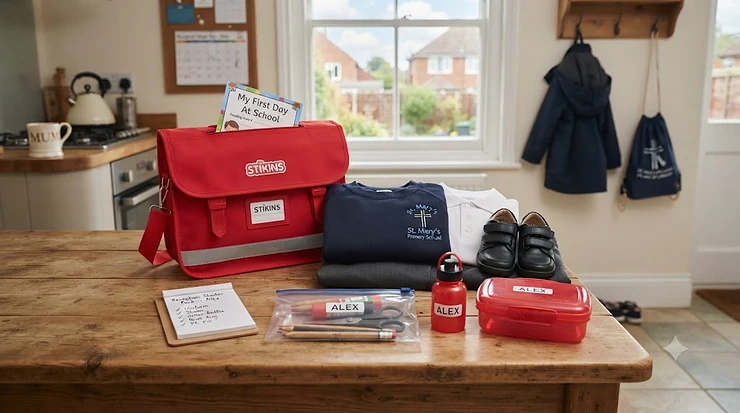
There’s a particular kind of panic that hits every parent around late July, usually while standing in a supermarket aisle holding a polo shirt in one hand and a book bag in the other, wondering if you’ve missed something crucial. A reception school starter pack is, at its simplest, the full set of uniform, bags, footwear and everyday kit a four-year-old needs to walk into their first day of school looking (and feeling) ready. It’s not one product — it’s a small ecosystem of items that all have to survive spilled paint, wet playgrounds and a child who has just discovered how satisfying it is to unzip things.
We’ve spent time digging through real product listings, aggregated customer feedback and independent UK buying guides to pull together a genuinely useful reception school starter pack roundup — not a rehashed Amazon listing with the serial numbers filed off. You’ll find budget picks that punch above their price tag, a couple of mid-range workhorses, and a premium option or two for families who’d rather buy once and buy well. Reception starts the September after a child turns four, and applications open a full year in advance, so there’s more lead time than you’d think — worth knowing if you’re only now realising your child starts in a few weeks (gov.uk explains the official starting age rules here).
By the end of this guide you’ll know exactly which seven products are worth your money, how to sequence your shopping so you’re not doing it all in the last week of August, and where the real pitfalls lie — because there are a few, and almost nobody warns you about them until it’s too late.
Quick Comparison Table
Before we go deep on all seven picks, here’s the lightning-round version for anyone reading this on their phone in a car park.
| Product | Category | Best For | Price Range |
|---|---|---|---|
| Quadra Classic Junior Book Bag | Book bag | Standard reading-record book bag | Under £6 |
| ZECO Premium School Book Bag with Strap | Book bag | Sturdier daily wear-and-tear | £9-£11 range |
| Amazon Essentials Kids’ School Uniform Polo Shirts | Uniform | Budget everyday basics | £10-£15 range (multipack) |
| Trutex School Shirts/Blouses Multipack | Uniform | Longer-lasting fabric quality | £12-£18 range (multipack) |
| Ion8 Leak Proof Kids’ Water Bottle | Water bottle | Small hands, easy operation | £7-£12 range |
| Chilly’s Kids Original Bottle | Water bottle | All-day temperature control | £20-£30 range |
| STIKINS Personalised Name Labels | Labelling | Stopping lost property | £10-£15 range |
Look at that table for two seconds and a pattern jumps out: nothing here is expensive on its own, but a full reception school starter pack across all these categories will still land somewhere in the £80-£140 range depending on how many multiples you buy. The real decision isn’t “can I afford this,” it’s “where do I spend a bit more, and where does cheap-and-cheerful genuinely do the job.” Spoiler: book bags rarely need to be premium; water bottles quietly do.
💬 Just one click — help others make better buying decisions too! 😊
Top 7 Reception School Starter Pack Picks: Expert Analysis
Here’s where we get into the actual products — what they’re made of, who genuinely reports being happy with them, and where they fall short. Every product name below stays bold throughout the article, so you can scan back to any pick at a glance.
1. Quadra Classic Junior Book Bag — the reception book bag every school recognises
This is the book bag you’ve probably already seen slung over a hundred small shoulders outside your local primary — a genuinely ubiquitous choice, and there’s a reason for that beyond price. The 5-litre capacity is deliberately modest: it’s built to carry a reading record, a couple of picture books and a home-school diary, not a laptop. That size constraint is actually useful, because oversized bags on four-year-olds tend to end up dragging on the floor or getting left behind entirely.
Spec-wise, you’re looking at a water-resistant polyester shell, a single adjustable shoulder strap, and a simple open-top design with no zips for little fingers to fight with. Based on the spec comparison with pricier alternatives, the lack of extra pockets is a feature, not a missing feature — reception teachers generally want one bag, one purpose, nothing to lose inside a maze of compartments. Reviewers consistently report that the bag holds up for a full academic year of daily use, including the inevitable “it lived at the bottom of the cloakroom pile” treatment, with the shoulder strap seams being the first thing to show wear on well-used bags.
Pros:
- ✅ Slim, school-appropriate size that won’t overwhelm a small child
- ✅ Water-resistant fabric copes with rainy playground pickups
- ✅ Extremely widely stocked, so replacements are easy to find
Cons:
- ❌ No internal pockets for smaller items like reading diaries
- ❌ Basic strap can fray with heavy daily use by year’s end
At under £6 at the time of research, this is about as close to a no-brainer as reception shopping gets — genuinely difficult to argue with the value here, especially if your school has a specific size requirement for book bags (many do).
2. ZECO Premium School Book Bag with Strap — sturdiest step-up from the basics
If the Quadra above is the reliable hatchback, this is the slightly more expensive trim level with the better upholstery. The ZECO Premium School Book Bag with Strap uses a heavier-gauge fabric and a reinforced base panel, which matters more than it sounds — book bags spend a surprising amount of their life being dropped, sat on, or used as an impromptu football.
The padded strap is the standout feature here, and it’s not just marketing fluff: a genuinely padded strap distributes weight more evenly across a small shoulder than the thin webbing straps found on cheaper bags, which can dig in when a bag’s fully loaded with wet PE kit and a reading folder. What most buyers overlook about this model is that the reinforced base also means the bag keeps its shape rather than sagging into a floppy pouch after a few months, which sounds trivial until you’re the parent trying to fish a reading book out of a collapsed bag at drop-off.
Pros:
- ✅ Reinforced base resists sagging over a full school year
- ✅ Padded strap noticeably more comfortable for daily wear
- ✅ Wipe-clean lining copes well with leaking snack pots
Cons:
- ❌ Costs roughly double the basic Quadra-style option
- ❌ Limited stock runs mean colour choice can be inconsistent
In the £9-£11 range, this is a sensible mid-tier upgrade if your child is hard on their belongings, or if you’re buying for a sibling who’ll inherit it in a couple of years — the extra durability genuinely extends its working life.
3. Amazon Essentials Kids’ School Uniform Polo Shirts (Multipack) — best value for everyday basics
Polo shirts are the unglamorous backbone of any school uniform checklist, and this is where buying in bulk genuinely pays off. The Amazon Essentials Kids’ School Uniform Polo Shirts multipack uses a classic-fit cotton piqué weave, which is the same fabric structure you’ll find on considerably pricier branded school polos — a button placket at the collar, short sleeves, and a fit designed to survive a tumble dryer without shrinking into a doll’s outfit.
Here’s what the spec sheet won’t tell you, but parent forums consistently mention: buying five polos rather than the traditional two means you’re doing laundry twice a week instead of daily, which matters enormously once you’re also juggling PE kit washing and a general September time crunch. On paper this means a small upfront spend saves real weekly time, and that’s before you factor in the near-universal complaint about branded school polos shrinking after a handful of 40-degree washes — own-brand cotton piqué tends to be more forgiving here because it isn’t cut as tightly to begin with.
Pros:
- ✅ Cotton piqué fabric breathes well through a warm classroom
- ✅ Multipack pricing works out cheaper per shirt than singles
- ✅ Reinforced button placket survives repeated machine washing
Cons:
- ❌ Generic colour range may not match every school’s exact shade
- ❌ Sizing can run slightly large in the first wash or two
Expect to pay in the £10-£15 range for a multipack at the time of research, which is genuinely one of the better value-per-wear items on this entire list.
4. Trutex School Shirts/Blouses (Multipack) — best durability for growing children
Trutex is one of those names that quietly turns up as an approved supplier on school uniform lists across the country, and the reason isn’t branding — it’s fabric longevity. The Trutex School Shirts/Blouses Multipack uses a cotton-rich, easy-care blend with a revere collar design, which sits flatter and holds its shape through repeated washing better than pure-cotton alternatives that tend to go limp around the collar by half-term.
Reviewers consistently note that Trutex items survive multiple terms of daily wear without the fabric thinning at stress points like elbows and cuffs — genuinely useful feedback given how much reception children put their sleeves through in a single week of painting, gluing and general chaos. Based on the spec comparison with budget polos, the trade-off is straightforward: you’re paying a bit more per shirt for fabric that’s engineered to be handed down to a younger sibling in reasonable condition, rather than replaced entirely each year.
Pros:
- ✅ Cotton-rich blend resists the “gone limp” look after washing
- ✅ Flat revere collar holds shape better than basic alternatives
- ✅ Widely accepted where schools specify an approved supplier
Cons:
- ❌ Sits at the pricier end of the uniform basics category
- ❌ Multipack colour options are more limited than generic brands
At a £12-£18 range for a multipack, this is the pick for families who’ve already been told secondhand or worn through a full set of polos by October — buy once, buy for durability.
5. Ion8 Leak Proof Kids’ Water Bottle — best all-rounder for small hands
The Ion8 Leak Proof Kids’ Water Bottle turns up on more “best of” lists than almost any other kids’ bottle on the market, and the reason is refreshingly unglamorous: it does the one job a school water bottle needs to do — not leak — with genuine consistency. The one-finger flip-lid design with a triple-lock mechanism is specifically built around small motor skills, meaning a four-year-old can actually open and close it unaided, which matters more in reception than almost any spec on this list.
Available in 350ml and 400ml capacities depending on version, the bottle is BPA-free plastic and dishwasher safe, though — and this is a genuinely useful practical note most listings bury — it shouldn’t go through the hot cycle, as heat can warp the locking mechanism over time. Reviewers consistently report years of leak-free use even after being dropped, sat on, or left at the bottom of a book bag over a long weekend, which for a bottle at this price point is a genuinely strong track record.
Pros:
- ✅ One-finger flip lid genuinely usable by a four-year-old
- ✅ Triple-lock design has a strong reputation for zero leaks
- ✅ Wide colour and design range appeals to reluctant drinkers
Cons:
- ❌ Not suitable for the dishwasher’s hot cycle
- ❌ Smaller 350ml size needs refilling for a full school day
At £7-£12 depending on capacity and finish, this is genuinely one of the best-value items in the entire starter pack — cheap enough to replace without guilt, reliable enough that you rarely have to.
6. Chilly’s Kids Original Bottle — best insulated bottle for all-day temperature control
If your child’s school has a longer day, or you’re sending drinks that need to stay properly cold through a warm September afternoon, the Chilly’s Kids Original Bottle is the step up worth knowing about. Its double-walled, vacuum-insulated stainless steel construction keeps drinks cold for roughly 24 hours and hot for around 12 — genuinely useful if you’re also using it for warm milk on colder mornings, not just water.
Here’s the honest trade-off: independent reviewers note it’s hand-wash only rather than dishwasher safe, and the smooth steel exterior offers less grip than textured plastic bottles, which can be a real issue for a child whose fine motor control is still developing. What most buyers overlook about insulated bottles generally is that the extra weight of steel construction — empty, before you even add water — is noticeably more than a plastic equivalent, something worth factoring in if your child’s book bag is already fairly loaded.
Pros:
- ✅ Vacuum insulation keeps drinks cold for around 24 hours
- ✅ Durable stainless steel construction resists dents and scratches
- ✅ Distinctive bright colourways make it easy to spot in lost property
Cons:
- ❌ Hand-wash only adds a small daily task for parents
- ❌ Smooth exterior can be harder for small hands to grip
Sitting in the £20-£30 range at the time of research, this is a considered upgrade rather than a default choice — worth it if temperature retention genuinely matters for your family’s routine, less essential if it doesn’t.
7. STIKINS Personalised Name Labels — best solution for stopping lost property
This is the one item on the list that isn’t glamorous at all, and it’s arguably the most important. STIKINS Personalised Name Labels are stick-on labels designed to go on absolutely everything — clothing care tags, water bottles, lunchboxes, shoes, book bags — without a single stitch of sewing or a hot iron in sight. That last point matters more than it seems: the old-school iron-on and sew-in label routine is one of the most commonly cited pre-term chores parents dread, and a peel-and-stick alternative genuinely removes an evening of admin.
Reviewers consistently describe the adhesive as unusually strong for a fabric label, bonding well enough to survive dozens of wash cycles without curling at the edges — a common complaint with cheaper iron-on alternatives. Based on aggregated parent feedback, families often end up using a mixed approach: sew-in labels for expensive items like blazers or jumpers that get removed often, and stick-on labels like these for everything else, particularly hard, non-fabric surfaces like water bottles and lunchboxes where sewing simply isn’t an option.
Pros:
- ✅ No ironing or sewing required, saving real prep time
- ✅ Adhesive bonds to fabric, plastic, and hard surfaces alike
- ✅ A single pack typically covers an entire reception kit list
Cons:
- ❌ Very small items like socks can be fiddly to label
- ❌ Popular customised names can occasionally use variant spellings, so double-check the order
At £10-£15 range for a standard pack, this consistently ranks as one of the highest-value, most-repeated recommendations across UK parenting forums — genuinely one of those products that pays for itself the first time it prevents a lost cardigan.
Top 7 Products: Specs, Pricing & Best-For Summary
| Product | Key Spec | Price Range | Best For |
|---|---|---|---|
| Quadra Classic Junior Book Bag | 5L, water-resistant polyester | Under £6 | Standard reading-record duty |
| ZECO Premium School Book Bag with Strap | Reinforced base, padded strap | £9-£11 range | Kids hard on their belongings |
| Amazon Essentials Kids’ School Uniform Polo Shirts | Cotton piqué, multipack | £10-£15 range | Budget-conscious families |
| Trutex School Shirts/Blouses Multipack | Cotton-rich, revere collar | £12-£18 range | Durability and hand-me-downs |
| Ion8 Leak Proof Kids’ Water Bottle | 350-400ml, triple-lock lid | £7-£12 range | Small hands, easy independence |
| Chilly’s Kids Original Bottle | Vacuum-insulated steel | £20-£30 range | All-day temperature retention |
| STIKINS Personalised Name Labels | Stick-on, no-sew adhesive | £10-£15 range | Preventing lost property |
Line these seven up together and the sensible shopping strategy becomes obvious: spend the least on the book bag, the most on whichever water bottle matches your actual routine, and treat the name labels as non-negotiable regardless of budget, because a £30 lost bottle costs more than a £12 pack of labels that would have stopped it going missing in the first place.
Benefits vs Buying Uniform Piecemeal
A lot of first-time reception parents shop for each item separately, one panic-buy at a time, rather than thinking about the starter pack as a coordinated set. Here’s how the two approaches actually compare.
| Factor | Curated Starter Pack Approach | Buying Piecemeal, As Needed |
|---|---|---|
| Time spent shopping | One planned session across a weekend | Multiple last-minute trips through August |
| Total cost | Similar overall, spread deliberately | Often higher, due to rushed full-price buys |
| Sizing consistency | Measured once, ordered together | Prone to mismatched sizing across brands |
| Best For | Organised families, first reception child | Families topping up an existing wardrobe |
Buying everything in one considered pass isn’t about spending more — the table above shows the totals land in a similar place either way — it’s about avoiding the classic late-August scramble where sold-out sizes force you into whatever’s left on the shelf. Families who’ve already got uniform from an older sibling naturally fall into the piecemeal column, and that’s a perfectly sensible approach too; the curated route mostly benefits first-time reception parents starting from absolute zero.
Setting Up Your Reception School Starter Pack: A 30-Day Practical Guide
Buying the kit is genuinely the easy part. Getting it labelled, sized, and organised before the first day is where most of the actual work happens, and it’s worth spreading across a month rather than cramming it into the final weekend of August.
In the first week, get your child measured properly rather than guessing — school uniform sizing varies more between brands than you’d expect, and a shirt that fits at the shop can feel completely different after a hot wash. Order name labels early, because personalised items like STIKINS Personalised Name Labels typically take a few working days to arrive, and you’ll want them ready before uniform is even washed for the first time. In week two, wash everything once before labelling — new fabric often needs a rinse to remove manufacturing residue, and it’s far easier to label pre-washed items than to label first and wash around a sticker.
By week three, do a full “kit check” with your child present: let them try opening their Ion8 Leak Proof Kids’ Water Bottle or Chilly’s Kids Original Bottle unaided, practise opening the Quadra Classic Junior Book Bag, and try on shoes with actual school socks, not bare feet. The single most common first-30-days mistake is discovering on day one that a child can’t open their own water bottle or lunchbox independently — something entirely avoidable with a fifteen-minute practice run at home the week before.
Three Real Families, Three Reception Starter Packs
Every reception child is different, and so is every family’s budget and routine — here’s how three fairly typical scenarios might shape a sensible starter pack.
The first-time, budget-conscious family: Two working parents, first child starting school, no hand-me-downs available yet. This family is best served leaning into the Quadra Classic Junior Book Bag and Amazon Essentials Kids’ School Uniform Polo Shirts, pairing them with the Ion8 Leak Proof Kids’ Water Bottle for its low cost and strong leak-proof reputation. Total spend stays modest without sacrificing anything a reception class actually needs day to day.
The “buying once, buying well” family: Perhaps a second or third child, where parents already know which items wear out fastest. Here, the Trutex School Shirts/Blouses Multipack and ZECO Premium School Book Bag with Strap earn their higher price tags through genuine longevity, and STIKINS Personalised Name Labels get ordered without a second thought, because this family has already learned the hard way what happens without them.
The longer-day, wraparound-care family: A child in breakfast club and after-school care, meaning a longer day with the same water bottle. This is where the Chilly’s Kids Original Bottle‘s all-day insulation genuinely earns its higher price point over the cheaper Ion8 option — a bottle that has to stay appealing to drink from at 4pm as well as 9am is doing more work than a standard school-day bottle.
How to Choose a Reception School Starter Pack: 7 Expert Criteria
Faced with dozens of options in every category, here’s a straightforward sequence for narrowing things down without decision fatigue.
- Check your school’s exact uniform policy first. Colours, logos, and permitted footwear vary school to school, so confirm this before ordering anything.
- Prioritise independence over aesthetics. A water bottle or lunchbox your child can’t open alone will come home unopened, regardless of how nice it looks.
- Buy uniform basics in multiples of five, not two. It genuinely reduces the laundry burden during an already exhausting first term.
- Choose durability for items with siblings behind them. If a younger child will inherit the kit, spend more on fabric and build quality now.
- Label everything before the first day, not after the first loss. Retrospective labelling after something’s already missing rarely works.
- Match bottle insulation to your child’s actual day length. Wraparound care days benefit from insulation; a short school day usually doesn’t need it.
- Keep receipts and check return policies. Reception-age children grow unpredictably fast over a single summer, and sizing mistakes are common.
Common Mistakes When Buying a Reception School Starter Pack
The single most frequent mistake is buying uniform sized for the child’s current age rather than their actual measurements — reception children vary enormously in height and build at four to five years old, and age-based sizing on a label is only ever a loose guide. A closely related mistake is buying everything brand new in one go without allowing for growth over the summer holidays; leaving shoe and shirt purchases until the final two weeks before term, once your child has had their full summer growth spurt, avoids a lot of wasted spending.
Another commonly overlooked pitfall is choosing a water bottle or lunchbox based on character branding alone, without checking whether a four-year-old can actually operate the lid independently — plenty of visually appealing bottles have fiddly mechanisms that end up needing adult help every single time, defeating the entire point of sending a child to school with their own supplies. Finally, many parents delay ordering name labels until after the first lost item, when ordering them alongside the rest of the starter pack from day one is both cheaper in the long run and considerably less stressful.
School Uniform Checklist for Reception: What You Actually Need
A school uniform checklist for reception doesn’t need to be complicated, but it does need to be realistic about how quickly small children go through clothes. As a sensible baseline: four to five polo shirts or shirts, three to four pairs of trousers, shorts, or a pinafore/skirt combination, two jumpers or cardigans, seven pairs of underwear, ten pairs of socks (reception children lose socks at an alarming rate), one pair of school shoes, and a separate PE kit consisting of a T-shirt, shorts or joggers, and a pair of plimsolls or trainers.
The reasoning behind these numbers is practical rather than arbitrary: five shirts means laundry twice a week rather than daily, and ten pairs of socks account for the genuinely surprising sock-loss rate typical of this age group. It’s worth checking your specific school’s uniform policy for exact colour and logo requirements before buying in bulk, since returns on personalised or logoed items are often restricted — a lesson Which?’s uniform-shopping advice covers in more detail, including where second-hand uniform swaps can meaningfully cut costs on items like blazers and jumpers that carry a school crest.
Book Bag vs Rucksack: Which Wins for Reception?
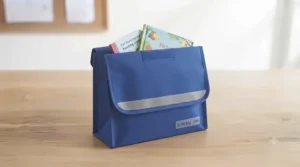
Most reception classes specifically request a book bag rather than a full-size rucksack, and the reasoning is more practical than aesthetic. A book bag like the Quadra Classic Junior Book Bag is deliberately small — it physically cannot be overloaded with toys, spare clothes, or unnecessary extras, which keeps cloakroom pegs manageable and prevents small children from carrying disproportionately heavy loads relative to their body weight. A rucksack, by contrast, invites over-packing, and its multiple compartments can actually work against a four-year-old who hasn’t yet developed the organisational skills to remember which zip holds what.
That said, a rucksack style like the sturdier ZECO Premium School Book Bag with Strap — despite the “book bag” name, worn more like a light backpack — can be the better call for schools without a strict single-strap requirement, particularly for children who find a shoulder bag prone to sliding off. On paper this means the “right” choice depends less on general preference and more on your specific school’s stated policy, so this is genuinely one of the few decisions in this entire guide where checking the school newsletter beats reading any buying guide, including this one.
Choosing the Best Water Bottle for School: What Actually Matters
The single biggest factor in choosing the best water bottle for school isn’t capacity, insulation, or even leak-proofing — it’s whether a four-year-old can open, drink from, and close it entirely unaided. Teachers in reception classrooms are managing thirty children at once, and a bottle that requires adult help every single time is a bottle that quietly goes unused for most of the day, however well it performs on paper.
Beyond independence, leak-proofing genuinely matters more at this age than almost any other spec, given how often book bags get thrown, dropped, or left on their side in a cloakroom. This is exactly why the Ion8 Leak Proof Kids’ Water Bottle shows up so consistently across independent reviews — its triple-lock lid solves the single most common complaint about kids’ bottles. Insulation, as covered by the Chilly’s Kids Original Bottle above, is a genuine nice-to-have rather than a necessity for most standard school days, and is worth the extra cost mainly for longer wraparound-care days or particularly warm terms.
✨ Don’t Miss These Exclusive Deals!
🔍 Take your reception school starter pack to the next level with these carefully selected picks. Click on any highlighted item to check current pricing and availability — these small choices help set your child up for a genuinely smoother first term.
Long-Term Cost & Maintenance: The Real ROI of a Reception Starter Pack
It’s tempting to judge every item on this list purely by its upfront price, but total cost of ownership tells a more useful story. A £6 book bag that needs replacing twice a year because the strap gives way isn’t actually cheaper than a £10 bag that lasts the full academic year — it’s roughly the same spend, with more hassle and more last-minute panic-buying attached. The same logic applies to uniform: a Trutex shirt at the higher end of its price range that survives being handed down to a younger sibling has effectively cost half as much per child as it first appears.
Water bottles are where this calculation gets more interesting. The Ion8 Leak Proof Kids’ Water Bottle, at its lower price point, is genuinely cheap enough to simply replace if lost or damaged, which for many families is the smarter long-term strategy than protecting a single expensive bottle. The Chilly’s Kids Original Bottle, by contrast, only delivers good value if it survives multiple terms — its higher price only pays off with careful use, which is worth being honest with yourself about before buying, particularly for a child who’s still prone to leaving things behind.
Features That Actually Matter (And Those That Don’t)
Marketing copy on children’s school products leans heavily on things that sound impressive but rarely affect day-to-day use — multiple zip compartments on a reception book bag, elaborate character branding on water bottles, or “premium” fabric blends on basic polo shirts. What genuinely matters, based on the spec comparisons throughout this guide, is far simpler: can a four-year-old operate it independently, does it survive a washing machine or dishwasher without degrading, and is it the size and weight a small child can realistically carry or lift without help.
Features that consistently don’t matter as much as their marketing suggests include insulation on a bottle for a standard six-hour school day, oversized book bags with room for “everything,” and premium fabric technologies on uniform basics that get replaced every school year regardless of quality. Reviewers consistently note that the simplest versions of most of these products perform just as well in practice as the feature-heavy premium alternatives — the Quadra Classic Junior Book Bag‘s total lack of extra pockets is a genuinely good example of a “missing” feature nobody actually misses.
Safety, Regulations & Labelling: What UK Parents Need to Know
There’s no specific UK regulation governing reception starter pack contents, but a few practical safety points are worth knowing. Children’s clothing sold in the UK must meet general product safety standards, including drawstring restrictions on hoods and necklines for younger age groups, so it’s worth double-checking any secondhand or imported uniform items against current guidance rather than assuming all listings comply. Water bottles marketed as BPA-free, like the Ion8 Leak Proof Kids’ Water Bottle and Chilly’s Kids Original Bottle, meet standard food-contact material requirements, though it’s still sensible to hand-wash any bottle with small crevices around the lid mechanism to avoid mould build-up.
On the labelling side, most reception classes ask parents to name every single item, partly for lost-property reasons and partly because young children genuinely struggle to distinguish their own belongings from a near-identical classmate’s. Products like STIKINS Personalised Name Labels solve this efficiently, but it’s worth checking your school’s specific guidance on food allergies too, particularly around lunchboxes and shared snack policies — the NHS Healthier Families lunchbox guidance is a genuinely useful starting point for packing something balanced that also respects common classroom allergy rules around nuts and sesame.
Reception Starter Pack Problems (And Practical Solutions)
Problem: uniform shrinks after the first wash. Solution: wash new uniform on a cool cycle before the first day, and check care labels — cotton piqué polos like the Amazon Essentials multipack tend to shrink most in the first wash, so buying slightly larger initially can offset this.
Problem: water bottles go missing constantly. Solution: label every bottle with STIKINS Personalised Name Labels and consider buying a cheaper bottle like the Ion8 Leak Proof Kids’ Water Bottle specifically because it’s affordable enough to replace without guilt.
Problem: book bags come home soaking wet on rainy days. Solution: choose a water-resistant option like the Quadra Classic Junior Book Bag, and keep a spare reading folder at home so a wet bag doesn’t mean a ruined book.
Problem: a child can’t manage their own PE kit or shoe laces. Solution: opt for Velcro fastenings over laces for the first term, and practise dressing and undressing at home in the weeks before term starts, since PE changing is one of the more common early reception stress points.
Problem: siblings’ hand-me-downs don’t quite fit. Solution: measure rather than guess, and treat hand-me-downs as a starting point for basics like jumpers rather than fitted items like shirts, where sizing consistency matters more.
Frequently Asked Questions
❓ What should be in a reception school starter pack?
❓ How many uniform items does a reception child need?
❓ Do reception children need a book bag or a backpack?
❓ What is the best water bottle for a reception-age child?
❓ Do I need to label everything in a reception starter pack?
Conclusion
Putting together a reception school starter pack isn’t complicated once you break it down into its actual parts: a book bag that matches your school’s requirements, uniform basics bought in sensible multiples, a water bottle your child can genuinely operate alone, and name labels on absolutely everything before day one. The Quadra Classic Junior Book Bag and Ion8 Leak Proof Kids’ Water Bottle cover the budget end brilliantly, the Trutex School Shirts/Blouses Multipack and ZECO Premium School Book Bag with Strap earn their higher price through genuine longevity, and STIKINS Personalised Name Labels are the quiet unsung hero that stops the whole system falling apart by October half-term.
None of this needs to be expensive, and very little of it needs to be premium — the honest theme running through every product above is that independence and reliability consistently beat flashy features for four- and five-year-olds. Get the basics sorted a few weeks ahead, let your child practise using their own kit before term starts, and the actual first day tends to go a lot more smoothly than the shopping did.
Recommended for You
- Best Folding Ruler for Craft Use in 2026: 7 Top UK Picks
- T-Square vs Set Square for Drawing: 7 Tools Ranked (2026)
- Metal Ruler vs Plastic Ruler for Durability: 7 Picks (2026)
Disclaimer: This article contains affiliate links. As an Amazon Associate, I earn from qualifying purchases. If you purchase products through these links, we may earn a small commission at no additional cost to you.
✨ Found this helpful? Share it with your friends! 💬🤗
