
In This Article
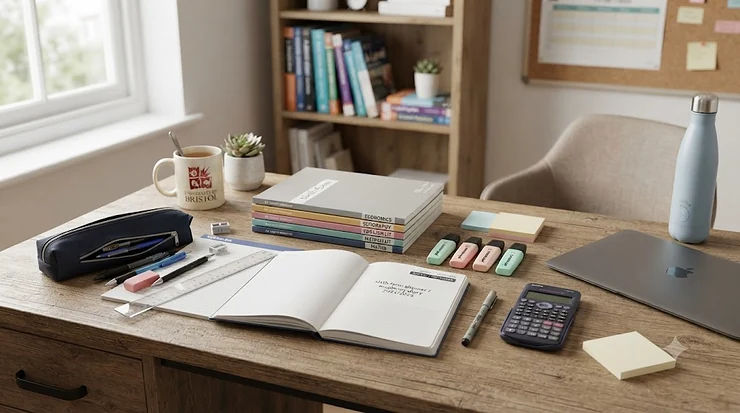
A stationery set for sixth form students is a bundle of writing, organisational and revision tools — typically pens, folders, dividers and planning materials — put together to cover the heavier note-taking and independent study demands of A-levels rather than the lighter needs of Key Stage 4. If you’ve just watched your GCSE pencil case get swallowed whole by three or four subject folders’ worth of handouts, you already know why sixth form calls for a genuine upgrade rather than a top-up. The jump from GCSE to A-level catches a lot of students off guard — suddenly there’s independent study periods to fill, coursework deadlines that don’t come with daily reminders, and folders that need to survive two full years rather than one. We’ve researched seven real, currently available UK stationery sets and organisational products, weighed up the genuine pros and cons of each, and built in dedicated guidance on A-level folders, choosing a proper revision planner, and putting together an independent study kit that actually gets used rather than abandoned in a drawer by October half term.
Quick Comparison Table
| Product | Type | Price Range | Best For |
|---|---|---|---|
| Helix Oxford Complete Back to School Stationery Set | All-in-one kit | Around £18-£20 | A genuine one-box starting point |
| Stationery Bundle for Students and Revision | Revision-focused bundle | Around £25 | Combining folders and revision tools in one buy |
| Rexel Choices A4 Lever Arch Files (3-Pack) | A-level folders | £7-£12 range | Serious long-term subject filing |
| Noted Study and Revision Planner Pad | Revision planner | Around £9-£10 | Weekly and daily study planning |
| CGP How to Revise for A-Level: Study Skills & Planner | Planner + guide | Around £6-£7 | Combining study advice with a write-in planner |
| Kitastik Filled Pencil Case with University Essentials | Independent study kit | Around £9-£10 | Topping up for library and common-room study |
| Four Candies 39 PCS Aesthetic School Supplies | Coordinated stationery set | £18-£22 range | Colour-coded, subject-by-subject organisation |
The spread here tells its own story: there’s no single “correct” stationery set for sixth form students, because sixth form itself is a mix of classroom kit, home revision tools and folders that live in a locker rather than a bag. Students starting from scratch tend to do best combining the Helix Oxford Complete Back to School Stationery Set or Stationery Bundle for Students and Revision with dedicated Rexel Choices A4 Lever Arch Files for each subject, while anyone already reasonably kitted out might only need a planner and a study-kit top-up.
💬 Just one click — help others make better buying decisions too!😊
Top 7 Stationery Sets for Sixth Form Students: Expert Analysis
1. Helix Oxford Complete Back to School Stationery Set — best genuine all-in-one starting point
What most buyers overlook about this set is that it’s explicitly positioned for the jump into “High School or College,” which is exactly the transition sixth form represents. The Oxford range from Helix carries a long-standing reputation in UK schools, and the set bundles a maths set, pens, a ruler and a scientific calculator alongside the everyday basics, so there’s genuinely less to source separately in the first week of term. Based on the spec comparison with piecemeal buying, the value here comes from not having to hunt down a compliant calculator and a decent ruler on top of pens and pencils during the usual back-to-school scramble. It suits students starting sixth form with genuinely nothing left over from GCSE, less so those who already have a working pencil case and just need folders or a planner. One thing worth checking before you rely on it for exams: confirm the included calculator model is on your specific exam board’s approved list, since not every scientific calculator qualifies for every subject.
Pros:
- ✅ Genuinely all-in-one, including a scientific calculator
- ✅ From a UK brand with a long schools track record
- ✅ Suits the GCSE-to-sixth-form transition specifically
Cons:
- ❌ Bulkier than students who already have basics need
- ❌ Calculator model needs checking against exam board rules
Priced around £18-£20, it’s a sensible one-box purchase for anyone starting sixth form with an empty pencil case.
2. Stationery Bundle for Students and Revision — best combined folders-and-revision bundle
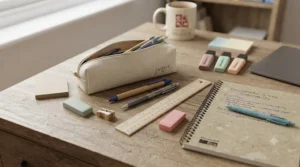
The standout advantage here is scope: this bundle folds folders, notebooks and genuine revision tools into a single purchase, which is unusually joined-up compared with most stationery sets that focus on pens and pencils alone. It includes two A4 wirebound notebooks, a refill pad, four exercise books, a ring binder, a lever arch file, two packs of dividers, punched pockets, revision cards, sticky notes and highlighters — reviewers consistently note that it genuinely covers what a student needs for revision rather than just classroom basics. On paper this means you’re getting both the “A-level folders” side of sixth form organisation and the “revision planner” adjacent tools (cards, dividers, highlighters) in one order, which saves several separate purchases. What the spec sheet won’t tell you is that the exercise books lean more toward GCSE-style short-answer note-taking than the longer-form notes A-level essay subjects often demand, so you may still want a dedicated notebook per subject alongside it.
Pros:
- ✅ Combines folders, notebooks and genuine revision tools
- ✅ Reviewers specifically praise its value for revision use
- ✅ Includes both a ring binder and a lever arch file
Cons:
- ❌ Pricier than a basic pens-and-pencils stationery set
- ❌ Exercise books suit shorter GCSE-style notes over A-level essays
At around £25, it’s the most complete single purchase on this list if you want folders and revision kit covered together.
3. Rexel Choices A4 Lever Arch Files (3-Pack) — best dedicated A-level folders
Here’s what most buyers overlook about lever arch files specifically: the mechanism, not the cover design, is what determines whether a folder survives two years of daily handling. The Rexel Choices range uses a patented No.1 mechanism backed by a three-year guarantee, engineered to close precisely even after 10,000 uses — a genuinely relevant spec when you consider how many times an A-level folder gets opened and shut across a school year. Each file holds up to 500 sheets of 80gsm A4 paper on a 75mm spine, which comfortably covers a full subject’s worth of handouts and notes without needing a mid-year replacement. Based on the spec comparison with ring binders, lever arch files hold considerably more paper and resist the ring-splitting that overstuffed ring binders are prone to, which is precisely why sixth form students commonly move away from ring binders once subject content builds up. The pack of three, in black, red and blue, makes basic colour-coding straightforward across your subjects.
Pros:
- ✅ Three-year guarantee on the closing mechanism
- ✅ 500-sheet capacity comfortably covers a full subject
- ✅ Colour-coded three-pack simplifies subject organisation
Cons:
- ❌ Too bulky to carry daily, best kept at home or in a locker
- ❌ Dividers aren’t included and need buying separately
Expect a price in the £7-£12 range for the pack of three — genuinely good value once you consider the guarantee and sheer capacity per file.
4. Noted Study and Revision Planner Pad — best dedicated revision planner
The standout feature is that this pad was, per the product listing, designed and tested with actual student input rather than adapted from a generic office diary — and the aggregated review picture backs that up, with a 4.5-star average across 415 ratings, a genuinely substantial sample for a niche stationery product. It’s a 52-sheet, tear-off A4 pad on 100gsm paper with a sturdy 450gsm card cover, built around a customisable weekly schedule with a colour-coded key so you can visually separate study time, socialising, downtime and exercise at a glance. Daily sections include six lines per day for topics or subjects plus tick boxes, which reviewers consistently note makes daily revision genuinely trackable rather than aspirational. What the spec sheet won’t tell you is that being undated is actually a feature here, not a flaw — you can start using it any week of the year rather than being locked into an academic calendar that doesn’t match your college’s term dates.
Pros:
- ✅ Strong review base: 4.5 stars across 415 ratings
- ✅ Colour-coded weekly schedule plus daily tick-box tracking
- ✅ Undated format means you can start any week
Cons:
- ❌ A4 size is less pocket-portable than a diary format
- ❌ Tear-off sheets need a folder of their own to stay organised
Priced around £9-£10, it’s the strongest dedicated revision planner on this list based on genuine review volume and student-tested design.
5. CGP How to Revise for A-Level: Study Skills & Planner — best study-skills-and-planner hybrid
What most buyers overlook about this one is that it isn’t just a planner — it’s from CGP, the publisher UK students have relied on for exam board-aligned revision guides for decades, which lends it a level of trust that a generic planner pad simply can’t claim. On paper this means the write-in and online timetable sits alongside genuine guidance on getting organised, making effective notes, writing essays and staying motivated through Years 12 and 13, with tips pulled directly from examiner reports on common mistakes to avoid. Reviewers and students alike tend to value the combination of practical advice with a structured planning tool, rather than treating planning and study skills as two separate purchases. It suits students who want to understand the reasoning behind a study plan, not just fill in boxes; anyone who already knows how they study best may find the standalone Noted planner gives more room to actually plan week to week.
Pros:
- ✅ Published by CGP, a trusted UK exam-revision authority
- ✅ Combines a write-in planner with genuine study-skills advice
- ✅ Includes tips drawn from real examiner reports
Cons:
- ❌ Less spacious for weekly planning than a dedicated pad
- ❌ More of a guide-plus-planner hybrid than a pure timetable
At around £6-£7, this is genuinely good value for combining two purchases most students would otherwise make separately.
6. Kitastik Filled Pencil Case with University Essentials Stationery — best compact independent study kit
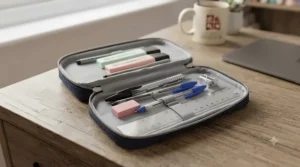
The standout here is credibility by numbers: a 4.6-star rating across 195 reviews is a solid, genuine signal for a filled pencil case at this price point, and reviewers consistently note that it arrives properly filled rather than as an empty case with a few token items. It’s built around the kind of independent study kit sixth form and college students actually carry between lessons, the library and free periods, rather than a full desk-based stationery haul. Based on the spec comparison with the bigger bundles on this list, this product’s strength is portability and topping-up rather than starting from absolute zero — it makes far more sense for a student who already owns folders and a planner but needs reliable daily-carry pens, pencils and basics that won’t run dry mid-essay. Honestly, if you’re kitting out sixth form from scratch, pair this with a folder and planner rather than expecting it to cover everything alone.
Pros:
- ✅ Strong genuine rating: 4.6 stars from 195 reviews
- ✅ Arrives properly filled, not just an empty case
- ✅ Compact enough for daily carry between lessons and library
Cons:
- ❌ Fewer items than the larger all-in-one bundles
- ❌ Not a substitute for folders or a dedicated planner
Priced around £9-£10, it earns its place as a top-up purchase rather than a complete sixth form starter kit on its own.
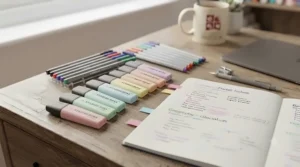
7. Four Candies 39 PCS Aesthetic School Supplies — best for colour-coded organisation
The standout advantage is the highlighter set: twelve pastel highlighters alongside five black gel pens and six mechanical pencils in two nib sizes gives genuinely practical scope for colour-coding notes by subject or topic, which matters more at A-level than it did at GCSE simply because there’s more content to keep visually organised. What the spec sheet won’t tell you is that a coordinated, pleasant-to-use set can genuinely support consistency in independent study — students who enjoy their stationery tend to actually use their colour-coding system rather than abandoning it after week two. It’s currently discounted against its own £22.99 RRP, which sweetens the value case further. This is very much an aesthetic-forward pick rather than a heavy-duty organisational one, so pair it with proper folders rather than expecting it to replace them.
Pros:
- ✅ Genuinely useful 12-highlighter set for subject colour-coding
- ✅ Good variety of gel pens and dual-size mechanical pencils
- ✅ Currently priced below its own listed RRP
Cons:
- ❌ Aesthetic-first design won’t suit every student’s taste
- ❌ Light on organisational items like folders or dividers
Priced in the £18-£22 range, it’s best suited to students who want their independent study kit to feel motivating as well as functional.
Setting Up Your Sixth Form Study Space: A Practical Usage Guide
Getting the stationery is the easy part — setting up a study space that actually gets used is where most students lose momentum by half term. Start by dedicating one lever arch file per subject rather than mixing subjects in a single ring binder, since BBC Bitesize’s revision and exams collection consistently emphasises that organised, easily retrievable notes make revision sessions faster to start and less mentally taxing to begin. A common mistake in the first month is filing handouts loosely rather than hole-punching and filing them the same week you receive them, which is exactly the kind of small habit that prevents a filing backlog building up by Christmas. Keep your revision planner somewhere visible rather than buried in a bag — stuck to a wall or propped on a desk works better than a drawer, since out of sight genuinely means out of mind for most students. For maintenance, do a five-minute folder tidy every Sunday: refile loose sheets, bin duplicate handouts, and check your planner reflects what actually happened that week rather than what you’d hoped would happen.
Real-World Scenarios: Matching Stationery to Your A-Level Subjects
If you’re studying a mix of essay-based subjects like English Literature and History, you’ll generate far more written content per topic than a maths or science student, so a Stationery Bundle for Students and Revision paired with extra Rexel Choices A4 Lever Arch Files per subject makes more sense than a single folder trying to hold everything. If you’re taking mostly STEM subjects with formula sheets, past papers and fewer long-form notes, the Helix Oxford Complete Back to School Stationery Set covers your calculator and maths-set needs directly, freeing up budget to spend on a proper Noted Study and Revision Planner Pad for tracking practice-question sessions instead. And if you’re commuting to a sixth form college with long free periods between lessons, the Kitastik Filled Pencil Case plus the CGP How to Revise for A-Level: Study Skills & Planner combination travels far better than a desk-bound bundle, since both are genuinely portable enough for library and common-room use.
Common Study-Kit Problems (And How to Fix Them)
Problem — handouts pile up loose and go missing. Solution — hole-punch and file the same day you receive a handout, using a dedicated lever arch file per subject rather than a general “sort later” pile. Problem — the revision planner gets started with enthusiasm in September and abandoned by October. Solution — keep the planner somewhere visible and review it weekly rather than daily, since a five-minute Sunday check-in is far more sustainable than a habit that needs daily willpower. Problem — the pencil case runs dry of pens mid-essay in an exam or timed assessment. Solution — carry at least two working pens at all times and check ink levels the night before any assessed piece, not the morning of. Problem — folders become mismatched or hard to tell apart between subjects. Solution — colour-code consistently, using the same colour for a subject’s folder, dividers and even highlighter, which the Which? guide to revision and exams notes helps students build the kind of consistent study routine that pays off closer to exams.
How to Choose a Stationery Set for Sixth Form Students
- Audit what you already own before buying a full set — most students entering sixth form already have working pens and pencils, so a full all-in-one kit may duplicate what’s sitting in a drawer.
- Prioritise folders over decorative extras — A-level folders that survive two years of daily use matter more to your grades than a matching pencil case.
- Choose a lever arch file over a ring binder once content builds up — ring binders struggle with volume in a way lever arch mechanisms don’t.
- Pick a revision planner format you’ll actually keep visible — a beautifully designed planner buried in a bag does nothing; a plain one stuck to your wall gets used.
- Check calculator compatibility with your exam boards before buying a bundled kit — not every scientific calculator is approved for every subject or board.
- Buy dividers separately if your chosen folder set doesn’t include them — subject-within-subject organisation depends on this small, easily overlooked item.
- Leave room in the budget for a mid-year top-up — pens run out and folders fill up faster than most students expect in the first term.
A-Level Folders: Lever Arch or Ring Binder?
This is one of the most debated practical questions among sixth form students, and the honest answer is that it depends on subject content volume rather than personal preference alone. Lever arch files, such as the Rexel Choices A4 Lever Arch Files, hold up to 500 sheets and use a mechanism engineered for thousands of open-close cycles, making them the more durable choice for subjects that generate heavy paper content across two years — think History, Geography or Biology with regular printed resources. Ring binders are lighter and easier to carry daily, which suits students who file their most recent handouts in a ring binder day to day, then transfer everything into a lever arch file at home every few weeks once a topic wraps up. Reviewers consistently note that ring binder rings eventually split or bend under heavy daily use, while a lever arch mechanism holds up considerably better over the same period — which is precisely why most sixth formers end up running both: a portable ring binder for daily carry and dedicated lever arch files for long-term subject storage at home.
Revision Planner: Why a Paper Planner Still Beats an App for Many Students
Digital planning apps have their fans, but a genuine paper revision planner like the Noted Study and Revision Planner Pad or the CGP How to Revise for A-Level: Study Skills & Planner still holds real advantages for many students, and it isn’t just nostalgia. Writing a plan down by hand, rather than tapping it into a phone that’s also home to every distracting app a student owns, removes an entire category of temptation during planning sessions. Reviewers consistently note that colour-coded, tear-off weekly formats make it easy to see an entire week’s study balance at a glance, something a scrolling phone screen genuinely struggles to replicate. This isn’t an argument against digital tools entirely — plenty of students use both — but for the specific job of sitting down, planning a week, and sticking it somewhere visible, paper remains a genuinely strong option rather than an outdated one.
Independent Study Kit: What Sixth Form Actually Expects You to Bring
Independent study periods are one of the biggest structural differences between GCSE and sixth form, and what most new students overlook is that these free periods are meant to be genuinely productive study time, not a break. A practical independent study kit — something like the Kitastik Filled Pencil Case paired with a subject folder and your revision planner — needs to cover writing tools that won’t run dry, a way to review notes without lugging every subject’s folder around, and something to actively test yourself with, whether that’s flashcards or a past paper. Reviewers and college guidance alike tend to agree that a kit built for portability beats a desk-bound stationery haul for this specific use case, since independent study happens in libraries, common rooms and sometimes on public transport rather than at a fixed desk. Building a kit around what you’ll realistically carry, rather than what looks complete in a photo, makes it far more likely to actually get used during those free periods.
Stationery Set vs Buying Separately: Value Comparison
| Factor | Pre-Built Stationery Set | Buying Items Separately |
|---|---|---|
| Upfront cost | Often better value per item | Can add up quickly across multiple purchases |
| Customisation | Fixed contents, less flexible | Choose exactly what you need |
| Convenience | One order, ready to use | Requires research across several products |
| Best For | Helix Oxford Complete Back to School Stationery Set and similar bundles | Students who already own most basics |
The table makes the trade-off fairly clear: a pre-built set generally wins on convenience and per-item value for students starting from scratch, while buying separately suits anyone who already owns pens and pencils and just needs specific gaps filled, like proper A-Level Folders or a dedicated revision planner. Reviewers of bundled sets consistently note the value-for-money angle specifically, but that value only holds if you’d genuinely have bought most of the included items anyway — paying for a full set when you only needed folders isn’t the saving it first appears to be.
✨ Don’t Miss These Exclusive Deals!
🔍 Take your sixth form study setup to the next level with these carefully selected products. Click on any highlighted item to check current pricing and availability. These tools will help you create an organised, exam-ready study routine that actually sticks!
Common Mistakes When Buying a Stationery Set for Sixth Form Students
One of the most frequent mistakes is buying a full all-in-one set without checking what’s already sitting in a pencil case at home, leading to duplicated pens and unused extras. Another is choosing ring binders for every subject without considering how quickly heavy-content A-level subjects outgrow them, resulting in a mid-year scramble for replacement lever arch files. Students also commonly buy a revision planner in September with real enthusiasm, then never build the weekly habit of actually using it, which the NTU guide to A-level revision specifically flags as one of the most common gaps between planning and follow-through. A less obvious pitfall is not checking exam board calculator approval before relying on a bundled kit’s included calculator for exams. Finally, treating stationery purchases as a one-off rather than budgeting for a mid-year top-up ignores how quickly pens, folders and planner sheets actually get used across a full academic year.
Long-Term Cost & Value Across Two Years
Sixth form runs across two full academic years, which changes the value maths compared with a single-year GCSE purchase. A durable lever arch file with a genuine multi-year mechanism guarantee, like the Rexel Choices A4 Lever Arch Files, costs more upfront per file than a flimsy ring binder but avoids a mid-Year 13 replacement purchase that effectively doubles the ring binder’s real cost. A revision planner used consistently across two years of study, such as the Noted Study and Revision Planner Pad, is genuinely one of the cheapest tools on this list relative to the study-habit benefit it can support, provided it actually gets used rather than abandoned. Budgeting roughly £40-£60 across folders, a planner and a study kit for the full two years — spread across an initial purchase plus a modest top-up in Year 13 — is a realistic total for most students, considerably less than the cost of repeatedly replacing cheap, failing stationery piecemeal.
Features That Actually Matter (And Those That Don’t)
Folder mechanism durability and genuine planner usability are the two things actually worth prioritising your budget toward — everything else is comfort rather than necessity. A wide colour range of highlighters and gel pens is genuinely useful for subject colour-coding, but it’s not worth a significant premium over a basic set once you have five or six core colours covered. Included calculators and maths sets matter enormously if you’re taking STEM subjects and don’t already own one, and barely at all if you’re taking three essay-based subjects. On the other hand, elaborate pencil case designs, novelty stationery, and oversized item counts you’ll never fully use are marketing dressing rather than functional value — spend your budget on folders that survive two years and a planner format you’ll genuinely keep using, not on features that photograph well for social media but don’t change your grades.
Frequently Asked Questions
❓ How many folders do sixth form students actually need?
❓ Is a paper revision planner worth it if I already use my phone calendar?
❓ What should go in an independent study kit for free periods?
❓ Do I need a scientific calculator for every A-level subject?
❓ How much should a full sixth form stationery set-up cost?
Conclusion
There’s no single perfect stationery set for sixth form students, because sixth form itself mixes classroom basics, long-term A-level folders and genuinely personal revision habits. For students starting completely from scratch, the Helix Oxford Complete Back to School Stationery Set or the Stationery Bundle for Students and Revision cover the essentials in one order. For anyone who already owns the basics and just needs to upgrade specific gaps, the Rexel Choices A4 Lever Arch Files solve the folder problem properly, while the Noted Study and Revision Planner Pad or the CGP How to Revise for A-Level: Study Skills & Planner give you a genuine framework for turning independent study periods into actual progress. Round it out with a portable kit like the Kitastik Filled Pencil Case or the Four Candies 39 PCS Aesthetic School Supplies, and you’ve got a setup built to survive two years of A-level demands rather than fall apart by Christmas.
Recommended for You
- Fountain Pen for GCSE: 7 Best Exam-Safe Picks (2026)
- Scientific Calculator for GCSE: 7 Exam-Approved Picks (2026)
- Pencil Case for Secondary School: 7 Best Picks for 2026
Disclaimer: This article contains affiliate links. As an Amazon Associate, I earn from qualifying purchases. If you purchase products through these links, we may earn a small commission at no additional cost to you.
✨ Found this helpful? Share it with your friends! 💬🤗
