
In This Article
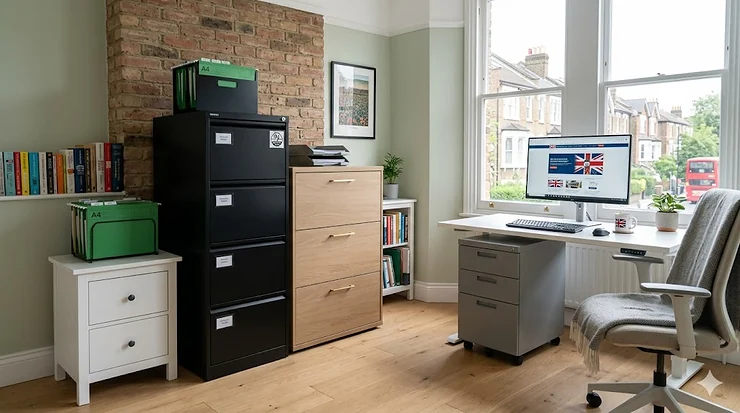
What most UK buyers overlook about filing cabinets isn’t the drawer count or the lock mechanism — it’s whether the thing will actually fit through their office door and still leave room to breathe in a compact British workspace. The filing cabinet buying guide you’re reading now addresses precisely that, alongside every other consideration that matters when you’re trying to tame the chaos of paperwork in 2026.
British offices face unique challenges. Space comes at a premium whether you’re in a converted Victorian terrace in Bristol or a modern flat in Manchester. Add the damp climate that can warp cheaper materials, the need for robust locks to satisfy UK data protection requirements, and the reality that most of us are now splitting time between home and office, and suddenly choosing a filing cabinet becomes rather less straightforward than it appears on Amazon.co.uk.
In this filing cabinet buying guide, I’ll walk you through seven carefully selected options available on Amazon UK, each suited to different needs and budgets. From budget-friendly mobile units under £100 to heavy-duty steel cabinets built for commercial use, every recommendation comes with practical context about who should buy it and why. More importantly, I’ll explain what the specifications actually mean for your daily use — because knowing a drawer holds 20 kg matters far less than understanding whether that’s enough for three years’ worth of client files or just six months.
Quick Comparison: Top Filing Cabinets at a Glance
| Product | Type | Drawers | Price Range | Best For | Lock | Prime |
|---|---|---|---|---|---|---|
| YITAHOME 3-Drawer Metal | Mobile | 3 | £55-£75 | Home offices, small spaces | Yes | Yes |
| SONGMICS Mobile OFC110B01 | Mobile | 3 | £70-£90 | Under-desk storage, mobility | Yes | Yes |
| Office Hippo Heavy Duty Steel | Vertical | 4 | £200-£280 | Commercial use, high security | Yes | Yes |
| VASAGLE Industrial Style | Mobile | 2 | £60-£80 | Modern aesthetics, mixed storage | Yes | Yes |
| DEVAISE Wood File Cabinet | Mobile | 3 | £70-£95 | Home offices, style-conscious | Yes | Yes |
| Vinsetto 3-Drawer Compact | Mobile | 3 | £65-£85 | Tight spaces, budget buyers | Yes | Yes |
| YITAHOME 2-Drawer with Open Shelf | Mobile | 2 | £50-£70 | Printer stand, open access | Yes | Yes |
💬 Just one click — help others make better buying decisions too!😊
✨ Don’t Miss These Exclusive Deals!
🔍 Take your office organisation to the next level with these carefully selected products. Click on any highlighted item to check current pricing and availability on Amazon.co.uk. These picks will help you find exactly what you need!
Top 7 Filing Cabinets: Expert Analysis
1. YITAHOME 3-Drawer Metal Filing Cabinet
The YITAHOME 3-Drawer Metal stands out as the practical choice for British home offices where every centimetre counts. With dimensions of 30 x 46 x 59 cm, this compact unit slides under most standard desks while accommodating A4, letter, and legal-size files — the latter being particularly relevant if you’re dealing with American clients or archived documents.
What the specification sheet won’t tell you is that the five-caster system (including one anti-tip caster beneath the bottom drawer) actually makes a difference when you’re wheeling this across carpet in a rented flat. The two front casters lock to prevent the cabinet drifting during earthquakes or, more likely, when you yank open a stuffed drawer. Made from premium steel with a rust-resistant coating, it handles the British climate better than wood-based alternatives that warp in damp conditions.
UK reviewers consistently praise the pre-assembled design — you literally just screw on the wheels. The lockable system secures all three drawers simultaneously with two keys provided, satisfying basic UK GDPR requirements for storing client data at home. The top drawer includes a detachable pencil tray, whilst the smooth sliding rails operate quietly enough that you won’t wake a sleeping partner during late-night tax prep.
Pros:
- Fully assembled except casters (10-minute setup)
- Anti-tipping design prevents accidents in compact spaces
- Accommodates A4/letter/legal files with adjustable rails
Cons:
- Steel construction shows fingerprints easily
- Not suitable for extremely heavy loads (printer weight limit around 15 kg)
Price range: around £55-£75. For UK home offices needing reliable storage without the premium price tag, this represents solid value — especially when you consider that commercial alternatives start north of £150.
2. SONGMICS Mobile Filing Cabinet OFC110B01
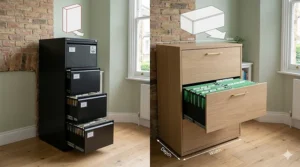
The SONGMICS OFC110B01 brings a touch of industrial style to filing cabinet design with its rustic brown particleboard front panels against a black steel frame. This isn’t just aesthetics — the combination delivers a unit that looks deliberate in a home office rather than like you’ve nicked it from a council building.
Specifications tell you the top two drawers hold 15 kg each whilst the bottom drawer manages 20 kg. In practice, this means you can stack three years’ worth of household bills in the top drawers and use the bottom for suspension files without the runners jamming. The full-extension ball-bearing slides let you access files at the back without playing archaeological dig, rather crucial when you’re hunting for that specific invoice from Q2 2024.
This model arrives pre-assembled except for the four casters (two with brakes). The lockable system and included stationery tray mirror the YITAHOME, but the SONGMICS edges ahead with its slightly more robust construction — you can genuinely rest a printer on top without worrying about dents. UK buyers in compact flats will appreciate the 40 x 50 x 62 cm footprint that tucks under desks whilst still offering proper file capacity.
The industrial aesthetic isn’t for everyone, but it photographs well on video calls and doesn’t scream “cheap office furniture” like pure white or black alternatives. If your home office leans towards Scandi-industrial rather than corporate sterile, this fits the brief nicely.
Pros:
- Industrial design suits modern home offices
- Robust construction with 20 kg bottom drawer capacity
- Full-extension slides for complete file access
Cons:
- Particleboard front less durable than all-steel
- Rustic brown finish limits colour coordination
Price range: £70-£90. The premium over basic models buys you a cabinet that doesn’t look apologetic in a nice room.
3. Office Hippo Heavy Duty Steel Filing Cabinet (4-Drawer)
When UK businesses need proper contract-grade storage, the Office Hippo Heavy Duty Steel series delivers. This isn’t a home office accessory — it’s a fully welded steel unit certified for commercial use with a substantial 40 kg per drawer capacity. That’s enough to store comprehensive client files, bound documents, or archived records without the structural groaning you get from lightweight alternatives.
The four-drawer vertical design (other configurations available in 2 or 3 drawers) stands 132.5 cm tall, making efficient use of vertical space rather than sprawling across your floor. Each drawer extends 100% on ball-bearing runners and includes adjustable rails for foolscap or A4 suspension files — flexibility that matters when you’re archiving years of mixed-format documents. The anti-tilt mechanism prevents more than one drawer opening simultaneously, a safety feature that’s genuinely important with 40 kg of files potentially creating a tipping hazard.
What sets this apart from consumer-grade units is the seven-year guarantee from Office Hippo, a UK-based supplier. The fully welded construction means no assembly required beyond attaching handles and feet, and the lockable system meets UK office security standards. Available in black, coffee cream, grey, or white, it suits professional environments where appearance matters.
UK reviewers note occasional transit damage issues — hardly surprising given the weight — but those who receive units in good condition report excellent long-term durability. The fully welded design also means improved security compared to bolted units that can be jimmied open with moderate effort.
Pros:
- Commercial-grade construction with 40 kg per drawer capacity
- Seven-year guarantee from UK supplier
- Anti-tilt mechanism prevents tipping hazards
Cons:
- Heavyweight (requires two people to position)
- Transit damage occasionally reported
Price range: £200-£280 depending on drawer count and finish. For businesses requiring certified commercial storage that satisfies UK data protection requirements, this investment makes sense — particularly when spread across the seven-year warranty period.
4. VASAGLE Industrial Style 2-Drawer with Open Shelf
The VASAGLE OFC071B02 takes a different approach entirely with its combination of enclosed drawer storage and an open shelf. The greige particleboard (a sophisticated grey-beige that photographs beautifully) pairs with a black steel frame to create a piece that works as both functional storage and deliberate design element.
At 41 x 45 x 66 cm, this compact unit fits under desks whilst offering mixed storage: notepads and frequently accessed items on the open shelf, pens and supplies in the upper drawer, and hanging files in the lockable lower drawer. The 360-degree swivel casters (two with brakes) provide mobility without sacrificing stability. What makes this particularly useful in UK home offices is the dual-purpose design — it serves as both filing cabinet and printer stand, maximising utility in tight spaces.
The open shelf design does mean less security than fully enclosed units, but it also means faster access to items you grab repeatedly. UK buyers juggling work-from-home setups appreciate being able to see their current project files at a glance rather than rummaging through locked drawers. The industrial aesthetic suits converted warehouse flats and modern new-builds better than traditional terraced houses, though.
Assembly takes about 45 minutes with illustrated instructions. The quality particleboard and steel frame combination delivers reasonable durability at a budget-friendly price point, though it won’t survive decades like all-steel commercial units.
Pros:
- Mixed storage (open/closed) suits varied needs
- Greige finish more sophisticated than basic black/white
- Compact enough for small home offices
Cons:
- Open shelf reduces security for confidential files
- Particleboard less durable than steel construction
Price range: £60-£80. For home workers needing versatile storage that doesn’t look purely utilitarian, this hits the sweet spot between function and form.
5. DEVAISE 3-Drawer Wood Filing Cabinet
The DEVAISE 3-Drawer brings warm wood aesthetics to filing storage, addressing a gap in the market where most options skew industrial or sterile white. Available in rustic brown or black wood grain finishes, this particleboard unit delivers the look of traditional furniture whilst maintaining modern filing functionality.
The three-drawer configuration includes dedicated space for hanging A4, letter, or legal files in the lockable bottom drawer. Full-extension slides mean you can access rear files without excavating the front contents first. At roughly 40 x 45 x 60 cm, it tucks under standard desks whilst offering substantial storage capacity. The wood-grain melamine finish resists water and scratches better than untreated particleboard, relevant in British climates where damp creeps into everything.
This model suits UK buyers who want office storage that doesn’t announce itself as such. Place it in a living room-turned-office and it reads as deliberate furniture rather than corporate castoff. The FSC-certified wood materials appeal to environmentally conscious buyers, meeting sustainability standards increasingly important in UK purchasing decisions.
Assembly required, though with numbered parts and illustrated instructions, most buyers complete setup in under an hour. The four casters (two locking) provide mobility for cleaning or rearranging, whilst the lockable drawer system secures confidential documents.
Pros:
- Wood finish suits residential aesthetics
- FSC-certified materials for sustainability
- Lockable bottom drawer for confidential files
Cons:
- Particleboard less robust than steel for heavy use
- Assembly required (45-60 minutes)
Price range: £70-£95. The premium over basic metal units buys you furniture that works in living spaces, not just offices.
6. Vinsetto 3-Drawer Compact Filing Cabinet
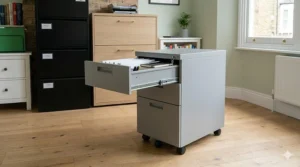
The Vinsetto 3-Drawer positions itself as the budget-conscious choice without skimping entirely on essential features. At 39 x 48 x 59 cm, it’s genuinely compact — useful in UK flats where “home office” means “corner of bedroom” rather than dedicated room. The pre-assembled design (just attach wheels) appeals to buyers who’d rather avoid furniture assembly entirely.
Steel construction provides durability and rust resistance, whilst the lockable drawer system secures all three drawers simultaneously. The compact dimensions do mean reduced capacity compared to larger units, so this suits light-to-moderate filing needs rather than comprehensive business archives. The five-caster system (including anti-tip design) prevents the cabinet toppling when you open a loaded drawer on carpet.
UK buyers appreciate the straightforward design that prioritises function over aesthetics. Available in black or white, it coordinates with most office setups without making design statements. The trade-off for the budget price is reduced weight capacity per drawer and slightly less smooth sliding action compared to premium units.
This works best for home workers storing current-year documents, occasional reference materials, and office supplies rather than decade-spanning archives. The compact size also means it won’t dominate small rooms, psychologically important when your workspace shares real estate with your living space.
Pros:
- Genuinely compact for tight UK spaces
- Pre-assembled design (wheel attachment only)
- Budget-friendly without sacrificing locks
Cons:
- Reduced capacity compared to larger units
- Sliding action less smooth than premium alternatives
Price range: £65-£85. For budget-conscious UK buyers needing basic lockable storage without frills, this delivers essentials competently.
7. YITAHOME 2-Drawer with Open Shelf
The YITAHOME 2-Drawer strips filing storage to its essence: one lockable drawer for confidential files, one standard drawer for supplies, and an open shelf for your printer or frequently accessed items. At 51 x 39 x 71 cm, it’s taller than most compact units, designed to position a printer at comfortable working height whilst maintaining under-desk storage.
The simplified design reduces the price point considerably whilst maintaining essentials like the anti-tipping caster system and lockable drawer. UK buyers juggling printer placement in compact spaces find this particularly useful — the cabinet consolidates storage and equipment in one footprint rather than sprawling across limited floor space. The open shelf means your printer stays accessible for grabbing printouts whilst the locked drawer secures client information underneath.
Steel construction handles printer weight (up to approximately 15 kg) without bowing, and the smooth-rolling casters let you wheel the entire setup aside for vacuuming or rearranging. The trade-off for this design is reduced enclosed storage — just two drawers rather than three or four — so it suits buyers with modest filing needs or those using cloud storage for most documents.
Assembly takes about 15 minutes (attach casters and shelves). The minimalist design won’t win aesthetic awards but it solves the practical problem of “where do I put my printer AND my files” in one affordable package.
Pros:
- Dual-purpose printer stand and filing storage
- Taller design suits printer access
- Budget-friendly whilst maintaining lock security
Cons:
- Only two enclosed drawers limits capacity
- Open shelf reduces dust protection for printer
Price range: £50-£70. For UK home workers needing combined printer stand and basic filing in tight quarters, this solves two problems affordably.
How to Set Up Your Filing Cabinet for Maximum Efficiency
The difference between a filing cabinet that works and one that frustrates you daily often comes down to the initial setup rather than the product itself. Here’s what actually matters in British conditions.
Step 1: Position Before Loading
Place your cabinet in its final location before adding files. Moving a loaded cabinet across carpet damages casters and strains the frame. If you’re in a rented property, check that the weight (cabinet plus files, potentially 60+ kg) won’t damage flooring. Laminate and engineered wood floors handle this fine; budget vinyl less so.
Step 2: Configure Hanging Rails Correctly
Most cabinets include adjustable rails for different file sizes. Set these BEFORE loading files. A4 suspension files need rails positioned at 240 mm width, whilst legal-size requires wider spacing. UK buyers typically stick with A4, but if you’re dealing with archived documents from American clients, adjusting for legal size saves future headaches.
Step 3: Lock Testing in Damp Conditions
British humidity affects lock mechanisms over time. Test your lock weekly for the first month, especially if the cabinet sits near exterior walls or in unheated spaces. Apply graphite lubricant (never oil) if the mechanism stiffens. This prevents the nightmare scenario where your lock seizes with client files inside.
Step 4: Load Bottom-to-Top
Fill the bottom drawer first, working upward. This lowers the centre of gravity and reduces tipping risk, particularly important with mobile units on carpet. Even anti-tip casters struggle if top drawers are stuffed whilst bottom ones sit empty.
Step 5: Label Immediately
British politeness doesn’t extend to labelling filing systems apparently, because unlabelled drawers are endemic. Use label holders on drawer fronts indicating broad categories: “Tax 2024-2026,” “Client Contracts,” “Household Admin.” Your future self will thank you when tax season arrives.
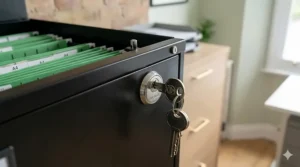
Real-World Filing Solutions: Three UK Scenarios
Scenario 1: London Freelancer in Studio Flat
Sarah works as a freelance graphic designer from her Zone 3 studio. Space is tight — her desk shares the room with her bed, and storage is at a premium. She chose the YITAHOME 2-Drawer with Open Shelf because it serves triple duty: printer stand, filing for client contracts and tax documents, and the open shelf holds her external hard drive and supplies.
The compact 51 x 39 x 71 cm footprint tucks beside her desk without dominating the room visually. The lockable drawer secures NDAs and client information, satisfying her data protection obligations without requiring a separate safe. The open shelf means her printer stays accessible for last-minute client proofs without occupying desk space. Total investment: around £60, which for a London freelancer represents about four hours’ billable work.
Scenario 2: Manchester Accountancy Practice
James runs a small accountancy practice from a rented office near Piccadilly. He needs certified commercial storage for client files, with proper security and capacity for five years’ worth of records. The Office Hippo Heavy Duty Steel 4-Drawer met requirements: 40 kg per drawer capacity, lockable system, anti-tilt mechanism, and seven-year warranty that satisfies his insurance requirements.
The fully welded construction means improved security over bolted units — important when storing confidential financial information. The £250 investment seemed steep initially, but spread across the seven-year warranty period and factored against potential data breach fines under UK GDPR, the cost-per-year looks rather more reasonable. The grey finish coordinates with his professional office aesthetics without the institutional vibe of basic black.
Scenario 3: Edinburgh Home Worker with Growing Business
Fiona transitioned from corporate employment to running her marketing consultancy from home in Edinburgh. Her needs fall between basic home filing and full commercial requirements. She selected the SONGMICS OFC110B01 for its industrial design that looks intentional in her converted bedroom office, plus the robust 20 kg bottom drawer capacity that handles growing client files.
The rustic brown and black finish photographs well on video calls (important for client meetings), whilst the lockable system secures confidential marketing strategies. The mobile design means she can wheel it aside when converting the room back to guest bedroom for visiting family. At around £80, it sits in the sweet spot between budget units that feel cheap and commercial-grade that’s overkill for a sole trader.
Common Mistakes When Buying Filing Cabinets in the UK
Ignoring British Space Constraints
Americans don’t understand how genuinely small British homes are. That “compact” filing cabinet measuring 46 x 60 cm? In a London flat, that’s significant real estate. Before buying, measure your actual available space including the swing radius for opening drawers fully. A drawer that extends 40 cm needs 40 cm of clearance behind the cabinet. In tight UK spaces, this often means choosing mobile units that can be wheeled out rather than fixed ones.
Overlooking Weight Capacity
Cheap filing cabinets claim “suitable for office use” whilst having drawer weight limits of 10-12 kg. That’s approximately two years of basic household filing or six months of proper business documents. UK tax requirements mean keeping records for at least six years, so unless you’re digitising everything, that £45 cabinet will collapse under realistic loads. Check weight capacity per drawer, not total unit capacity.
Assuming All Locks Are Equal
A basic cam lock that comes with budget cabinets provides psychological security, not actual protection. It stops casual curiosity but won’t deter anyone moderately determined. If you’re storing genuinely confidential information under UK data protection laws, invest in cabinets with reinforced lock mechanisms. The difference between a £60 cabinet and an £80 one often lies primarily in lock quality.
Forgetting About Assembly Hell
“Some assembly required” on a filing cabinet can mean anything from “attach four casters” to “spend three hours with an Allen key.” UK buyers in flats without lifts should particularly note this — getting a pre-assembled heavy steel cabinet up three flights of stairs requires planning and possibly professional help. Check whether the unit arrives assembled or flat-packed before ordering.
Neglecting Damp Climate Considerations
British weather wreaks havoc on particleboard and untreated wood. Filing cabinets positioned near exterior walls or in unheated spaces need either steel construction or properly sealed wood. The damp will warp cheaper materials within months, leading to drawers that jam or don’t close properly. Steel or high-quality sealed particleboard with moisture-resistant coating are worth the premium in UK conditions.
Filing Cabinet Features That Actually Matter
Full-Extension vs. Three-Quarter-Extension Slides
Marketing makes a fuss about full-extension slides, and for once they’re right. Three-quarter extension means the drawer stops with the back quarter still inside the cabinet. Practically, this means files at the rear remain inaccessible without removing front contents first. In a packed drawer, this is maddening. Full-extension slides add perhaps £10-15 to manufacturing costs but save endless frustration. Prioritise this feature.
Anti-Tilt Mechanisms Explained
Basic anti-tilt designs use an anti-tip caster underneath the bottom drawer. Better systems mechanically prevent opening multiple drawers simultaneously. The best combine both approaches. In UK homes with children or pets, this isn’t optional — a fully-loaded top drawer can topple an entire cabinet if the base isn’t properly weighted. The Office Hippo units use mechanical interlock systems that physically prevent multiple drawers opening, worth the premium for safety-conscious buyers.
Lock Systems: Cam vs. Plunger
Budget cabinets use cam locks (the rotating cylinder type). These work fine for light security but can be picked with moderate effort. Plunger locks (the push-button style) offer slightly better security. Commercial-grade units sometimes feature reinforced cam locks with anti-drill plates. For UK home offices storing client data under GDPR, even basic cam locks satisfy requirements as long as you can demonstrate “appropriate security measures.” For actual high-security needs, consider dedicated safe storage instead.
Caster Quality Makes the Difference
Cheap plastic casters fail within months on UK carpets, leaving you with a cabinet that scrapes floors or refuses to move. Look for nylon or rubberised casters rated for the cabinet’s loaded weight. Two locking casters minimum; four is better. The fifth anti-tip caster underneath the bottom drawer isn’t marketing fluff — it genuinely prevents tipping when that drawer extends fully loaded.
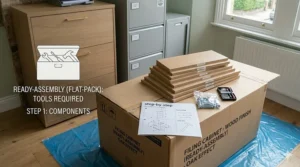
Filing Cabinet Maintenance in British Conditions
Monthly maintenance takes five minutes but extends cabinet life considerably in damp British climates:
Drawer Slides: Wipe slide rails with a dry cloth to remove dust and debris. Every three months, apply silicone spray (never oil, which attracts dust) to keep slides moving smoothly.
Lock Mechanisms: Test locks monthly. If resistance increases, apply graphite powder lubricant. British humidity causes metal lock components to corrode; catching this early prevents lockouts.
Caster Wheels: Remove hair and debris wrapped around axles. Check that locking casters actually lock. Replace worn casters before they damage flooring.
Exterior Cleaning: Wipe steel cabinets with damp microfibre cloth. For wood/particleboard, use slightly damp (not wet) cloth only. Avoid furniture polish which leaves residue that attracts dust.
Interior Ventilation: Once quarterly, empty drawers completely and leave open for 24 hours to air out. British damp encourages mould in enclosed spaces; ventilation prevents this.
UK Regulations and Office Storage Standards
British office furniture doesn’t face the strict regulations governing residential furniture fire safety, but several standards apply:
General Product Safety Regulations 2005 ensure filing cabinets meet basic safety requirements. Commercial units often reference BS EN 14073 for office storage furniture, though this isn’t mandatory for home use. The Furniture Industry Research Association (FIRA) provides testing and certification services for UK office furniture manufacturers.
For businesses, the Health and Safety at Work Act 1974 requires employers to provide safe storage that doesn’t create tipping hazards or injury risks. This typically means properly anchored cabinets in busy offices and anti-tilt mechanisms on mobile units.
UK GDPR doesn’t specify filing cabinet requirements directly but demands “appropriate technical and organisational measures” for protecting personal data. In practice, this means lockable storage for confidential documents. Home workers and small businesses can satisfy this with basic cam locks; larger organisations may need more robust security.
The British Standards Institution (BSI) provides guidance through various standards, though most apply to specific furniture types rather than filing cabinets specifically. The key principle remains ensuring storage doesn’t create safety hazards and adequately protects any confidential information stored within.
Filing Cabinets vs. Alternative Storage Solutions
Digital vs. Physical Storage
Cloud storage enthusiasts claim filing cabinets are obsolete, but UK tax law and client contracts often require physical document retention. HMRC accepts digital records but many UK solicitors and accountants still request paper originals for certain transactions. A hybrid approach works best: scan for backup, file originals for legal requirements.
Open Shelving vs. Enclosed Cabinets
Open shelving costs less and makes finding files easier, but dust accumulation in British homes is real. Enclosed drawers protect documents from dust, damp, and curious fingers. For active files you access daily, open storage on a desk works; for archives and confidential materials, enclosed cabinets remain superior.
Plastic Storage Boxes vs. Proper Cabinets
Plastic boxes seem economical until you’re hunting through unlabelled stacks for that one document. Filing cabinets enforce organisation through structure. They also handle weight better — stacked plastic boxes collapse, whilst properly designed cabinets distribute load across engineered frames. For serious document storage, cabinets win on accessibility, capacity, and longevity.
Budget vs. Premium: Where to Spend Your Money
Worth the Premium:
- Lock quality: The difference between a £15 lock and a £40 lock is substantial in actual security
- Full-extension slides: Adds perhaps £20 but saves endless frustration
- Steel construction: In damp UK climate, steel outlasts particleboard by years
- Commercial-grade for businesses: Seven-year warranties and certified construction matter for companies
Not Worth the Premium:
- Fancy finishes: Powder coating vs. paint makes minimal difference in home offices
- Extra drawers you don’t need: Four-drawer units cost significantly more than three-drawer; only buy capacity you’ll actually use
- Brand names alone: SONGMICS, YITAHOME, and VASAGLE perform identically at similar price points despite different branding
The sweet spot for UK home workers sits around £70-90 for a decent mobile three-drawer steel unit with proper locks and full-extension slides. Going cheaper sacrifices essentials; going more expensive buys features you likely won’t use unless running a proper business.
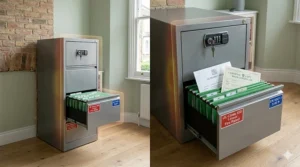
Frequently Asked Questions
❓ Can I use a filing cabinet for storing valuable items securely?
❓ How much weight can a typical home office filing cabinet drawer actually hold?
❓ Do filing cabinets need to be fixed to walls in UK homes?
❓ What's the difference between foolscap and A4 filing systems?
❓ How often should I replace a filing cabinet in normal home office use?
Conclusion: Making Your Filing Cabinet Decision
The filing cabinet buying guide boils down to matching your actual needs with realistic budgets whilst accounting for British space constraints and climate. Most UK home workers will find excellent value in the £70-90 range with units like the SONGMICS OFC110B01 or YITAHOME 3-Drawer Metal, both offering lockable security, reasonable capacity, and mobile convenience in compact footprints.
Businesses requiring commercial-grade storage should seriously consider the Office Hippo Heavy Duty Steel series despite the £200+ investment. The seven-year warranty, 40 kg per drawer capacity, and certified construction satisfy insurance requirements whilst providing storage that won’t embarrass you during client visits or regulatory audits.
Budget-conscious buyers eyeing sub-£70 options should understand the trade-offs: reduced capacity, lighter construction, shorter lifespan. These work fine for light filing needs or temporary solutions whilst building a business, but factor in replacement costs when evaluating true value.
Consider your space realistically — those dimensions matter more in a British flat than anywhere else in the world — and prioritise features that solve your specific problems. Full-extension slides if you need to access rear files frequently. Heavy-duty construction if you’re archiving comprehensively. Mobile design if you’re juggling multi-purpose spaces. The perfect filing cabinet doesn’t exist, but the right cabinet for your situation absolutely does.
Recommended for You
- Plastic vs Wooden Storage Boxes: 7 Best UK Options 2026
- 7 Professional Looking Office Storage Solutions UK 2026
- 7 Brilliant Storage Solutions for Tiny Office Spaces UK 2026
Disclaimer: This article contains affiliate links. As an Amazon Associate, I earn from qualifying purchases. If you purchase products through these links, we may earn a small commission at no additional cost to you.
✨ Found this helpful? Share it with your mates! 💬🤗
