
In This Article
Picture this: it’s three weeks before your first GCSE exam, you’ve got notes scattered across your desk like confetti, and you can’t quite remember which topics you’ve actually revised versus those you’ve merely thought about revising. Sound familiar? You’re not alone. According to Ofqual, the regulatory body overseeing qualifications in England, thousands of students each year struggle with the organisational side of revision planning—and it costs them dearly come results day.
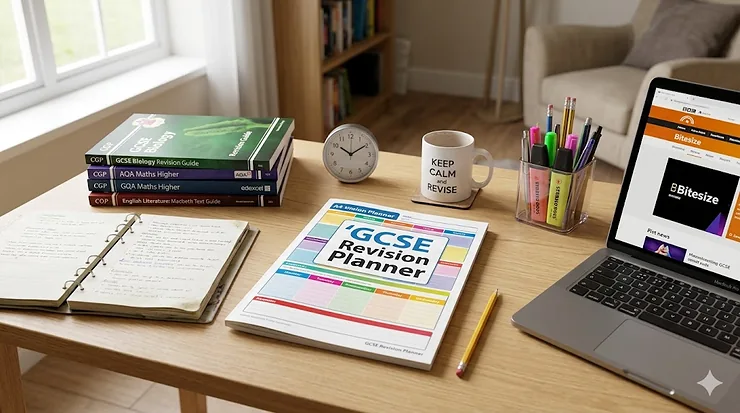
A revision planner for GCSEs isn’t just another stationery purchase; it’s your strategic command centre for the most important exams you’ve sat thus far. The difference between a grade 7 and a grade 9 often comes down to structured, consistent revision rather than frantic last-minute cramming. What most students overlook is that exam success isn’t purely about intelligence—it’s about systematic preparation, and that requires a tangible planning system you can actually stick to.
Whether you’re juggling nine subjects, dealing with mock exam timetable organiser chaos, or simply trying to work out which topics deserve your limited revision time, the right A-level revision timetable planner (many work brilliantly for GCSEs too) transforms your approach from reactive panic to proactive control. In this guide, we’ll examine seven proven GCSE revision planner packs available on Amazon.co.uk, analyse what actually makes them effective, and help you choose the one that matches your revision style—not just the prettiest cover.
Quick Comparison: Top GCSE Revision Planners at a Glance
| Product | Format | Duration | Price Range (£) | Best For | Rating |
|---|---|---|---|---|---|
| Pearson REVISE GCSE Revision Planner | Spiral-bound book | Full academic year | £6-£8 | Structured learners who need exam board alignment | 4.3/5 |
| How to Revise for GCSE (CGP Books) | Paperback with online resources | Academic year + videos | £7-£10 | Students needing study skills and planning combined | 4.7/5 |
| BBC Bitesize GCSE Revision Skills Planner | Paperback course planner | 2026-2027 exams | £8-£11 | BBC Bitesize users wanting integrated revision | 4.1/5 |
| A3 Study & Revision Planner Pad | 52-sheet tear-off pad | 52 weeks | £12-£17 | Visual planners who like large-format organisation | 4.5/5 |
| GCSE Revision Planner (Move Forward Publishing) | Paperback workbook | 12 weeks intensive | £8-£11 | Last-minute revisers needing focused sprint planning | 4.0/5 |
| GCSE Revision Diary Planner | Diary-style planner | 4 months structured | £9-£13 | Anxious students needing daily structure and reassurance | 4.2/5 |
| Study Planner Pad (A4) | 52 A4 tear-off sheets | 52 weeks flexible | £6-£10 | Budget-conscious students wanting flexibility | 4.4/5 |
From the comparison above, the Pearson and CGP options dominate the “value under £10” category—both deliver robust planning frameworks without the fluff. However, if you’re a visual learner who needs to see the entire week at a glance, the A3 pad format justifies its £12-£17 price point through sheer usability. Budget buyers should note that cheaper doesn’t mean less effective here; the £6-£8 paperback planners often outperform fancier alternatives because they force you to engage actively with the planning process rather than just admiring pretty layouts.
💬 Just one click — help others make better buying decisions too!😊
Top 7 Revision Planners for GCSEs: Expert Analysis
1. Pearson REVISE GCSE Revision Planner – The Exam Board Professional
The Pearson REVISE GCSE Revision Planner is the closest thing to having an exam board expert on your desk. This spiral-bound planner spans the full academic year and includes a pull-out wall chart—rather handy when you need a visual reminder of looming deadlines without opening the book.
What sets this planner apart is its integration with actual GCSE specifications. You’re not just filling in random boxes; the structure aligns with how exam boards organise content, making it genuinely useful for students taking Pearson Edexcel qualifications. The spiral binding means the book stays flat on your desk (a small detail that matters enormously at 10pm when you’re trying to plan tomorrow’s revision), and the mindfulness section introduced in recent editions addresses the exam anxiety that hits most Year 11 students around March.
In practical terms, this planner helps you break down each subject into manageable revision chunks, allocate time realistically, and track progress week by week. UK students particularly appreciate that it accounts for half-term breaks and bank holidays—unlike American planners that assume continuous study. The wall chart works brilliantly in compact bedrooms typical of British terraced houses; you can mount it above your desk without requiring masses of wall space.
Customer feedback from Amazon.co.uk consistently praises its “no-nonsense approach” and “actually useful layout,” though some note it can feel prescriptive if you prefer free-form planning. One recurring theme: parents buy it, teenagers initially resist it, then grudgingly admit it helps by week three.
Pros:
✅ Exam board-aligned structure
✅ Includes mindfulness guidance for exam stress
✅ Spiral binding keeps pages flat during use
Cons:
❌ Can feel rigid for creative planners
❌ Some find the layout slightly cramped
Around £6-£8 on Amazon.co.uk—exceptional value for exam board-quality planning. Particularly worth considering if you’re taking multiple Pearson Edexcel subjects.
2. How to Revise for GCSE: Study Skills & Planner (CGP Books) – The Complete Revision Toolkit
CGP Books built their reputation on making GCSE content actually digestible, and their How to Revise for GCSE: Study Skills & Planner extends that philosophy to the planning process itself. This isn’t just a planner—it’s a comprehensive guide teaching you how to revise effectively before you even start scheduling.
The standout feature is the integrated video content accessible through unique codes printed inside. These short videos explain revision techniques like active recall, spaced repetition, and Cornell note-taking—techniques that research from UK universities demonstrates genuinely improve retention. Rather than assuming you already know how to revise, CGP walks you through proven methods, then provides planning templates to implement them. For British students accustomed to CGP’s distinctive humour and clear explanations, this planner feels like a natural extension of their revision guides.
The physical planner includes downloadable timetables you can edit digitally—brilliant for students who plan on tablets or prefer typing. The free online edition means you can access your plan from your phone during your commute (particularly useful for London students spending 90 minutes daily on the Tube). One aspect UK students mention repeatedly: it accounts for the reality of British weather affecting revision mood. Sounds trivial, but anyone who’s tried concentrating during a grey November knows that environmental factors matter.
Customer reviews highlight its “friendly tone that doesn’t talk down” and practical advice that “actually works in real life, not just in theory.” Some users note it’s content-heavy, which can feel overwhelming initially, but most agree the investment in learning proper revision techniques pays off across all subjects.
Pros:
✅ Teaches revision techniques, not just planning
✅ Includes online videos and downloadable resources
✅ Free digital edition for mobile access
Cons:
❌ Heavier on reading than pure planning tools
❌ Can feel overwhelming for students wanting simple schedules
In the £7-£10 range on Amazon.co.uk—marginally more expensive than basic planners, but the educational content justifies the premium. If you’re uncertain how to revise effectively, this is your starting point.
3. BBC Bitesize GCSE Revision Skills Planner – The Multimedia Integration Champion
The BBC Bitesize GCSE Revision Skills Planner leverages the UK’s most trusted educational brand to create a planner that integrates seamlessly with BBC Bitesize online content. If you’re already using Bitesize for revision (and most British students are), this planner creates a bridge between digital resources and physical planning.
Written by educational psychologist David Putwain, this planner incorporates evidence-based strategies for managing exam anxiety—particularly relevant given that UK students report higher stress levels than previous generations. The structure encourages you to identify subjects causing most anxiety, then allocate revision time proportionally. It’s not about working hardest on your weakest subjects; it’s about strategic time allocation that maximises your overall grade profile.
The planner spans 2026-2027 exams, which matters more than you might think. Many generic planners don’t account for the specific GCSE timeline, including mock periods, controlled assessments, and the actual exam windows. This one does, reducing the mental load of working out when things actually happen. For students in Wales using WJEC specifications, this planner adapts better than England-only alternatives.
Customer feedback splits interesting ways: visual learners find the layout “a bit text-heavy,” whilst analytical students appreciate the detailed guidance. The “supernatural” review quoted earlier—where planners remained pristine despite supposed heavy use—highlights a genuine challenge: buying a planner doesn’t automatically translate to using it consistently. That requires discipline beyond any product’s capability.
Pros:
✅ Integrates with BBC Bitesize digital content
✅ Evidence-based anxiety management strategies
✅ Covers full 2026-2027 exam period
Cons:
❌ Layout can feel text-heavy for visual learners
❌ Requires discipline to use effectively (like all planners)
Around £8-£11 on Amazon.co.uk—reasonable pricing for the BBC Bitesize brand integration. Particularly suitable if you’re already embedded in the Bitesize ecosystem.
4. A3 Study and Revision Planner Pad – The Visual Learner’s Dream
For students who think in big pictures rather than detailed lists, the A3 Study and Revision Planner Pad provides exactly what smaller formats can’t: space. With 52 huge 42cm × 30cm sheets, each week gets its own dedicated page where you can colour-code subjects, visualise your entire week simultaneously, and spot gaps in your revision coverage instantly.
The A3 format addresses a specific problem with compact planners: you can’t see patterns. When your week is crammed onto an A5 page, you miss obvious insights like “I’ve scheduled three hours of maths on Monday but nothing for the rest of the week.” The large format forces visual awareness of your revision distribution. UK students living in flats or smaller bedrooms might worry about storage, but these tear-off sheets actually solve that problem—you keep only the current week displayed, storing the pad itself in a drawer.
The sheets include colour-coded weekly schedules, daily revision tracking, and wellness monitoring sections. That last bit matters more than it sounds: tracking sleep, meals, and breaks helps you correlate revision effectiveness with self-care. When you notice revision quality drops on days you skip breakfast or sleep poorly, you start making different choices. It’s behavioural psychology disguised as a planner.
Amazon.co.uk customers mention “perfect for visual planning” and appreciate the “good quality paper that doesn’t tear.” Multiple users note success using these for A-level mock exams, suggesting the format scales beyond GCSEs. The main limitation is portability—you’re not taking A3 sheets to the library—but for home-based revision planning, the size becomes an advantage.
Pros:
✅ Large A3 format perfect for visual learners
✅ 52 weeks coverage with tear-off convenience
✅ Includes wellness tracking alongside revision
Cons:
❌ Not portable for on-the-go planning
❌ Higher price point than compact alternatives
In the £12-£17 range on Amazon.co.uk—a premium purchase justified by the format’s unique advantages. If you’re a visual thinker who gets overwhelmed by cramped planning spaces, this investment pays dividends in clarity.
5. GCSE Revision Planner (Move Forward Publishing) – The Intensive Sprint Specialist
The GCSE Revision Planner from Move Forward Publishing takes a different approach: it assumes you’ve got 12 weeks until exams and need focused, intensive planning rather than year-long scheduling. This makes it ideal for students starting serious revision after Christmas or those who’ve previously been using informal methods and now need structure fast.
The 12-week timeframe forces prioritisation. You can’t revise everything equally in three months, so this planner includes frameworks for identifying high-priority topics, subjects where small improvements yield big grade changes, and strategic coverage that maximises your overall performance. The weekly planning pages integrate with daily checklists, creating a two-tier system: strategic weekly goals supported by tactical daily tasks.
What UK students particularly appreciate is the running total system for revision hours per subject. This transparency prevents the common problem of over-revising favourite subjects whilst neglecting difficult ones. You might feel productive after six hours of history revision, but if you’ve only allocated two hours to maths all week, your grades won’t reflect that effort imbalance. The visual tracking makes these patterns obvious.
Customer reviews note it’s “great for last-minute organisation” and “helps create realistic plans rather than aspirational ones that fail by week two.” The compact format suits students revising in school libraries, cafes, or during commutes. Some users mention wanting more guidance on revision techniques themselves, but for students who already know how to revise and just need structural organisation, this delivers exactly that.
Pros:
✅ Focused 12-week intensive planning
✅ Running total system prevents subject imbalance
✅ Compact size for portability
Cons:
❌ Less suitable for early planners wanting year-long structure
❌ Minimal revision technique guidance
Around £8-£11 on Amazon.co.uk—solid value for focused sprint planning. Particularly effective for students who respond better to intensive bursts than prolonged campaigns.
6. GCSE Revision Diary Planner – The Anxiety-Management Companion
The GCSE Revision Diary Planner recognises that exam preparation isn’t purely academic—it’s psychological. Spanning four months with weekly and daily timetables, this planner incorporates anxiety-management techniques alongside traditional scheduling, addressing the reality that exam stress can derail even the best-planned revision.
The diary format creates accountability through daily entries. Rather than abstract weekly planning, you’re recording what you actually revised each day, noting energy levels, comprehension, and emotional state. Over time, patterns emerge: perhaps you concentrate better in morning sessions, or certain subjects drain you more than others. These insights let you optimise not just what you revise, but when and how.
For British students dealing with the compressed GCSE exam period (often 15+ exams within six weeks), managing stress becomes as important as covering content. This planner includes breathing exercises, positive affirmation spaces, and reflection prompts—elements that might seem fluffy until you’re in the exam hall and actually need those calming techniques you practised.
Amazon.co.uk feedback mentions it’s “really helpful for anxious students” and “makes revision feel less overwhelming.” Some users note the diary sections require consistent daily engagement, which works brilliantly for disciplined students but can become another source of guilt for those who skip days. The key is viewing it as a tool, not a judge—missing a day doesn’t invalidate the whole system.
Pros:
✅ Integrates anxiety management with revision planning
✅ Daily diary format creates accountability
✅ Four-month timeframe suits intensive revision period
Cons:
❌ Requires consistent daily engagement
❌ Can feel like additional pressure for some students
In the £9-£13 range on Amazon.co.uk—worthwhile investment for students who recognise that managing exam anxiety directly impacts performance. If stress undermines your revision effectiveness, this planner addresses root causes.
7. Study Planner Pad (A4) – The Flexible Budget Champion
The Study Planner Pad (A4) delivers 52 weeks of planning across tear-off A4 sheets at a price point that makes it accessible to every student. With 52 thick sheets covering an entire year, it provides blank-canvas flexibility that rigid planners can’t match—you adapt it to your needs rather than forcing your revision into someone else’s framework.
The A4 format strikes a practical balance: large enough for comprehensive weekly planning without the storage challenges of A3, yet compact enough to slip into a rucksack or ringbinder. British students appreciate this portability, particularly those revising in libraries, study groups, or during free periods at sixth form. The tear-off design means you can remove completed weeks, creating a satisfying tangible record of progress whilst keeping your current planning clean and focused.
The main trade-off is guidance: you get planning space but minimal direction on how to use it effectively. For self-directed students who already understand revision principles, this freedom becomes an advantage. You might allocate Monday evenings to past paper practice, colour-code subjects by priority, or design your own symbols for different revision activities. The planner doesn’t impose structure; it enables whatever structure you create.
Customer reviews consistently highlight “good value for money” and “thick quality paper that handles highlighters well.” Multiple users mention pairing these sheets with the Pomodoro Technique or personalised revision systems. Some note wanting more pre-printed structure initially, then appreciating the flexibility once they established their own rhythm.
Pros:
✅ Excellent value for 52-week coverage
✅ Flexible format adapts to any revision system
✅ Quality paper handles colour-coding and highlighting
Cons:
❌ Minimal guidance for students unsure where to start
❌ Requires self-direction to use effectively
Around £6-£10 on Amazon.co.uk—outstanding value making structured revision planning accessible regardless of budget. Perfect for students who know what they need and want tools, not tutors.
Real-World Revision Success: How UK Students Use These Planners
Let’s examine three typical UK student profiles and match them to effective planner choices, because context matters far more than features alone.
Mia, Year 11, London Comprehensive: Taking nine GCSEs, commutes 75 minutes daily via Overground and bus, revises primarily at home in shared bedroom. Mia needs portability and flexibility. She uses the CGP Study Skills & Planner during her commute to learn revision techniques, then implements those strategies using the A4 Study Planner Pad at home. The combination costs under £18 and provides both education and execution. Her family’s compact flat makes the A4 format practical, whilst the CGP content helps her maximise limited revision time between arriving home and dinner.
James, Year 11, Manchester Suburb: Eight GCSEs, dedicated desk in his bedroom, struggles with exam anxiety that peaks in March. James benefits most from the GCSE Revision Diary Planner combined with BBC Bitesize Planner. The diary addresses his anxiety directly through daily reflection and calming techniques, whilst the Bitesize integration connects to resources he already trusts. Total investment around £20 provides structured support precisely where he needs it—psychological as much as organisational.
Aisha, Year 11, Rural Dorset: Ten GCSEs, visual learner, revises in farmhouse bedroom with ample desk space, prefers seeing entire weeks at once. The A3 Study & Revision Planner Pad suits her perfectly. The large format lets her colour-code all ten subjects clearly, spot revision gaps instantly, and feel in control of her preparation. At £12-£17, it’s her single planning purchase covering all subjects and creating the visual clarity she needs to manage complexity.
Notice none of these students use planners exactly as designed—they adapt tools to personal circumstances. That’s the key insight: the best revision planner for GCSEs isn’t the most sophisticated one; it’s the one matching your actual revision environment, learning style, and constraints.
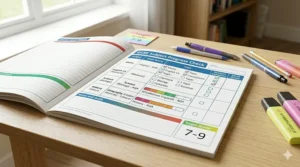
How to Choose a Revision Planner for GCSEs: What Actually Matters
Walking into WHSmith or browsing Amazon.co.uk reveals dozens of GCSE revision planners, each promising exam success through superior organisation. Most claims are marketing noise. Here’s what genuinely matters when choosing your planner:
1. Format Must Match Your Revision Space If you’re revising in a compact bedroom in a Birmingham terrace or a London flat share, A3 sheets create practical problems. Conversely, if you’ve got desk space and think visually, cramped A5 planners feel restrictive. Consider where you’ll actually use this planner daily—desk, bed, library table, kitchen table between dinner and washing up—then choose accordingly.
2. Time Horizon Should Align with Your Starting Point Starting revision in September? Year-long planners like Pearson REVISE make sense. Starting post-Christmas? The 12-week intensive planners match your reality better. Using a 52-week planner when you’ve got 10 weeks left creates psychological burden—all those empty early pages become visual reminders of time you didn’t plan. Match the planner duration to your actual available revision period.
3. Guidance vs. Flexibility: Know Your Learning Independence Structured planners like CGP and Pearson provide frameworks, techniques, and specific scheduling systems. Flexible pads give you blank space and freedom. Honest self-assessment helps here: do you struggle knowing how to revise effectively, or do you know what to do but lack organisational tools? The former needs guided planners; the latter needs flexible formats.
4. Integration with Existing Resources If you’re already using BBC Bitesize extensively, their planner creates natural synergy. If you’re studying Pearson Edexcel specifications, their planner aligns with exam board content. If you’re device-agnostic and prefer paper-only, integration matters less. Consider your existing revision ecosystem before adding another disconnected tool.
5. Physical Durability for British Conditions Spiral bindings that lie flat matter when you’re using the planner daily. Paper quality that handles highlighters prevents bleed-through frustration. Tear-off formats suit students who like refreshing their planning weekly. British homes can be damp—cheap paper can warp or tear. These practical factors affect consistent use more than fancy features.
6. Price Relative to Subject Coverage A £15 planner managing ten GCSE subjects costs £1.50 per subject. A £7 planner covering the same subjects costs 70p each. Neither price predicts effectiveness—some students thrive with premium planners, others prefer budget flexibility. Consider total revision investment including textbooks, online resources, and potential tutoring. Your planner should be proportional to overall budget.
7. Psychological Fit with Your Motivation Style Some students respond to detailed daily checklists that provide frequent satisfaction through ticking boxes. Others find daily tracking oppressive and prefer weekly overview planning. Understanding your motivation psychology—immediate small wins vs. strategic long-term planning—determines which planner format you’ll actually use consistently.
The common thread? Effectiveness comes from sustained use, not sophisticated features. A £6 basic planner used daily outperforms a £15 premium one abandoned after a fortnight because it demanded too much engagement energy.
Common Mistakes When Buying GCSE Revision Planners
The Aesthetic Trap: That Instagram-worthy planner with motivational quotes and pastel colours looks gorgeous. It’ll photograph beautifully for your study stories. But if the layout doesn’t match how you actually think and plan, it becomes expensive stationery rather than functional tool. UK students regularly mention buying planners based on appearance, then reverting to scrappy notebook planning because the beautiful planner felt “too precious to mess up.” Your planner should be functional first, attractive second.
Over-Planning the Planning: Some students spend more time perfecting their revision timetable than actually revising. They colour-code every hour, create elaborate systems, and obsess over optimal scheduling. The planner becomes procrastination disguised as productivity. Effective revision planning takes 20-30 minutes weekly, not daily hours. If your planning system requires more maintenance than your actual subjects, something’s gone wrong.
Ignoring Mock Exam Realities: Many generic planners don’t account for the British academic calendar—half terms, bank holidays, mock exam periods, controlled assessments. You might schedule intensive physics revision for a week that’s actually dominated by mock exams in three other subjects. Choose planners that acknowledge UK school term structures, or manually block out these periods immediately.
The “Fresh Start” Fallacy: Students often abandon their first planner when it gets messy or they miss a few days, buying a fresh one to “start properly this time.” Multiple Amazon.co.uk reviews mention owning three or four planners. Consistency beats perfection. A used, slightly chaotic planner tracking actual progress outperforms a pristine, unused replacement. Embrace the mess; it represents real revision rather than aspirational planning.
Forgetting Subject Specificity: A planner allocating equal time to all subjects ignores reality. English Literature revision looks completely different from Chemistry revision—one needs sustained reading and essay practice, the other needs problem-solving repetition and formula memorisation. Generic “two hours per subject” planning fails because it doesn’t account for subject-specific revision methods. Better planners let you customise time allocation per subject based on content type and your proficiency level.
Neglecting Recovery Time: Revision planners scheduling solid blocks from 9am to 9pm with only meal breaks create unsustainable routines. British teenagers aren’t revision robots. Effective planning includes recovery time, hobby space, social interaction, and physical activity. Planners that acknowledge wellbeing alongside academics produce better results because they’re actually maintainable beyond the first enthusiastic week.
Setting Up Your Revision Planner: First-Week Essentials
You’ve chosen your planner—now what? The first week determines whether it becomes essential tool or abandoned stationery. Here’s how to set up any revision planner effectively, regardless of which one you’ve bought:
Day 1: Audit Your Subjects and Exam Dates Gather your exam timetable from school (if you haven’t got it, check with your exams officer or school website—most UK schools publish GCSE exam timetables in January). List every subject, the exam board (AQA, OCR, Edexcel, WJEC), and specific exam dates. This reality check prevents abstract planning disconnected from actual deadlines.
Day 2: Assess Current Knowledge Using your specification for each subject (download these from exam board websites—they’re free), rate your confidence for each topic on a simple scale: comfortable, uncertain, or weak. This honest assessment guides time allocation. According to research from UK universities, students often over-revise topics they already understand whilst avoiding weaker areas. Objective assessment counters that tendency.
Day 3: Calculate Available Revision Time Count actual available hours weekly. Be realistic: you’ve got school, homework, sleep, meals, travel, and necessary downtime. Most Year 11 students realistically have 15-20 hours weekly for dedicated revision outside school—more during study leave. Under-estimating available time creates impossible schedules you’ll abandon; over-estimating creates guilt when you can’t maintain unsustainable routines.
Day 4: Distribute Time by Subject Priority Not all subjects deserve equal time. Subjects with multiple exams (like combined science or maths with calculator and non-calculator papers) need more hours. Subjects where you’re borderline between grades need focused effort—moving from grade 6 to 7 might require less time than maintaining a grade 9 in a subject where you’re already strong. Prioritise strategically rather than democratically.
Day 5: Build Your First Weekly Plan Create your first week’s schedule. Include specific topics, not just subjects—”revise biology” is vague; “photosynthesis and plant transport systems, complete AQA past paper questions 2019-2023” is actionable. Test this first week’s realism: if you complete 60% of planned revision, your planning is reasonable. If you complete 90%+, you’re under-scheduling. If you complete 30%, you’re over-ambitious.
Day 6: Set Up Progress Tracking However your planner tracks progress—tick boxes, colour coding, percentage bars—use it consistently. The psychological boost from visible progress combats the demotivation that hits around Easter when exams still feel distant but you’re already revision-tired. Tracking creates momentum through accumulated evidence that you’re making progress.
Day 7: Review and Adjust Sunday evening or Monday morning, review your first week. What worked? What didn’t? Did you over-estimate concentration capacity? Under-estimate time needed for past papers? Were breaks too short or too long? Adjust next week’s plan based on actual experience. Your planner should evolve as you learn how you revise most effectively.
This first-week investment—roughly 2-3 hours total—determines months of subsequent revision effectiveness. Students who set up systematically use their planners consistently. Those who jump straight into scheduling often abandon planners within weeks because the system never quite worked from the start.
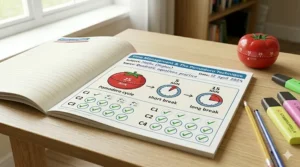
Long-Term Success: Maintaining Your Revision Plan Through Exam Season
Buying a revision planner is easy. Using it consistently from February through June is where most students struggle. Here’s how to maintain momentum:
Weekly Review Ritual: Every Sunday evening (or whenever suits your rhythm), review the past week’s revision and plan the next. This 20-minute routine prevents drift. You’ll notice patterns—perhaps you consistently skip Friday evening revision because you’re exhausted after the school week. Acknowledging this lets you schedule lighter topics on Fridays rather than fighting your natural energy fluctuations.
Flexibility Within Structure: Your planner provides framework, not prison. If Wednesday’s planned chemistry revision gets derailed by unexpected coursework deadline, that’s life, not failure. Move the chemistry session to Thursday evening and adjust accordingly. Rigid adherence to plans creates stress; flexible navigation within planned structure creates control.
Track Study Techniques, Not Just Hours: Instead of simply recording “two hours maths,” note “two hours maths—completed three past papers, identified algebra gaps.” This qualitative tracking reveals which revision methods actually stick. You might discover that flashcard sessions feel productive but don’t translate to exam performance, whilst explaining concepts to study partners genuinely embeds understanding.
Build in Rewards: Link planner completion to actual rewards. Not abstract “you’ll thank yourself at results day” promises—concrete immediate treats. Complete four solid revision days? Friday evening is guilt-free gaming or seeing friends. Finish this week’s planned topics? Weekend lie-in without alarm. Behavioural psychology works better than willpower alone.
Use Easter Holidays Strategically: The Easter holidays represent your biggest revision opportunity—typically two weeks of dedicated study time. Plan these weeks differently from term-time revision: longer daily sessions are sustainable when you haven’t got school draining energy. But schedule complete rest days too—continuous revision across 14 days straight guarantees diminishing returns and burnout.
Exam Week Adaptation: As actual exams begin, your planner’s role shifts from structured topic coverage to exam-specific preparation. The day before an exam, focus on reviewing key concepts, checking formulae, and mental preparation rather than attempting new learning. Your planner becomes reassurance system—you’ve covered the content; now you’re simply refreshing.
The students who succeed with revision planners treat them as evolving tools rather than fixed systems. Your planning approach in February should differ from April, which differs from late May when you’re mid-exam-period. The planner that adapts with you remains useful; the rigid system you abandon might have been perfect if you’d allowed it to flex.
Revision Planner Alternatives: When Digital Might Beat Paper
Whilst this article focuses on physical planners available through Amazon.co.uk, digital alternatives deserve consideration—particularly for students who naturally organise their lives on devices. Google Calendar, Notion, or simple spreadsheets can replicate planner functionality with added benefits: instant rescheduling, automated reminders, cross-device sync for students who plan on tablets but revise at desks.
The advantage of physical planners is tangibility. Research from UK universities suggests handwriting aids memory retention more than typing, and the physical act of planning creates psychological commitment digital scheduling sometimes lacks. You can stick post-it notes on pages, colour-code with actual highlighters, and see your whole week without battery anxiety.
However, digital works brilliantly for certain students. If you’re already managing your life in Google Calendar, adding revision blocks there creates seamless integration with existing commitments. If you collaborate in study groups, shared digital planning documents coordinate group revision sessions more easily than comparing physical planners. If you’re revising across multiple locations—home, library, friend’s house—cloud-based planning stays accessible everywhere.
The hybrid approach works well: use a physical planner for strategic overview and weekly planning, then maintain digital calendar for specific session scheduling and automated reminders. The physical planner creates the revision strategy; digital tools execute the tactical details. Many successful UK students report this combination delivers advantages of both systems whilst minimising weaknesses.
Ultimately, the best revision planning system is the one you’ll actually use consistently. If you’ve never maintained a physical planner but live in your phone’s calendar, don’t force yourself to use paper planners just because they’re traditional. Equally, if screens drain your focus and physical writing helps you think, don’t abandon paper because digital seems more sophisticated. Match the tool to your existing habits rather than forcing habit changes alongside exam preparation stress.
Frequently Asked Questions
❓ How far in advance should I start using a revision planner for GCSEs?
❓ Can the same planner work for both mock exams and final GCSEs?
❓ Do subject-specific revision planners work better than general ones for GCSEs?
❓ Should I buy an exam countdown planner printable or a full physical planner?
❓ Are revision planners with subject trackers worth the extra cost?
Conclusion: Your Revision Planner Starts Working Today
The difference between a grade 6 and a grade 7, between acceptable and excellent GCSE results, rarely comes down to intelligence alone. It comes down to systematic, organised, strategic revision—and that requires planning infrastructure. The seven revision planners examined here all deliver that infrastructure, but in different ways suited to different students.
If you’re methodical and appreciate exam board alignment, the Pearson REVISE GCSE Revision Planner provides professional structure at remarkable value. If you need to learn revision techniques alongside scheduling, CGP’s How to Revise for GCSE delivers education and execution in one package. If visual clarity matters most, the A3 Study and Revision Planner Pad creates the big-picture perspective compact formats can’t match.
Your choice should reflect honest self-assessment: How do you naturally organise? What’s your realistic revision environment? Where do you struggle most—knowing what to revise, scheduling time, maintaining motivation, managing anxiety? Match planner to problem.
Remember that the planner itself isn’t the solution—it’s the tool enabling your solution. A £17 premium planner abandoned after two weeks achieves nothing. A £7 basic planner used consistently through exam season transforms your revision effectiveness. Consistency trumps sophistication every time.
Start today. Choose your planner based on the analysis above, order it through Amazon.co.uk’s next-day delivery if you’re Prime eligible, and commit to that first-week setup process. Your future self, holding excellent GCSE results on that August morning, will thank your current self for taking revision planning seriously.
Your exam success journey doesn’t begin when you sit down for that first exam—it begins the moment you commit to structured, planned, strategic revision. Make that commitment now.
Recommended for You
- 7 Best Planner for Medical Students UK 2026 | Top Picks
- 7 Best Academic Planner for University Students UK 2026
- Filing Cabinet Buying Guide: 7 Best UK Choices 2026
Disclaimer: This article contains affiliate links. As an Amazon Associate, I earn from qualifying purchases. If you purchase products through these links, we may earn a small commission at no additional cost to you.
✨ Found this helpful? Share it with your mates! 💬🤗
