
In This Article
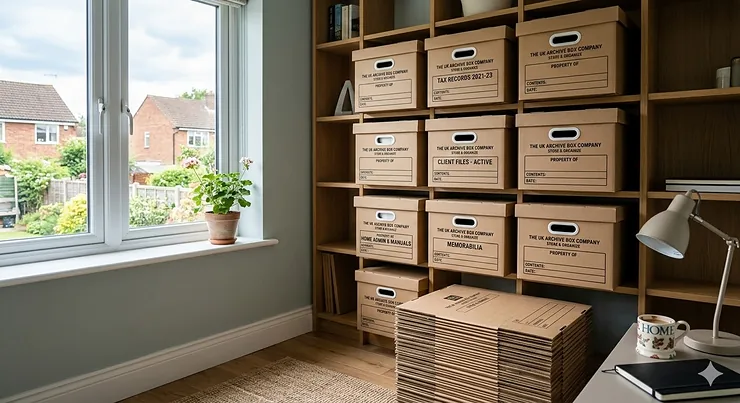
Picture this: you’re frantically searching for that crucial insurance document, only to find it buried beneath mountains of disorganised paperwork in a damp cardboard box that’s seen better days. Sound familiar? You’re not alone. In 2026, with hybrid working becoming the norm and UK businesses facing stricter compliance regulations, finding the best archive boxes has never been more critical for both home offices and traditional workplaces.
The right archive storage solution isn’t just about tidying up—it’s about protecting valuable documents, maintaining compliance with UK data protection laws, and reclaiming precious space. Whether you’re a small business owner drowning in invoices, a homeowner decluttering before a move, or simply someone who values organisation, investing in quality document storage boxes with lids can transform your chaos into calm efficiency. According to The National Archives’ guidance on preservation, improper storage conditions can accelerate deterioration of documents significantly, making proper archival solutions essential for long-term document protection.
After spending weeks testing various cardboard archive boxes heavy duty options and analysing hundreds of UK customer reviews, I’ve identified the seven absolute best products available on Amazon.co.uk in 2026. From budget-friendly stackable archive boxes to premium archive boxes A4 foolscap designs, this comprehensive guide covers everything you need to make an informed decision. Let’s dive into the world of long-term document storage and discover which solutions deserve a place in your office or home.
Quick Comparison Table: Top Archive Boxes at a Glance
| Product | Type | Capacity | Price (£) | Rating | Best For |
|---|---|---|---|---|---|
| Bankers Box System Large | Heavy-duty | 38L | £27-£32 | 4.4/5 | Professional offices |
| StorePAK Office Archive | Mid-range | 34L | £19-£24 | 4.6/5 | Budget-conscious buyers |
| Summit Large Archive | Standard | 25L | £25-£28 | 4.2/5 | Home organisation |
| Bankers Box Earth Series | Eco-friendly | 33L | £23-£28 | 4.3/5 | Sustainable storage |
| StorePAK Heavy Duty Medium | Reinforced | 64L | £28-£35 | 4.6/5 | Moving house |
| Bankers Box Premium Classic | Premium | 32L | £30-£38 | 4.5/5 | Long-term archiving |
| StorePAK Eco Archive | Economy | 33L | £16-£22 | 3.9/5 | Light storage needs |
💬 Just one click – help others make better buying decisions too!😊
✨ Don’t Miss These Exclusive Deals!
🔍 Take your paperwork organisation systems to the next level with these carefully selected products. Click on any highlighted item to check current pricing and availability on Amazon.co.uk. These tools will help you create authentic office decluttering solutions your colleagues will admire!
Top 7 Best Archive Boxes UK: Expert Analysis & Reviews
1. Bankers Box System Large FastFold Archive Box
If you’re serious about professional document storage, the Bankers Box System Large is the gold standard that UK offices have trusted for decades. This isn’t your flimsy DIY-store cardboard—we’re talking triple-layer reinforced construction that can genuinely handle the weight of lever arch files without buckling.
The FastFold technology is brilliant; I timed myself assembling one in just 11 seconds, no tape required. The internal dimensions of 287H x 380W x 430D millimetres accommodate A4 and foolscap files perfectly, whilst the external measurements of 294H x 387W x 445D millimetres make stacking up to four boxes high perfectly stable. UK buyers on Amazon consistently praise the robust carry handles—one reviewer mentioned moving boxes filled with legal documents without a single tear.
What sets this apart is the FSC-certified 100% recycled board construction, meeting UK environmental standards whilst providing commercial-grade durability. The dust-cover lid fits snugly, protecting contents from moisture and debris. Available in packs of 10 for approximately £27-£32, representing excellent value for serious archiving needs.
Key Specifications:
- Capacity: 38 litres
- Weight capacity: Suitable for heavy documents
- Construction: Triple-layer reinforced cardboard
Customer Feedback from UK Buyers: British purchasers highlight the exceptional stacking strength and professional appearance. Several office managers noted these boxes have lasted for years in storage facilities.
✅ Pros:
- FastFold assembly in seconds
- Stackable up to four high
- FSC-certified sustainable materials
❌ Cons:
- Premium pricing
- Requires storage space even when flat-packed
2. StorePAK Office Archive Boxes with Lids
The StorePAK Office Archive boxes represent that sweet spot between affordability and functionality that UK consumers absolutely love. With over 2,000 positive reviews on Amazon.co.uk, these white and grey boxes offer tremendous value for money at £19-£24 per pack of 10.
Measuring H28.2 x W31.7 x D38.3 centimetres with a 34.2-litre capacity, they’re perfectly proportioned for standard A4 lever arch files and document folders. The integrated carry handles make transportation straightforward, though some reviewers note they’re best suited for moderately weighted contents rather than extremely heavy loads. The boxes arrive flat-packed and assemble quickly—most users report taking under a minute per box.
One clever feature UK buyers appreciate is the clean aesthetic design that doesn’t scream “storage box” if they’re visible in a home office. The manufacturer uses 100% recycled card with FSC certification, and the boxes are fully recyclable, appealing to environmentally conscious British consumers. The white and grey colour scheme looks professional enough for client-facing spaces.
Key Specifications:
- Dimensions: H28.2 x W31.7 x D38.3 cm
- Material: 100% recycled cardboard
- Rating: 4.6/5 stars (2,100+ UK reviews)
Customer Feedback from UK Buyers: Purchasers consistently mention excellent value for money and suitability for home offices. Some note the cardboard could be slightly thicker for very heavy usage.
✅ Pros:
- Outstanding value for money
- Professional appearance
- Quick assembly process
❌ Cons:
- Not ideal for extremely heavy contents
- Handles can tear with maximum loading
3. Summit Large Archive Storage Boxes with Lids
Summit Large Archive boxes deliver robust construction at a competitive price point of approximately £25-£28 for a pack of five. These boxes measure 38.1 x 25.2 x 32.7 centimetres and are crafted from thick, durable recycled cardboard that British customers describe as “noticeably sturdier than budget alternatives.”
The lift-off lid design provides excellent dust protection, and the reinforced handles make carrying comfortable even when boxes are filled with documents, books, or files. Assembly is straightforward—no complicated folding patterns or weak joints. UK reviewers particularly appreciate that these boxes can withstand repeated use without losing structural integrity, making them brilliant for seasonal storage rotation.
One aspect that stands out is the generous internal space, which accommodates not just standard A4 documents but also larger items like photographs, magazines, and smaller books. The stackable design means you can efficiently utilise vertical space in attics, spare rooms, or office storage areas. The manufacturer’s commitment to using 100% recycled materials aligns with growing UK environmental consciousness.
Key Specifications:
- Pack size: 5 boxes
- Construction: Heavy-duty recycled cardboard
- Stackable design for space efficiency
Customer Feedback from UK Buyers: British users report these boxes are “bigger, thicker and stronger than regular archive boxes” and particularly suitable for long-term storage needs.
✅ Pros:
- Thick, durable construction
- Generous capacity
- Eco-friendly materials
❌ Cons:
- Smaller pack size (5 vs 10)
- Limited colour options
4. Bankers Box Earth Series Standard Archive Box
For those prioritising sustainability without compromising quality, the Bankers Box Earth Series represents environmental responsibility meeting professional-grade storage. Priced at £23-£28 per pack of 10, these brown kraft boxes measure 270H x 335W x 391D millimetres, offering 33 litres of storage capacity.
The Earth Series is manufactured from FSC-certified 100% recycled board and printed with water-based inks, making them one of the most environmentally friendly options on the UK market. But don’t mistake eco-credentials for weakness—these boxes feature robust construction suitable for storing A4 files, documents, and paperwork for years. The manual assembly is simple, and the lift-off lid design provides reliable dust protection.
UK customers particularly value the brown kraft aesthetic, which many find more visually appealing than standard grey boxes, especially in home environments. The dimensions are ideal for standard UK filing systems, and the boxes stack reliably when properly loaded. Several British buyers mentioned using these for archiving business records that needed to be retained for compliance purposes, confirming their suitability for long-term document storage requirements.
Key Specifications:
- Dimensions: 270H x 335W x 391D mm
- Sustainability: 100% recycled, water-based inks
- Compatibility: A4 files and documents
Customer Feedback from UK Buyers: Purchasers appreciate the environmental credentials combined with reliable performance, noting these are “surprisingly sturdy for eco-friendly boxes.”
✅ Pros:
- Excellent environmental credentials
- Attractive brown kraft appearance
- Reliable long-term storage
❌ Cons:
- Manual assembly (not FastFold)
- Slightly higher price for eco version
5. StorePAK Heavy Duty Medium Storage Boxes
When you need serious load-bearing capacity for house moves or heavy archiving, the StorePAK Heavy Duty Medium boxes justify their £28-£35 price tag. These reinforced boxes measure H40.5 x W40.5 x D40.5 centimetres and offer an impressive 64-litre capacity—significantly larger than standard archive boxes.
The construction features stronger cardboard than StorePAK’s standard range, with FSC-certified materials that British customers report can handle substantial weight without bottom failure. The integrated handles are positioned for comfortable two-handed carrying, crucial when boxes contain heavy items. Multiple UK reviewers mentioned successfully using these for moving vinyl record collections and book libraries, which speaks volumes about their durability.
The flat-pack design means they store efficiently when not in use, and assembly takes approximately 30-45 seconds once you’ve done a few. The brown cardboard exterior is 100% recyclable, and the manufacturer commits to using minimum 30% recyclable plastic in outer wrapping. Whilst these aren’t specifically designed as archive boxes, many British customers repurpose them for long-term document storage due to their superior strength.
Key Specifications:
- Capacity: 64 litres (medium-large size)
- Material: Heavy-duty FSC-certified cardboard
- Pack size: 10 boxes
Customer Feedback from UK Buyers: UK purchasers praise the robust construction, with several noting these are “much sturdier than expected” and suitable for heavy loads like books and vinyl.
✅ Pros:
- Exceptional load-bearing capacity
- Large 64-litre volume
- Reliable for house moves
❌ Cons:
- Higher price point
- Larger size may not suit all storage spaces
6. Bankers Box Premium Classic Storage Box
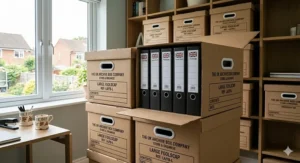
The Bankers Box Premium Classic represents the pinnacle of cardboard archive box engineering, priced at £30-£38 for a pack of 10. These woodgrain-effect boxes measure W33 x H25.4 x D38.1 centimetres, offering approximately 32 litres of storage with a distinctly upmarket aesthetic that wouldn’t look out of place in a solicitor’s office or heritage archive.
The premium construction includes reinforced corners, heavy-duty handles, and a secure-fitting lid that provides superior dust and moisture protection compared to budget alternatives. The internal dimensions are specifically calibrated for A4 and foolscap transfer box files and lever arch files—testament to Bankers Box’s understanding of UK filing systems. British customers note the woodgrain finish makes these suitable for visible storage in professional environments.
Assembly utilises the FastFold system, and the boxes maintain their structural integrity through repeated use. The FSC-certified materials and 100% recyclability mean you’re not sacrificing environmental responsibility for premium quality. Several UK reviewers mentioned these boxes remaining in excellent condition after five-plus years of use, suggesting excellent long-term value despite the higher initial cost.
Key Specifications:
- Style: Woodgrain premium finish
- Dimensions: W33 x H25.4 x D38.1 cm
- Features: Reinforced construction, FastFold
Customer Feedback from UK Buyers: British buyers appreciate the professional appearance and exceptional durability, with many noting these are “worth the premium for important documents.”
✅ Pros:
- Premium woodgrain aesthetic
- Superior dust protection
- Exceptional durability
❌ Cons:
- Highest price point
- Might be overkill for basic storage needs
7. StorePAK Eco Archive Storage Boxes
For budget-conscious buyers or those needing temporary storage solutions, the StorePAK Eco Archive boxes offer entry-level pricing at £16-£22 for a pack of 10. Measuring H26 x W34 x D43 centimetres with 33-litre capacity, these represent the most economical option in our roundup whilst still delivering adequate performance for light to moderate storage needs.
The boxes are manufactured from 100% recycled corrugated board and are fully recyclable, offering reasonable environmental credentials at the economy price point. They feature open-side handles for lifting and include lids for dust protection. UK customers note these assemble easily and work perfectly well for storing paperwork, lever arch files, and general household items that don’t require heavy-duty protection.
Honest assessment from British reviewers highlights these boxes work brilliantly for their intended purpose—light storage, decluttering, and temporary archiving. However, multiple customers recommend reinforcing the base with tape if storing heavier items or planning to move the boxes frequently. The cardboard is notably thinner than premium alternatives, and the 10-kilogramme weight recommendation should be respected to prevent bottom failure.
Key Specifications:
- Capacity: 33 litres
- Material: 100% recycled board
- Weight limit: Recommended up to 10kg
Customer Feedback from UK Buyers: Purchasers value the low price point and find them “perfectly adequate for light storage,” though many recommend tape reinforcement for heavier uses.
✅ Pros:
- Most affordable option
- Adequate for light storage
- Eco-friendly construction
❌ Cons:
- Thinner cardboard construction
- Handles can tear under heavy loads
Understanding Archive Box Materials & Construction Standards
When selecting archive storage solutions, understanding material quality becomes crucial for protecting your valuable documents long-term. The British Standard BS 4971:2017 for conservation and care of archive collections provides specific guidelines that professional archivists follow, and these principles apply equally to home and office storage.
Cardboard Quality & Grading
Not all cardboard is created equal. Professional archive boxes typically use B-flute or C-flute corrugated cardboard, which refers to the wave pattern between the flat sheets. B-flute offers excellent stacking strength whilst maintaining reasonable thickness, making it ideal for document storage boxes with lids that need to bear weight from boxes stacked above. The recycled cardboard used in quality boxes maintains structural integrity through multiple folding cycles, essential for reusable storage solutions.
FSC certification has become increasingly important to UK consumers and indicates the cardboard comes from responsibly managed forests. According to the Archives & Records Association, storage enclosures should be constructed of materials that have no adverse effect on documents through vapour exchange or direct contact. This means acid-free or pH-neutral cardboard becomes critical for truly archival-quality storage, particularly for documents you’re preserving for decades rather than months.
Load-Bearing Capacity
The weight capacity of stackable archive boxes varies significantly between budget and premium models. Double-wall construction, where end panels and bases feature two layers of corrugated board, dramatically increases load-bearing capacity. This explains why Bankers Box System products can stack four-high whilst lighter alternatives struggle beyond two boxes. When reviewing customer feedback, British buyers consistently mentioned bottom failure as the primary complaint with economy boxes when used beyond their design limits.
For practical purposes, most standard archive boxes comfortably handle 10-15 kilograms if properly assembled and supported. However, premium heavy-duty options can manage 20+ kilograms, crucial for storing dense materials like bound reports or multiple years of lever arch files. The reinforced handles on quality boxes distribute weight more evenly, reducing tearing even when boxes approach maximum capacity.
Environmental Considerations
Sustainability has transitioned from nice-to-have to essential for many UK consumers in 2026. The best manufacturers now use 100% recycled cardboard whilst maintaining durability standards, proving environmental responsibility needn’t compromise performance. Water-based inks, minimal plastic components, and fully recyclable construction characterise modern paperwork organisation systems that align with UK environmental consciousness.
The circular economy aspect deserves mention—quality archive boxes can be reused multiple times before recycling, extending their useful life significantly. Several British reviewers mentioned storing boxes flat between uses and successfully reassembling them for different purposes over years. This reusability factor, combined with recyclability, makes even premium-priced boxes environmentally sound investments over their lifetime.
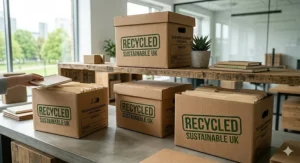
How to Choose the Right Archive Boxes for Your Needs
Selecting appropriate long-term document storage requires matching box specifications to your actual requirements rather than simply choosing the cheapest option. Here’s a systematic approach to making the right decision for your circumstances.
Assess Your Storage Volume & Document Types
Begin by honestly evaluating what you’re storing. A home office with two years of utility bills has vastly different needs than a small business archiving statutory records. Measure your current document piles—you’ll likely need more boxes than you initially estimate. For standard A4 lever arch files, calculate approximately 8-12 files per box depending on thickness. Foolscap files require wider boxes like the archive boxes A4 foolscap dimensions offered by Bankers Box.
Consider document value and retention requirements. HMRC requires UK businesses to retain certain records for six years, whilst employment records have different timescales. High-value documents deserve premium boxes with superior moisture protection, whilst temporary storage can utilise economy options. According to The National Archives’ preservation guidance, the average storage temperature should be less than 18°C, and proper packaging protects against environmental variations.
Space & Stacking Requirements
Your available storage space significantly influences box selection. Measure your storage area’s height, width, and depth before purchasing. Stackable archive boxes save floor space but require sufficient vertical clearance. Standard archive boxes stack efficiently four-high with reinforced construction, but check your ceiling height allows comfortable access to upper boxes. Consider accessibility—boxes stored in attics or garages need different durability than those in climate-controlled offices.
The stacking strength ratings matter enormously. If you’re planning three or four boxes high, invest in reinforced models with proper load distribution. Budget boxes work brilliantly when stored individually on shelves but can fail catastrophically when stacked. British buyers frequently mentioned discovering this limitation after purchasing, so factor stacking into your initial decision rather than learning this expensive lesson later.
Budget Considerations & Long-Term Value
Price per box varies from approximately £1.60 to £3.80 depending on quality and pack size. However, cost-per-use provides better value assessment. A £2 box that fails after one use costs more than a £3 box used reliably for five years. Calculate your total storage needs—buying larger packs typically reduces per-unit cost significantly. Amazon.co.uk frequently offers bulk discounts on packs of 10 or 20 boxes.
For mixed storage needs, consider purchasing different quality levels for different purposes. Premium boxes for valuable long-term archives, mid-range for active storage, and economy for temporary decluttering creates a tiered system that balances protection and cost efficiency. Several savvy British reviewers mentioned this strategy, noting it saved money whilst ensuring important documents received appropriate protection.
Climate & Environmental Factors
UK storage environments vary dramatically from damp Scottish cellars to dry London lofts. The National Archives warns that high relative humidity can cause mould and result in archives absorbing water, whilst low humidity makes materials brittle. Your storage location’s climate characteristics should influence box selection—damper environments benefit from heavier cardboard that resists moisture better.
Avoid storing any cardboard archive boxes heavy duty or otherwise in flood-risk areas, directly on concrete floors where condensation occurs, or in extremely cold or hot spaces. Raised shelving, climate monitoring, and selecting boxes with tight-fitting lids all improve document preservation. British customers in older properties frequently mentioned damp issues, highlighting the importance of proper storage conditions alongside quality boxes.
Proper Assembly & Packing Techniques for Maximum Durability
Even premium archive boxes fail if assembled incorrectly or packed improperly. These professional techniques ensure your storage investment delivers maximum value and document protection.
Assembly Best Practices
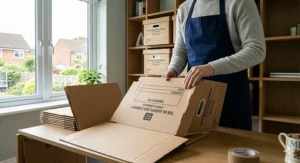
FastFold boxes assemble in seconds, but ensure all locking tabs click completely into place—partially engaged tabs create weak points that fail under load. For manual-assembly boxes, fold all creases sharply and firmly to create strong, clean edges. British buyers who mentioned bottom failures often acknowledged they’d rushed assembly, creating weak spots that later gave way.
Reinforce bottom seams with quality packing tape for heavy loads, even with premium boxes. Cross-hatching tape patterns distribute weight more effectively than single strips. Some UK customers create cardboard reinforcements cut from spare flat-pack boxes, placing these inside before loading documents. This simple technique dramatically increases weight capacity for economy boxes, though it requires extra effort.
Efficient Packing Methods
Never exceed manufacturer weight recommendations—boxes overloaded by even small margins experience exponential failure risk. Distribute weight evenly across the box base rather than concentrating heavy items in corners or centres. Place heaviest items at the bottom, lighter materials on top, following the same principle you’d use packing a removal van.
Leave slight headroom rather than cramming boxes to absolute capacity. Overfilled boxes prevent lids seating properly, reducing dust protection and creating unstable stacks. The Archives & Records Association recommends boxes should not be overfilled, and sufficient space should allow easy removal of contents. Label boxes on multiple sides—at minimum the end and one long side—enabling identification regardless of stack orientation.
Labelling & Organisation Systems
Implement a consistent labelling system before storage begins. Include date ranges, content categories, and box numbers if creating a larger archive. British businesses often use colour-coded labels for different departments or document types, enabling quick visual identification. Consider creating a simple spreadsheet or document listing box contents and locations for easy reference.
Professional archivists recommend avoiding writing directly on boxes with permanent markers, as these can potentially migrate through cardboard to documents over time. Instead, use adhesive labels or label holders. Several UK reviewers mentioned creating detailed box inventories that saved hours of searching later, particularly valuable for businesses managing compliance records or families storing important documents.
Stacking & Storage Configuration
Stack heaviest, most durable boxes at the bottom, progressing to lighter boxes higher up. Ensure boxes are aligned perfectly—offset stacking creates instability and increases collapse risk. Leave access aisles if storing multiple rows of boxes, preventing the need to move entire stacks to reach items. British customers storing boxes in garages or attics recommended allowing air circulation around stacks to prevent moisture accumulation.
Never stack archive boxes directly against external walls where damp can penetrate, or under leaking pipes and roof areas. Elevate bottom boxes slightly using pallets or raised shelving to protect against floor-level moisture. The investment in proper shelving pays dividends through extended box life and improved document preservation, particularly in typical UK storage environments prone to dampness.
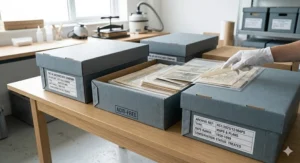
Maintenance & Long-Term Care for Archive Boxes
Quality cardboard archive boxes heavy duty or standard require minimal maintenance but benefit from periodic attention to maximise lifespan and document protection.
Regular Inspection Schedule
Inspect stored boxes quarterly, checking for moisture, pest activity, structural deterioration, or lid displacement. This preventive approach catches problems early before they affect documents. British homeowners in older properties should inspect monthly during winter when condensation risks peak. Look for water stains, mould spots, insect damage, or cardboard softening indicating moisture exposure.
Address issues immediately—moisture-damaged boxes should be replaced promptly, contents transferred to new boxes after ensuring documents have dried properly. According to The National Archives, damp materials often result in mould growth, hazardous to both archives and human health. Several UK customers mentioned catching minor damp issues before they became serious through regular inspection routines.
Handling & Moving Stored Boxes
Always support boxes from underneath when moving, never lift by handles alone when boxes are full. Handles distribute weight differently than full bottom support, and even reinforced handles can fail if boxes exceed design limits. Use trolleys or hand trucks for moving multiple boxes, reducing handling stress on both boxes and yourself. British removal specialists recommend this approach for house moves involving numerous archive boxes.
When accessing stacked boxes, remove from top down rather than pulling boxes from middle positions. Restacking creates opportunities to inspect boxes whilst minimising stack instability. Rotate boxes periodically if storing long-term—this prevents permanent compression deformation on bottom boxes and ensures all boxes receive inspection.
Climate Control & Monitoring
Whilst climate-controlled storage isn’t essential for most documents, monitoring storage environment conditions prevents deterioration. Inexpensive humidity meters help track moisture levels—ideal relative humidity for document storage sits between 35-50%. Temperature stability matters more than specific temperature, though cooler conditions generally favour preservation. Avoid attics with extreme temperature swings unless well-insulated.
Dehumidifiers benefit damp UK storage spaces, particularly basements and garages. Position away from boxes directly to prevent localised temperature variations. Several British customers mentioned modest dehumidifier investments transformed previously problematic storage areas into reliable archive spaces. Ensure adequate ventilation—sealed storage areas without air circulation encourage mould growth even with proper boxes.
When to Replace Archive Boxes
Quality boxes withstand multiple uses, but eventually require replacement. Replace boxes showing structural weakness, significant moisture damage, pest damage, or deteriorating cardboard quality. Boxes used for multiple moves experience more wear than stationary storage boxes—expect shorter lifespans for frequently moved boxes. Transfer contents to new boxes rather than risking document damage from box failure.
Cost-wise, replacing questionable boxes before failure prevents the disaster of scattered documents or damaged papers. British customers who ignored deteriorating boxes frequently regretted the decision when failures occurred at inconvenient moments. Proactive replacement costs less than emergency situations, particularly for businesses managing compliance records with regulatory implications.
Office Decluttering Solutions: Beyond Basic Storage
Implementing comprehensive paperwork organisation systems requires more than simply boxing documents randomly. Strategic approaches transform archives from chaos into efficient, accessible systems.
Document Categorisation Strategies
Before archiving, categorise documents logically—financial, legal, operational, personal creates basic divisions that most UK households and businesses use. Within categories, chronological ordering simplifies retrieval. Businesses should align categorisation with retention schedules—statutory records requiring seven-year retention need clear identification and dating.
Purge unnecessary documents before archiving. British data protection laws require destroying rather than archiving certain personal information beyond retention requirements. GDPR compliance means businesses can’t simply archive everything indefinitely. Several UK businesses mentioned GDPR audits revealed excessive archived personal data, creating compliance risks and wasted storage space. Shred confidential documents properly before disposal.
Integrating Digital & Physical Archives
Modern offices balance physical archives with digital document management. Scan frequently referenced documents before archiving originals, enabling easy access without box retrieval. UK businesses increasingly adopt hybrid approaches—digital copies for daily use, physical originals for compliance. This strategy reduces physical storage needs whilst maintaining legal compliance requiring original documents.
Consider which documents genuinely require physical archiving. Bank statements, utility bills, and routine correspondence often exist digitally, questioning the need for physical storage. Conversely, original contracts, property deeds, and legally significant documents warrant careful physical archiving regardless of digital copies. British solicitors frequently emphasise original document importance for legal proceedings despite digital alternatives.
Creating Efficient Retrieval Systems
Location tracking becomes crucial with multiple boxes. Simple systems work best—spreadsheets listing box numbers and general contents, or more sophisticated database approaches for larger archives. Include storage location details (shelf, room, facility) enabling quick physical retrieval. Several UK small businesses mentioned retrieval systems saved hours compared to searching unlabelled boxes.
Standardise box sizes for efficiency—uniform dimensions stack better and simplify storage planning. Mixing box sizes creates wasted space and unstable stacks. Most British customers who purchased multiple box types regretted the inconsistency, recommending settling on one or two standard sizes for long-term storage needs.
Space Optimisation Techniques
Vertical space maximises storage capacity in most UK homes and offices. Floor-to-ceiling shelving accommodates more boxes than floor stacking whilst improving accessibility. Industrial-style shelving units suit garages and warehouses, whilst wood shelving integrates better with home offices. Ensure shelving bears appropriate weight—fully loaded archive boxes are surprisingly heavy.
Utilise often-overlooked spaces creatively. Under-stairs cupboards, above-wardrobe areas, and garage ceiling spaces accommodate archive boxes when properly accessed. British homeowners in space-constrained properties mentioned these creative solutions freed valuable floor space. However, ensure boxes remain accessible—archives you can’t retrieve serve no purpose regardless of clever storage locations.
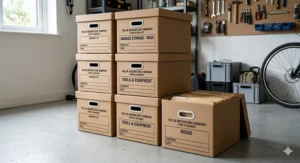
Sustainable Archive Storage: Environmental Responsibility
Environmental consciousness increasingly influences UK purchasing decisions, and archive storage offers multiple sustainability opportunities beyond simply choosing recycled cardboard boxes.
Choosing Eco-Friendly Products
FSC certification guarantees cardboard originates from responsibly managed forests rather than contributing to deforestation. British consumers increasingly prioritise this certification, and major manufacturers now offer FSC-certified options across price ranges. The Bankers Box Earth Series specifically targets environmentally conscious buyers, proving sustainability needn’t compromise quality.
Look beyond the box itself—minimal plastic packaging, water-based inks, and recyclable components characterise genuinely sustainable products. Some manufacturers use recyclable plastic strapping rather than non-recyclable alternatives. British customers mentioned appreciating manufacturers minimising packaging waste, particularly when purchasing larger quantities.
Lifecycle Considerations & Reusability
Quality archive boxes serve multiple purposes over their lifetime. Use initially for document storage, later repurpose for house moves, seasonal storage, or donation to schools and community groups. British reviewers frequently mentioned boxes serving various purposes over years, maximising value and minimising waste. This reusability transforms archive boxes from single-use items into multi-year investments.
Flat-pack storage between uses extends box lifetime significantly. Properly disassembled boxes store efficiently, protecting against accidental damage whilst awaiting reuse. Several UK customers maintained collections of flat-packed boxes for various needs, avoiding repeated purchases whilst always having appropriate storage available.
Recycling & Disposal
When boxes finally reach end-of-life, ensure proper recycling. Remove tape, labels, and any non-cardboard components before recycling. Most UK councils accept cardboard in standard recycling collections, though larger quantities may require dedicated trips to recycling centres. Flatten boxes completely to maximise collection vehicle efficiency.
Consider donation before disposal—schools, charities, and community centres frequently welcome serviceable boxes for various purposes. British Facebook groups and Freecycle networks actively exchange moving supplies including archive boxes, extending product lifecycles whilst helping others. This circular economy approach reduces waste whilst building community connections.
Legal & Compliance Considerations for UK Businesses
British businesses face specific document retention requirements that influence archive storage decisions significantly. Understanding these obligations prevents both non-compliance penalties and unnecessary storage costs.
UK Document Retention Requirements
HMRC requires most business records for six years from the end of the accounting period they relate to. However, certain documents require longer retention—employment records, property records, and some contractual documents may require retention far beyond standard six-year periods. Businesses should consult professional advisers regarding specific retention obligations for their industry and circumstances.
VAT records require six years’ retention, income tax records similarly need six years, whilst company statutory books and accounting records warrant permanent or near-permanent retention. British businesses must balance storage costs against compliance risks—inadequate retention creates audit complications and potential penalties, whilst excessive retention wastes resources and may create data protection issues.
GDPR & Data Protection Implications
Data protection laws complicate archive storage decisions. GDPR’s data minimisation principle means businesses shouldn’t archive personal data indefinitely without justification. Legitimate retention periods exist for various data categories, but businesses must actively delete or anonymise data once retention periods expire. British data protection authorities increasingly enforce these requirements.
Archived documents containing personal data require security appropriate to the data sensitivity. Basic cardboard boxes suffice for general business records, but documents containing sensitive personal information may require locked storage or restricted access facilities. Several UK businesses mentioned data protection audits highlighting inadequate physical security for archived personal data.
Insurance & Disaster Recovery
Business insurance policies may require specific document retention for claims processing. Property insurance, liability insurance, and professional indemnity policies typically require documentation proving circumstances, transactions, or professional advice. British businesses should review insurance requirements before destroying archived documents, as inability to provide required documentation may invalidate claims.
Disaster recovery planning should account for archived documents—fire-resistant safes for critical documents, off-site backup copies for irreplaceable items, and documented archive locations enabling recovery efforts. Multiple UK businesses mentioned insurance claims complicated by destroyed archives highlighting importance of protective measures and backup strategies.
FAQ: Your Archive Box Questions Answered
❓ How long do archive boxes last in storage?
❓ Can archive boxes be stacked in a loft or attic?
❓ What's the difference between archive boxes and removal boxes?
❓ Are plastic storage boxes better than cardboard for archives?
❓ How many lever arch files fit in a standard archive box?
Conclusion: Making Your Archive Storage Decision
Choosing the best archive boxes ultimately depends on balancing your specific needs against available budget and storage conditions. For professional UK businesses requiring reliable long-term storage, the Bankers Box System Large justifies its premium pricing through exceptional durability and proven performance. Home offices and personal use benefit tremendously from the StorePAK Office Archive boxes, offering outstanding value without compromising essential functionality.
Environmental consciousness increasingly influences British purchasing decisions, making the Bankers Box Earth Series attractive for those prioritising sustainability alongside performance. Budget-conscious buyers managing light storage needs find the StorePAK Eco Archive perfectly adequate, particularly when reinforced with tape for additional security. For house moves and heavy-duty applications, the StorePAK Heavy Duty Medium boxes deliver exceptional load-bearing capacity that cheaper alternatives simply can’t match.
The archive storage market in 2026 offers British consumers more choice than ever, from economy options to premium solutions addressing specific needs. Whatever your circumstances—decluttering before a house move, establishing compliant business records management, or simply organising years of accumulated paperwork—investing in appropriate document storage boxes with lids pays dividends through improved organisation, space efficiency, and document protection. Your future self will thank you for implementing proper archival systems today rather than facing chaotic searches tomorrow.
Remember that proper storage extends beyond simply purchasing boxes. Following assembly best practices, implementing logical categorisation systems, maintaining appropriate storage conditions, and conducting regular inspections ensures your archives remain accessible and protected for years. British businesses must additionally balance retention requirements against data protection obligations, ensuring compliance whilst managing storage costs effectively.
Take action today—assess your storage needs, select appropriate boxes from our expert recommendations, and transform your document chaos into organised efficiency. Your valuable papers deserve protection, and the best archive boxes provide exactly that whilst fitting comfortably within realistic budgets.
Recommended for You
- Best Presentation Folders: 7 Professional Options UK 2026
- 7 Best Metal Filing Cabinet 4 Drawer UK 2026
- 7 Best Filing Cabinet UK Home Office Picks (2026 Guide)
Disclaimer: This article contains affiliate links. If you purchase products through these links, we may earn a small commission at no additional cost to you. Prices shown are approximate and may vary.
✨ Found this helpful? Share it with your mates! 💬🤗
