
In This Article
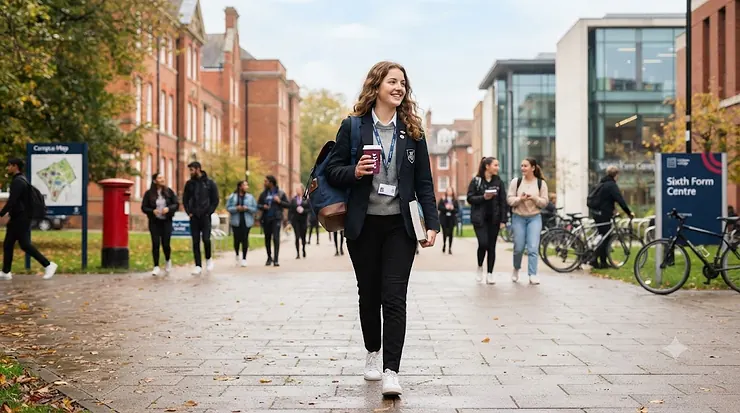
Somewhere between GCSE results day and your first free period in the sixth form common room, your school bag quietly changes jobs. It stops being a book-carrier and starts being a life-support system for a laptop that now has to survive buses, rain, canteen tables and the bottom of a locker that never quite closes. A laptop bag for sixth form isn’t a luxury purchase — it’s the thing standing between your coursework and a cracked screen on the 08:07 service into town. Most sixth formers today are on a Bring Your Own Device set-up, meaning the machine you carry is often the only one you’ve got for two years of A-levels, BTECs or IB work.

What is a laptop bag for sixth form? It’s a padded backpack or case, typically sized for a 13-16 inch laptop, built to combine day-to-day school carrying (books, files, PE kit) with genuine shock protection, weather resistance and easy access for lessons. The best ones also solve two problems schools rarely mention: keeping a laptop sleeve rigid enough to stop screen flex, and giving a USB-C charger somewhere safe to live that isn’t loose at the bottom of the main compartment.
We’ve spent time researching seven genuinely available bags — from ultra-affordable options with a built-in USB charging port to premium Scandinavian and American classics — comparing real specs, aggregated review sentiment, and what actually matters for a British sixth former navigating buses, common rooms and a school day that runs longer than most office ones. Whether you’re commuting to college on foot, by bus, or by a combination that involves at least one sprint, there’s a fit here.
Quick Comparison Table
| Product | Best For | Laptop Fit | Price Range |
|---|---|---|---|
| Fjällräven Kånken Laptop 15 | Style-conscious, low-maintenance carrying | Up to 15″ | £100-£130 |
| MATEIN Travel Laptop Backpack | Tightest budget, built-in USB port | Up to 15.6″ | Under £35 |
| Eastpak Padded Pak’r | Classic looks, long-term durability | Up to 14″ | £50-£70 |
| Herschel Little America | Premium everyday commuting | Up to 15″ | £90-£130 |
| Targus Sagano Backpack | RFID security, professional finish | Up to 15.6″ | £35-£60 |
| JanSport Big Student | Maximum capacity for heavy timetables | Up to 15″ | £40-£55 |
| Osprey Ozone Laptop Daypack | Lightweight commuting and travel crossover | Up to 16″ | £90-£105 |
Looking at the spread above, the real split isn’t really “cheap versus expensive” — it’s capacity versus weight. The JanSport Big Student and Eastpak Padded Pak’r are built to carry a genuinely heavy sixth form timetable, while the Osprey Ozone Laptop Daypack and Fjällräven Kånken Laptop 15 are engineered to carry less, more comfortably. If your school still issues a stack of physical textbooks alongside a laptop, capacity should outrank style; if you’re mostly digital, the lighter builds pay off on a long commute.
💬 Just one click — help others make better buying decisions too!😊
The Top 7 Laptop Bags for Sixth Form: Expert Analysis
1. Fjällräven Kånken Laptop 15 — cult styling that actually protects your machine
The Fjällräven Kånken Laptop 15 takes the brand’s famously simple square silhouette and adds a properly padded, separate rear compartment purpose-built for a 15-inch laptop. That separation matters more than it sounds: keeping the laptop compartment structurally apart from the main body means a dropped textbook inside the bag can’t slam directly into your screen.
Built from Vinylon F — a hardwearing, water-resistant vinylal fabric rather than standard nylon — the Kånken Laptop 15 weighs around 460g empty and holds an 18-litre capacity across its main compartment, a front zip pocket and two open side pockets. That’s snug for a full sixth form kit but workable if you’re mostly digital. The fabric shrugs off drizzle in a way that plain canvas doesn’t, and the flat, structured base means it stands upright on a common room floor instead of slumping.
Based on the spec comparison with cheaper padded backpacks, what most buyers overlook is that the Kånken Laptop 15‘s appeal isn’t really about protection specs at all — it’s about longevity of use. This is a bag you’ll still want to carry in year 13, which matters when you’re buying something you’ll see every single day for two years. It suits image-conscious students who want a laptop bag for sixth form that doesn’t scream “school bag,” and who are willing to trade some capacity for a design classic.
Reviewers consistently note that the vinylon fabric holds its shape well even after heavy daily use, though several long-term owners mention the single main compartment can feel tight once folders and PE kit are added on top of a laptop and charger.
Pros:
- ✅ Genuinely water-resistant Vinylon F fabric handles British weather
- ✅ Separate padded 15″ laptop compartment protects against knocks
- ✅ Iconic, durable design that lasts well beyond sixth form
Cons:
- ❌ 18L capacity is tight once books and kit are added
- ❌ Sits at the pricier end for a fairly simple internal layout
At around £100-£130, with occasional promotional pricing pushing it lower, the Fjällräven Kånken Laptop 15 is a style-first buy — pay the premium and it’ll outlast the two years you actually need it for.

2. MATEIN Travel Laptop Backpack — best budget pick with a built-in USB charging port
The MATEIN Travel Laptop Backpack is one of the most consistently reviewed budget backpacks around, and its standout feature for sixth formers is genuinely useful: a built-in external USB charging port with an internal cable, so a power bank clipped inside the bag can top up a phone through the day without unzipping anything.
The laptop compartment fits up to 15.6 inches and sits separated from the main packing area, which holds textbooks, folders and daily essentials. At roughly 700g and with a luggage strap on the back, it’s designed as much for commuting and travel as for school corridors — a detail that matters if your route to sixth form involves buses, trains, or both.
Here’s what to weigh: this isn’t a premium build, and it won’t pretend to be. What it does deliver, based on the spec sheet and aggregated review data, is disproportionate value for the price. The anti-theft pocket sitting against the wearer’s back is a smart touch for anyone commuting to college through a busy town centre, and the water-resistant polyester coating handles typical UK drizzle without needing a rain cover.
Reviewers consistently report strong build quality for the price point, with particular praise for the metal zippers holding up under daily use; a recurring complaint is that the USB port itself doesn’t power the bag — you still need to carry your own battery pack inside.
Pros:
- ✅ Lowest price point of any bag on this list
- ✅ Built-in USB charging port for on-the-go phone top-ups
- ✅ Anti-theft rear pocket is genuinely useful on public transport
Cons:
- ❌ USB port needs your own power bank — it isn’t self-charging
- ❌ Build quality noticeably below the premium picks on this list
Typically priced under £35, the MATEIN Travel Laptop Backpack is the pragmatic choice if budget is the deciding factor and you still want tech-friendly features.
3. Eastpak Padded Pak’r — the classic sixth form staple, reinvented with a laptop sleeve
The Eastpak Padded Pak’r has been a fixture of UK school corridors for decades, and the updated version keeps the brand’s famously simple two-compartment shape while adding a padded laptop sleeve fitted for machines up to around 13-14 inches. At 24 litres and roughly 470g, it strikes a genuine balance between capacity and weight that many “laptop-first” bags don’t bother with.
What most buyers overlook about this model is the 30-year warranty Eastpak backs it with — a detail that turns what looks like a mid-range purchase into one of the better long-term value picks here, provided you don’t outgrow the 13-14 inch laptop limit. The padded back panel and adjustable straps are built for genuinely heavy daily loads, not just a slim laptop and a notebook, which suits sixth formers whose timetable still includes bulky folders or art portfolios.
On paper this means a slightly smaller laptop compartment than rivals like the Targus Sagano Backpack, but real-world performance tends to favour the Eastpak Padded Pak’r for anyone carrying more than just tech — reviewers frequently mention it holding up well through multiple academic years without the zips or straps failing.
Pros:
- ✅ 30-year warranty signals genuine long-term durability
- ✅ 24L main compartment comfortably fits folders, kit and books
- ✅ Iconic, low-key design that doesn’t scream “new bag”
Cons:
- ❌ Laptop sleeve tops out around 13-14 inches, not 15.6
- ❌ Basic organisation compared with pricier commuter-focused bags
Priced typically between £50 and £70 depending on colourway, the Eastpak Padded Pak’r earns its reputation as the safe, sensible sixth form choice — provided your laptop fits.
4. Herschel Little America — the premium pick for daily commuting
The Herschel Little America trades school-bag aesthetics entirely for a rounded, structured silhouette that reads more “commuter” than “student” — which is exactly the point for sixth formers who want a laptop bag for sixth form that will also work for open days, part-time jobs and university visits. Inside, a dedicated padded sleeve accommodates laptops up to 15 inches, sitting apart from the drawstring-closed main compartment.
The drawstring top-load design is the detail that divides opinion. It’s fast and forgiving when you’re stuffing the bag full, but it’s slower for grabbing a single item mid-corridor compared with a straightforward zip. Two side pouches handle water bottles or umbrellas, and a front pocket with a magnetic buckle closure keeps smaller items — cards, bus passes, headphones — quickly accessible without opening the main body.
Based on the spec comparison with the other premium options here, the Herschel Little America‘s real advantage is versatility beyond the school gates. Reviewers consistently note the 100% polyester construction feels genuinely durable under daily use, though the padded straps get more mixed feedback on very long carrying days compared with dedicated hiking-style brands like Osprey.
Pros:
- ✅ Structured, commuter-friendly design that works beyond sixth form
- ✅ Padded 15″ laptop sleeve kept separate from the main compartment
- ✅ Front magnetic pocket for fast access to small essentials
Cons:
- ❌ Drawstring top-load is slower for quick single-item access
- ❌ Shoulder strap padding draws mixed feedback on longer wears
At around £90-£130 depending on retailer and colourway, the Herschel Little America suits sixth formers who want one bag to see them through school, part-time work and beyond.
5. Targus Sagano Backpack — best for RFID security and a professional finish
The Targus Sagano Backpack leans into a genuinely useful, under-discussed feature for sixth formers who now carry bank cards, bus passes and student ID everywhere: a workstation-style front pocket with RFID-blocking protection alongside a padded tablet pocket. The dedicated laptop compartment, built on Targus’s SafePort Sling Protection System, takes laptops up to 15.6 inches and is designed to absorb impact from drops rather than just cushion static weight.
At roughly 480-800g depending on the exact model year, and made partly from recycled PET bottles in newer runs, it’s a genuinely practical, unfussy build. Two water bottle pockets, a hidden rain cover, and a trolley strap for rolling luggage round out a bag that clearly wasn’t designed purely for a school run — it’s a commuter bag that happens to fit a sixth form kit well.
Here’s what the spec sheet won’t tell you directly, but user reports suggest: the two-tone, minimalist look reads more “young professional” than “student,” which some sixth formers specifically want when they’re already thinking about work experience placements or Saturday jobs. Reviewers frequently flag the SafePort system as a genuine point of difference versus simpler padded sleeves.
Pros:
- ✅ RFID-blocking pocket protects cards and student ID
- ✅ SafePort Sling system offers active drop protection, not just padding
- ✅ Hidden rain cover included as standard
Cons:
- ❌ Main compartment is less spacious than the JanSport Big Student
- ❌ Pricing varies significantly between retailers, so shop around
Typically found in the £35-£60 range, the Targus Sagano Backpack is the pick for sixth formers who want tech-focused protection with a professional edge.
6. JanSport Big Student — maximum capacity for a genuinely heavy timetable
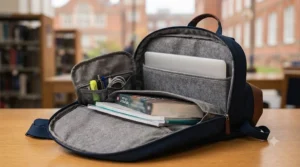
The JanSport Big Student is built for one thing above all else: volume. At 34 litres split across two large main compartments, plus a front utility pocket with an organiser panel, it’s the bag to reach for if your sixth form still hands out physical textbooks alongside digital coursework. The dedicated 15-inch laptop sleeve sits within the main compartment with zip closure and 360-degree padding, rather than as a fully separate pocket.
Constructed from 100% recycled 600-denier polyester with S-curve ergonomic shoulder straps and a fully padded back panel, it’s designed to carry real weight comfortably — a genuinely important factor given how heavy a fully-loaded sixth form bag can get. JanSport backs the Big Student with a lifetime warranty, which is a stronger guarantee than most of the bags on this list offer.
What the spec sheet won’t tell you, but reviewers consistently note, is that the laptop sleeve’s position inside the main compartment — rather than in its own isolated pocket — means a heavy textbook packed carelessly on top can still press against the laptop. For students whose bag genuinely needs to swallow folders, kit and a laptop, that’s a reasonable trade-off for the sheer capacity on offer; for a lighter, laptop-only carry, it’s arguably overkill.
Pros:
- ✅ Huge 34L capacity for a genuinely loaded sixth form timetable
- ✅ Lifetime manufacturer warranty, stronger than most rivals here
- ✅ Ergonomic S-curve straps designed for heavier daily loads
Cons:
- ❌ Laptop sleeve sits inside the main compartment, not isolated
- ❌ Bulkier profile than the commuter-style options on this list
Usually priced between £40 and £55, the JanSport Big Student is the practical, high-capacity choice for anyone still juggling physical books alongside a laptop.
7. Osprey Ozone Laptop Daypack — lightest premium option for commuting and travel
The Osprey Ozone Laptop Daypack comes from a brand better known for hiking packs, and it shows in the details: a ventilated AirScape back panel designed to reduce heat build-up on your back, a luggage trolley pass-through for anyone who also travels, and a dedicated laptop sleeve that fits machines up to a generous 16 inches — the largest capacity of any bag on this list.
At roughly 670g and 18 litres, it’s genuinely lightweight for what it offers, built from 210D recycled high-tenacity nylon ripstop with a PFAS-free water-repellent coating. Dual stretch mesh side pockets hold water bottles, and an internal organiser with a key clip keeps small essentials from disappearing into the main compartment.
Based on the spec comparison with the other bags here, the Osprey Ozone Laptop Daypack‘s real strength is weight-to-durability ratio — it’s built with genuine outdoor-brand engineering but at a fraction of the bulk of a hiking pack. That makes it a strong pick for sixth formers commuting to college by train or bus over longer distances, where every extra gram on your shoulders adds up over a school year. Reviewers rate it highly for comfort on longer carries, with the main critique being that its minimalist single-compartment layout offers less day-to-day organisation than school-focused bags like the JanSport Big Student.
Pros:
- ✅ Fits laptops up to 16 inches — largest on this list
- ✅ Lightweight, breathable AirScape back panel for long commutes
- ✅ Water-resistant, third-party certified recycled ripstop fabric
Cons:
- ❌ Fewer organisational pockets than dedicated school bags
- ❌ Premium pricing relative to its fairly minimal feature set
At around £90-£105, the Osprey Ozone Laptop Daypack is the pick for sixth formers who commute long distances and want their bag to feel light by the end of the day.
Practical Usage Guide: Setting Up Your Laptop Bag for Sixth Form
Buying the right bag is only half the job — how you load and maintain it decides whether your laptop survives the year. Start by packing your laptop in its dedicated sleeve before anything else goes in the main compartment; this sounds obvious, but a surprising number of cracked screens happen because a heavy textbook was dropped in first and the laptop went in on top, pressing down through a full day of corridor knocks.
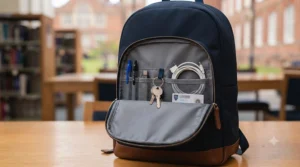
In the first 30 days, get into the habit of checking your USB-C charger cable for fraying where it exits the plug — this is the most common point of failure, and catching it early avoids a dead laptop mid-lesson. Store the charger in a dedicated front pocket rather than loose in the main compartment, where it can tangle with keys or coil around zips.
A quick monthly clear-out avoids the single biggest mistake sixth formers make with any laptop bag for sixth form: letting it slowly fill with dead pens, old worksheets and forgotten snack wrappers until the bag is heavier than it needs to be. Wipe down the laptop compartment lining every few weeks, since crumbs and dust can work their way against the screen over time. Finally, rotate which shoulder strap you tighten first when putting the bag on — it’s a small habit, but it prevents the kind of one-sided posture strain that adds up over two years of daily wear.
✨ Don’t Miss These Exclusive Deals!
🔍 Whichever bag matches your commute, check current pricing before you buy — availability and offers shift regularly, and a few minutes of comparing now means the right bag turns up on your first day back, not week three.
Real-World Scenarios: Matching the Bag to Your Sixth Form Journey
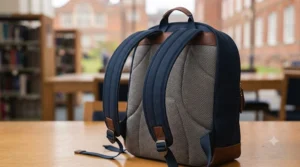
Picture three different sixth formers. The first cycles or walks a short distance to school, has a locker, and mostly needs the laptop protected between lessons rather than across a long journey — for this profile, the Eastpak Padded Pak’r or Fjällräven Kånken Laptop 15 make sense: compact, durable, low-maintenance.
The second catches two buses each way, often standing for part of the journey, and needs a bag that stays comfortable under sustained weight while also surviving being set down on a wet pavement while waiting. This is where the Osprey Ozone Laptop Daypack and Targus Sagano Backpack earn their keep, with genuinely weather-resistant builds and back panels designed for longer carries.
The third is juggling a heavier academic load — still-physical textbooks, art folders, sports kit on certain days — and genuinely needs volume over minimalism. Here, the JanSport Big Student‘s 34 litres and lifetime warranty are hard to beat, even if it’s bulkier than the commuter-style picks. Matching your actual daily reality to a bag’s design intent, rather than buying on looks alone, is what separates a bag you’ll still be using in year 13 from one replaced by Christmas.
Problem → Solution: Fixing Common Laptop Bag for Sixth Form Headaches
Problem: the laptop compartment feels loose and the laptop shifts around. A laptop sleeve that’s too big for your machine lets it slide and knock against the bag’s edges. The fix is checking the manufacturer’s stated laptop size range before buying — a 13-inch laptop in a 15.6-inch sleeve, like some found in the Eastpak Padded Pak’r, will always move more than a snug fit.
Problem: the bag is soaked through after a wet commute. Look specifically for water-resistant coated fabrics rather than plain cotton canvas — the Fjällräven Kånken Laptop 15‘s Vinylon F and the Osprey Ozone Laptop Daypack‘s coated ripstop nylon both genuinely shrug off typical UK drizzle, whereas uncoated canvas absorbs it.
Problem: your phone or power bank charger cable keeps tangling. A bag with a built-in USB charging port and internal routing, like the MATEIN Travel Laptop Backpack, solves this directly by giving the cable a fixed path rather than letting it float loose.
Problem: shoulder or back discomfort by the end of the school day. This is usually a packing and posture issue as much as a bag one — see the safety section below for the specific weight guidance — but choosing a bag with genuinely padded, adjustable straps, such as the JanSport Big Student‘s S-curve design or the Osprey Ozone Laptop Daypack‘s AirScape panel, makes a measurable difference over a full term.
How to Choose a Laptop Bag for Sixth Form
- Confirm your laptop’s screen size first. Measure diagonally in inches before you shop — a bag rated for “up to 15.6 inches” won’t always comfortably fit a bulky 15-inch gaming-style laptop with a wide bezel.
- Decide how much you’re actually carrying. If your school has gone largely digital, prioritise a lighter, laptop-first design like the Osprey Ozone Laptop Daypack; if you’re still hauling textbooks, capacity should come first.
- Check for a separated laptop compartment. Bags where the laptop sleeve is fully isolated from the main body, rather than just a padded pocket inside it, generally offer better impact protection.
- Look for weather resistance, not just “water resistant” marketing. Coated fabrics and taped seams genuinely outperform plain canvas on a wet commute.
- Weigh up organisation versus minimalism. More pockets mean faster access to a USB-C charger or bus pass, but also more weight and more places for small items to go missing.
- Factor in the warranty. A 30-year or lifetime warranty, as offered on the Eastpak Padded Pak’r and JanSport Big Student, is a genuine signal of expected durability.
- Try it loaded, not empty. A bag that feels fine empty in a shop can feel very different once it’s carrying a laptop, charger, folders and kit for a full day.
Laptop Sleeve vs Padded Backpack Compartment: What Actually Protects Your Machine
A standalone laptop sleeve and a backpack’s built-in padded compartment solve overlapping but distinct problems, and conflating them is a common buying mistake. A dedicated laptop sleeve — a slim, foam-lined case the laptop lives inside — protects primarily against scratches, dust and minor knocks, and can be moved between bags. A backpack’s built-in compartment, like those in the Fjällräven Kånken Laptop 15 or Targus Sagano Backpack, is generally thicker-padded and structurally reinforced against drops, but ties the protection to that specific bag.
For sixth formers, the strongest setup is often both: a slim laptop sleeve inside a backpack’s padded compartment doubles up the cushioning without adding much weight, and means the laptop stays protected even if you occasionally borrow a friend’s bag or switch to a tote for a non-school day. What most buyers overlook is that a sleeve also protects against a specific everyday risk backpacks alone don’t: compression from other items being stacked on top when the bag is set down flat, such as on a bus luggage rack or under a desk.
USB-C Charger and Cable Care On the Go
Most laptops issued or recommended for UK sixth form BYOD schemes now charge via USB-C, following the same shift toward a common charging standard that the EU mandated for portable devices and which the UK government has been consulting on adopting for the wider market. Practically, that means most sixth formers are carrying a USB-C charger that’s also compatible with their phone, which is genuinely useful — but also means that charger is now doing double duty and taking more wear.
The most common point of failure isn’t the plug itself but the cable, particularly where it meets the connector. Storing the charger loose in a bag’s main compartment, coiled tightly or wrapped around other items, accelerates this wear. A bag with a dedicated accessory pocket — most of the picks on this list include one — keeps the cable straight and separated from sharp-edged items like rulers or metal water bottles. If your bag doesn’t have a built-in USB charging port like the MATEIN Travel Laptop Backpack, a small zip pouch for the charger and any power bank is a cheap, worthwhile addition.
Commuting to College and Sixth Form: What to Expect
Commuting to college on public transport changes what “good” looks like in a bag in ways that aren’t obvious from a spec sheet alone. Standing on a crowded bus means your bag needs to sit stably on your back without shifting weight forward — a well-padded, adjustable-strap design like the Osprey Ozone Laptop Daypack‘s makes a real difference here compared with a loosely structured tote-style bag.
Weather is the other daily variable a school corridor doesn’t prepare you for. A bag that’s fine carried from a car to a front door behaves very differently after ten minutes at a bus stop in September rain. This is where genuinely water-resistant coated fabrics, rather than “shower resistant” marketing claims, earn their keep — reviewers of both the Fjällräven Kånken Laptop 15 and the Osprey Ozone Laptop Daypack consistently report the fabric holding up through a full wet commute without the laptop compartment ever feeling damp.
Security is worth a mention too: front pockets with quick, one-handed access for a bus pass or contactless card, like those on the Targus Sagano Backpack and Herschel Little America, save the fumbling that slows down boarding a busy bus — a small thing, but one that adds up daily.
Safety, Weight and Wellbeing: What the Evidence Says
This is the section most sixth form laptop bag guides skip, and it matters. According to guidance distributed by NHS physiotherapy services, a child’s or teenager’s backpack should weigh no more than 10-20% of their body weight, since heavier loads pull the body backwards and force compensating strain through the neck and shoulder muscles. For a sixth former weighing around 60kg, that’s a ceiling of roughly 6-12kg fully loaded — easy to exceed once a laptop, charger, several textbooks and PE kit are all packed together.
Warning signs the NHS guidance flags include a visible change in posture when the bag is worn, difficulty putting it on or taking it off, and any tingling, numbness or persistent shoulder pain. Choosing a bag with two wide, padded, adjustable shoulder straps — as opposed to carrying anything over one shoulder — is consistently recommended, and every bag on this list is built with that in mind. Practically, the simplest fix most sixth formers can make is doing a genuine weekly clear-out of anything not needed for that day’s timetable, rather than relying on the bag itself to solve a packing habit.
Benefits vs Traditional School Bags
| Feature | Laptop Bag for Sixth Form | Traditional School Rucksack |
|---|---|---|
| Device protection | Dedicated padded compartment | Rarely padded, laptop unprotected |
| Weather resistance | Coated, water-resistant fabrics common | Often plain canvas, absorbs rain |
| Charging accessories | Dedicated pockets, some with USB port | Loose storage, cables tangle |
| Best For | Osprey Ozone Laptop Daypack, Targus Sagano Backpack | General book-carrying only |
The gap here isn’t cosmetic — a traditional rucksack without a structured laptop compartment offers essentially no protection beyond whatever padding happens to be in the main body, which is exactly how screens crack when a heavy textbook shifts on top. Every bag reviewed above closes that gap specifically, which is why, for a device that’s often the single most expensive item a sixth former owns, it’s worth treating the bag as part of the laptop’s total cost rather than an afterthought.
FAQ
❓ What size laptop bag do I need for sixth form?
❓ Is a backpack better than a laptop sleeve for sixth form?
❓ Do laptop bags for sixth form need to be waterproof?
❓ How much should a sixth form laptop bag weigh when packed?
❓ Can I fit a 15.6-inch laptop in every bag on this list?
Conclusion
There’s no single “best” laptop bag for sixth form — there’s a best one for your commute, your timetable, and how much you’re actually carrying alongside the laptop itself. If your priority is style and you’re travelling light, the Fjällräven Kånken Laptop 15 earns its reputation. If budget rules everything, the MATEIN Travel Laptop Backpack delivers genuinely useful features — including that built-in USB charging port — for very little outlay. Heavier timetables point toward the JanSport Big Student‘s sheer capacity, while longer, more demanding commutes favour the lightweight engineering of the Osprey Ozone Laptop Daypack.
Whichever you choose, treat the decision with the same seriousness as the laptop itself: a £30 mistake on a badly padded bag can easily cost far more in a cracked screen or a damaged charger cable. Check current prices before buying, since availability shifts regularly across retailers, and match the bag to the journey you’ll actually be making — not the one you imagine on results day.
Recommended for You
- Stationery Set For Sixth Form Students: 7 Best UK Picks (2026)
- Fountain Pen for GCSE: 7 Best Exam-Safe Picks (2026)
- Scientific Calculator for GCSE: 7 Exam-Approved Picks (2026)
Disclaimer: This article contains affiliate links. As an Amazon Associate, I earn from qualifying purchases. If you purchase products through these links, we may earn a small commission at no additional cost to you.
✨ Found this helpful? Share it with your friends! 💬🤗
