
In This Article
Choosing the right A-level chemistry revision guide can genuinely make the difference between scraping a B and securing that coveted A*. I’ve seen countless Year 13 students panic-buy revision materials in March, only to realise they’ve wasted £50 on resources that don’t match their exam board or learning style.
What most British sixth-formers overlook is that not all revision guides are created equal. Some excel at condensing organic mechanisms into digestible chunks, whilst others shine when explaining Born-Haber cycles or equilibrium calculations. The trick is matching your specific needs — whether that’s OCR A, AQA, or Edexcel — with materials that actually complement how you learn, rather than fighting against it.
In this comprehensive review, I’ve analysed the most popular A-level chemistry revision guides available on Amazon.co.uk for the 2026 and 2027 exam series. Each guide has been evaluated not just on content coverage, but on practical factors that matter when you’re revising at 11 PM with exam anxiety setting in: clarity of explanations, quality of worked examples, usefulness for weak topics like transition metals, and whether the practice questions genuinely mirror exam standards. You’ll find budget options around £15, premium comprehensive guides in the £20-25 range, and specialist resources for organic chemistry or practical skills that fill specific gaps your teacher might have glossed over.
According to Ofqual’s GCE subject-level guidance, all UK exam boards must cover the same core content areas, though they differ in assessment structure and emphasis. This means choosing board-specific revision materials isn’t just pedantic — it’s essential for exam success.
Quick Comparison: Top A-level Chemistry Revision Guides at a Glance
| Guide | Best For | Exam Boards | Price Range (£) | Key Strength | Rating |
|---|---|---|---|---|---|
| CGP Complete Revision & Practice | All-rounders needing comprehensive coverage | AQA, OCR A, Edexcel | £20-25 | Online edition included + extensive practice | ⭐⭐⭐⭐⭐ |
| Pearson REVISE Guide | Visual learners + online revision fans | OCR, Edexcel | £15-20 | Colour-coded topics + digital resources | ⭐⭐⭐⭐½ |
| Oxford Revise for OCR A | OCR students seeking exam-focused prep | OCR A only | £18-22 | Specification-matched structure | ⭐⭐⭐⭐½ |
| My Revision Notes OCR A | Self-directed learners | OCR A | £12-16 | Step-by-step revision planner | ⭐⭐⭐⭐ |
| A-Level Organic Chemistry Textbook (Shah) | Organic chemistry strugglers | OCR A (Years 1+2) | £18-24 | Mechanisms broken down brilliantly | ⭐⭐⭐⭐½ |
| CGP Revision Question Cards | Active recall enthusiasts | AQA, OCR A | £9-12 | Portable + spaced repetition friendly | ⭐⭐⭐⭐ |
| Nora Henry Practical Chemistry Guide | Paper 3 / practical skills focus | AQA, OCR | £12-17 | Required practicals coverage | ⭐⭐⭐⭐ |
From the comparison above, CGP’s Complete Revision & Practice guides dominate for most students because they bundle study notes, worked examples, and hundreds of practice questions in one package — crucial when you’re juggling three A-levels and don’t have time to cross-reference multiple books. However, if you’re specifically drowning in organic nomenclature or arrow-pushing mechanisms, Rehan Shah’s specialist organic textbook offers the depth that general guides simply can’t match. Budget-conscious students should note that the £9-12 revision question cards deliver exceptional value for targeted topic practice, particularly when paired with free online resources from exam boards.
💬 Just one click — help others make better buying decisions too!😊
Top 7 A-level Chemistry Revision Guides: Expert Analysis
1. CGP A-Level Chemistry Complete Revision & Practice (AQA / OCR A / Edexcel)
For students who want everything in one place, CGP’s Complete Revision & Practice guides are the gold standard — and for good reason. These chunky books (typically 250-300 pages) cover both Year 1 and Year 2 content with straightforward study notes, full-colour diagrams, and exam-style questions for every single topic. The real game-changer here is the free online edition code printed inside, which lets you access the entire book on your laptop, tablet, or phone — invaluable when you’re commuting to sixth form on the bus or revising in the college library.
What sets CGP apart is how they’ve structured the content. Each section starts with clear, jargon-free explanations (think “this is what a Born-Haber cycle actually does” rather than regurgitating textbook definitions), follows with worked examples showing exactly how to tackle calculation questions, then hits you with practice questions that genuinely mirror exam difficulty. The mixed synoptic practice section at the end is particularly useful for Paper 3-style questions that combine topics. UK chemistry teachers consistently recommend these because the explanations anticipate common student misconceptions — like why Le Chatelier’s principle doesn’t always predict yield, or how to avoid losing marks on curly arrow mechanisms.
The books are exam board-specific, so you’ll need the correct version (AQA 9781789080292, OCR A 9781789080384, or Edexcel 9781782943013). All are updated for the 2026 and 2027 exams. One student reviewer mentioned they “dropped A-Level Chemistry a month before mocks but still got into Oxford” — whilst that’s not the intended use case, it speaks to how well these books condense complex content. The main limitation is that some students find the sheer volume of information overwhelming if they’re starting revision late; in that scenario, you’re better off using it selectively for weak topics rather than trying to work through cover-to-cover.
Price range: Around £20-25 on Amazon.co.uk (Prime eligible, usually next-day delivery)
Pros:
✅ Comprehensive coverage of entire specification in one book
✅ Free online edition included — access on any device
✅ Exam-style questions with detailed worked answers
Cons:
❌ Dense content can overwhelm last-minute crammers
❌ Some niche topics covered more briefly than specialist guides
2. Pearson REVISE OCR / Edexcel A-Level Chemistry Revision Guide
If you’re the type of student who highlights, colour-codes, and thrives on visual organisation, Pearson’s REVISE guides might suit you better than CGP’s text-heavy approach. These guides (around 200 pages) use a more structured layout with each topic broken into bite-sized chunks, plenty of white space, and clear colour-coding to distinguish between physical, organic, and inorganic chemistry sections. The online revision component is particularly strong — you get access to additional practice questions, quick quizzes, and topic overviews that work brilliantly for spaced repetition.
What I particularly appreciate about Pearson guides is the “guided support and hints” feature embedded throughout. Rather than just presenting answers, they walk you through common pitfalls and exam technique — for example, reminding you that examiners expect state symbols in certain equation types, or that “explain” questions require cause-and-effect chains, not just factual statements. This makes them especially valuable for students who find exam technique challenging, or those retaking exams who need to tighten up their approach rather than re-learn content from scratch.
UK reviewers consistently mention these guides work best as a complement to class lessons rather than a standalone resource. One student secured an A* despite having a “poor teacher,” relying heavily on this book, which suggests it can fill gaps effectively. However, several customers note that topics aren’t always presented in specification order, which can be frustrating if you’re trying to follow along with your school’s teaching sequence. Available for OCR (9781447984375) and Edexcel (check current ISBN for your spec) for the 2026-2027 exams.
Price range: £15-20 on Amazon.co.uk
Pros:
✅ Colour-coded visual layout aids memory retention
✅ Strong online revision tools for active practice
✅ Guided hints address common exam mistakes
Cons:
❌ Topics not always in specification order
❌ Less comprehensive than CGP for standalone revision
3. Oxford Revise: A Level Chemistry for OCR A
Oxford’s Revise series represents a slightly different philosophy: these aren’t traditional revision guides but rather exam practice companions. The OCR A version (winner of a Teach Secondary 2021 award) focuses heavily on applying knowledge through questions rather than lengthy explanations. Each topic includes a concise summary, then immediately throws you into exam-style questions with mark schemes and examiner commentary explaining exactly what’s needed for full marks.
This approach works exceptionally well for students who’ve already covered the content in class and need to sharpen exam technique, particularly for Paper 1 and Paper 2 where question phrasing can be deliberately tricky. The book includes questions on practical skills and synoptic elements, mirroring the OCR A specification’s emphasis on linking topics. UK students particularly value the examiner insights — little nuggets like “Most students lose marks here because they write ‘delocalised electrons’ without explaining why this lowers the bond energy” — which help you anticipate marking pitfalls.
The main limitation is that Oxford Revise isn’t ideal if you’re still building foundational understanding. It assumes you know what a Gibbs free energy change is and focuses on drilling you on how to apply that knowledge under exam conditions. Use this alongside a more explanatory guide (like CGP or Pearson) for best results, or if you’re a high-achieving student consolidating A/A* performance rather than trying to understand topics for the first time.
Price range: £18-22 on Amazon.co.uk
Pros:
✅ Exam-style questions perfectly match OCR A specification
✅ Examiner commentary reveals common marking pitfalls
✅ Award-winning resource trusted by UK teachers
Cons:
❌ Less useful for initial learning of new topics
❌ OCR A only — no AQA or Edexcel versions
4. My Revision Notes: OCR A Level Chemistry A (Hodder Education)
For self-disciplined students who prefer a structured, methodical approach, My Revision Notes from Hodder Education offers something unique: a built-in revision planner that helps you pace your study over weeks or months. Written by experienced teacher and examiner Mike Smith, this guide (around 180 pages) breaks each topic into manageable sections with clear headings, definitions, key points, and “knowledge check” questions to test understanding as you go.
What distinguishes this from other guides is the explicit focus on definitions and terminology — absolutely critical for OCR A, where exams frequently test whether you can accurately define terms like “standard enthalpy of formation” or “rate-determining step.” One reviewer specifically praised the “accuracy of the mechanisms within organic chemistry,” noting it’s “not found in any other book” — a significant endorsement given how easy it is to lose marks on incorrectly drawn curly arrows or missing intermediates.
The book’s main strength is helping students who struggle with self-directed revision. The planner at the start breaks the entire specification into realistic revision chunks, so you can tick off topics as you master them. This psychological benefit shouldn’t be underestimated when you’re facing 18 months of content and feeling overwhelmed. However, it’s worth noting that the practice questions are less extensive than CGP or Pearson guides, so you’ll likely need to supplement with past papers or a separate exam practice workbook.
Price range: £12-16 on Amazon.co.uk
Pros:
✅ Built-in revision planner for structured study
✅ Exceptionally accurate organic chemistry mechanisms
✅ Clear definitions and key terminology throughout
Cons:
❌ Fewer practice questions than competitor guides
❌ Quite concise — may need supplementing for depth
5. A Level Organic Chemistry Textbook – OCR A (Years 1 + 2) by Rehan Shah
If organic chemistry is your nemesis — and let’s be honest, it trips up most British A-level students at some point — Rehan Shah’s specialist textbook is the antidote you need. This isn’t a general revision guide trying to cover everything; it’s a laser-focused deep dive into organic chemistry for OCR A, written by an experienced teacher who understands exactly where students get confused: mechanisms, synthesis routes, nomenclature, and those endless reagent/condition combinations.
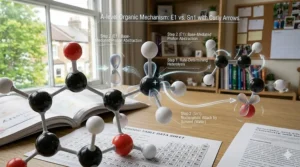
What makes this book exceptional is the step-by-step breakdown of mechanisms with colour-coded arrows, clear explanations of why each step occurs (not just what happens), and crucially, worked examples using unfamiliar molecules so you learn to apply principles rather than just memorise specific reactions. UK student reviews are overwhelmingly positive, with many mentioning it transformed their understanding of mechanisms and helped them achieve top grades. One noted it’s “one of the best books to use when it comes to revising for exams with all the mechanisms included and explained step by step.”
The book includes practice questions with answers throughout, tips for avoiding common mistakes, and coverage of all the organic content in both Year 1 and Year 2. It’s particularly valuable if your teacher rushed through organic chemistry or if you find the topic intimidating. The only downside is that it’s OCR A-specific, so AQA or Edexcel students should check content overlap carefully (though most organic chemistry is similar across boards, reagents and specific reactions can differ).
Price range: £18-24 on Amazon.co.uk
Pros:
✅ Mechanisms explained with exceptional clarity
✅ Colour-coded diagrams make complex reactions understandable
✅ Practice questions specifically for unfamiliar molecules
Cons:
❌ Organic chemistry only — not a complete revision guide
❌ OCR A specific (though much content applies to other boards)
6. CGP A-Level Chemistry Revision Question Cards (AQA / OCR A)
Sometimes the most effective revision tool isn’t a hefty textbook but something you can slip into your blazer pocket. CGP’s Revision Question Cards (126 cards for AQA, 128 for OCR A) offer a completely different learning approach based on active recall and spaced repetition — two evidence-based techniques that cognitive science repeatedly shows are far more effective than passive re-reading.
Each card tackles a key topic with quick warm-up questions on one side, harder questions to stretch you, then full answers with explanations on the reverse. The genius here is portability: you can revise on the bus, during free periods, or whilst waiting for football training to start. Unlike bulky revision guides that live on your desk, these cards become part of your daily routine. One reviewer mentioned using them for “bite-size pieces” of practice, which is exactly how they’re designed to work — frequent, short bursts of testing rather than marathon study sessions.
The cards cover all major topics including practical skills, with plenty of diagrams and expert revision tips scattered throughout. What you sacrifice is comprehensive coverage; these complement rather than replace a full revision guide. They’re exceptionally good value in the £9-12 range, particularly for students who’ve already covered content and need to cement it through regular testing. Pro tip: use them with a spaced repetition system (separate cards you answer correctly from those you struggle with, then focus on the weaker pile more frequently).
Price range: Around £9-12 on Amazon.co.uk (also available as online edition)
Pros:
✅ Portable format enables revision anywhere
✅ Active recall design proven to boost retention
✅ Excellent value for money at under £12
Cons:
❌ Not comprehensive enough as sole revision resource
❌ Physical cards can be bulky if you carry the full set
7. AQA / OCR A-level Chemistry Student Guide: Practical Chemistry by Nora Henry
Here’s the thing about Paper 3 (or whichever paper covers practicals for your board): it’s where even high-achieving students can haemorrhage marks if they can’t recall what they actually did in that titration 18 months ago. Nora Henry’s Practical Chemistry guides (separate versions for AQA 9781471885143 and OCR 9781471885648) are specifically designed to solve this problem, providing concise summaries of every required practical, sample questions on methodology, and exam tips for nailing those practical technique questions.
What’s particularly valuable is the focus on what examiners actually want to see: not just “I would use a burette” but why a burette gives more accurate results than a measuring cylinder (because you can read to ±0.05 cm³), or how to explain sources of error specifically (not vague statements like “human error” which score zero marks). The guides include knowledge check questions throughout with answers in the back, plus exam-style questions that mirror the phrasing you’ll see in Paper 3.
UK students and teachers consistently praise these guides for exam preparation, with one reviewer noting they’re “indispensable for revising the practical aspect” because “they come with clear instructions and a set of questions with mark schemes for every required practical.” This is crucial context many students lack if they missed a practical day or if their teacher rushed through the analysis. The guides are relatively slim (around 100-120 pages), so they won’t overwhelm you, but they pack everything you need to approach practical questions confidently.
Price range: £12-17 on Amazon.co.uk
Pros:
✅ Covers all required practicals for your exam board
✅ Sample answers show exactly what examiners expect
✅ Consolidates practical methodology outside the lab
Cons:
❌ Narrow focus — only useful for practical content
❌ Some students want more detailed explanations
How to Choose Your A-level Chemistry Revision Guide: A Strategic Framework
With seven strong options on the table, here’s how to make the right choice based on your specific situation:
If you’re starting revision early (6+ months before exams): Go comprehensive
Pick the CGP Complete Revision & Practice for your exam board. You have time to work through it systematically, and the extensive practice questions will build both knowledge and exam technique gradually. Supplement with CGP Revision Question Cards for spaced repetition during term time.
If you’re 2-3 months out and need targeted help: Identify your weak spots first
Start with a diagnostic past paper to see which topics cost you the most marks. Then:
- Struggling with organic chemistry? Grab Rehan Shah’s Organic Chemistry Textbook and work through it methodically.
- Practical skills letting you down? Nora Henry’s Practical Chemistry Guide will tighten that up quickly.
- Generally okay but need exam technique polish? Oxford Revise or Pearson REVISE will focus you on question styles and mark schemes.
If you’re retaking and know exactly what went wrong: Precision tools over broad coverage
Don’t buy another comprehensive guide if you already have one. Instead, invest in resources that directly address your grade-limiting factors. Lost marks on calculation questions? Focus on worked examples in your existing guide and download exam board specimen papers. Struggled with synoptic Paper 3? Past paper practice is more valuable than re-reading content you already know.
If you’re on a tight budget (£20 or less total): Stack cheaper resources strategically
One My Revision Notes guide (£12-16) plus CGP Revision Question Cards (£9-12) gives you content coverage and active practice for under £25. Then use free resources from your exam board website (specimen papers, mark schemes) and sites like ChemGuide or Chemguide.co.uk for additional explanations. Many students achieve A/A* grades using primarily free online materials if they have good self-discipline.
If you learn best visually or need structure: Pearson over CGP
Pearson REVISE guides with their colour-coded layout and integrated revision planner suit visual learners better than CGP’s denser text format. The online component also works well if you prefer digital study tools to physical books.
Common Mistakes When Buying A-level Chemistry Revision Guides (And How to Avoid Them)
Mistake #1: Buying for the wrong exam board
This sounds obvious, but it’s remarkably common — particularly when students transfer schools or colleges mid-course. AQA, OCR A, and Edexcel specifications do overlap significantly (they’re all teaching A-level chemistry, after all), but the differences matter: specific practicals assessed, calculation types emphasised, organic synthesis routes tested, and mark scheme expectations all vary. Always verify your exam board (check your school’s website or ask your teacher) before purchasing. If you accidentally buy the wrong board’s guide, it’s not useless — about 70-80% of content transfers — but you’ll waste time on irrelevant material and miss board-specific nuances.
Mistake #2: Buying too late in the revision cycle
I’ve seen countless students in April of Year 13 finally purchase a comprehensive revision guide, then feel paralysed because they “don’t have time to use it properly.” If you’re within 6-8 weeks of exams, a 300-page guide isn’t your best investment. Focus on past papers, mark schemes, and targeted resources for specific weak topics. The comprehensive guide should have been your January or February purchase, giving you time to work through it properly alongside other revision.
Mistake #3: Collecting guides instead of using them
Academic hoarding is real. Some students end up with 3-4 different revision guides, flipping between them constantly and never properly engaging with any. This creates an illusion of productivity whilst achieving very little actual learning. Pick one comprehensive guide and use it thoroughly. Make notes in the margins, highlight key points, complete every practice question, return to difficult sections multiple times. A single well-used guide beats a shelf of pristine unused ones every time.
Mistake #4: Ignoring exam board free resources
Before spending £60 on commercial revision materials, check what your exam board provides for free. All major UK boards (AQA, OCR, Edexcel) offer specimen papers, mark schemes, examiner reports, and often topic-by-topic question banks on their websites. The Royal Society of Chemistry also provides excellent free teaching resources through their Teach Chemistry platform. These are gold dust for understanding exactly what examiners want, and they cost nothing. Many students would be better served using free exam board materials alongside one good revision guide rather than buying multiple commercial products.
Mistake #5: Assuming one guide fits all subjects
Just because the CGP Complete Revision & Practice worked brilliantly for your mate’s Biology A-level doesn’t automatically mean it’s perfect for chemistry. Different subjects reward different learning styles: chemistry places far more emphasis on mathematical problem-solving and mechanism recall than biology does, so the “best” guide format varies. Chemistry revision usually benefits from worked examples and step-by-step solutions more than dense text, whereas biology rewards diagram-heavy resources. Choose based on chemistry-specific needs, not what worked for other subjects.
Maximising Your Revision Guide: Study Techniques That Actually Work
Owning a brilliant revision guide isn’t enough; you need to use it strategically. Here’s how UK A* chemistry students extract maximum value:
The “Chapter-Test-Review” Cycle
Don’t just read a chapter and move on. After studying a topic (e.g., energetics), immediately test yourself with the practice questions in your guide without looking at the answers. Mark your attempts honestly, then review mistakes by re-reading the relevant explanations. Research shows this active retrieval practice cements knowledge far more effectively than passive re-reading. Repeat this cycle for every topic, and revisit weak areas every 5-7 days (spaced repetition).
Creating Your Own Condensed Notes
As you work through your revision guide, distil each topic onto a single A4 sheet. This forces you to identify what’s essential versus mere detail, strengthening your understanding. These condensed notes become your go-to resource for final pre-exam revision when you don’t have time to re-read entire chapters. Students who create their own summary notes consistently outperform those who rely solely on pre-made resources because the process of creating the notes drives learning. The Royal Society of Chemistry’s education resources offer excellent templates and structure ideas for creating effective summary notes aligned with A-level specifications.
Practice Questions Under Timed Conditions
Your revision guide’s practice questions are valuable, but they’re even more effective if you complete them under exam-like conditions: no notes, strict timing (roughly 1 minute per mark), no calculator unless permitted. This builds the exam stamina and time management skills that separate A students from A* students. Mark ruthlessly using mark schemes, noting where you lost marks even on questions you got “mostly right” — those partial-credit losses add up in real exams.
Targeting Your Weaknesses, Not Your Strengths
It’s human nature to revise topics you already understand (they feel comfortable and deliver quick wins). Fight this urge. Use your revision guide to systematically attack weak topics — the mechanisms you keep messing up, the equilibrium calculations that confuse you, the practicals you never quite grasped. Track which topics consistently cost you marks in practice questions, then schedule dedicated sessions on those areas until they improve.
Combining Resources Intelligently
Your revision guide works best as part of an ecosystem: use it for content and initial practice, then move to past papers for exam-realistic practice, then return to your guide’s explanations when you identify knowledge gaps from past paper mistakes. Supplement with online resources (Chemguide for deep dives, YouTube for visual explanations of mechanisms) where your guide’s coverage feels insufficient. The best students fluidly move between resources based on what each does well, rather than trying to force one resource to do everything.
A-level Chemistry Revision for Different UK Learning Contexts
Urban vs Rural Students: Access and Resources
If you’re in a rural area with limited bookshop access, Amazon.co.uk’s Prime delivery becomes particularly valuable — most chemistry revision guides arrive next-day to even remote Scottish Highlands or Welsh valleys. Consider digital versions (Kindle/online editions included with CGP guides) if you’re hours from the nearest Waterstones. Urban students often have the advantage of specialist education bookshops where you can browse before buying, plus easier access to study groups and teachers for extra help outside school hours.
State School vs Independent School Preparation
State school students shouldn’t feel disadvantaged; exam boards level the playing field remarkably well, and the guides reviewed here are explicitly designed to fill gaps your school might not have time to cover. Independent schools sometimes provide additional resources, but the same CGP or Pearson guides are used across both sectors. If your state school has large class sizes or limited lab time, prioritise practical-focused guides (Nora Henry) and work through required practicals independently using school equipment during free periods or lunch breaks.
Students with SEND: Choosing Accessible Formats
Visual impairments or dyslexia can make dense text guides challenging. Pearson’s colour-coded layout and generous white space generally work better than CGP’s more text-heavy format. The digital editions allow you to zoom text size, change background colours, or use screen readers. Contact exam boards about access arrangements (extra time, coloured paper, reader support) — these can be game-changers and require application months in advance, not weeks before exams.
UK Exam Board Specifics: What Changes in 2026-2027
OCR A Chemistry (H432)
The specification remains stable for 2026-2027 exams, with no major content changes from 2025. However, examiner reports increasingly emphasise synoptic thinking — expect Paper 3 questions that combine energetics, kinetics, and equilibrium in single multi-step calculations. OCR’s Practical Endorsement (pass/fail) must be completed independently of your grade, so don’t neglect it even if you’re strong on theory. Full specification details are available on the OCR Chemistry A-level page.
AQA Chemistry (7405)
AQA continues to favour calculations and quantitative analysis, particularly in Paper 2. The 2026-2027 mark schemes maintain the trend of rewarding precise definitions and penalising vague explanations. Students report that AQA’s organic synthesis questions are becoming more application-focused, requiring you to design routes for unfamiliar molecules rather than regurgitate memorised pathways. Check AQA’s A-level Chemistry specification for the most current assessment objectives and practical requirements.
Edexcel/Pearson Chemistry (9CH0)
Edexcel’s international and UK A-level specifications diverge slightly, so ensure you’re buying UK-specific materials. Paper 3 (practical and synoptic) is weighted heavily, comprising 40% of your final grade. Edexcel mark schemes particularly value “scientific language” — using terms like “delocalised π-electrons” rather than “delocalised electrons” can determine whether you access full marks. The full specification is available from Pearson Qualifications, and it’s worth downloading the assessment objectives document to understand exactly how marks are allocated across different skill areas.
Long-Term Cost Analysis: Revision Guide Investment in UK Education
Budgeting Your A-level Chemistry Resources
Most UK students spend £40-70 total on chemistry revision materials across two years, though this varies widely. Here’s a realistic breakdown:
- Essential foundation (Year 12): One comprehensive guide for your exam board (£20-25)
- Practice supplements (Year 13): Exam practice workbook or question cards (£10-15) plus past papers (free from exam boards)
- Targeted reinforcement (optional): Specialist guides for weak topics like organic or practicals (£15-20)
Total: £45-60 for well-resourced revision
Compare this to the cost of retaking an exam (£130+ per A-level, plus the opportunity cost of delayed university entry), and investing in quality revision materials proves remarkably cost-effective. Students who purchase appropriate guides early and use them thoroughly almost always outperform those who rely solely on class notes and free resources, particularly in independent sixth forms where you’re expected to self-direct much of your learning.
According to research from the Royal Society of Chemistry on chemistry education, students who engage with diverse learning resources — textbooks, digital materials, and practical work — demonstrate stronger conceptual understanding and achieve higher grades than those relying on single-source revision.
Resale Value and Sustainability
Revision guides for current specifications (2026-2027 exams) hold reasonable resale value on platforms like eBay, Depop, or local sixth form notice boards. You can typically recoup 40-60% of purchase price if selling immediately after exams. However, specifications do change, so don’t hold onto them thinking they’ll be valuable in years to come — they won’t. The sustainable approach is to use your guides intensively, then sell them to Year 12 students starting their A-level journey, passing on knowledge whilst recovering some cost.
FAQ: Your A-level Chemistry Revision Guide Questions Answered
❓ Which is better for OCR A chemistry: CGP or Oxford Revise?
❓ Are A-level chemistry flashcards worth buying or should I make my own?
❓ Do I need different revision guides for AS and A2 chemistry?
❓ Can I use last year's revision guide for 2026 exams?
❓ Which revision guide is best for organic chemistry mechanisms?
Conclusion: Making Your A-level Chemistry Revision Count
Choosing the right A-level chemistry revision guide isn’t about finding the “best” book in abstract terms — it’s about matching your specific needs, exam board, learning style, and revision timeline to resources that genuinely help rather than just sitting pretty on your shelf. Whether that’s CGP’s comprehensive all-in-one volumes for systematic learners, Pearson’s colour-coded visual guides for students who think in diagrams, or specialist resources like Rehan Shah’s organic chemistry deep-dive for targeted skill-building, the “right” choice varies by student.
What unites every successful A-level chemistry student I’ve observed over years of teaching isn’t which guide they bought, but how thoroughly they used it. The student who works methodically through one well-chosen guide, completing every practice question, revisiting weak topics repeatedly, and integrating that learning with past papers and class materials will always outperform the student who buys three guides and skims through all of them superficially.
Start your revision early (ideally January of Year 13 for summer exams, earlier if you’re particularly anxious about chemistry), choose one comprehensive guide that matches your exam board, supplement it with targeted resources for your weak spots, and commit to using these materials actively — not just reading them, but testing yourself, making notes, and tracking progress. The 2026-2027 exam specifications reward deep understanding and exam technique in equal measure, and the guides reviewed here provide everything you need to develop both.
Recommended for You
- Best GCSE History Revision Guide Edexcel: 7 Top Picks for 2026 UK
- 7 Best GCSE English Literature Revision Guide AQA UK 2026
- 7 Best CGP GCSE Combined Science Revision Books UK 2026
Disclaimer: This article contains affiliate links. As an Amazon Associate, I earn from qualifying purchases. If you purchase products through these links, we may earn a small commission at no additional cost to you.
✨ Found this helpful? Share it with your mates! 💬🤗
