

In This Article
Choosing the right GCSE English literature revision guide AQA can feel rather overwhelming when you’re staring down the barrel of Paper 1 Shakespeare questions and Paper 2 poetry comparisons. I’ve spent years observing which resources actually help British students crack the grade 9-1 marking criteria, and the truth is this: not all revision guides are created equal. Some merely regurgitate plot summaries you could find on Wikipedia, whilst others transform how you approach unseen poetry or nail those all-important context marks.
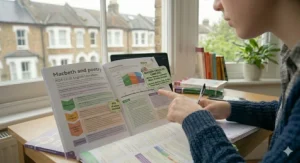
What most students overlook is that the AQA English Literature specification demands more than just knowing what happens in Macbeth or An Inspector Calls. You need to demonstrate sophisticated analysis of form, structure, language, and context whilst drawing perceptive comparisons under exam pressure. The revision guides featured in this article have been selected because they bridge that gap between surface-level understanding and the kind of nuanced interpretation that examiners actively reward. Whether you’re tackling the Power and Conflict anthology, wrestling with Shakespeare’s iambic pentameter, or struggling to memorise quotations for closed-book exams, the resources below offer practical frameworks rather than vague encouragement.
According to the AQA specification for 2026 and 2027 exams, students must demonstrate critical understanding across poetry, prose, and drama whilst maintaining focus on assessment objectives covering textual analysis, context, and comparative skills. The UK government’s Department for Education regulates GCSE qualifications through Ofqual, ensuring consistent standards across exam boards. These guides have been researched on Amazon.co.uk to ensure UK availability, compatibility with British teaching methods, and value for money in pounds sterling.
Quick Comparison Table: Top GCSE English Literature Revision Guide AQA Resources
| Resource | Best For | Price Range (£) | Key Strength | Format |
|---|---|---|---|---|
| CGP Complete Revision & Practice | Comprehensive coverage | £12-£16 | Online edition + practice papers | Book + digital |
| Collins SNAP Revision Text Guides | Specific set texts | £5-£7 per guide | Portable A5 format | Compact book |
| CGP Poetry Revision Question Cards | Active recall practice | £8-£11 | Flip-card testing system | Physical cards |
| York Notes RAPID Revision | Quick refreshers | £6-£9 | Fast-track structure | Slim guide |
| Scholastic Study Guides | Essay planning support | £8-£12 | Step-by-step essay frameworks | Workbook |
| The Quotation Bank | Quotation memorisation | £7-£10 | Detailed analysis per quote | Reference book |
| Oxford Revise AQA | Concept-focused learning | £9-£13 | Clear concept breakdowns | Modern guide |
From the comparison above, CGP’s Complete Revision & Practice offers the most comprehensive package if you’re starting revision from scratch, whilst Collins SNAP guides excel for targeted support on individual texts. The question cards from CGP prove particularly effective for kinesthetic learners who struggle with passive reading, and at under £11, they’re a solid investment for poetry revision. Budget-conscious students should note that the Collins SNAP series provides excellent value per text, though purchasing multiple guides can add up if you’re studying several set texts.
💬 Just one click — help others make better buying decisions too! 😊
Top 7 GCSE English Literature Revision Guide AQA Resources: Expert Analysis
1. GCSE English Literature AQA Complete Revision & Practice (CGP Books)
The CGP Complete Revision & Practice guide represents the gold standard for comprehensive GCSE preparation. This resource covers all three examination components—Shakespeare, the nineteenth-century novel, and modern texts—with equal depth, plus dedicated sections for both poetry anthologies (Power and Conflict, Love and Relationships). What distinguishes this from competing guides is the integration of realistic exam-style questions with worked answers demonstrating what grades 4-5, 6-7, and 8-9 actually look like on paper.
In my experience working with Year 11 students across the UK, the guides that succeed are those which don’t just explain what to write but how to structure responses under timed conditions. CGP achieves this through annotated sample answers that decode examiner expectations, particularly for AO2 (analysis of language, form, structure) where many students lose marks. The free online edition proves invaluable for revision on the move—whether you’re commuting on the Northern Line or waiting for football practice to finish. UK students report that the Knowledge Organisers for set texts provide essential quotation banks without the overwhelming detail that some premium guides include.
Price range: Around £12-£16
Pros:
✅ Comprehensive coverage of all AQA assessment objectives with exam-focused explanations
✅ Free online edition accessible on multiple devices for flexible revision
✅ Practice exam papers with mark schemes mirror actual exam format and difficulty
Cons:
❌ Dense content might overwhelm students who prefer visual learning approaches
❌ Some reviewers note it doesn’t explore individual texts in exhaustive detail
Customer feedback highlights the guide’s usefulness for GCSE preparation, with students noting it contains important analytical techniques and accurate syllabus coverage. One parent mentioned using it as a tutor resource, which speaks to its clarity for self-directed learning.

2. Collins GCSE Grade 9-1 SNAP Revision Text Guides (Individual Set Texts)
For targeted support on specific texts, the Collins SNAP Revision series offers exceptional value. These compact A5 guides focus on individual texts—Macbeth, Romeo and Juliet, An Inspector Calls, A Christmas Carol, Great Expectations—with plot summaries, character analysis, theme exploration, and crucially, exemplar essay responses. The portable format means you can slip one into your blazer pocket for last-minute revision before mocks.
What students appreciate most about the SNAP format is how each guide breaks down the text into manageable sections with quick tests and exam tips embedded throughout. The essay planning examples prove particularly valuable because they demonstrate how to integrate quotations naturally whilst maintaining analytical flow—a skill many students struggle with under exam pressure. For British students studying multiple set texts, purchasing several SNAP guides still costs less than some single comprehensive volumes, and the focused approach prevents information overload.
The guides include context sections that address AO3 requirements (demonstrating understanding of historical, cultural, and social contexts), which is where many students drop marks by making vague historical references rather than precise contextual links. For instance, the An Inspector Calls guide explicitly connects Priestley’s socialist politics to specific moments in the play—exactly the kind of integrated analysis AQA rewards.
Price range: £5-£7 per individual text guide
Pros:
✅ Portable A5 format ideal for revision on the go or during study periods
✅ Affordable per-text pricing allows targeted support without breaking the bank
✅ Clear essay planning examples with integrated quotations model exam technique
Cons:
❌ Need to purchase multiple guides for full set text coverage
❌ Less comprehensive than all-in-one guides for students who prefer single resources
Students and parents report the Collins SNAP guides provide clear explanations and background information for each text, with one reviewer noting the guides contain key quotations and extract analysis essential for exam preparation.
3. GCSE English: AQA Poetry Anthology Revision Question Cards (CGP Books)
The CGP Poetry Revision Question Cards revolutionise poetry revision through active recall—arguably the most effective study technique for long-term retention. These aren’t passive flashcards; each card presents progressively challenging questions about individual poems, themes, and poetic techniques, with comprehensive answers on the reverse. The Power and Conflict anthology set contains approximately 64 cards covering all fifteen poems plus thematic connections and comparative analysis frameworks.
What makes these cards particularly effective for British students preparing for closed-book exams is the emphasis on quotation recall and contextual understanding simultaneously. For example, a card might ask you to identify the quotation that demonstrates conflict in Ozymandias, then on the reverse, provide not just the quotation but analysis of Shelley’s use of caesura and the historical context of imperial decline. This integrated approach mirrors how examiners expect you to deploy quotations in exam responses—not as isolated fragments but as evidence supporting sophisticated arguments.
The colour-coded system helps visual learners distinguish between poem-specific cards and thematic overview cards. Students report using these during commutes, whilst waiting for the bus in rainy British weather, or in spare moments between lessons. At under £11, they represent exceptional value for the depth of practice provided, and unlike digital flashcard apps, they don’t require phone battery or screen time—useful when you’re already spending hours on devices for other subjects.
Price range: £8-£11 per anthology set
Pros:
✅ Active recall methodology proven more effective than passive re-reading for retention
✅ Portable format perfect for quick revision sessions between lessons or during travel
✅ Colour-coded organisation helps navigate between individual poems and thematic comparisons
Cons:
❌ Limited to poetry anthologies; doesn’t cover set texts or unseen poetry techniques
❌ Some students prefer digital flashcard apps with spaced repetition algorithms
Reviewers describe the cards as well-made and comprehensive, covering all aspects of the poetry curriculum with clear questions on one side and detailed answers on the reverse, plus revision tips throughout. One parent noted their son engaged more deeply with poetry discussion after using the cards for testing, suggesting they facilitate genuine understanding rather than rote memorisation.
4. York Notes RAPID AQA GCSE Revision Guides (Individual Texts)
The York Notes RAPID series targets students who need fast-track revision or those returning to a text after time away. These slim guides condense essential knowledge into highly structured, scannable formats with clear signposting of assessment objectives. The Romeo and Juliet and Power and Conflict editions prove particularly popular among UK students who appreciate the step-by-step approach to building contextual understanding alongside textual analysis.
What distinguishes RAPID guides from comprehensive alternatives is the focus on efficiency without sacrificing depth. Each guide identifies the quotations, themes, and contextual points that recur most frequently in AQA exams, based on analysis of past papers and examiner reports. This evidence-based approach means you’re not wasting revision time on tangential historical details that rarely feature in mark schemes. For British students balancing multiple GCSEs, this targeted efficiency proves invaluable during the final weeks before exams.
The guides also excel at demystifying how to write about context effectively—a persistent challenge for many students who either ignore AO3 entirely or shoehorn in irrelevant historical facts. RAPID guides model how to weave contextual references into analytical paragraphs naturally, demonstrating that context should illuminate textual interpretation rather than existing as a separate section.
Price range: £6-£9 per guide
Pros:
✅ Fast-track structure ideal for last-minute revision or students returning to texts
✅ Evidence-based selection of most exam-relevant quotations, themes, and context
✅ Clear guidance on integrating contextual understanding into analytical responses
Cons:
❌ Less comprehensive than full York Notes guides for students seeking extensive analysis
❌ Slim format means fewer practice questions compared to workbook-style resources
The RAPID format acknowledges that many British students don’t have unlimited revision time, particularly when juggling subjects like Sciences and Maths that require different study approaches. By prioritising efficiency, these guides help students achieve solid results without the burnout that comes from attempting to memorise every possible interpretation.
5. Scholastic GCSE Grades 9-1 Study Guides (Essay Planners and Practice Books)
The Scholastic Study Guides shine in the area where many students struggle most: translating knowledge into coherent, well-structured exam responses. The series includes both revision guides and essay planners for texts including Macbeth, Romeo and Juliet, An Inspector Calls, and the Power and Conflict anthology. The essay planner volumes answer the question “What do great answers look like?” with step-by-step frameworks showing how top students construct arguments.
What British students find particularly valuable is the active revision approach incorporating “Snap it!” (photograph key pages for mobile revision), “Nail it!” (essential examiner insights), “Do it!” (quick consolidation activities), and “Stretch it!” (extension material for higher grades). This multi-modal methodology accommodates different learning preferences whilst maintaining focus on AQA assessment objectives. The guides explicitly state which parts of each activity address AO1, AO2, AO3, and AO4, helping students understand how marks are awarded.
The essay planner format proves especially useful for students who know their texts well but struggle with exam technique under timed conditions. Each planner walks through exemplar responses to typical AQA questions, annotating how specific sentences fulfil marking criteria. For instance, a Macbeth essay planner might show how to open with a thesis statement that addresses the question directly, integrate quotations that demonstrate understanding of Shakespeare’s language choices, and conclude with sophisticated personal response—all within the time constraints of Paper 1.
Price range: £8-£12 per guide
Pros:
✅ Step-by-step essay frameworks show exactly how to structure high-grade responses
✅ Active revision techniques (Snap it! Nail it! Do it!) engage different learning styles
✅ Explicit mapping to assessment objectives helps students understand marking criteria
Cons:
❌ Fewer texts covered compared to broader revision guide series
❌ Essay planner format assumes solid foundational knowledge of texts
Students and parents report the Scholastic guides combine revision and practice effectively, with one parent noting their son passed his GCSE with flying colours thanks to the clear character breakdowns, plot summaries, and practice questions that built both confidence and critical thinking skills.
6. The Quotation Bank: AQA Poetry Anthology (Esse Publishing)
The Quotation Bank series offers something different: comprehensive quotation analysis rather than general overview. Available for both Power and Conflict and Love and Relationships anthologies, these guides take each poem and provide detailed material covering interpretations, literary techniques, and analytical frameworks for key quotations. The focus is depth over breadth—understanding fewer quotations thoroughly rather than superficially knowing many.
For British students preparing for closed-book exams, this approach proves remarkably effective. AQA doesn’t reward lengthy quotations; examiners prefer short, embedded references that demonstrate close reading. The Quotation Bank trains this skill by showing how a single line or phrase can support multiple interpretative angles depending on essay focus. For instance, analysis of “Ozymandias” might demonstrate how “boundless and bare” supports arguments about power, nature, time, or artistic legacy through different critical lenses.
Each guide includes sample essays, detailed essay plans, revision activities, and a comprehensive glossary of literary terminology. The sample essays prove particularly valuable because they model how to sustain sophisticated analysis across an entire response—moving from quotation to technique to effect to wider interpretation without losing coherence. British students often struggle with this analytical stamina, and seeing it modelled builds confidence.
Price range: £7-£10 per anthology
Pros:
✅ Deep analysis of key quotations demonstrates multiple interpretative approaches
✅ Sample essays model how to sustain sophisticated analysis throughout responses
✅ Comprehensive literary terminology glossary supports technical vocabulary development
Cons:
❌ Narrow focus on quotations means less coverage of broader thematic or contextual material
❌ Limited to poetry anthologies; no prose or drama coverage
Reviewers describe the layout as clear and practical, with co-authors bringing 20 years of teaching experience and intimate knowledge of the exam system to create resources with essential ingredients for exam success. Teachers particularly appreciate that the guides don’t spoon-feed answers but encourage students to develop independent analytical thinking.
7. Oxford Revise: AQA GCSE English Language (with Literature Applications)
Whilst primarily an English Language resource, Oxford Revise deserves mention for students studying both qualifications because it strengthens the analytical reading and writing skills that underpin Literature success. The guide splits into Concept Knowledge (texts and meaning, figurative language, characterisation, narrative structure) and Exam Knowledge (paper-specific question guidance), with both sections relevant to Literature analysis.
What makes Oxford Revise particularly useful for British students is the emphasis on building conceptual understanding before applying it to exam contexts. Many students struggle with Literature because they haven’t grasped how to analyse form and structure systematically; they rely on instinct rather than framework. Oxford Revise provides those frameworks—explaining how to identify and interpret sentence forms, rhetorical techniques, and narrative structures across any text, then demonstrating application through worked examples.
The clear, accessible language makes complex concepts approachable for students at all levels, whilst hints and tips from revision experts help with revision planning and exam confidence. The guide acknowledges that English exams require different skills from subjects like Maths—you can’t simply memorise formulae—and instead focuses on building analytical instincts through practice and pattern recognition.
Price range: £9-£13
Pros:
✅ Builds transferable analytical skills applicable across Language and Literature
✅ Clear concept breakdowns make complex techniques accessible for all ability levels
✅ Expert revision tips address exam confidence and effective study planning
Cons:
❌ Primarily Language-focused; doesn’t replace dedicated Literature revision guides
❌ Less text-specific support for set texts like Shakespeare or modern prose
Students and parents report the guide builds understanding of key concepts using clear language, with one parent noting it gave their daughter confidence in understanding the subject better, and students describing it as the best resource with five-star reviews.
How to Choose GCSE English Literature Revision Guide AQA: Expert Framework
Selecting the right GCSE English literature revision guide AQA requires honest assessment of where you are and where you need to be. Start by identifying your current grade trajectory from mock results and teacher feedback. If you’re working towards grades 4-5, prioritise guides with clear, step-by-step frameworks and basic quotation banks—CGP Complete Revision or Scholastic Study Guides fit this profile. Students targeting grades 7-9 need resources that model sophisticated analysis and alternative interpretations; York Notes and The Quotation Bank better serve these ambitions.
Consider your learning style next. Visual learners benefit from guides with diagrams, colour-coding, and annotated texts—Collins SNAP and Oxford Revise excel here. If you’re a kinesthetic learner who thinks whilst moving, the CGP Question Cards allow active revision during walks or commutes. Auditory learners should seek guides with online components featuring audio recordings of poems, available through some CGP Poetry Guides.
Coverage needs matter enormously. If you’re studying multiple set texts (common for UK students taking Paper 1 and Paper 2), weigh whether to buy a comprehensive all-in-one guide or separate text-specific resources. The former offers consistency and easier cross-referencing; the latter provides deeper analysis per text. Budget plays a role here—five Collins SNAP guides cost roughly the same as one premium comprehensive volume, but offer more targeted support.
Timing influences choice as well. Students beginning revision in Year 10 have time for comprehensive guides with extensive practice questions; those starting in late Year 11 need RAPID-style resources that prioritise exam-relevant content. Don’t underestimate the value of practice papers—AQA’s exam format rewards familiarity with question types and timing as much as textual knowledge.
Assessment objective alignment separates good guides from great ones. Every response you write should address AO1 (textual references and terminology), AO2 (analysis of language, form, structure), AO3 (context), and where applicable, AO4 (comparison). The official AQA assessment objectives outline exactly what examiners look for in student responses. Strong revision guides explicitly map content to these objectives rather than leaving you to guess which skills you’re developing. Check the table of contents for phrases like “AO2 focus” or “assessment objective practice”—these signal an evidence-based approach.
Finally, consider whether you need active practice (questions, essays, mark schemes) or passive reference (summaries, quotations, analysis). Most students require both, but in different proportions depending on proximity to exams. The sweet spot combines a comprehensive reference guide with question cards or workbooks for active recall.
Common Mistakes When Buying GCSE English Literature Revision Guide AQA
British students frequently purchase revision guides based on surface appeal rather than substance—sleek covers and promises of “easy grades” sell books, but effective revision demands more. The most common mistake is buying multiple comprehensive guides that essentially cover the same ground, creating redundancy rather than depth. Instead, combine one solid all-in-one resource with targeted supplements addressing specific weaknesses (e.g., a general guide plus poetry question cards).
Another pitfall involves ignoring edition dates. Some guides warn that used books may be out of date for old exam specifications, and previous owners will have already claimed online access codes, rendering those features useless. The AQA specification hasn’t changed drastically recently, but you want resources aligned with current assessment objectives and updated set texts. Always verify the guide states “for 2026 and 2027 exams” or similar current phrasing.
Overlooking practical usability causes problems too. A 400-page guide might seem comprehensive, but if its density prevents you from actually using it, you’ve wasted money. Similarly, beautiful design means nothing if the explanations confuse rather than clarify. Before purchasing, check Amazon’s “Look Inside” feature or library copies to assess whether the writing style and layout suit your learning preferences.
Many students also underestimate the importance of answer keys and mark schemes. A workbook full of practice questions becomes frustrating without model answers demonstrating what examiners expect. Some publishers sell answer books separately—factor this into your budget rather than discovering mid-revision that you can’t self-assess your work. CGP typically includes answers; some publishers don’t.
Ignoring UK-specific requirements causes issues for students buying international editions. American study guides for Shakespeare won’t align with AQA assessment objectives or the specific extracts British exams use. Always verify resources state “AQA” explicitly and are sold through Amazon.co.uk with UK Prime availability—this ensures compatibility with your specification.
Finally, students sometimes purchase revision guides too late in the process. These resources work best when integrated throughout Year 10 and Year 11, allowing gradual knowledge building and repeated practice. Buying a comprehensive guide three weeks before exams leads to panic rather than preparation; question cards or RAPID guides better serve that timeline.

GCSE English Literature Revision Guide AQA vs General English Guides
The distinction between AQA-specific and general English literature guides matters more than many students realise. General guides may cover similar texts—Macbeth, An Inspector Calls, the Romantic poets—but without alignment to AQA’s particular assessment objectives, they can’t teach you what examiners actually reward in responses. For instance, AQA places significant emphasis on context (AO3), often worth more marks than some students expect. A general guide might mention historical background; an AQA guide shows precisely how to integrate contextual references into analytical paragraphs to maximise marks.
Question wording differs across exam boards, and familiarity with AQA’s phrasing helps enormously under pressure. AQA questions often include extract-based analysis followed by whole-text exploration, requiring you to zoom in on language details before stepping back to broader themes. Resources designed for Edexcel or OCR use different questioning formats, and practising the wrong structure wastes revision time. AQA guides include past paper questions or close approximations, training the specific skills your actual exam demands.
The texts themselves sometimes vary. Whilst Shakespeare plays remain constant across boards, the poetry anthologies are AQA-specific—you won’t find Power and Conflict or Love and Relationships analysis in general guides because these clusters exist only for AQA. Similarly, the modern prose and drama texts on the AQA specification may differ from what other boards require, making text-specific AQA guides essential rather than optional.
Mark schemes provide another key difference. General guides might explain what makes a good essay, but AQA guides decode the specific terminology and criteria AQA examiners use. Understanding phrases like “sustained critical response” or “perceptive analysis” becomes easier when you see them in context of actual AQA mark schemes with grade boundaries explained. Wikipedia’s comprehensive GCSE article provides broader context about how GCSEs function within the UK education system, whilst the UK government’s official GCSE guidance explains the 9-1 grading system and regulatory framework. This knowledge transforms abstract grade descriptors into concrete targets you can aim for in practice responses.
That said, some general English skills guides—particularly those strengthening analytical reading or essay structure—complement AQA-specific resources. Oxford Revise, whilst primarily a Language guide, builds foundational skills applicable across specifications. The key is ensuring your core resources are AQA-aligned, with general guides serving as supplements rather than main texts.
Maximising Your GCSE English Literature Revision Guide AQA: Practical Usage
Owning the right revision guide achieves nothing unless you use it effectively. The most successful British students I’ve worked with treat these resources as interactive workbooks rather than passive reference books. This means annotating margins with your own interpretations, attempting practice questions before reading model answers, and using sticky notes to mark pages requiring repeated review. A pristine revision guide at exam time suggests insufficient engagement; a well-worn copy covered in highlighter and notes indicates active learning.
Create a revision schedule that integrates guide work with other study methods. Allocate specific sessions to reading analytical sections, separate sessions for practice questions, and distinct slots for testing quotation recall with question cards. Mixing these approaches prevents boredom whilst reinforcing learning through varied contexts. For instance, Monday might involve reading CGP’s Macbeth analysis, Wednesday sees you attempting essay questions from the Scholastic planner, and Friday tests quotation knowledge with revision cards.
Use guides to fill gaps rather than duplicate classroom teaching. If your teacher has thoroughly covered context for An Inspector Calls, don’t spend hours re-reading that material in your guide. Instead, focus guide time on areas you find challenging—perhaps comparative analysis of poems or integrating quotations smoothly. This targeted approach prevents wasted effort whilst addressing genuine weaknesses.
Practice writing timed responses using guide questions, then compare your work against model answers. Don’t just read the model and think “I would have written that”—actually write your version first. This reveals gaps between your current ability and target performance, showing precisely where you need improvement. Be honest in this self-assessment; British students sometimes overestimate their essay-writing skills until they attempt timed practice and realise how much they omit under pressure.
For poetry, use guides to build thematic connections across the anthology. AQA questions require comparing unnamed poems, which means you must know the anthology well enough to select appropriate comparisons quickly. Create your own comparison matrices using guide analysis as a foundation—list all poems down one axis, themes across the other, then note which guides identify as strong examples of each theme. This overview becomes invaluable during exams when you need to recall a suitable comparison under time pressure.
Finally, supplement your revision guide with other resources—YouTube channels explaining challenging poems, Seneca Learning for practice questions, BBC Bitesize for quick summaries before bed. Revision guides work best as part of a multi-resource strategy rather than single solutions. The guides provide structure and depth; other resources offer variety and reinforcement through different presentation styles.
Long-Term Value and Maintenance: Making Your Investment Count
A quality GCSE English literature revision guide AQA represents more than a one-year investment in exam preparation. The analytical skills and close reading techniques these guides develop transfer to A-Level English Literature, university humanities courses, and professional careers requiring textual interpretation. Students who learn to read critically, support arguments with evidence, and write coherently under pressure possess advantages extending well beyond GCSEs.
Financially, these guides prove remarkably cost-effective. Private English tuition in the UK typically costs £25-£40 per hour, with most students requiring 10-20 hours minimum for meaningful improvement. A comprehensive revision guide around £15 provides equivalent instruction you can access repeatedly at your own pace. Even purchasing multiple resources—perhaps £60-£80 total for guides, cards, and workbooks—costs substantially less than a few tutorial sessions whilst offering more flexibility.
Physical care matters for long-term value. Store guides in dry conditions away from damp—British weather being what it is, books left in sheds or garages can suffer mould damage. If purchasing for multiple siblings, consider whether ring-bound workbooks or spiral guides offer better durability for repeated use. Some families pass guides between siblings, making condition preservation worthwhile. That said, a well-used guide full of notes from an older sibling can provide additional insights for younger students tackling the same texts.
The online components included with many modern guides—CGP’s RevisionHub, Collins’ online editions—add significant value if you actually use them. These platforms often include video tutorials, interactive quizzes, and audio recordings of poems that reinforce print learning through different media. When choosing between guides, factor in the quality and accessibility of digital components rather than assuming all online extras are equally valuable. Some require annoying registration processes; others integrate seamlessly with mobile devices for revision on the go.
Resale potential exists for guides in good condition, particularly for current specifications. Year 12 students often sell their GCSE resources to younger relatives or through school notice boards, recouping some investment. However, guides with claimed online access codes have diminished resale value, so factor this into your purchasing decision—sometimes buying new makes more sense than saving a few pounds on used copies without functional digital access.
Consider too the psychological benefit of quality revision resources. Students who feel well-equipped approach exams with greater confidence than those making do with inadequate materials. That confidence translates to better performance under pressure—you know you’ve prepared using resources that thousands of successful students used before you. This reassurance shouldn’t be underestimated, particularly during the stressful final weeks of Year 11.
GCSE English Literature Revision Guide AQA for Different Student Profiles
For the Struggling Student (Currently Grade 2-4): Prioritise CGP Complete Revision & Practice for its clear, accessible explanations without overwhelming detail. Pair this with Collins SNAP guides for your specific set texts, as their straightforward summaries prevent confusion. Avoid advanced resources like The Quotation Bank initially—build confidence with fundamentals first. Consider Scholastic guides’ active revision techniques (Snap it! Nail it!) which break learning into manageable chunks. Your focus should be securing solid understanding of plot, characters, and basic themes before attempting sophisticated analysis. Budget around £30-£40 for comprehensive coverage without duplication.
For the Middle-Achieving Student (Currently Grade 5-6): You need resources that push beyond basic comprehension towards analytical depth. York Notes RAPID guides offer efficiency for texts you understand reasonably well, whilst The Quotation Bank develops the sophisticated quotation analysis that elevates grades 5 to 6 and 6 to 7. CGP Poetry Question Cards provide active practice for anthology mastery—essential since poetry comparison often proves the trickiest component for middle-achieving students. Mix comprehensive reference (CGP or Scholastic) with active practice resources (cards, workbooks) for balanced preparation. Budget £40-£55 allows strong coverage across multiple resources.
For the High-Achieving Student (Currently Grade 7-9): Your challenge lies in refining excellent knowledge into exceptional exam technique. The Quotation Bank series provides the analytical depth you need, demonstrating how single quotations support multiple interpretative angles. Scholastic Essay Planners show how top students structure sophisticated arguments under timed conditions—your biggest obstacle may be time management rather than textual understanding. York Notes offer alternative critical perspectives that enrich your own interpretations. Avoid purely descriptive resources; you need materials that model Grade 8-9 responses. Budget £50-£70 for premium resources focusing on technique rather than basic content.
For the Last-Minute Crammer: You need maximum exam relevance with minimum bulk. York Notes RAPID guides condense essential content into fast-track formats. CGP Question Cards provide active recall practice that’s more effective than re-reading notes. Avoid comprehensive 400-page guides—you won’t finish them, which damages morale. Focus on quotation memorisation, exam technique, and practice papers rather than attempting to learn entire texts from scratch. Budget £25-£35 for targeted resources that respect your time constraints. Accept that you won’t achieve Grade 9 through last-minute revision, but solid technique can secure respectable results even with limited preparation time.
For Students Studying Both Language and Literature: Oxford Revise AQA English Language deserves consideration despite its Language focus, as it builds transferable analytical skills. CGP offers combined Language & Literature guides that prevent duplication whilst covering both specifications. Ensure any combined resource aligns with both exam requirements rather than superficially touching each. Poetry guides remain Literature-specific, but writing technique resources often benefit both qualifications. Budget £50-£65 allows comprehensive coverage without purchasing entirely separate resources for each subject.

FAQ Section
❓ How much does a GCSE English literature revision guide AQA cost in the UK?
❓ Are CGP revision guides good for AQA English Literature?
❓ What's the best revision guide for AQA Power and Conflict poetry?
❓ When should I start using GCSE English literature revision guide AQA resources?
❓ Do I need different revision guides for Literature Paper 1 and Paper 2 in AQA?
Conclusion: Your Pathway to GCSE English Literature Success
Finding the right GCSE English literature revision guide AQA transforms exam preparation from overwhelming chaos into structured, manageable progress. The resources reviewed in this article represent the most effective options available to British students in 2026, each offering distinct advantages depending on your current grade, learning style, and revision timeline. Whether you’re targeting secure passes through CGP’s comprehensive guides, refining sophisticated analysis with The Quotation Bank, or building exam confidence through Scholastic’s essay frameworks, the right combination of resources exists for your needs.
The key is starting early, using resources actively rather than passively, and balancing comprehensive reference materials with targeted practice. Remember that revision guides work best as tools supporting broader revision strategies—combine them with past papers, class notes, and varied study methods for optimal results. The investment you make in quality resources pays dividends not just in GCSE results but in developing analytical skills valuable throughout further education and professional life. Visit Amazon.co.uk to explore these resources, read detailed reviews from British students, and select the combination that aligns with your exam goals and budget.
Recommended for You
- 7 Best CGP GCSE Combined Science Revision Books UK 2026
- Best GCSE Maths Revision Guide UK 2026: 7 Expert Picks
- 7 Best Combination Cork and Whiteboard 2026 | Top UK Picks
Disclaimer: This article contains affiliate links. As an Amazon Associate, I earn from qualifying purchases. If you purchase products through these links, we may earn a small commission at no additional cost to you.
✨ Found this helpful? Share it with your mates! 💬🤗
