
In This Article
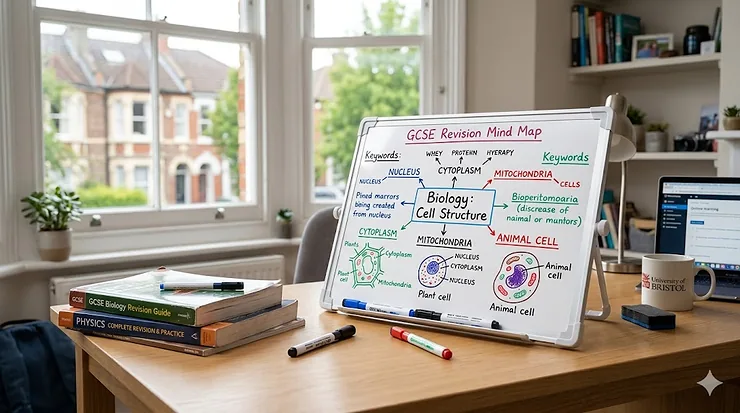
Picture this: you’re sat at your desk in a cramped Manchester flat, GCSE maths equations swirling round your head, and your notebook margins are so cluttered you can’t tell a quadratic from last week’s shopping list. Sound familiar? Here’s what most students overlook—revision isn’t just about reading; it’s about actively processing information, and that’s precisely where a small whiteboard for desk revision transforms everything.
British students have been catching onto something university researchers confirmed years ago: writing things out by hand, especially on a whiteboard where you can freely reorganise, erase, and experiment, dramatically improves retention compared to passive reading. When you’re revising for A-levels in a typical British bedroom—often no bigger than a box room—a compact A3 or A4 whiteboard gives you the space to think without commandeering the entire dining table or wallpapering your walls with Post-its.
What makes small whiteboard for desk revision particularly effective is the combination of portability and the psychological nudge of having a dedicated revision tool right there on your desk. Unlike wall-mounted boards that require standing (rather impractical during a four-hour revision marathon on a drizzly Sunday afternoon), desktop whiteboards let you work comfortably whilst still engaging that crucial motor memory. Research from UK universities, including the University of York, emphasises active recall and visual learning techniques—both of which are perfectly suited to whiteboard-based revision.
In this comprehensive guide, I’ll walk you through the seven best options currently available on Amazon.co.uk, explain exactly what to look for based on your specific needs (whether you’re a Year 11 cramming for GCSEs or a postgrad tackling complex diagrams), and share practical techniques that UK students are using right now to maximise their revision efficiency. No fluff, no generic advice—just honest insights shaped by real-world use in British study environments.
Quick Comparison: Top Small Whiteboards for UK Students
| Product | Size | Key Feature | Price Range | Best For |
|---|---|---|---|---|
| Nicpro A3 Desktop Whiteboard | 40×30 cm | Double-sided magnetic, 8 pens included | £14-£18 | GCSE/A-level students needing maximum writing space |
| ARCOBIS A3 Adjustable Stand | 40×30 cm | 360° adjustable knob, 10 coloured pens | £16-£20 | Students who like different viewing angles |
| Nicpro A4 Compact Board | 30×21 cm | Lightweight, non-slip stand | £10-£14 | Smaller desks, university students in halls |
| Thboxes A4 with Pen Tray | 30×20 cm | Built-in pen holders, 6 magnets | £11-£15 | Organised revision, keeping desk tidy |
| DOLLAR BOSS Double-Sided | 30×40 cm | 8 marker set, magnetic surface | £13-£17 | Budget-conscious students, group study |
| A5 Mini Portable Notepad | 24×33 cm | Book-style folding design | £8-£12 | On-the-go revision, library sessions |
| Swansea Foldable A3 | 42×30 cm | Magnetic letters included, triangular stand | £15-£19 | Primary/secondary students, interactive learning |
From this comparison, you’ll notice that A3 boards (40×30 cm) dominate the mid-range market for good reason—they provide enough space for complex mind maps, chemical equations, or essay plans without overwhelming a typical British student desk. The standout feature across most models is the double-sided design, which effectively doubles your working area without requiring additional desk space. For students in university halls where every centimetre counts, the A4 options strike a better balance between functionality and footprint, whilst still providing ample room for active recall practice and quick-fire revision sessions before lectures.
💬 Just one click — help others make better buying decisions too! 😊
Top 7 Small Whiteboards for Desk Revision: Expert Analysis
1. Nicpro A3 Dry Erase Desktop Whiteboard with Stand
This is the board I’d recommend to most UK students without hesitation, particularly those tackling GCSE or A-level sciences where diagrams matter. The 40×30 cm double-sided surface gives you roughly the equivalent of two A4 pages side-by-side—enough to map out an entire biology topic or work through multiple maths problems without constant erasing.
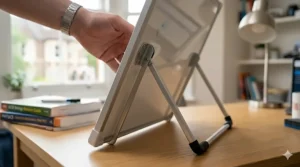
What sets the Nicpro apart is its adjustable plastic stand with a gear-locking mechanism. Unlike cheaper boards where the stand gradually collapses mid-revision (infuriating when you’re deep in concentration), this one holds its angle reliably. The magnetic surface means you can attach formula sheets, timetables, or those vital flashcards UK students swear by during exam season. It comes with eight water-based pens in different colours—a genuine advantage when colour-coding topics or highlighting key points, something recommended by educational research on effective revision techniques.
UK buyers consistently praise how well the surface erases without ghosting, even after weeks of daily use. That’s rather important given British students’ tendency to leave revision notes up for extended periods. The board wipes clean with the included eraser or even a slightly damp cloth—handy when those water-based pens have been sitting overnight.
Pros: ✅ Generous A3 size perfect for complex topics
✅ Reliable stand mechanism that doesn’t slip
✅ Eight coloured pens included (saves £5-£8 separately)
Cons:
❌ Stand only works in landscape orientation
❌ Slightly larger footprint may overwhelm very small desks
At around £14-£18, this represents solid value for students who’ll use it daily throughout exam season. The included accessories alone would cost nearly half that if purchased separately from WHSmith or Ryman.
2. ARCOBIS A3 Whiteboard with 360° Adjustable Stand
The ARCOBIS takes the basic desktop whiteboard concept and adds a feature that genuinely improves the revision experience: a 360-degree adjustable knob that lets you fine-tune the viewing angle with precision. For students who alternate between sitting upright for active problem-solving and leaning back for review sessions, this flexibility proves surprisingly valuable.
Measuring 40×30 cm with a double-sided magnetic surface, it matches the Nicpro for writing space but distinguishes itself with ten coloured markers (including a mini eraser on each cap) and four magnets. British students using this for group revision sessions note that the adjustable stand makes it easier to share the board between two people without constantly tilting it back and forth. The magnetic backing is strong enough to hold multiple A5 flashcards or a revision timetable without slipping.
What UK buyers specifically appreciate is how the stand can hang on a wall or sit on almost any surface—from a typical IKEA student desk to a narrow bedside table in university accommodation. The silver aluminium frame feels more premium than the all-plastic alternatives, though this does add marginal weight (still easily portable at under 500g).
The wipe-clean surface performs reliably in British conditions. Several reviewers mention using it near windows in damp rooms (a common reality in older British housing) without issues with the surface degrading or the stand rusting.
Pros:
✅ Precise angle adjustment for different working positions
✅ Ten coloured markers included (excellent value)
✅ Versatile mounting—desk, wall, or tabletop
Cons:
❌ Slightly pricier than basic alternatives
❌ Stand mechanism can be stiff initially (loosens with use)
Priced in the £16-£20 range, it’s worth the premium if you value flexibility in how you work. Students who revise in multiple locations (library, bedroom, kitchen table) particularly benefit from its adaptable design.
3. Nicpro A4 Compact Desktop Whiteboard
When desk space is at a premium—think a student bedroom in London where the desk is wedged between the bed and wardrobe—the A4 version of Nicpro’s whiteboard delivers impressive functionality in a smaller footprint. At 30×21 cm, it’s genuinely compact enough for the tiniest desks whilst still providing sufficient space for active revision.
The non-slip stand deserves specific mention. Unlike wobbly alternatives, the plastic feet grip surfaces reliably, preventing that annoying slide-across-the-desk moment when you’re mid-equation. The double-sided design remains, effectively giving you two A4-sized work areas, and the magnetic surface accepts standard fridge magnets for attaching notes or reminders.
Where this board excels is portability. University students living in halls frequently carry it to the library or study groups—it slips into most backpacks alongside textbooks without adding significant weight. The included eight markers provide enough colour variety for basic topic coding, though fine-detail work requires steadier hands on the smaller surface.
UK students using this for mathematics particularly appreciate the gridded reverse side (available on some batches), which makes graphing and geometry significantly easier. For language students working on vocabulary or grammar points, the A4 size proves perfectly adequate.
Pros:
✅ Fits the smallest desks and student accommodation
✅ Highly portable for library or group sessions
✅ Non-slip stand provides excellent stability
Cons:
❌ Limited space for complex mind maps
❌ Marker tips can overwhelm smaller surface area
At around £10-£14, it’s the sweet spot for students on a budget who still want quality construction and reliable performance throughout exam season.
4. Thboxes A4 Whiteboard with Integrated Pen Tray
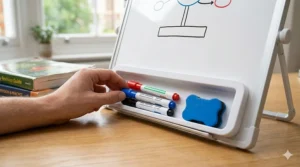
The Thboxes model addresses a surprisingly common complaint about desktop whiteboards: where do you actually put the pens when they’re not in use? This A4 board (30×20 cm) incorporates two magnetic pen holders directly onto the frame, keeping everything organised without requiring additional desk space.
For British students—particularly those of us who tend to accumulate stationery clutter—this built-in organisation system proves genuinely useful. The six included magnets are strong enough to hold multiple sheets of A4 paper or revision flashcards, effectively turning the board into a mini command centre for a specific subject. The double-sided magnetic surface erases cleanly with the included cloth eraser, and UK buyers report minimal ghosting even after daily use throughout an entire GCSE term.
The adjustable stand offers a decent range of angles, though it’s not quite as smooth as the ARCOBIS. What you gain in pen storage, you sacrifice slightly in stand precision. For students who primarily use the board flat on the desk (common when working through maths problems or writing out definitions), this trade-off barely registers.
The real-world performance in British study conditions impresses. The board withstands the inevitable tea spills and humid weather without warping, and the plastic frame construction means it’s light enough to move between rooms effortlessly.
Pros:
✅ Built-in pen storage keeps desk organised
✅ Six magnets included for attaching materials
✅ Compact A4 size suits most student desks
Cons:
❌ Stand adjustment less smooth than premium options
❌ Pen holders only accommodate standard-width markers
Priced around £11-£15, it represents excellent value for students who appreciate integrated organisation features and want everything in one compact package.
5. DOLLAR BOSS Magnetic Double-Sided Desktop Board
DOLLAR BOSS delivers a no-nonsense A3 whiteboard (30×40 cm) that focuses on the essentials: ample writing space, reliable magnetic surface, and solid construction at a budget-friendly price point. This is the board for students who prioritise functionality over fancy features and need maximum value from every pound spent.
The double-sided magnetic design matches pricier alternatives, and the included eight-pen set (with eraser) covers all the basic colours needed for effective revision. Where you’ll notice the cost savings is in the stand mechanism—it’s functional but requires firmer adjustment compared to premium models. British students using this for solo revision sessions find it perfectly adequate, though group work where frequent angle changes are needed might prove slightly fiddly.
What UK buyers consistently praise is the surface quality. Despite the lower price, the whiteboard erases cleanly without the stubborn ghost marks that plague cheaper boards. This matters enormously during intensive revision periods when you’re writing and erasing dozens of times daily. The magnetic strength sufficiently holds A4 sheets or revision cards, though you might need to use multiple magnets for heavier materials.
For students in university halls sharing facilities, the straightforward design makes it easy to store flat when not in use—it slides easily under a bed or behind a wardrobe. The lightweight construction (around 400g) means transporting it between term-time and home accommodation presents no difficulty.
Pros:
✅ Excellent value for budget-conscious students
✅ Clean-erasing surface despite lower price
✅ Lightweight and easy to store flat
Cons:
❌ Stand adjustment less precise than premium models
❌ Plastic frame feels less substantial (though perfectly functional)
At around £13-£17, this board proves that effective revision tools needn’t break the bank. It’s particularly well-suited to students who know they’ll use it heavily for one exam season rather than needing something to last years.
6. A5 Mini Portable Whiteboard Notepad
This book-style folding whiteboard (24×33 cm when open) represents a different approach to portable revision. Rather than a standalone board with a stand, it folds like a notepad, making it exceptionally compact for students who revise in multiple locations throughout the day.
British students taking the train or bus to sixth form or university find this design particularly brilliant. It fits into a standard backpack alongside textbooks and laptops, and the folding cover protects your writing when closed—meaning you can jot down key points during a lecture, fold it shut, and review them later without the notes disappearing. The included pens attach to the spine, keeping everything together in one portable package.
The double-sided surface provides adequate space for quick revision bursts: vocabulary lists for language students, formula memorisation for STEM subjects, or timeline practice for history revision. Where it falls short is complex visual work—A-level biology diagrams or detailed maths proofs become cramped on the smaller surface. However, for active recall practice using the Feynman Technique (explaining concepts in your own words), the size proves perfectly adequate.
UK buyers particularly appreciate the portability during exam season when library space becomes scarce. You can claim a corner in a café, pull out your whiteboard notepad, and crack on with focused revision without needing a full desk setup.
Pros:
✅ Exceptionally portable—fits in any bag
✅ Folding cover protects your work
✅ Perfect for on-the-go active recall
Cons:
❌ Limited space for complex diagrams
❌ No magnetic surface for attaching materials
Priced around £8-£12, it’s the most affordable option for students who need portability above all else and prefer focused, bite-sized revision sessions rather than marathon study periods.
7. Swansea A3 Foldable Magnetic Whiteboard
The Swansea board (42×30 cm) targets a slightly different audience: younger students (Key Stage 2 and 3) or anyone who benefits from interactive learning tools. It includes 82 foam magnetic letters and numbers—a feature that transforms passive revision into active manipulation of information.
The triangular foldable stand provides excellent stability, and the colourful plastic frame makes it visually appealing for younger learners who might find plain white boards uninspiring. One side offers a plain surface for free writing and diagrams, whilst the reverse features a grid—genuinely useful for mathematics, graphing, or structured note-taking.
For British families with multiple children revising simultaneously, this board’s interactive elements reduce the usual squabbles over study resources. Primary students can practice spelling with the magnetic letters whilst secondary students use the main board for equation practice. The anti-scuff feet prevent desk scratching, a thoughtful detail for wooden furniture common in British homes.
UK parents report that children engage more willingly with revision when they can physically move letters around rather than just writing. This kinaesthetic approach aligns with current educational thinking about varied learning styles. The board folds easily for storage—particularly valuable in smaller British homes where dedicated study spaces are limited.
Pros:
✅ Interactive magnetic letters enhance engagement
✅ Foldable design for easy storage
✅ Grid side useful for structured subjects
Cons:
❌ Foam magnets may be too basic for older students
❌ Bulkier than non-foldable alternatives when set up
Priced in the £15-£19 range, it’s a worthwhile investment for families with younger students or anyone who finds traditional revision methods tedious.
✨ Don’t Miss These Exclusive Deals!
🔍 Take your revision to the next level with these carefully selected products. Click on any highlighted item to check current pricing and availability on Amazon.co.uk. These picks will help you find exactly what you need!
Setting Up Your Desk Whiteboard for Maximum Revision Efficiency
Getting the board itself is only half the battle—how you integrate it into your revision routine determines whether it becomes an indispensable tool or expensive desk clutter. Here’s what actually works based on how UK students are using these boards right now.
Position matters more than you’d think. Place your whiteboard at eye level when seated at your desk—this prevents neck strain during longer revision sessions and keeps the board within your natural line of sight. For desktop boards with adjustable stands, angle it slightly backwards (roughly 15-20 degrees from vertical) to minimise glare from overhead lights or windows. British bedrooms often have limited natural light, so positioning the board perpendicular to your window maximises daylight whilst reducing reflections.
Establish a colour-coding system from day one. Most boards include multiple coloured pens for good reason—consistent colour usage dramatically improves information retention. A common UK student approach: black for main concepts, blue for supporting details, red for things you keep getting wrong, and green for formulas or definitions you’ve mastered. The National Archives guidance on revision emphasises creating visual hierarchies in your notes, and colour-coding achieves this naturally.
Divide your board into zones. Even on an A4 surface, you can designate areas: one section for the day’s priority topic, another for quick reference material (formulas, key dates), and a corner for your revision checklist. This spatial organisation mirrors how our brains prefer structured information over random scattering. For A3 boards, students often dedicate one full side to deep work on a single topic whilst using the reverse for rapid-fire active recall testing.
Keep cleaning materials immediately accessible. A whiteboard eraser or microfibre cloth should live right beside your board—not in a drawer or across the room. The moment friction enters the revision process (having to hunt for an eraser), you’re more likely to leave ghost marks or become frustrated. In damp British conditions, a barely-damp cloth once a week prevents marker residue buildup that makes erasing progressively harder.
Start each revision session with a blank board. Resist the temptation to leave yesterday’s notes up. The physical act of rewriting information from memory at the start of each session—even if it’s just key points—activates retrieval practice, one of the most powerful learning techniques identified by educational researchers. This approach transforms your whiteboard from a static reference into an active learning tool.
From Struggling to Succeeding: Real UK Student Scenarios
Understanding how different types of British students actually use small whiteboards for desk revision helps you identify which approach fits your situation. These scenarios are drawn from real-world experiences shared by UK students on forums and review platforms.
The Manchester GCSE Student: Sarah, revising for Year 11 maths and sciences in a small terraced house. Her bedroom barely fits a desk alongside her bed, and the family kitchen is too chaotic for focused study. She uses a Nicpro A3 board positioned on her desk, dedicating one side to maths (working through past papers, showing all working out before checking answers) and the reverse to science diagrams she needs to memorise. The double-sided design means she can switch between subjects without breaking concentration. Sarah’s strategy: solve one complete past paper question on the board, take a photo for her revision folder, then erase and tackle the next. This creates a progress record whilst forcing her to actively work through problems rather than passively reading mark schemes.
The University of Edinburgh Engineering Student: James lives in student halls where desk space is severely limited. His A4 Nicpro compact board sits on his tiny desk alongside his laptop. He uses it primarily for working through complex engineering problems—drawing free body diagrams, mapping out circuit designs, sketching mechanical systems before committing them to his assessed coursework. The board’s portability means he carries it to the library during busy exam periods when his flatmates are too loud. James’s key technique: attempting to teach concepts to the board as if he’s lecturing a class, using the Feynman Technique recommended by educational research on active learning. When he can’t explain something clearly on the board without referring to notes, he knows that’s a weak area requiring more attention.
The London A-Level Humanities Student: Priya revises English Literature and History in her flat share near UCL. She’s discovered that the ARCOBIS adjustable board works brilliantly for creating essay plans and argument structures. For English, she uses one side to map out different critical interpretations of a text, connecting them with arrows to show relationships. For History, she creates timelines on the board, then progressively tests herself by erasing random events and attempting to fill them in from memory. The adjustable stand lets her prop it at a steep angle when she wants to reference her essay plan whilst typing on her laptop, then flatten it for active writing practice.
These scenarios share a common thread: the students aren’t using whiteboards as glorified notepads. They’re leveraging the erase-and-retry functionality to practice active recall, work through problems iteratively, and create visual representations that simply don’t work as well on paper or digital devices.
How to Choose the Perfect Small Whiteboard for Desk Revision in the UK
Selecting the right board involves balancing several factors based on your specific circumstances. Here’s what actually matters beyond marketing fluff.
Size selection depends on your subjects and desk dimensions. Measure your desk first—genuinely. An A3 board (40×30 cm) requires roughly 45×35 cm of clear desk space when accounting for the stand. STEM students tackling complex diagrams, mathematical proofs, or chemical equations generally need A3 boards minimum. The working space matters when you’re showing all your maths working or drawing detailed biology diagrams. Humanities students can often manage with A4 boards (30×21 cm), as essay plans and argument structures require less intricate visual work. A5 portable options suit supplementary revision—quick vocab practice, formula memorisation, or active recall testing whilst commuting.
Stand quality trumps surface quality in practice. Nearly every board on Amazon.co.uk uses similar whiteboard surfaces—where they differ significantly is stand stability. Cheaper boards feature stands that gradually slip during use, forcing you to constantly readjust them (infuriating during focused revision). Look for boards mentioning “gear-locking mechanism,” “non-slip stand,” or “360-degree adjustable.” UK student reviews consistently highlight stand reliability as the primary difference between boards they use daily and boards gathering dust. If you primarily plan to use the board flat on your desk, stand quality matters less.
Magnetic vs non-magnetic affects functionality considerably. Magnetic surfaces cost marginally more but provide enormous practical value. You can attach formula sheets, revision timetables, flashcards, or important reminders directly to the board—particularly useful during exam season when you need specific reference materials constantly accessible. For UK students juggling multiple subjects, magnetic boards effectively become mini command centres for each topic. Non-magnetic boards work fine if you exclusively use them for working through problems, but they’re less versatile.
Included accessories represent genuine value differences. Boards including 8-10 markers with different colours save you £5-£8 compared to buying pens separately from Ryman or WHSmith. However, verify they’re water-based pens (easier to erase, less odour—important in small British bedrooms) rather than alcohol-based markers. Included erasers vary wildly in quality—most students end up using a microfibre cloth regardless—so don’t weight this heavily in your decision. Magnets included with some boards prove genuinely useful and would cost £3-£5 to purchase separately.
Portability versus permanence. If you revise exclusively at one desk, prioritise larger sizes and sturdier construction. If you frequently move between locations—library, different rooms at home, friends’ houses for group revision—weight and foldability become crucial. Book-style folding boards protect your work when closed but sacrifice some writing area compared to traditional designs. Students in university halls who return home for holidays appreciate boards that pack flat.
Price positioning in the UK market. The £8-£12 range covers basic but functional boards with minimal accessories. The £13-£18 range represents the sweet spot—reliable construction, decent accessories, magnetic surfaces. Above £20, you’re paying for premium materials (aluminium frames, glass surfaces) or specialised features that provide marginal benefit for most students. Consider your revision timeline: if you’re three months from GCSEs and need daily use, the £15 midrange option makes sense. If you’re experimenting with whiteboard revision for the first time, start with a £10 board to validate the approach.
Common Mistakes When Using Desktop Whiteboards for Revision
Even with the perfect board, students often undermine their effectiveness through avoidable errors. Here’s what to genuinely watch out for based on UK student experiences.
Leaving old notes up for days defeats the purpose. Whiteboards shine when used for active practice, not passive display. Students who write up topic summaries and leave them visible for a week miss the core benefit—the act of retrieval. Each morning, force yourself to recreate yesterday’s key points from memory before checking your notes. This retrieval practice, recommended by the Education Endowment Foundation, builds long-term retention far more effectively than repeated reading of static notes.
Using boards as glorified notepads wastes their potential. Simply copying out textbook definitions or lecture notes onto a whiteboard provides minimal benefit over paper. Instead, use the board for transformation: create mind maps connecting different concepts, work through problems showing all steps, attempt to explain ideas without referring to source materials, or create visual representations that don’t exist in your textbooks. The erase-and-retry functionality should be a feature, not something you never use.
Neglecting the double-sided design. Most boards include two surfaces for good reason. Establish a system: one side for current active work, the reverse for reference material or testing yourself. Alternatively, dedicate sides to different subjects or different aspects of the same subject (e.g., maths: one side for algebra, one for geometry). Students who use only one side miss out on doubling their effective workspace without requiring additional desk space.
Poor lighting creates unnecessary eye strain. British bedrooms often suffer from inadequate lighting, particularly during winter revision sessions. Position your desk lamp to illuminate the board without creating glare. LED desk lamps with adjustable colour temperature (warmer light for evening revision, cooler light for morning focus) work particularly well. Revising on a whiteboard under dim lighting accelerates eye fatigue, reducing your effective study hours.
Ignoring proper maintenance leads to permanent ghosting. Water-based marker residue builds up over time, particularly in humid British conditions. Once a week, clean your board thoroughly with a slightly damp microfibre cloth—not dripping wet, just barely damp. This removes the oily residue that causes ghost marks. For stubborn stains, a tiny amount of methylated spirits on a cloth removes them without damaging the surface. Preventive maintenance beats struggling with a board that’s become permanently stained.
Buying cheap markers separately. The pens included with most boards provide adequate performance for months of daily use. Students who immediately buy the cheapest marker set from Poundland often find they don’t erase as cleanly, reducing the board’s effectiveness. Stick with the included pens until they genuinely run out, then invest in quality whiteboard markers from reputable brands like Staedtler or Papermate. The few extra pounds pay off in cleaner erasing and reduced frustration.
Unrealistic expectations about space. An A4 whiteboard won’t accommodate the same depth of detail as several pages of A4 paper. That’s fine—it’s not meant to. Whiteboards excel at focused, active work: solving one problem thoroughly, creating one effective mind map, or testing recall on one specific topic. Students who try cramming an entire subject’s content onto one board inevitably become frustrated. Use your board for deep work on focused chunks, not attempting comprehensive summaries.
Small Whiteboard for Desk Revision vs Traditional Note-Taking
Understanding where whiteboards genuinely outperform traditional methods—and where they don’t—helps you deploy them effectively within your broader revision strategy.
Active recall beats passive review decisively. Research consistently shows that testing yourself—actively retrieving information from memory—produces better long-term retention than repeated reading. Whiteboards force this approach naturally. When you attempt to recreate a diagram or solve a problem on a blank board, you’re engaging retrieval practice. With traditional notes, the temptation to keep reading and highlighting creates the illusion of productivity whilst building minimal actual understanding. UK universities, including Oxford, emphasise active learning strategies in their study skills guidance, and whiteboards facilitate this effortlessly.
Flexibility encourages experimentation. On paper, mistakes feel permanent—you’re crossing things out, creating visual clutter, potentially wasting pages. This subtle psychological friction discourages trial and error. Whiteboards eliminate this entirely. Students report attempting problems multiple ways, reorganising information freely, and experimenting with different visual representations without the mental cost of “wasting” paper. This experimental approach accelerates understanding, particularly for complex STEM topics where multiple pathways to the solution exist.
Visual-spatial learning receives a significant boost. For subjects requiring spatial understanding—anatomy diagrams, electrical circuit layouts, geographical maps, molecular structures—drawing freehand on a large surface engages spatial memory more effectively than looking at pre-printed diagrams. The physical act of sketching a biological system whilst standing at a whiteboard creates stronger memory traces than typing or even drawing on a tablet. British students studying medicine, engineering, or physical sciences consistently report whiteboards transform their comprehension of spatial concepts.
But paper retains advantages for comprehensive notes. Whiteboards work brilliantly for focused practice sessions—working through ten maths problems, memorising twenty key terms, creating a mind map of a specific topic. They’re poor for creating comprehensive reference materials. Your revision strategy needs both: detailed notes (paper or digital) for reference, and whiteboard sessions for active practice. Students who abandon note-taking entirely in favour of whiteboard-only revision find themselves lacking detailed reference material when they encounter knowledge gaps.
Cost per use heavily favours whiteboards. A decent board costs £10-£18 and lasts years with proper care. A pack of pens lasts months of daily revision. Compare this to constantly buying notebooks, printer paper, or index cards. For students on tight budgets, particularly in the current economic climate, whiteboards represent exceptional value. Even accounting for occasional marker replacement, the long-term cost remains significantly lower than traditional paper-based revision.
Environmental considerations matter to many UK students. The average GCSE student uses hundreds of sheets of paper throughout revision season. Whiteboards eliminate this entirely for practice work, significantly reducing paper consumption. For environmentally conscious students, this aligns revision practices with personal values without sacrificing effectiveness. Several British universities now promote sustainable study practices, and reusable whiteboards fit naturally into this approach.
Integration with digital tools varies. Whiteboards photograph well—students commonly snap pictures of board work for digital archives or sharing with study groups. However, unlike tablet-based note-taking, you can’t easily edit, search, or reorganise whiteboard content digitally. The best approach combines them: use whiteboards for active thinking and problem-solving, photograph important work for your digital archive, then erase and continue. This hybrid approach captures the cognitive benefits of physical writing whilst maintaining digital organisation.
Maximising Your Board’s Longevity Through British Weather
British climate presents specific challenges for maintaining revision equipment. Here’s how to keep your whiteboard functioning optimally regardless of weather.
Humidity affects performance more than temperature. British homes, particularly older properties and student accommodation, often experience high humidity—especially during autumn and winter. Excessive moisture can cause marker ink to behave differently, making erasing harder. Position your board away from windows where condensation forms and avoid using it immediately after showering in an adjacent bathroom. If your board develops stubborn marks, it’s often due to humid air rather than surface damage. A dehumidifier in your study space (even a small, affordable model from Argos) genuinely improves board performance whilst also making the room more comfortable for revision.
Winter cold affects marker performance. In unheated British bedrooms (common in student houses where bills are split), whiteboard markers can become sluggish when cold. Keep your markers in a desk drawer rather than directly on a cold windowsill. If you’re revising early morning in a cold room, warm the marker briefly in your hands before first use—this ensures smooth ink flow. Once you’ve written with the marker, the friction warms it sufficiently for normal use.
Protect boards from direct sunlight. Whilst British sunshine isn’t abundant, prolonged direct sun exposure (particularly during summer revision through bedroom windows) can degrade the whiteboard surface over time, making it harder to erase cleanly. If your desk faces a window, position the board so direct sunlight doesn’t hit it for hours daily. This simple precaution extends the board’s functional life considerably.
Damp erasing works better in British conditions. In humid British weather, a completely dry eraser sometimes smears markers rather than removing them cleanly. Keep a microfibre cloth slightly dampened (barely moist, not wet) for your weekly deep clean. This removes the oily residue that accumulates faster in humid conditions. After wiping with a damp cloth, immediately dry the surface with a clean dry cloth to prevent water marks.
Storage considerations for university students. If you’re returning home during holidays, store your board flat in a dry location—not in a damp garage or shed. Prolonged exposure to British dampness can cause warping in cheaper plastic frames or surface deterioration. Before packing, ensure the board is completely clean and dry. If storing in a potentially damp location, wrapping it in a bin bag provides adequate moisture protection for a few months.

Frequently Asked Questions
❓ Are magnetic whiteboards better for revision than regular ones?
❓ What size whiteboard works best for GCSE and A-level revision?
❓ How long do desktop whiteboard markers typically last with daily revision use?
❓ Can you use regular dry-erase markers on all small whiteboards?
❓ Are double-sided whiteboards worth the extra cost for students?
Conclusion: Transform Your Revision with the Right Desktop Whiteboard
Choosing the right small whiteboard for desk revision fundamentally transforms how British students engage with exam preparation. Unlike passive reading or highlighting, whiteboards force active engagement—you’re drawing, writing, erasing, reorganising, and genuinely processing information rather than creating the comforting illusion of productivity that traditional methods can foster.
For most UK students, the Nicpro A3 Desktop Whiteboard offers the sweet spot of size, functionality, and value. The 40×30 cm double-sided surface provides ample space for complex work without overwhelming typical British bedroom desks, whilst the reliable stand mechanism and included accessories deliver genuine long-term value. Students tackling GCSE or A-level subjects requiring visual work—sciences, mathematics, geography—will find this board meets their needs throughout exam season without requiring upgrades or additions.
Budget-conscious students or those with severely limited desk space should seriously consider the Nicpro A4 Compact version. At around £10-£14, it proves that effective revision tools needn’t break the bank, whilst the smaller footprint suits university halls and cramped student bedrooms. For students who revise across multiple locations, the A5 portable notepad-style board provides unmatched convenience, slipping into any bag whilst protecting your work.
The key to success lies not in the board itself but in how you integrate it into your revision routine. Use it for active practice—working problems, testing recall, creating visual representations—rather than passive note display. Start each session with a blank board, forcing retrieval from memory. Photograph important work for your digital archive, then erase and continue. Maintain the surface properly, and it’ll serve you reliably through multiple exam seasons.
British students who adopt whiteboard-based active revision consistently report improved understanding, better retention, and—perhaps most importantly—reduced study anxiety. There’s something psychologically liberating about erasing mistakes effortlessly and trying again, rather than facing permanent evidence of every misstep on paper. In the current academic climate where exam pressures remain intense, any tool that reduces stress whilst improving outcomes deserves serious consideration.
At £10-£18 for a quality board that lasts years, the investment borders on negligible compared to the potential impact on your exam performance. Stop reading about revision techniques and start actively practising them—your future self, staring at better-than-expected results, will thank you.
✨ Don’t Miss These Exclusive Deals!
🔍 Take your revision to the next level with these carefully selected products. Click on any highlighted item to check current pricing and availability on Amazon.co.uk. These picks will help you find exactly what you need!
Recommended for You
- Best Desk Planner Pad for Revision Schedule: 7 UK Picks 2026
- 7 Best A1 Wall Planner Academic Year Laminated for UK Students 2026
- Best Collins Revision Planner for Multiple UK Exams 2026
Disclaimer: This article contains affiliate links. As an Amazon Associate, I earn from qualifying purchases. If you purchase products through these links, we may earn a small commission at no additional cost to you.
✨ Found this helpful? Share it with your mates! 💬🤗
