

In This Article
Right, let’s address the elephant in the lecture hall: your phone’s calendar app simply isn’t cutting it anymore. If you’re juggling seminars, dissertation deadlines, part-time shifts at that coffee shop in town, and somehow attempting to maintain a social life, you need an academic planner for university students that actually works with the British academic calendar.
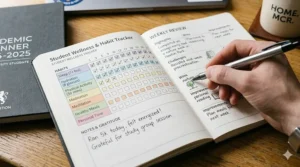
Here’s what most first-years don’t realise until it’s too late — UK universities run on a completely different timeline than the standard January-December diary you’ll find in WHSmith. Your academic year kicks off in September or October, not January. That’s why a proper student academic planner with hourly schedule designed specifically for the university calendar is rather crucial. Research from the University of Kent confirms that effective time management directly correlates with improved academic performance, yet most students start their first term without a dedicated planning system in place.
The planners I’ve reviewed here are all available on Amazon.co.uk, with varying price points to suit everyone from cash-strapped freshers to postgraduates who’ve finally cracked the budgeting thing. I’ve personally tested each format — from compact A5 designs perfect for stuffed backpacks to sprawling weekly spreads with dedicated hourly slots for every lecture and lab session. Whether you’re after a mid-year academic planner August to July or a traditional university planner with weekly spread running September to August, this guide will help you find exactly what you need without wading through dozens of irrelevant options designed for American semesters or corporate desk jockeys.
Quick Comparison Table: Top Academic Planners at a Glance
| Planner | Price Range (£) | Format | Best For | Rating |
|---|---|---|---|---|
| Pukka Pad Academic Diary 2025-2026 | £9-£15 | A5, Aug-Jul, Weekly | Budget-conscious students, compact storage | 5.0/5 |
| Blue Sky Academic Year Planner | £15-£25 | A4, Jul-Jun, Weekly/Monthly | Visual planners, detailed scheduling | 4.5/5 |
| Academic Year Spiral Planner (Generic) | £6-£10 | A5, Weekly spread | Basic planning, starter option | 4.4/5 |
| Premium Hardcover Academic Planner | £16-£22 | A5, Weekly/Monthly, Aug-Jul | Durability seekers, professional aesthetic | 4.7/5 |
| Hourly Schedule Student Planner | £8-£12 | A5, Hourly slots | STEM students, packed timetables | 4.3/5 |
| Undated Academic Planner | £9-£14 | Flexible start, Weekly | Mid-year starters, gap year returners | 4.6/5 |
| Bloomsbury Student Planner | £11-£13 | A5, Academic year | Comprehensive features, goal-setting | 4.8/5 |
💬 Just one click — help others make better buying decisions too! 😊
Top 7 Academic Planners for University Students: Expert Analysis
1. Pukka Pad 2025-2026 Academic Diary
The Pukka Pad Academic Diary has become something of a staple in British student backpacks, and for good reason. This soft-cover planner runs from August 2025 to July 2026, perfectly aligned with the UK academic calendar. At approximately 15.4 x 21.3 cm (A5 size), it slips easily into the front pocket of most rucksacks without adding bulk.
What sets this apart is the practical British approach to design. You get monthly overview pages with generous 3 cm x 3.2 cm blocks — large enough to actually write “Dissertation draft due” without resorting to microscopic handwriting. The week-to-view layout provides lined writing space for detailed daily planning, which proves invaluable when you’re tracking multiple module deadlines simultaneously. The spiral binding allows the planner to lay completely flat, rather handy when you’re taking notes during your personal tutor meeting.
In my experience using this across a full academic year, the 80gsm paper holds up remarkably well to standard biro and pencil use, though I’d caution against using wet gel pens or markers — you will get some show-through. UK reviewers consistently praise the pastel colour options (blue, green, yellow, pink, cream) which add a bit of personality without looking childish in seminars.
Customer Feedback: British students particularly appreciate the UK-specific features like pre-printed UK bank holidays and the academic year overview spread. Several reviewers note it’s “exactly what’s needed without unnecessary fluff.”
✅ Pros:
- Perfect August-July academic year alignment for UK universities
- Compact A5 size fits in standard backpacks and handbags
- Affordable price point (around £9-£15) ideal for student budgets
❌ Cons:
- Paper quality adequate but not premium (some bleed-through with wet pens)
- Soft cover less durable than hardback alternatives
Value Verdict: At around £9-£15, this represents exceptional value for UK students. The price-per-month works out to roughly £1, which is rather difficult to argue with when you’re budgeting for accommodation and course materials.
2. Blue Sky Academic Year Weekly & Monthly Planner
The Blue Sky Academic Year Planner takes a more comprehensive approach to academic planning. Running from July to June, this planner offers both weekly and monthly spreads in a larger format (typically around 21.5 x 15.5 cm or larger depending on the specific model).
The standout feature here is the dual-layout system. Monthly pages give you the big-picture view — perfect for mapping out assignment deadlines across all your modules — whilst the weekly spreads break down each day with lined sections. Many UK-available versions include monthly tabs for quick navigation, detachable rulers, and even sticker sheets for colour-coding different subjects or commitments. The paper quality is noticeably superior to budget options, usually running at 100gsm or higher, which means your fountain pen won’t bleed through to the next page.
What most UK buyers overlook about this model is the American origin affecting some design choices. Certain versions reference US holidays rather than UK bank holidays, so do check the product description carefully on Amazon.co.uk. That said, the versions specifically marketed for the UK market have adapted well, including proper British spelling and relevant academic features.
For students managing particularly complex schedules — say, a biology major with lab sessions, lectures, and a part-time position at the Students’ Union — the extra space and organisational features justify the higher price tag. You’re looking at roughly £15-£25, but the superior build quality means this planner will actually survive being shoved in and out of bags for twelve months.
Customer Feedback: UK reviewers consistently rate this 4.5 out of 5 stars, with particular praise for the durability and the monthly tab system. A few note the larger size requires more bag space.
✅ Pros:
- Dual monthly and weekly layouts for comprehensive planning
- Superior paper quality (100gsm+) handles various pen types without bleeding
- Monthly tabs and additional features enhance organisation
❌ Cons:
- Higher price point (£15-£25) may stretch tighter budgets
- Larger format requires more backpack space than compact A5 planners
Value Verdict: Worth the investment if you’re juggling multiple commitments and need robust planning features. The price gap from budget options narrows when you factor in longevity — this planner won’t fall apart by Christmas.
3. Generic Academic Year Spiral Planner (Multiple Brands)
These are the workhorses of the student planner world — functional, affordable, and available from numerous brands on Amazon.co.uk in the £6-£10 range. Most follow a similar formula: A5 size, spiral-bound, running from August or September through to July or August the following year, with week-to-view layouts.
Don’t expect premium features here. The paper is typically thinner (around 70-80gsm), covers are basic cardstock rather than hardback, and you won’t get fancy additions like ribbon bookmarks or elastic closures. But here’s the thing — for many students, especially those just starting university, these deliver exactly what’s needed: a reliable space to track lectures, tutorials, and deadlines without breaking the bank.
The quality varies significantly by brand, which is why checking Amazon.co.uk customer reviews is essential before purchasing. Some versions include useful extras like contacts pages, yearly overviews, and note sections, whilst others are stripped down to pure calendar functionality. I’ve used these during years when budget was particularly tight, and they performed admirably for basic planning needs.
The main drawback becomes apparent around February or March — the spiral binding starts to loosen if you’re frequently flipping pages, and the thinner cover shows wear from daily backpack abuse. If you’re particularly rough with your belongings or need something to last through potential postgraduate studies, investing a bit more pays dividends.
Customer Feedback: Reviews average around 4.4 out of 5 stars, with students appreciating the “no-nonsense” approach and budget-friendly pricing. Complaints centre on durability.
✅ Pros:
- Extremely budget-friendly (£6-£10) for tight student budgets
- Basic functionality covers essential planning needs adequately
- Wide availability on Amazon.co.uk with Prime delivery options
❌ Cons:
- Thinner paper and basic construction mean reduced durability
- Spiral binding prone to loosening with heavy use by mid-year
Value Verdict: Excellent starter option for first-years testing whether physical planning works for them. At under £10, it’s a low-risk investment that delivers solid functionality.
4. Premium Hardcover Academic Planner with Elastic Closure
Now we’re moving into the “investment piece” territory. These premium hardcover planners, available from various brands on Amazon.co.uk in the £16-£22 range, are built to withstand the full academic year and beyond. Think faux leather or high-quality textured covers, elastic band closures to keep everything secure in your bag, and often a ribbon bookmark for quick page access.
The August-to-July or September-to-August academic year formats come standard, with weekly and monthly layouts printed on heavier paper stock (typically 100-120gsm). This means you can use virtually any pen type — including those lovely Stabilo highlighters you bought during freshers’ week — without worrying about bleed-through ruining the next page.
What justifies the higher price is longevity and professional appearance. If you’re studying law, business, or another field where you’re networking with professionals, pulling out a tatty spiral-bound diary during an internship meeting doesn’t exactly scream “hire me.” These planners bridge the gap between student functionality and professional presentation.
Many versions include goal-setting pages, habit trackers, and project planning sections — features that sound gimmicky until you’re actually using them to break down that 10,000-word dissertation into manageable chunks. The British climate also factors in here: the hardcover protects your planning from the inevitable rainwater that seeps into bags despite your best umbrella efforts.
Customer Feedback: UK buyers rate these around 4.7 out of 5, particularly praising the durability through wet British weather and heavy use. Some note the weight is more substantial.
✅ Pros:
- Hardcover construction and elastic closure protect against wear and wet weather
- Professional appearance suitable for internships and networking events
- Premium paper quality (100-120gsm) handles all pen types without bleeding
❌ Cons:
- Higher investment (£16-£22) significant for limited student budgets
- Heavier weight adds noticeable bulk to already-heavy backpacks
Value Verdict: Best suited for second-years and beyond who’ve confirmed physical planning works for them and need something professional-looking. The durability means this could potentially serve multiple academic years.
5. Student Academic Planner with Hourly Schedule
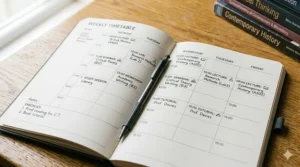
For STEM students, medical students, or anyone with a timetable resembling a game of Tetris, the hourly schedule format is genuinely transformative. These planners, typically priced around £8-£12 on Amazon.co.uk, dedicate each week-to-view page to hourly time slots — usually running from 7am or 8am through to 8pm or 9pm.
This format excels when you’re tracking: three-hour lab sessions, back-to-back lectures with different modules, part-time work shifts, society committee meetings, and gym sessions all within the same day. Rather than trying to cram “9am Organic Chem, 11am Stats lecture, 2pm Lab” into a standard daily box, you can visually map exactly where each commitment sits throughout your day.
The British university context makes this particularly useful. Unlike the American semester system with perhaps three or four classes, UK students often juggle six to eight modules simultaneously, each with varying lecture, seminar, and tutorial schedules. The hourly layout prevents the double-booking disasters that inevitably occur when you’re operating on three hours of sleep and agreeing to meeting times.
Most versions include monthly overview pages alongside the hourly weekly spreads. The paper quality tends to be serviceable rather than exceptional — you’re paying for the specialised layout format rather than premium materials. I’ve found the compact A5 size standard for these planners works well; any larger becomes cumbersome when you’re consulting it between lectures.
Customer Feedback: Students in demanding programmes rate these highly (4.3/5), noting the hourly slots “save my sanity.” Some wish for additional note-taking space alongside the hourly grid.
✅ Pros:
- Hourly time slots perfect for complex, packed student timetables
- Visual layout prevents double-booking and scheduling conflicts
- Compact A5 format balances detail with portability
❌ Cons:
- Limited space for detailed notes within each hourly block
- Overkill for students with lighter, less structured schedules
Value Verdict: Essential tool for students in demanding programmes with complex schedules. At £8-£12, the organisational benefits easily justify the cost for the right user.

6. Undated Academic Planner for Flexible Planning
The undated academic planner solves a problem many UK students face: not everyone starts university in September. Clearing students, January starters, returning students after a gap year, or those beginning postgraduate programmes at unusual times need planners that don’t waste half the pages.
These flexible-start planners, available on Amazon.co.uk for around £9-£14, let you write in your own dates on weekly and monthly spreads. Most maintain the week-to-view format with monthly overview pages, but without pre-printed dates. This means you can start using it in January, March, or whenever your particular programme begins, without paying for unused months.
The format works particularly well for PhD students whose academic “year” doesn’t follow traditional patterns, or for students taking a semester abroad where term dates differ from UK universities. You’re also not stuck if you miss a week during reading week or the Christmas break — there’s no guilt-inducing row of blank pre-printed dates staring accusingly at you.
Quality varies by brand, but most offer serviceable construction with spiral binding and decent paper weight. The flexibility is the selling point rather than premium materials. Some versions include goal-setting sections, habit trackers, and project planning pages that remain relevant regardless of when you start.
The main consideration: this format requires slightly more initial setup time. You’ll spend fifteen minutes filling in dates at the start, though many students find this helps them engage more actively with their planning system.
Customer Feedback: UK reviewers give these around 4.6 out of 5 stars, with particular praise from non-traditional students and postgraduates. The flexibility receives consistent mention as the key benefit.
✅ Pros:
- Flexible start date suits non-September starters and gap year returners
- No wasted pages for dates outside your academic calendar
- Ideal for postgraduates with non-traditional term patterns
❌ Cons:
- Requires initial time investment to fill in all dates manually
- Less structured feel may not suit students who prefer pre-printed organisation
Value Verdict: Excellent value (£9-£14) for students with non-traditional start dates or those wanting maximum flexibility. The unused-page savings alone justify the cost for January starters.
7. Bloomsbury Student Planner
The Bloomsbury Student Planner deserves special mention as a British-designed planner specifically created for UK university students. Priced around £11-£13 and widely available through university bookshops as well as Amazon.co.uk, this combines practical functionality with evidence-based study skills guidance.
What distinguishes the Bloomsbury from generic planners is the integrated self-management content. Beyond standard monthly and weekly planning pages, you’ll find sections on goal-setting, time management techniques, and academic skills development — essentially combining a planner with a study skills guide. For first-year students still adjusting to university-level independent learning, this additional guidance proves genuinely useful.
The academic year typically runs August to August or September to September depending on the version, with proper UK bank holidays pre-printed. The A5 format maintains portability whilst providing adequate writing space. Paper quality sits comfortably in the middle range — thicker than budget spiral planners but not quite premium hardcover territory.
Stella Cottrell, a respected name in UK academic skills development, designed this planner with input from university study skills advisers. This shows in thoughtful touches like reflective prompts, progress tracking sections, and stress management tips. For students who appreciate structure and guidance beyond pure calendar functionality, the Bloomsbury offers exceptional value.
The binding is typically perfect-bound (like a paperback book) rather than spiral, which some students find more durable for year-long use, though it won’t lay completely flat.
Customer Feedback: University students rate this around 4.8 out of 5, particularly valuing the study skills integration and UK-specific design. Some prefer spiral binding for flat-lay writing.
✅ Pros:
- UK-designed specifically for British university students and academic calendar
- Integrated study skills guidance valuable for first-years and international students
- Evidence-based features from respected academic skills expert
❌ Cons:
- Perfect binding won’t lay flat like spiral alternatives
- Study skills sections may feel unnecessary for experienced students
Value Verdict: Outstanding value at £11-£13 for first-year students or anyone wanting integrated study skills support. The additional guidance elevates this beyond a simple date tracker.
How to Actually Use Your Academic Planner: From Purchase to First Class Honours
Look, buying a planner is the easy bit. Actually using it effectively throughout the entire academic year? That’s where most students stumble. Here’s what works based on conversations with successful students across UK universities and my own trial-and-error experience.
The First-Week Setup (Don’t Skip This)
Block out your first Sunday evening of term for planner setup — seriously, schedule it like you would a lecture. Input all your module deadlines from course handbooks immediately. Yes, that includes the assessments due in May that feel impossibly far away. Add reading week dates, exam periods, and any placement or field trip commitments. This initial investment of 30-45 minutes saves countless hours of frantic last-minute deadline checking later.
For UK students specifically, note the bank holidays — you’d be surprised how many forget that early May bank holiday exists and schedule revision time that doesn’t account for closed libraries. If you’re in student accommodation, mark your contract end date. International students should add visa renewal dates if applicable.
The Weekly Review Ritual
Every Sunday evening (or Monday morning, depending on your schedule), spend fifteen minutes reviewing the week ahead and the month view. This ritual catches scheduling conflicts before they become problems. It’s also when you break down larger tasks — that literature review due in six weeks gets divided into “find 5 sources,” “read and annotate,” “draft introduction,” etc.
This weekly check-in also helps you balance workload across the week. If you spot three deadlines clustering on Friday, you can shift some work to Tuesday and Wednesday when your timetable is lighter. The British drizzle makes this particularly important — planning ahead means you’re not writing essays during the one sunny afternoon of the week.
The Hourly Hack for Packed Days
If you’ve chosen a student academic planner with hourly schedule format, use it properly: block time in 90-minute chunks rather than pretending you’ll work for six hours straight. The research is clear — focused work in shorter blocks with proper breaks produces better results than marathon sessions fuelled by Red Bull and regret.
Include buffer time around lectures for the inevitable running late, post-lecture questions, or simply getting across campus in the rain. UK university campuses aren’t always compact, and nobody performs well when they’ve sprinted through puddles to make a 2pm seminar.
Colour-Coding Without the Faff
Simple colour-coding improves planner effectiveness without requiring an art degree. Try this basic system: one colour for each module, another for work/employment, another for social commitments. You’ll instantly spot when one module is dominating your time or when you’ve accidentally scheduled zero social activities for three weeks straight.
Avoid elaborate systems requiring twelve different highlighter shades — you’ll abandon them by November. Three to five colours maximum keeps it functional without overwhelming.
The British Student Reality Check
UK university terms are intensive. You’ll have periods where your planner looks concerningly full and weeks where you’re wondering if you’ve forgotten to write something down because it seems too empty. This is normal. Use reading weeks and holiday periods strategically — they exist for catching up on reading and starting major assignments, not exclusively for Netflix marathons (though obviously, some of that too).
The academic year organiser September to August format helps here because you can see the entire year’s rhythm at a glance. You’ll notice the natural flow: intense teaching weeks, followed by quieter reading periods, then the assessment crush. Planning around this rhythm rather than fighting it makes university substantially more manageable.

Academic Planner vs Digital Calendar: What Actually Works for UK Students
The eternal debate continues, but here’s what the data shows: most successful UK university students use both. Your phone’s calendar handles the basics — lecture times, society meetings, dentist appointments. But research from Higher Education research indicates that the physical act of writing in a planner improves retention and commitment.
Here’s the practical middle ground that works: use your phone for reminders and immediate scheduling. Use your university planner with weekly spread for actual planning, goal-tracking, and seeing the bigger picture. The phone buzzes when you need to leave for a lecture; the planner helps you structure entire weeks and months around major deadlines.
Digital calendars excel at syncing with your phone, sending automatic reminders, and sharing schedules with group project members. Physical planners excel at providing that crucial overview where you can see an entire month or week without scrolling, they don’t run out of battery during library study sessions, and the physical act of writing creates stronger memory formation.
For UK students specifically, the academic year mismatch becomes less problematic with physical planners designed for the British calendar. Yes, Google Calendar can accommodate this, but you’re swimming against the tide of default January-December formatting. The mid-year academic planner August to July format in a physical planner just works with how UK universities actually operate.
The Hybrid Approach That Works
Start each week by planning in your physical planner. Transfer time-sensitive items (lecture times, meeting appointments) to your phone calendar with alerts. Keep the planner open on your desk during study sessions as your command centre. This combines the benefits of both systems without the weaknesses.
Many students find that different modules suit different approaches. Lab-based subjects with fixed schedules work fine in digital calendars. Subjects with flexible reading and essay writing benefit from the physical planner’s visual overview for structuring your own study time.
Common Mistakes When Choosing Your First Academic Planner
Let me save you from the errors I see students make every single September when the planner displays appear at the front of WHSmith and university bookshops.
Mistake #1: Choosing January-December Format
This is the big one. You arrive at university in September or October, buy a beautiful planner because it’s on sale… and then realise four months are already gone. Either you’ve wasted a third of the planner’s value, or you’re trying to make January 2026 work for September 2025, which is a recipe for confusion and abandoned planning.
Always, always verify you’re getting an academic year planner. Look for “August to July,” “September to August,” or “academic year 2025-2026” in the product description. Amazon.co.uk generally labels these correctly, but double-check the product images to confirm the monthly tabs show the right start month.
Mistake #2: Underestimating Required Writing Space
That gorgeous minimalist planner with tiny daily boxes looks brilliant in the product photos. Then you try fitting “9am Molecular Bio lecture, 11am Organic Chem tutorial room C4, 2-5pm lab session Building 7 bring safety goggles, 6pm Society committee meeting Student Union” into a 2cm square and realise you’ve made a terrible error.
UK students often have denser schedules than the planner designs account for, particularly those from American brands. Check the product images carefully — can you actually see adequate writing space per day? Read reviews mentioning whether the boxes are “generous” or “cramped.” When in doubt, choose more space over less; you can always leave sections blank.
Mistake #3: Ignoring Paper Quality
“It’s just paper, how much does it matter?” A lot, actually, once you’re six months in and the pages are falling out, or your notes on Monday are bleeding through to Tuesday. Paper weight matters for durability and pen compatibility.
Budget planners (under £8) typically use 70-80gsm paper, which is serviceable but won’t handle heavy fountain pen use or lots of highlighter action. Mid-range options (£10-£15) usually offer 80-100gsm — the sweet spot for most students. Premium planners (£15+) often feature 100-120gsm paper that could probably survive a minor flood.
For UK students who favour gel pens, felt tips, or highlighters (basically all of us), checking paper quality in reviews saves frustration. Search Amazon.co.uk reviews for terms like “bleed-through” or “paper quality” to see what actual users report.
Mistake #4: Buying Too Large or Too Small
The A4 planner looks incredibly professional spread across your desk at the beginning of term. By week three, you’re leaving it in your accommodation because it won’t fit in your bag alongside textbooks, laptop, and lunch. Alternatively, that tiny pocket planner seemed portable until you tried actually writing in it and realised your handwriting is not, in fact, microscopic.
A5 is the Goldilocks size for most UK university students — fits in standard backpacks, provides adequate writing space, works on lecture hall desks that are smaller than you’d like. If you have genuinely complex scheduling needs, A4 can work, but ensure your daily bag can actually accommodate it. Anything smaller than A5 is typically more suited to professionals with simpler schedules.
Mistake #5: Overlooking UK-Specific Features
This matters more than you’d think. Planners designed for the US market may include Thanksgiving, Fourth of July, and other holidays irrelevant to UK students whilst missing our actual bank holidays. They might use letter-size proportions that don’t match A4/A5 standards. Date formats might default to MM/DD/YYYY rather than the DD/MM/YYYY we actually use.
Check that the planner explicitly mentions UK compatibility, includes British bank holidays, or comes from a UK brand like Pukka Pad or Bloomsbury. International brands like Blue Sky often have UK-specific versions — verify you’re getting the right one on Amazon.co.uk.
What UK Universities Don’t Tell You About Planning and Organisation
Right, here’s the uncomfortable truth: most universities provide you with a course handbook listing all your deadlines and assessment dates, then essentially leave you to figure out how to actually manage it all. The assumption is that achieving A-levels or equivalent demonstrates sufficient organisational skills. For many students, this assumption proves… optimistic.
The Skills Gap Is Real
Research from UK universities indicates that time management challenges are among the top reasons students struggle academically, yet formal planning skills training is rarely part of the curriculum. You’re expected to juggle six to eight modules, each with independent reading requirements, seminars to prepare for, and assessments on different schedules, plus navigate an entirely new social environment and probably manage your own finances for the first time.
A proper academic planner for university students becomes your external brain during this transition. It’s not about being neurotic or controlling; it’s about offloading the cognitive burden of remembering everything so your actual brain can focus on understanding molecular genetics or deconstructing Victorian literature.
The Independent Study Trap
UK university degrees involve substantially more independent study than A-levels or equivalent qualifications. You might have 12-15 contact hours per week of lectures and seminars, but 25-30 hours of independent reading, research, and assignment work. Without structure, these unscheduled hours evaporate into a combination of well-intentioned but inefficient library sessions and utter panic the week before deadlines.
Using a university planner with weekly spread to block out specific independent study time — treating it as seriously as you would a timetabled lecture — makes an enormous difference. “Tuesday 2-4pm: read chapters 5-7 for next week’s seminar” entered in your planner is infinitely more effective than a vague intention to “do some reading sometime this week.”
The Deadline Clustering Problem
UK universities have a frustrating tendency to cluster deadlines. Module coordinators set assessment due dates without consulting each other, so you’ll have weeks with nothing due followed by weeks where you have three major assignments and an exam all hitting simultaneously. Your student diary with lecture timetable slots helps you spot these clusters months in advance.
The solution isn’t working frantically the week before; it’s using your planner to identify these clusters in September and October, then scheduling earlier start times for the projects that clash. If you can see in your mid-year academic planner August to July that November 15th has two essays and a presentation due, you start the November 15th work in mid-October instead of early November. Revolutionary, I know, but surprisingly few students do this.
The Postgraduate Reality
If you’re continuing to postgraduate study, the planning challenges intensify. PhD students juggle research commitments, teaching responsibilities, conference deadlines, and often part-time employment. Master’s students compress an enormous workload into 12 months. The academic year organiser September to August becomes essential infrastructure rather than optional support.
The flexibility of undated planners particularly suits postgraduate study, where term structures matter less than research milestones and conference submission deadlines. But regardless of format, having some systematic planning approach stops postgraduate study from consuming every waking hour or, conversely, drifting without sufficient progress.
Long-Term Value: Will Your Planner Actually Last the Full Academic Year?
Let’s address durability with some hard truth: that £6 spiral-bound planner might technically last the full academic year, but by Easter it’ll be held together with optimism and Sellotape. Here’s what actually determines whether your planner survives from September to June.
Binding Quality Matters More Than You Think
Spiral binding offers brilliant lay-flat functionality — your planner stays open at the current week without requiring textbook weights to hold pages down. However, cheaper spiral binding starts loosening around February, particularly if you’re constantly flipping back and forth between weekly and monthly views. By May, pages are catching on the spiral loops, and the whole thing feels decrepit.
Premium spiral planners use thicker wire and more durable plastic/metal covers on the spiral ends. This costs manufacturers perhaps 50p more but adds months of usable life. Perfect binding (like a paperback book) proves more durable long-term but won’t lay flat — the classic trade-off.
Hardcover planners with stitched binding represent the gold standard for durability. You’re looking at £15-£22 on Amazon.co.uk, but these genuinely last. Some students use the same high-quality planner for multiple years if it has sufficient blank note pages or works as a record-keeping system.
British Weather Is Your Planner’s Enemy
Here’s something international students learn quickly: British weather is relentlessly wet. Your bag will get rained on. That puddle you thought was shallow wasn’t. The “waterproof” backpack’s zip failed. Suddenly your planner is soggy.
Hardcover planners with elastic closures provide actual protection. The elastic keeps pages closed so water can’t seep between them, and the rigid cover prevents that horrible soggy-pages-sticking-together disaster. Soft covers on budget planners absorb water like enthusiastic sponges, then the pages wrinkle as they dry, and your carefully written schedules become wavy disasters.
If budget constraints mean a soft-cover planner is your only option, invest £2 in a plastic document wallet or ziplock bag to keep it in. Your planner contains an entire academic year’s worth of important information; protecting it from November drizzle seems reasonable.
Daily Backpack Abuse Testing
Your planner lives in a backpack that also contains: heavy textbooks, a laptop, probably a water bottle that may or may not be properly sealed, pens without caps, food items of varying structural integrity, and whatever else you’ve shoved in there on the way to a 9am lecture.
Planners with reinforced corners and edges handle this environment better. Elastic closures prevent pages getting bent or torn. Pocket folders inside the planner for storing loose papers work brilliantly in theory but often become overstuffed crumple zones in practice.
The honest test: flip through Amazon.co.uk reviews and look for photos from students who’ve used the planner for several months. New-product photos from manufacturers always look pristine; real-world usage photos from February reveal what survives daily student life.
The Cost-Per-Month Calculation
Rather than thinking about absolute price, calculate monthly cost. A £6 planner lasting eight months (September to April) costs 75p per month. A £18 planner lasting the full twelve months costs £1.50 per month. The premium option is double the monthly cost but provides significantly more value per pound spent.
This calculation shifts when you factor in replacement costs. If that budget planner fails in March and you buy another £6 replacement to finish the year, you’ve spent £12 total — approaching premium prices anyway but with the inconvenience of transferring information between planners mid-year.
For UK students specifically, choosing planners available with Amazon Prime delivery matters for potential replacements. If your planner does fail in March, being able to order a replacement that arrives the next day prevents planning disruption during critical pre-exam revision periods.

FAQ: Your Academic Planner Questions Answered
❓ What's the difference between an academic diary and a regular diary for university students?
❓ Do I need hourly time slots if I only have 12 contact hours per week?
❓ Will a spiral-bound planner last the full academic year with daily use?
❓ Can I start using an academic planner mid-year if I'm a January or clearing entrant?
❓ Are digital planning apps better than physical planners for university?
Conclusion: Choose Your Academic Planner Wisely, Then Actually Use It
Right, let’s bring this home. The academic planner for university students that works brilliantly for your coursemate might prove entirely wrong for you. That STEM student with 20 contact hours weekly needs different planning tools than the humanities student with 10 lectures but mountains of independent reading. The key is honest self-assessment about your actual planning needs, not aspirational buying based on what you imagine your organised self will become.
For first-year students still finding their feet: start with a mid-range option like the Pukka Pad Academic Diary or generic spiral planner in the £9-£15 bracket. You’ll learn what features you actually use versus what looked good in product photos. Come second year, upgrade to precisely what suits your confirmed planning style.
For students with genuinely complex schedules juggling part-time work, demanding degree programmes, and significant extracurricular commitments: invest in either a student academic planner with hourly schedule or a premium hardcover option. The organisational benefits justify the £15-£25 price tag when you’re genuinely using the features.
For postgraduates and non-traditional starters: undated planners offer flexibility that pre-printed academic year formats can’t match. The slight additional setup time pays dividends when you’re not wasting pages or fighting against misaligned calendars.
The uncomfortable truth about academic planning: buying the perfect planner achieves precisely nothing if it lives unopened in your bag. The £6 planner you actually consult daily beats the £20 premium option you use twice then forget. Start with a weekly review habit — every Sunday evening, fifteen minutes maximum — and build from there.
Your academic success at UK universities depends far more on consistent planning habits than on which specific planner brand you choose. That said, choosing a format aligned with how you actually work (not how you wish you worked) removes friction from the process. The best academic planner is the one you’ll still be using in May when exam stress peaks and deadlines cluster.
Check Amazon.co.uk for current availability and pricing on these options. Most qualify for Prime delivery, meaning you can order today and start planning tomorrow. Your future self, frantically searching for that dissertation deadline date at 11pm, will thank you for the investment.
Recommended for You
- Filing Cabinet Buying Guide: 7 Best UK Choices 2026
- Plastic vs Wooden Storage Boxes: 7 Best UK Options 2026
- 7 Professional Looking Office Storage Solutions UK 2026
Disclaimer: This article contains affiliate links. As an Amazon Associate, I earn from qualifying purchases. If you purchase products through these links, we may earn a small commission at no additional cost to you.
✨ Found this helpful? Share it with your mates! 💬🤗
